

Vindonissa, Germania Superior – Part III

Continued From Vindonissa Part II Out the southwest exit of the cemetery onto a small unnamed street that connects with Dorfstrasse to the south, and then just a minute or so west down Dorfstrasse (about 60 meters), is the culina centurionis, the officer’s kitchen. It’s a bit hidden if you aren’t looking in the right…

Read More

Vindonissa, Germania Superior – Part II

Continued From Vindonissa Part I A few blocks to the southeast of the amphitheater, on the southeast corner of the intersection Oelackerstrasse and Bergstrasse (about 450 meters walking) is an innocuous looking low stone structure with a window. Looking through the window is a settling basin for the aqueduct that supplied water to Vindonissa, one…

Read More

Lucus Augusti, Hispania Tarraconensis – Part I

Most Recent Visit: July 2022 The Roman settlement of Lucus Augusti (also sometimes called Lucus Asturum) seems to have been founded sometime after the conclusion of the Cantabrian Wars in 19 BCE. One of the primary belligerents in the war were the Gallaeci, a broad tribal group that occupied the far northwestern corner of the…

Read More

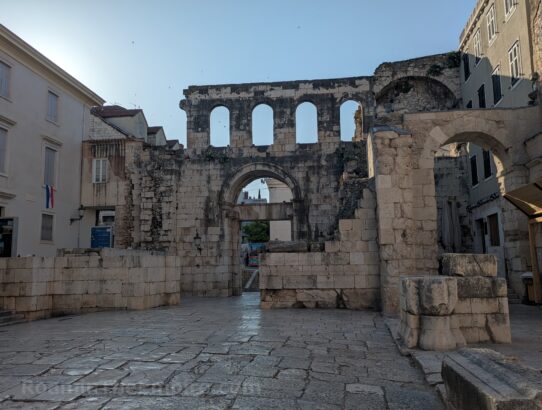
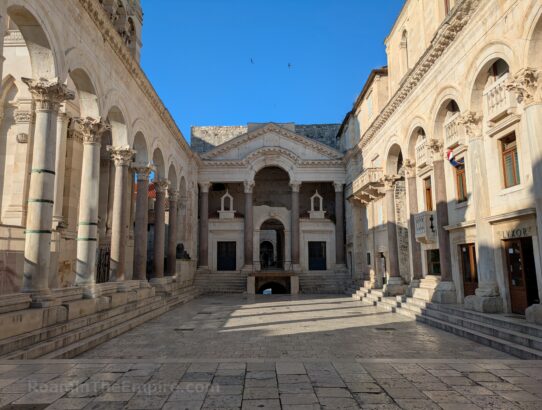
Spalatum, Dalmatia – Part IV

Continued from Spalatum – Part III A bit of a winding passageway is the only egress from the triclinium area of the palace and back toward the north. Near the entrance to the passage is a column capital mounted on a short pedestal. The passage winds for about 40 meters before opening up into an…

Read More

Spalatum, Dalmatia – Part I

Most Recent Visit: June 2025 The settlement that would later become Spalatum under the Romans was originally founded by settlers from the Greek colony of Issa (modern Vis), located on an island of the same name about 50 kilometers off the coast. The colony was established as Spalathos (or Aspalathos) on a natural harbor on…

Read More

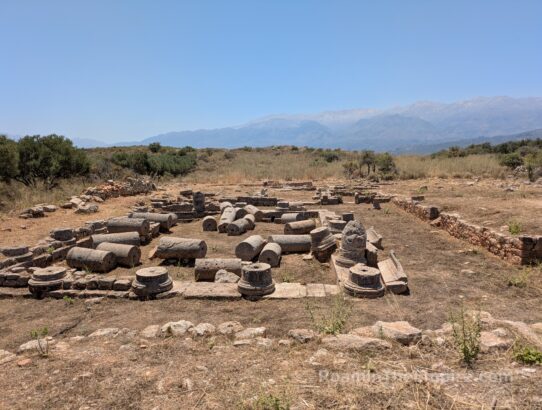
Aptera, Creta – Part I

Most Recent Visit: June 2025 The ancient city of Aptera (or Aptara) was located on a strategic plateau above the south side of the mouth of the Souda Bay in northwestern Crete. One derivation given for the name is from the mythological singing contest between the Sirens and the Muses that was said to have…

Read More

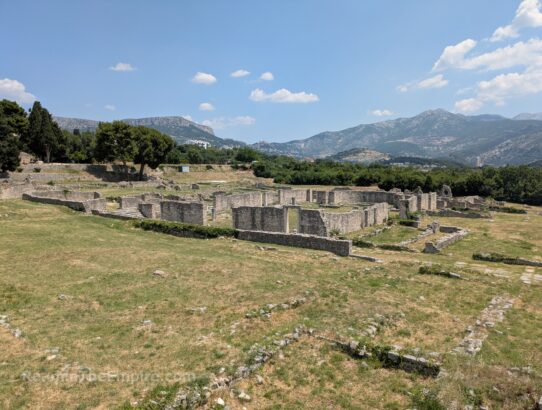
Salona, Dalmatia – Part IV

Continued From Salona, Dalmatia – Part III While the majority of the archaeological remains of ancient Salona are contained within the archaeological park, there are a few things worth seeing outside the park as well. The easiest one to get to from the entrance of the archaeological park Marusinac cemetery complex. Marusinac is located about…

Read More

Salona, Dalmatia – Part II

Continued From Salona, Dalmatia – Part I A stairway descends from the top of the fortifications down into the area of the Episcopal Center of Salona, just to the west of the excavated towers. A few meters on and to the west of the bottom is a structure designated as Oratorium A. This space originally…

Read More

Colonia Ulpia Traiana, Germania Inferior – Part II

Continued From Colonia Ulpia Traiana Part I The archaeological park is more or less divided up into the insula that would have been present in antiquity using dirt visitor paths (the actual roads are either not excavated or are not present) to mark the paths of the dividing roads. The vast majority of the site…

Read More

Agrigentum, Sicilia – Part V (Addendum III)

Continued From Agrigentum, Sicilia Part IV At the very west end of the archaeological park, near the Temple of the Dioscouri, is the entrance to the Giardino della Kolymbethra, a valley located along the north side of the archaeological area. I didn’t visit this on the 2017 trip because I thought having a separate additional…

Read More