



Most Recent Visit: June 2025
The settlement that would later become Spalatum under the Romans was originally founded by settlers from the Greek colony of Issa (modern Vis), located on an island of the same name about 50 kilometers off the coast. The colony was established as Spalathos (or Aspalathos) on a natural harbor on the south side of a peninsula created by the modern Gulf of Kaštela and the channel created between the mainland and islands off the coast sometime in the 3rd or 2nd century BCE. Around this same time as the foundation, the Delmetae were establishing themselves as a distinct Illyrian group inland. Issa itself had been a colony of Syracuse founded in the early 4th century BCE. The name Aspalathos may derive from the Ancient Greek word for a spiny broom shrub that grows in the area (calcitome spinosa).

Initially Spalathos thrived off trade with their Illyrian and Delmetae neighbors. The Illyrians first came into major conflict with the Romans in 219 BCE, and the Delmetae specifically ran afoul of the Romans in 156 BCE, sparking a series of three conflicts that lasted until about 76 BCE, after which Spalathos was firmly under the hegemony of Rome and the name was Latinized to Spalatum. The nearby Delmetae settlement of Salona (about 5 kilometers to the northeast) was captured at the end of the final conflict and Romans settled there as part of a conventus civium Romanorum, which started the decline of the importance of Spalatum. The Delmetae of Salona supported Caesar during his civil war with Pompey, and as reward a colony was established there. When Illyricum was incorporated as a province, Salona became the capital and Spalatum disappeared into obscurity as Salona rose to prominence.

For the next three centuries, little is known about Spalatum. In 293 CE, however, the emperor Diocletian, who was born in Salona, established the Tetrarchy and began work on the construction of a fortified palace near his hometown. It is believed that at least one reason that the site of Spalatum was chosen was due to the established harbor with access to the open sea, rather than Salona’s port that opened onto the protected gulf that could easily be blockaded. This would offer more routes of egress should Diocletian have needed to escape his palace quickly; a realistic consideration after the volatile and frequent leadership changes that troubled the empire in the second half of the 3rd century CE. The palace, which was constructed directly on the waterfront, was completed in 305 CE. After its completion, Diocletian retired as emperor and took up residence at the palace.

Diocletian famously refused to return to his position as emperor as turmoil once again took hold, instead stating his preference to grow cabbages and other vegetables in the garden at his palace in Spalatum. He died there in December 3 of either 311 or 312 CE. After Diocletian’s death, the palace became an imperial property. Following a brief reign as emperor in the west, Flavius Julius Nepos was driven out of Italy and escaped across the Mare Adriaticum to his native Salona in 475 CE. It is believed that he took up residence in Diocletian’s palace. Ruling over Dalmatia from the palace, Nepos maintained his claim on the western throne until he was murdered in the palace in 480 CE. It is possible the palace was sacked but not destroyed by the Ostrogoth king Totila around 549 CE. The palace remained standing following the sack of Salona by the Avars in 639 CE, and many of the refugees from Salona found safety inside the still secure walls of the palace, beginning the post-Antique foundations of modern Split.
Getting There: Split is the second largest city in Croatia behind the capital of Zagreb, and as such is well connected to the rest of the country by bus, train, and even ferry. It is connected elsewhere in Europe with a nearby airport. Cruise ships even frequent the travel destination. This all amounts to it being a relatively easy city to get to. Once there, the city is fairly walkable; the historic center is pedestrian only and as a huge tourist destination is tailored to facilitate that.
Very little remains of Spalatum prior to the construction of Diocletian’s palace; and the few remnants that exist and are visible are contained within the palace. The palace itself isn’t really a unified archaeological area; the walls of the palace encompass an area of about 180 meters by 205 meters, which amounts to about half of the historical center of the city. It is laid out more or less like a military castrum, with two primary internal roads dividing the area within the walls more or less into quadrants. Scattered around the city within the wall are various vestiges of the palace; some are part of ticketed access areas while others are open access and have no real restrictions.

While there are a few minor entrances that were created post-antique, the four major entrances built into the walls of the palace still remain the primary means of ingress into the historic center and remnants of the palace. The southern walls today, as they did in antiquity, face the water of the harbor. Today the harbor is about 50 meters from the wall, but at the time of Diocletian, the water would have been much closer to the walls. Some reconstructions of the palace place the walls almost directly on the water. While the lower parts of the southern wall are now obscured by the modern restaurants that line the Riva, the seaside promenade, the remnants of the upper registers of the exterior of the wall are visible above these shops and restaurants. Above the initial couple meters of the wall on the south side was a colonnade gallery. Diocletian’s residence was located in the southern part of the palace, and so the gallery afforded views out over the sea. Columns from this gallery are visible over much of the wall, incorporated into later buildings constructed into the wall. Two massive towers stood at the east and west ends of the wall, but only the eastern tower survives.

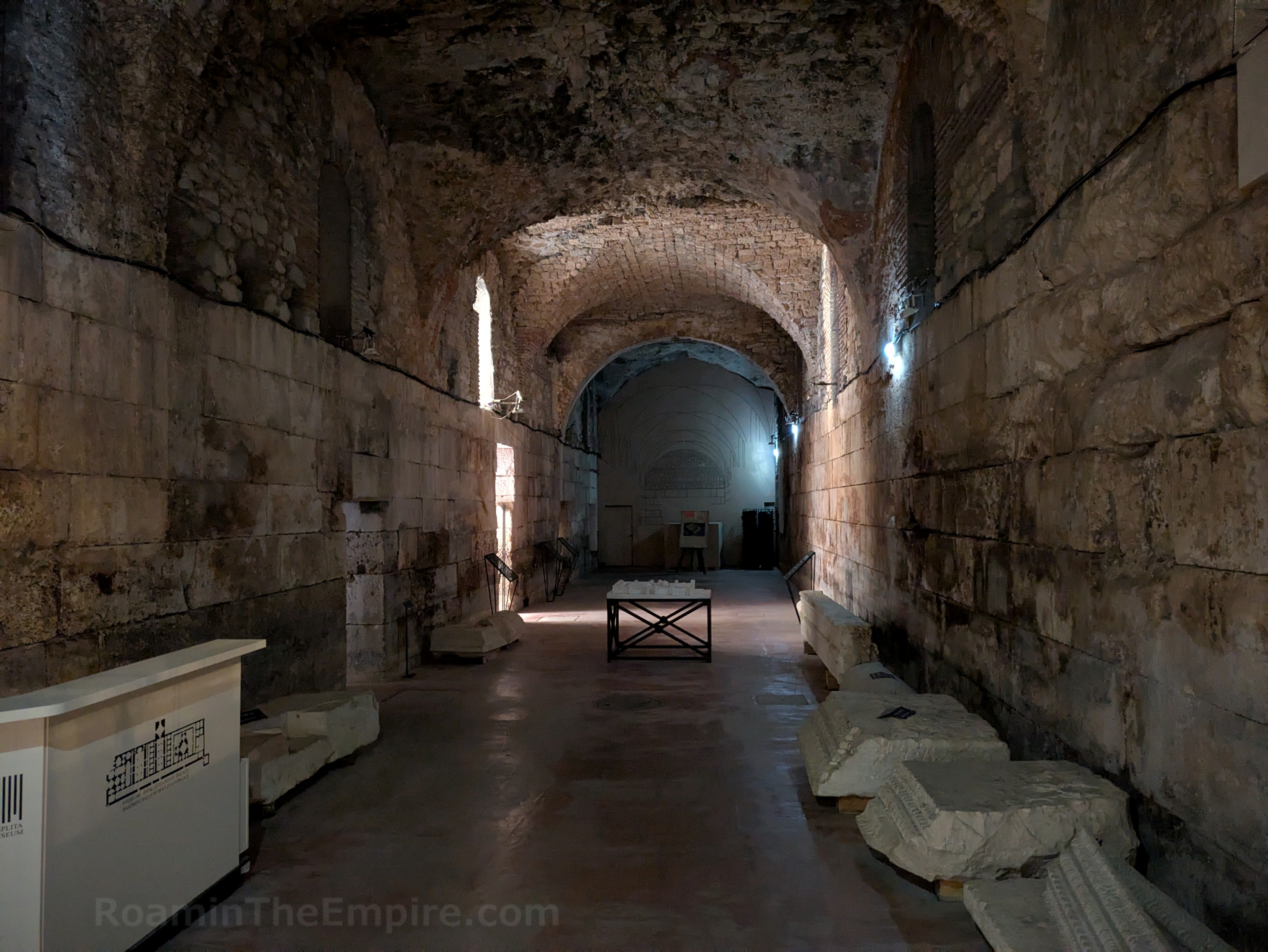
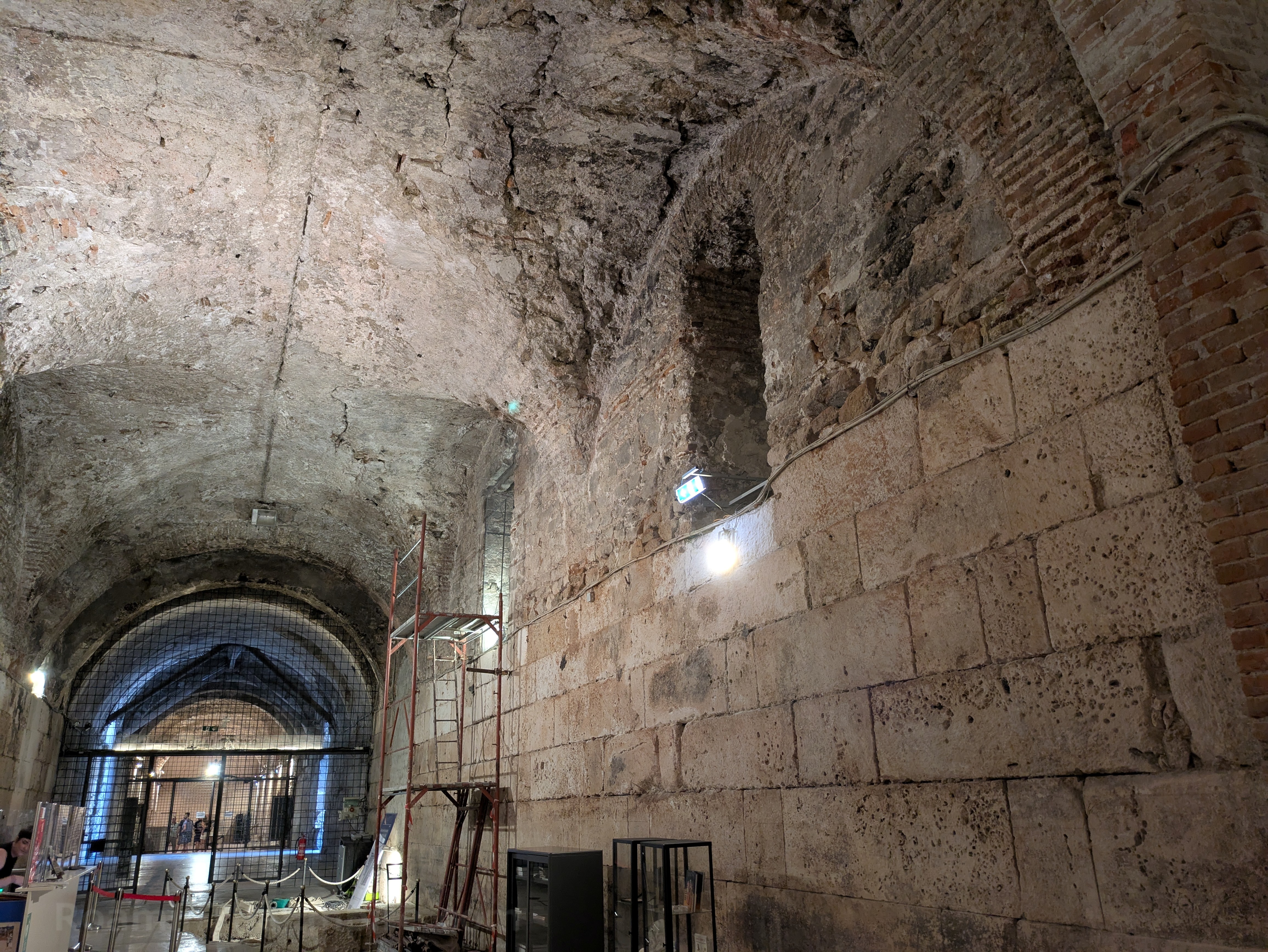
In the center of the wall is the southern entrance, the porta meridionalis. It is sometimes referred to as the Sea Gate or Security Gate, or Brass Gate, but is most often called the Bronze Gate. Unlike the three main terrestrial gates, this gate was small, simple, and not flanked by defensive towers. The Bronze Gate leads directly into the basement substructure of the residential section of the palace. In addition to being a sort of ‘emergency exit’ by sea for Diocletian, this gate likely more practically served as a service entrance for the delivery of goods, with its direct access to the basement substructure of the residence. When I first visited Split in 2012, the basement halls adjacent to the entrance were filled with vendors, something that seems to have been done away with in the years since then. A hallway opens up running east and west (hallway Y) inside the gate with a large hall directly forward (north) from the gate.
The halls to the left and right inside the Bronze Gate are gated off after several meters, where access is limited as part of an archaeological area. The entrance to the archaeological area, which is run by the city museum, is located down the left hallway. The archaeological area is open daily from 8:30 to 20:00. Admission is 8 Euros.

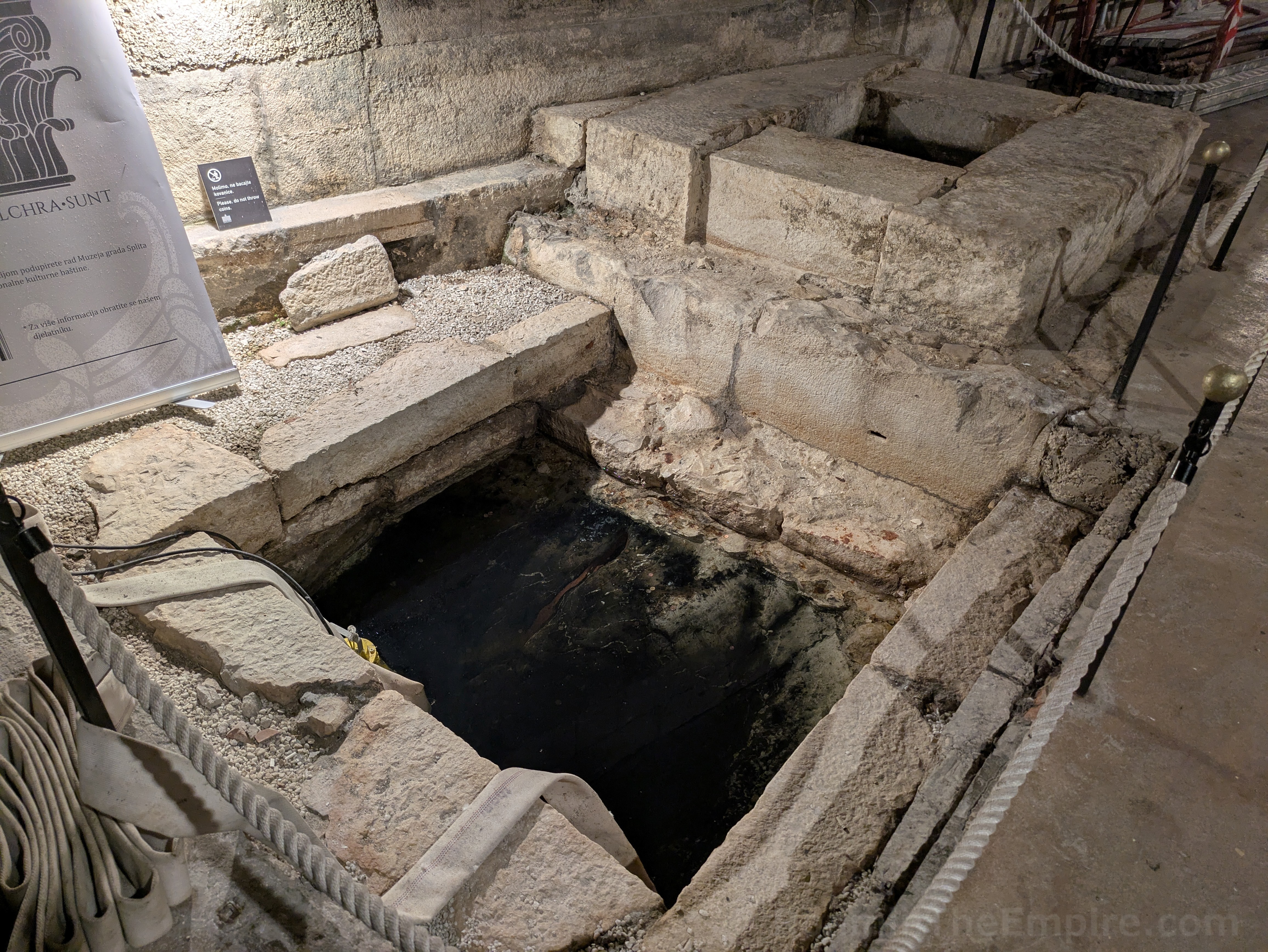
Just inside the entrance of the archaeological area, off against the south wall across from the ticket booth, is one of the few remnants of the pre-Diocletian’s palace Spalatum. Two square well structures, one raised above the other and both still drawing water. The exact dating of the wells is not given, only that they predate the construction of the palace. They seem to have continued to have been used in the post-antique period.
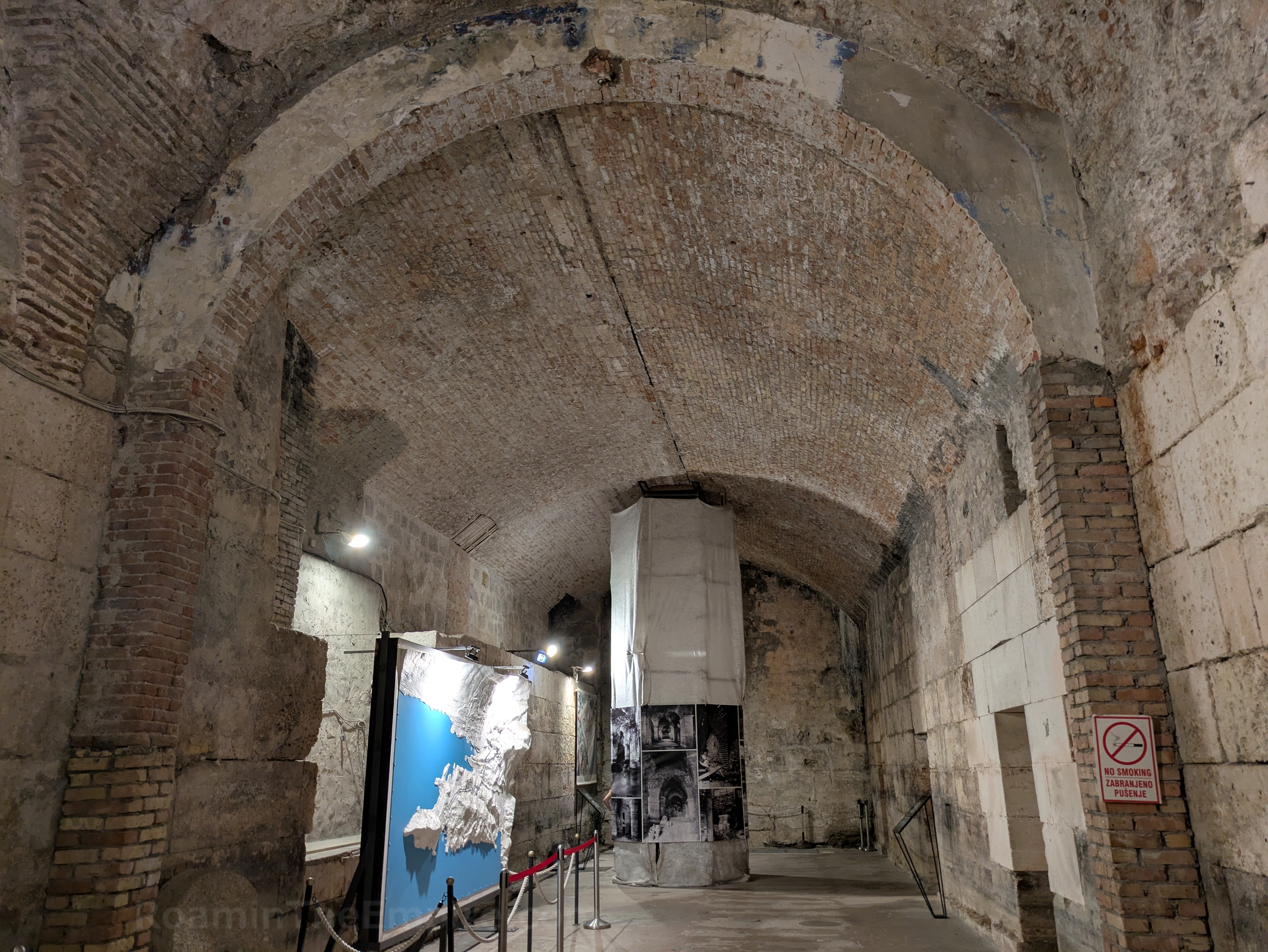
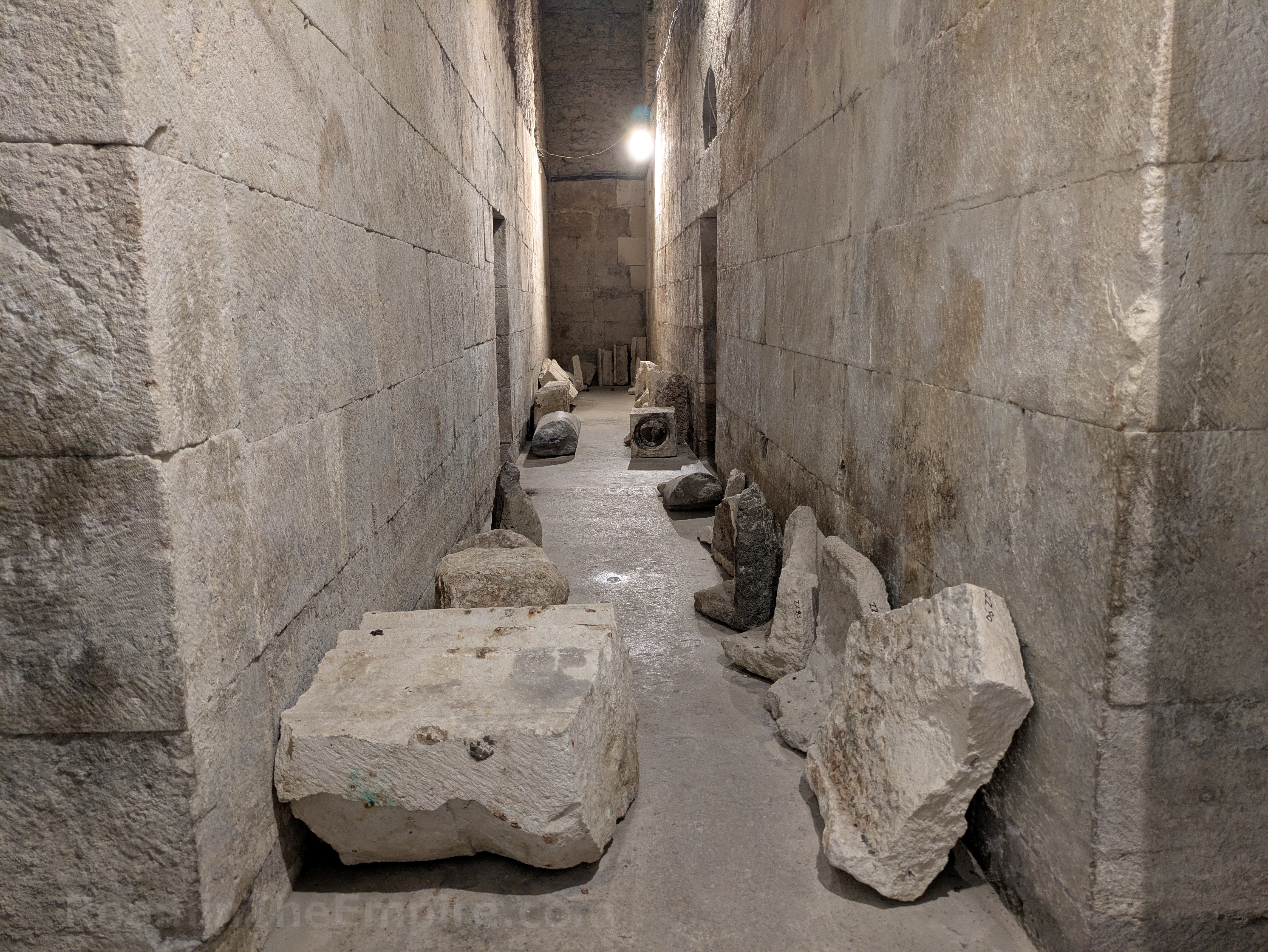
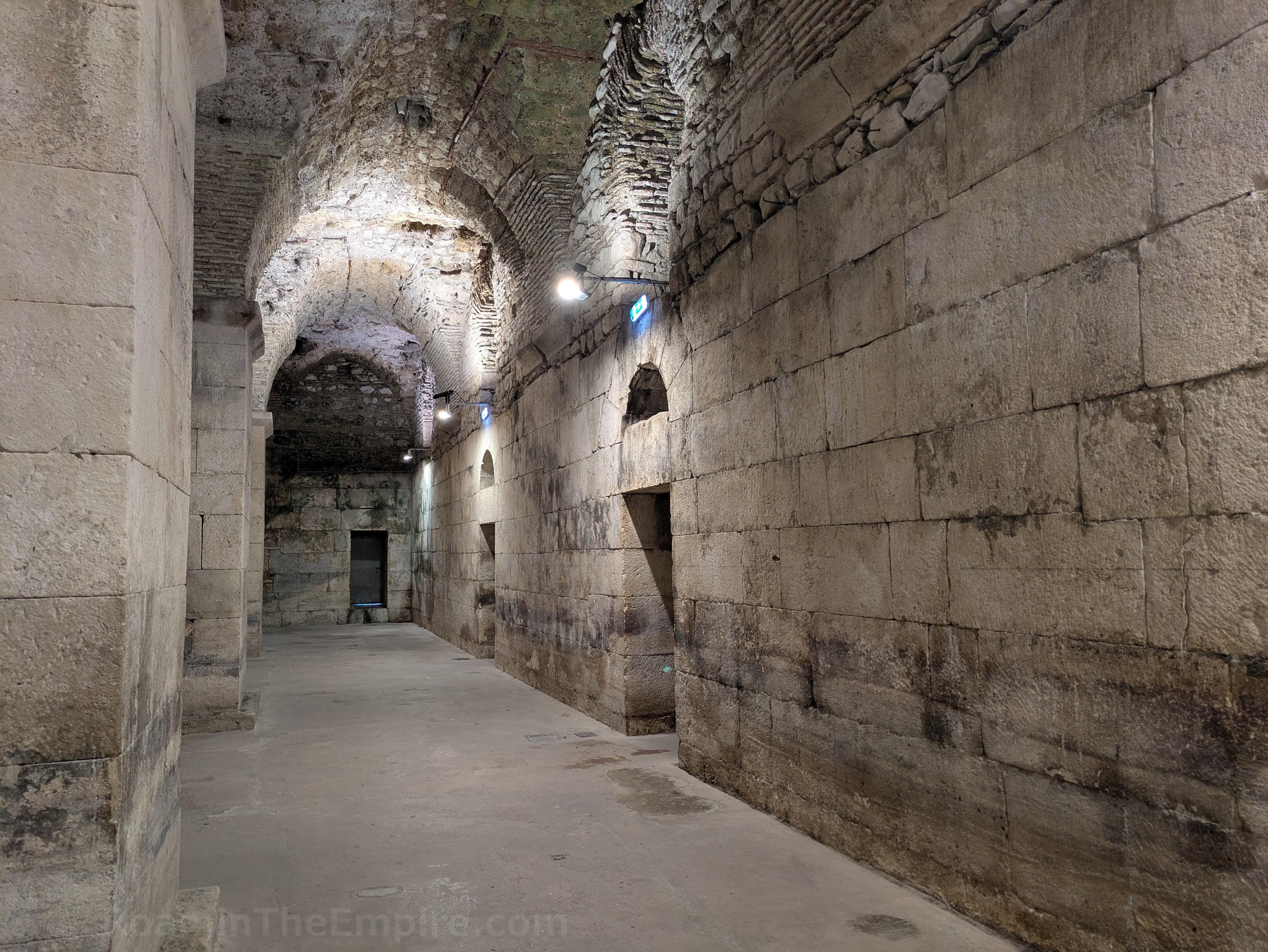
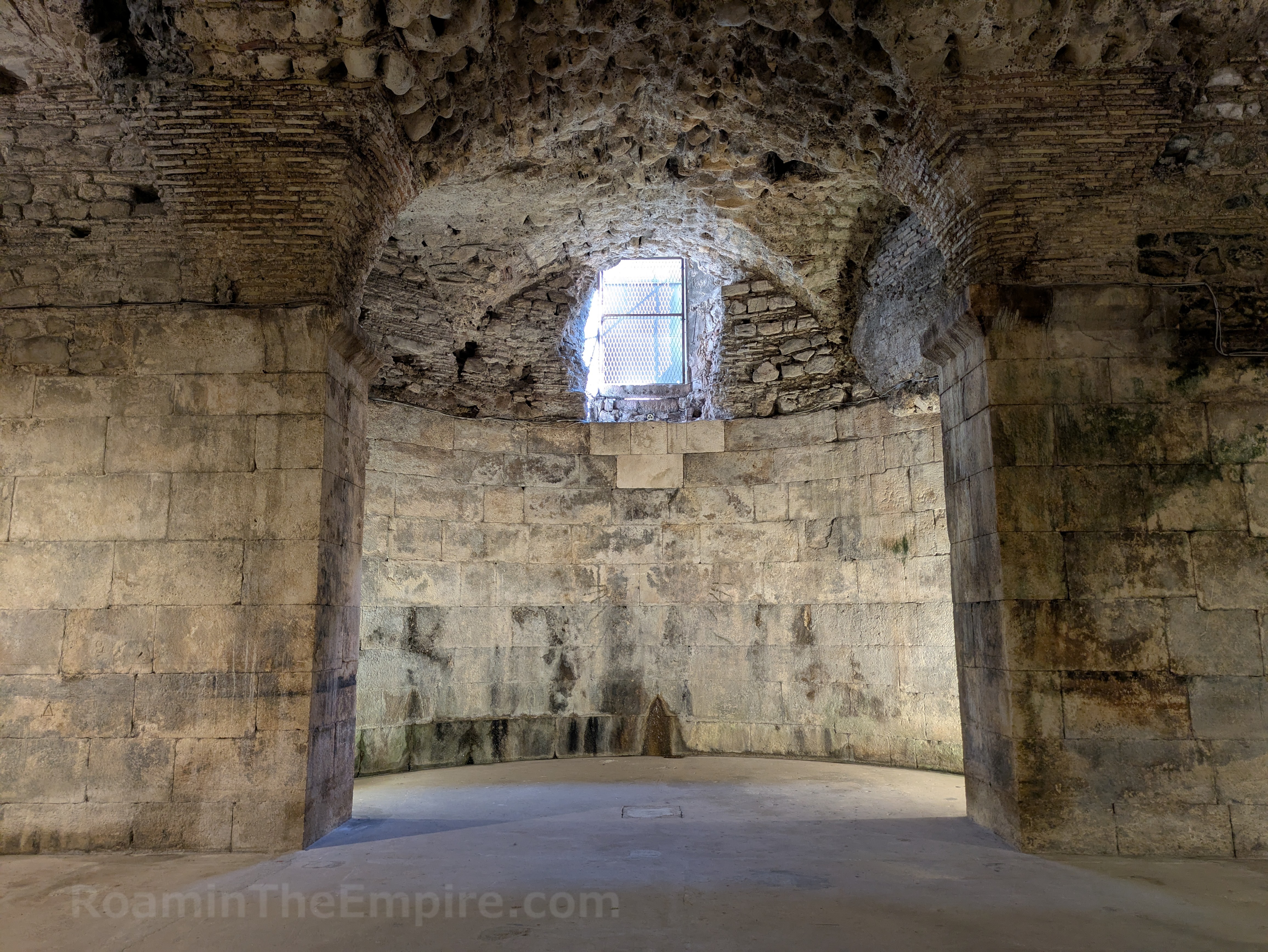
The first set of rooms that lead off this hallway (hallway Y) to the north is a corridor (corridor 8) with a series of six rectangular rooms off the eastern side (rooms 9a-f). These are mostly unremarkable rooms with no distinction between them. The rooms of the substructure of the residence, however, seem to have reflected the layout of the main floor of the residence; above this corridor and series of rooms would have been a similar or identical corridor with series of six rooms in the main living area. Two passageways off the east side lead to a much narrower corridor (corridor 7), which was connected to the living area above through a system to help with ventilation in the basement area. These passageways then continue on into a large hall (6a).

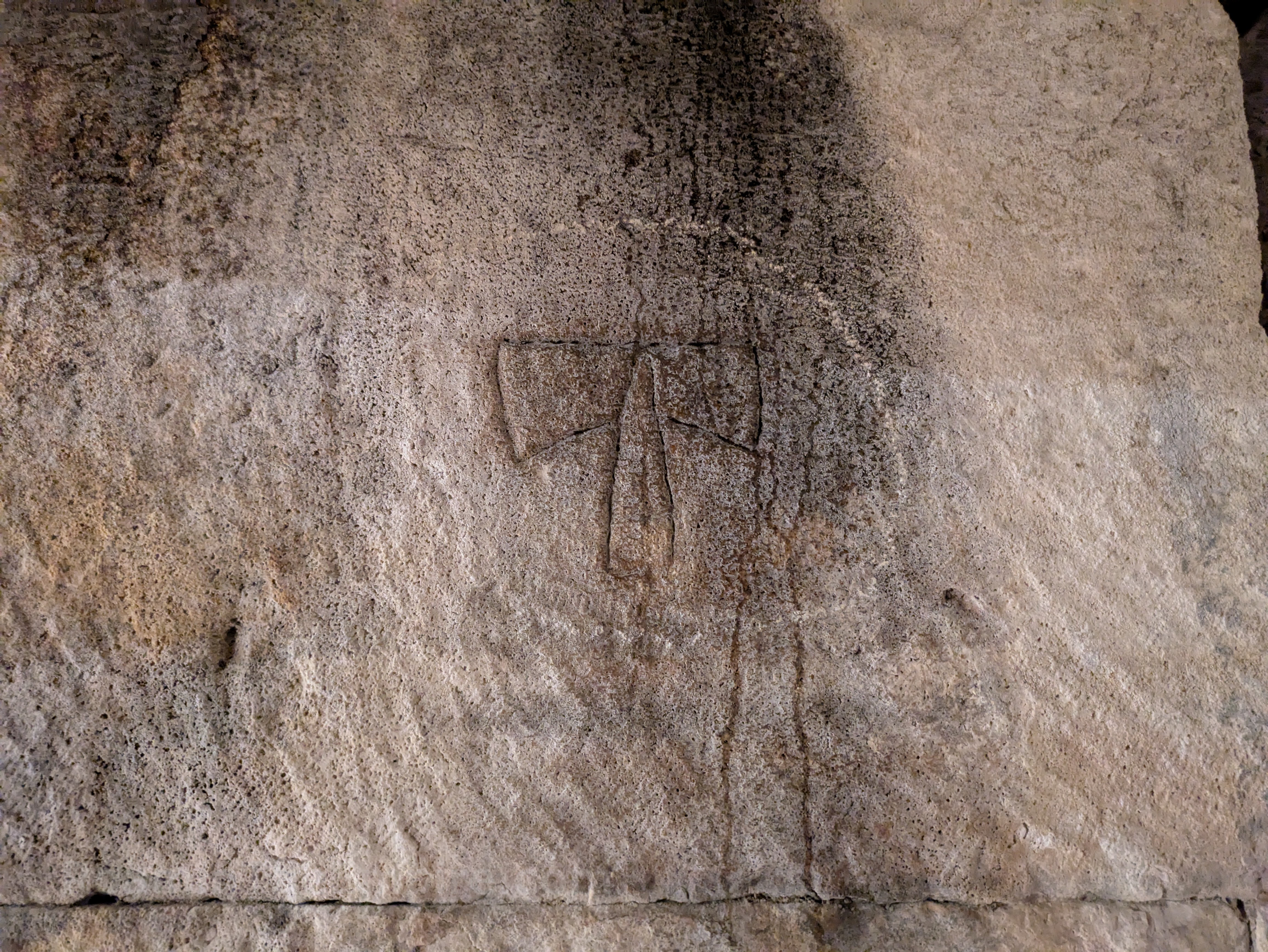
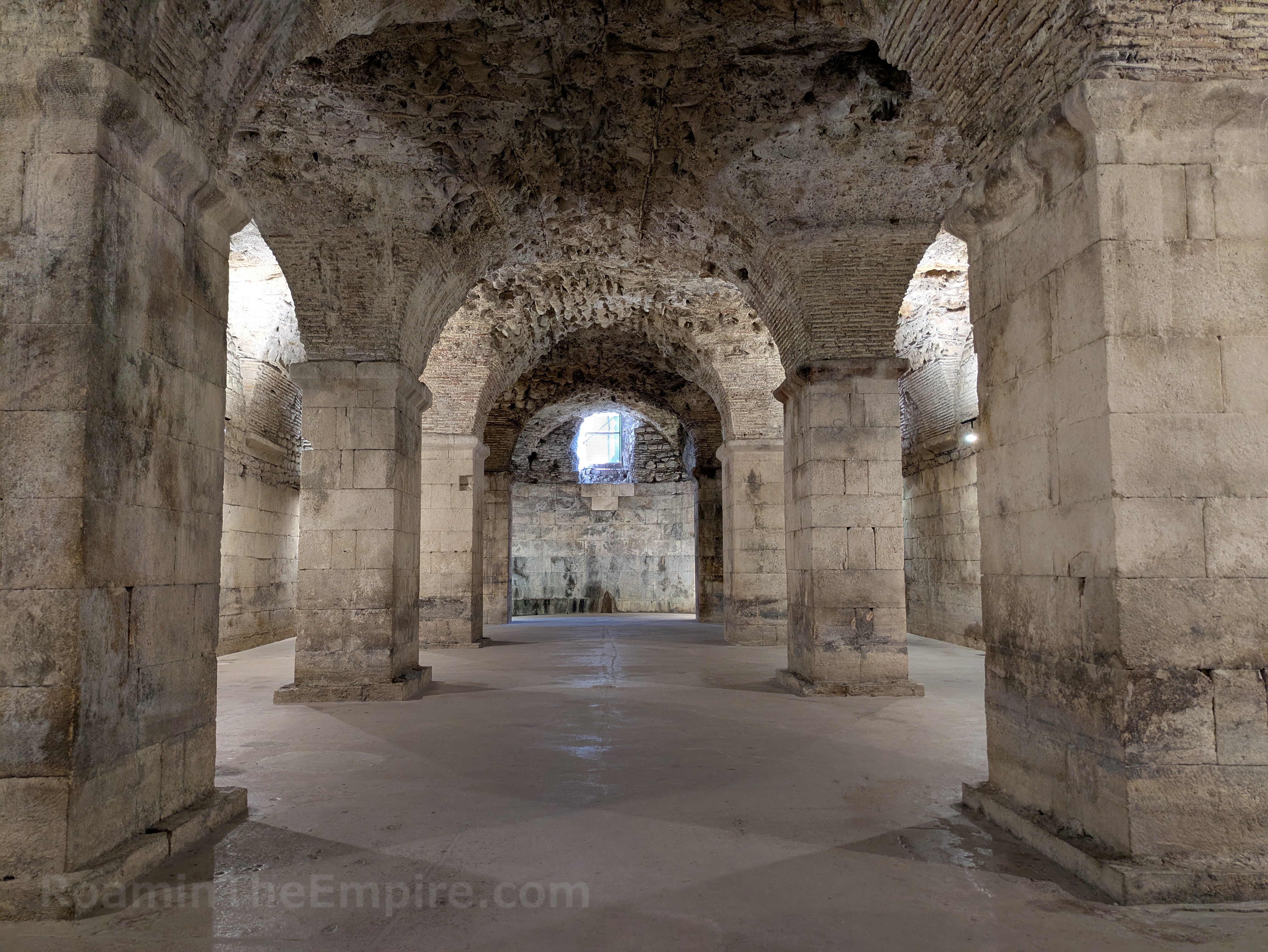
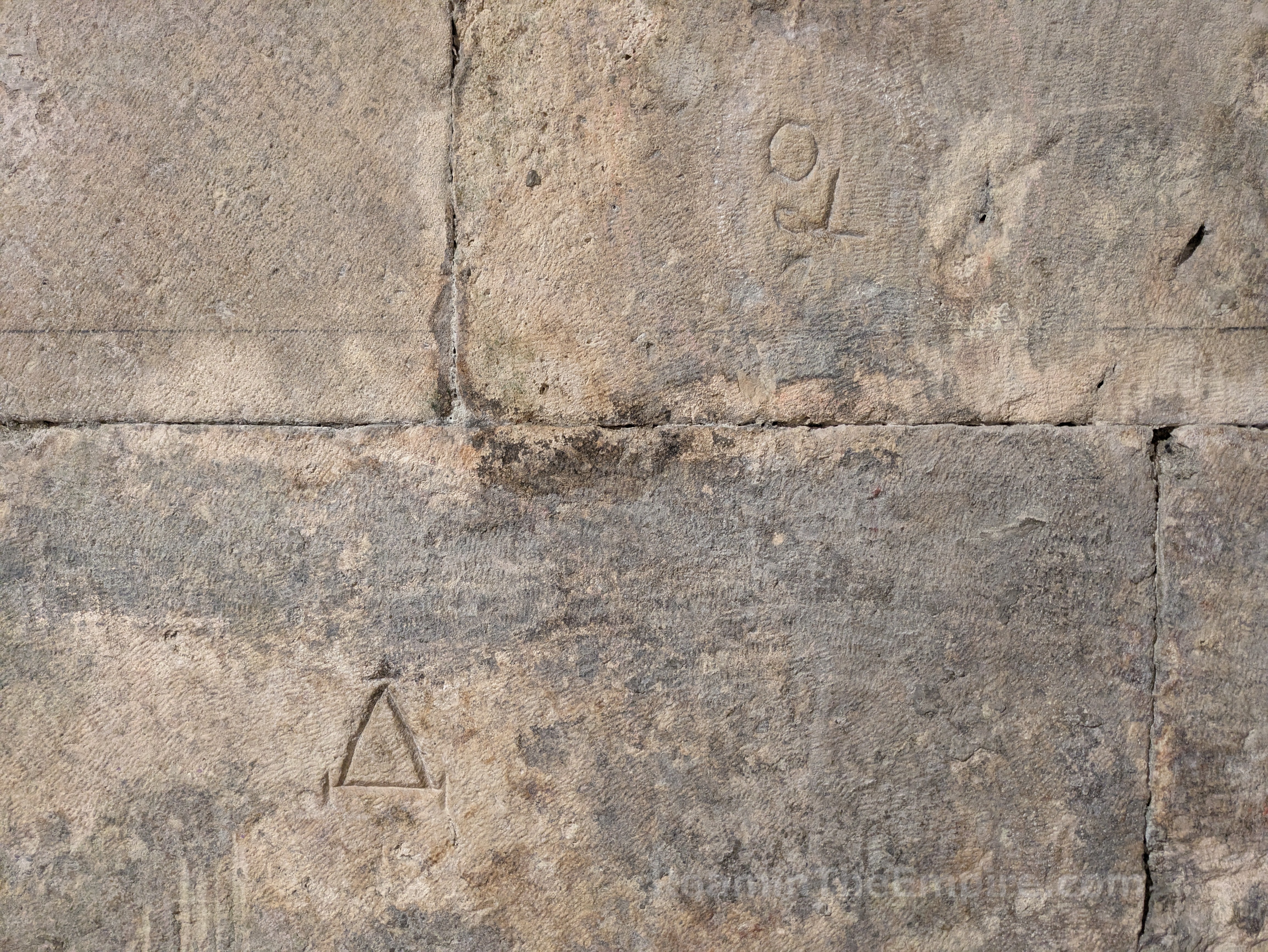
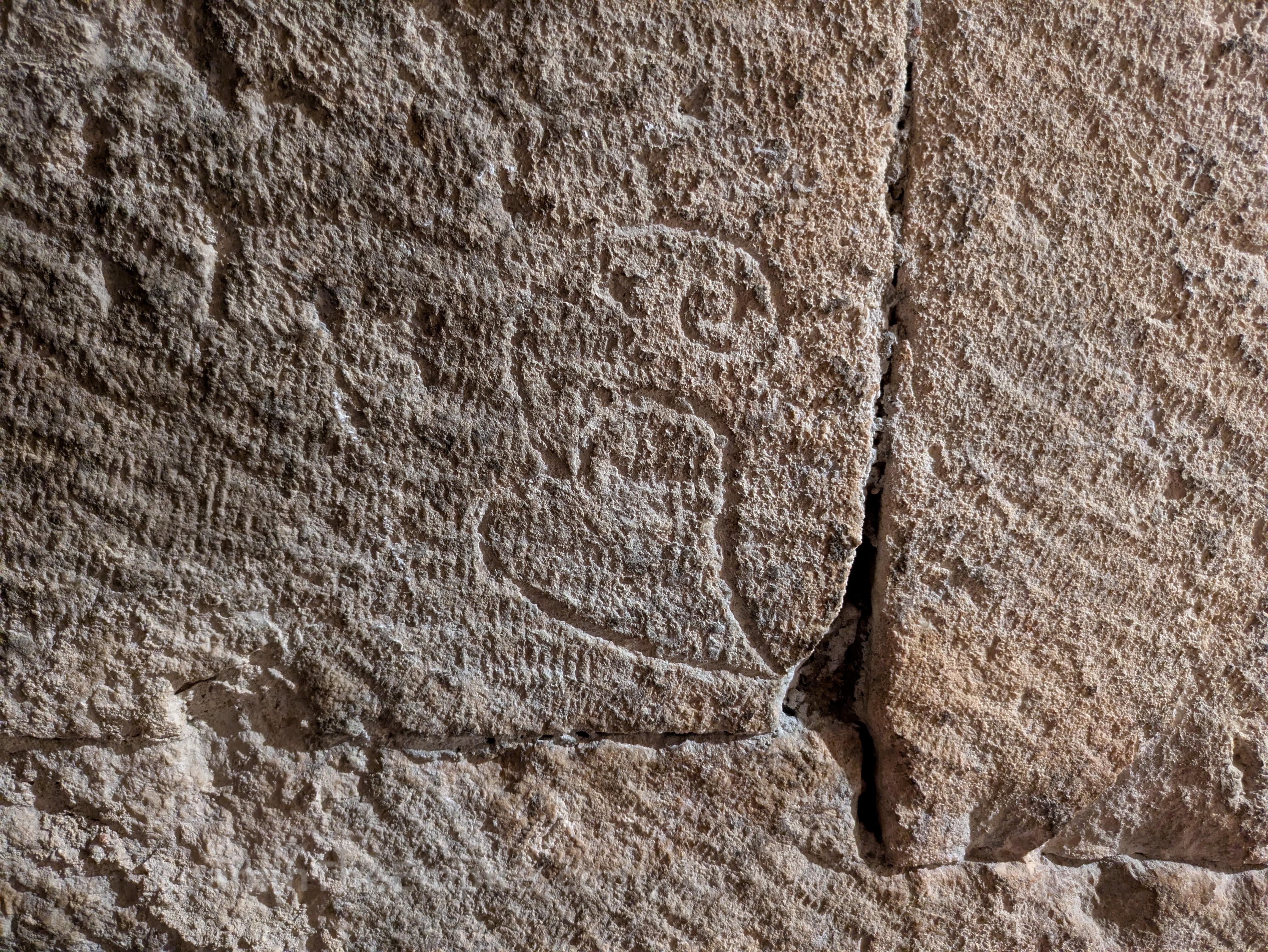
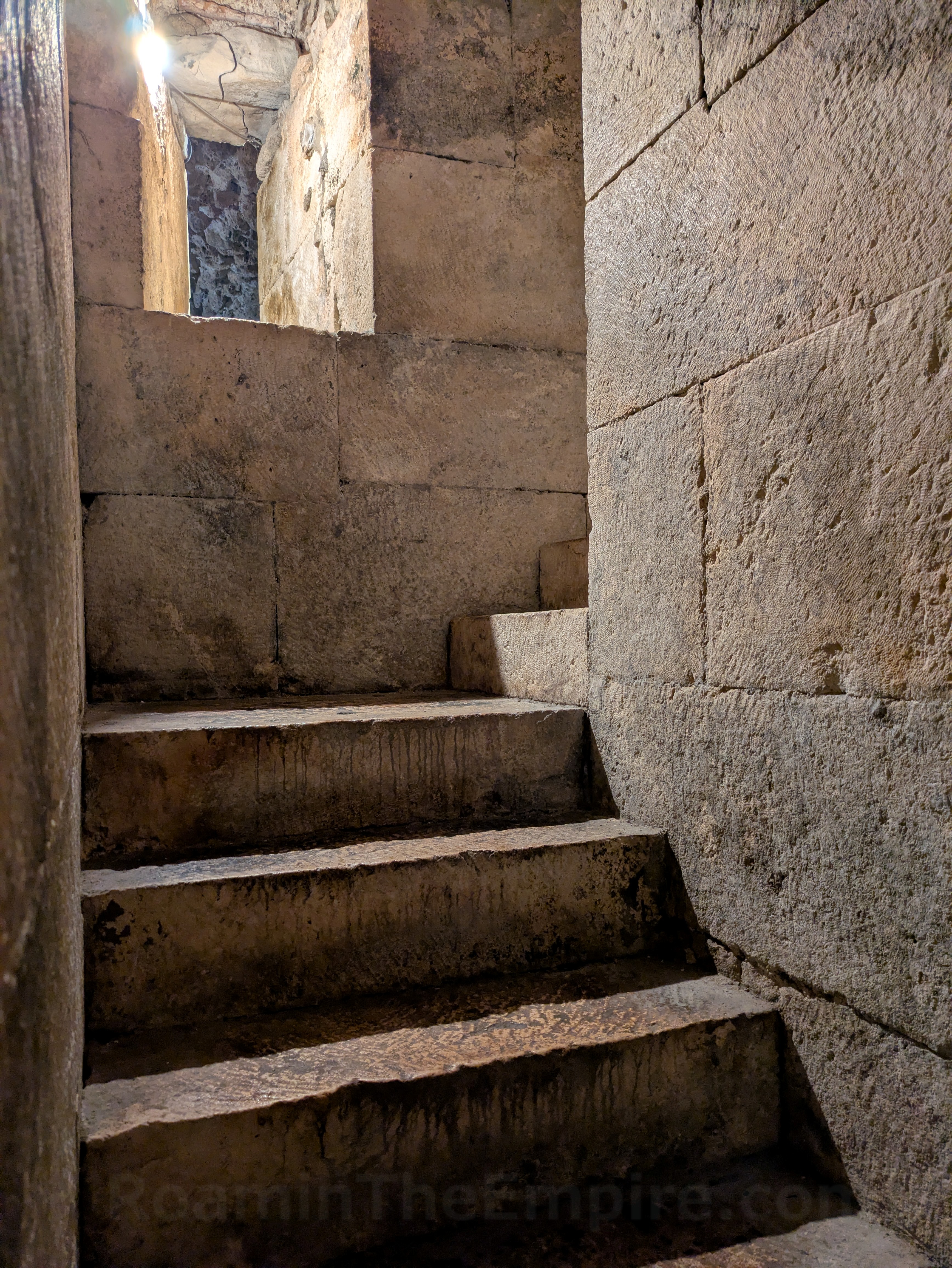
Throughout the basement area, visible mason marks are carved into some of the blocks. Some are very clear and at the time I visited, even circled in chalk. Others are a bit harder to find. I found at least 40 in the western section of the basement, and there are many etched into the blocks around corridor 7 as well as the adjacent hall (6a). These include Greek letters as well as pictographs like double axes and menorahs. Hall 6a has what is described as a triple nave structure, with the space being divided into three areas by two rows of three internal support pylons. The north end of the hall is apsidal, further reflecting a basilica-like floorplan. On either side of the apse, a stairway (which is partially accessible) led up to a more or less identical room that is thought to have served as the main reception hall for the residential area of the palace. Two doorways at the south side of the hall lead to the main hallway (hallway Y) along the south of the palace basements.
Continued in Spalatum – Part II
Sources:
Brcic, Inga Vilogorac. “Venus et Cybele. Matres Romanorum,” The Century of the Brave: Roman Conquest and Indigenous Resistance in Illyricum During the Time of Augustus and His Heirs. Stoljeće Hrabrih (Ed.), FF Press: Zagreb, 2018.
Bužančić, Radoslav. Diocletian’s Palace, 2009.
Bužančić, Radoslav. “Diocletian’s Palace, Restoration of the S–E Quadrant.” 50 Years (1972–2022) of the Convention Concerning the Protection of World Cultural and Natural Heritage, 2024.
Smith, William. Dictionary of Greek and Roman Geography. Walton & Murray, 1870.
Stillwell, Richard, William L. MacDonald, and Marian Holland. McAllister. The Princeton Encyclopedia of Classical Sites. Princeton, NJ: Princeton U Press, 1976.
Grant, Michael. A Guide to the Ancient World: A Dictionary of Classical Place Names. New York: Barnes & Noble Books, 1997.