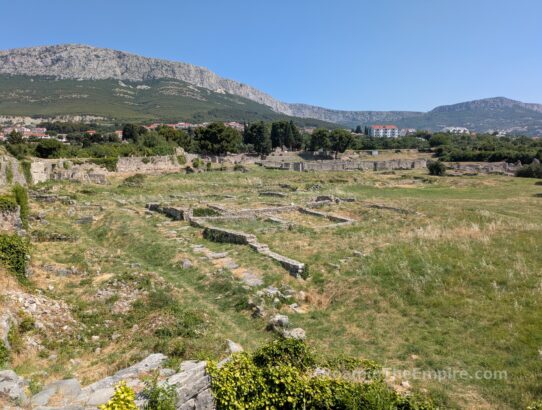


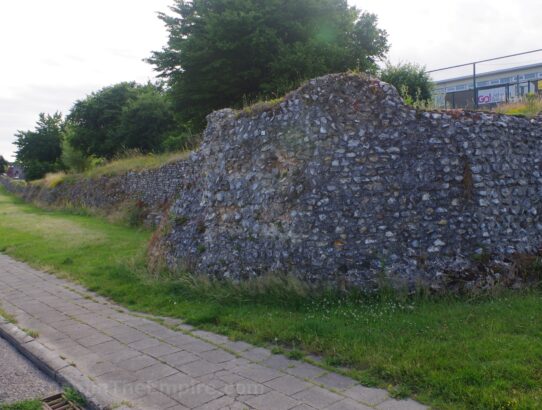
Aduatuca Tungrorum, Gallia Belgica

Most Recent Visit: June 2022 While the Roman settlement of Aduatuca Tungrorum (or Atuatuca Tungrorum) seems to have been established around 10 BCE at the site of modern Tongren in Belgium, a separate settlement of Aduatuca (typically differentiated as Aduatuca Eburonum) existed in at least the middle of the 1st century BCE. The settlement of…

Read More
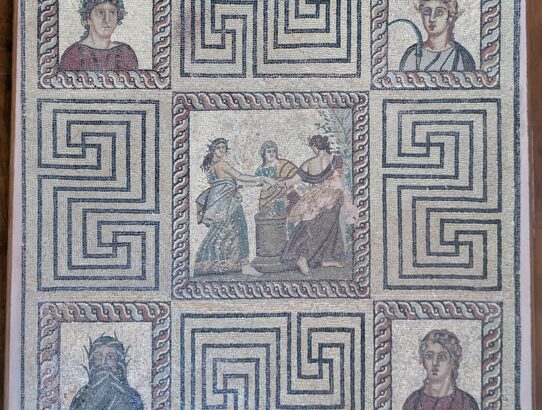
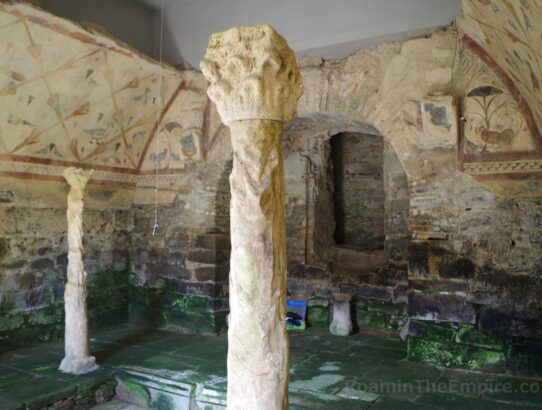
Kisamos, Creta – Part II

Continued From Kisamos Part I The next site is a bit of a zig zag a few streets over to the southeast on Georgiakaki, less than 5 minutes away from the East Roman Baths. At the corner of Polirrinias and Georgiakaki is the Metropolitan Church of the Annunciation (Μητρόπολη Κίσσαμος Ναός Ευαγγελιστριας). Though I couldn’t…

Read More

Lucus Augusti, Hispania Tarraconensis – Part II

Continued From Lucus Augusti Part I Just on the other (west) side of the cathedral from the Piscina Romana, inside the Porta Santiago and the west side of Praza Pío XII, is the Museo Universitario a Domus do Mitreo. Located at Praza Pío XII 3, the museum and archaeological area is open Tuesday through Saturday…

Read More

Spalatum, Dalmatia – Part III

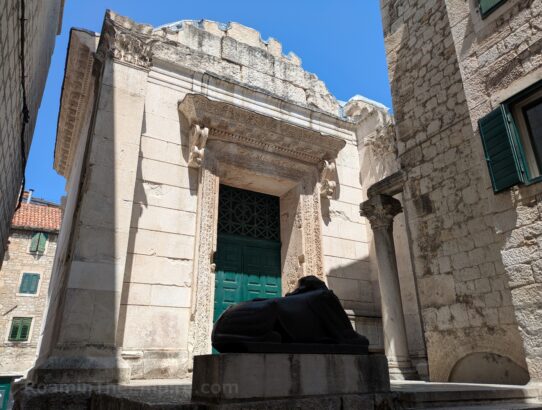
Continued From Spalatum – Part II At the southwest corner of the peristyle is the Skočibušić-Lukaris Palace, rebuilt in the 15th century CE but with an uncertain original construction date. The building now houses the Treasury of the Split Cathedral as well as the ticket office for a number of sites managed by the cathedral….

Read More

Aptera, Creta – Part II

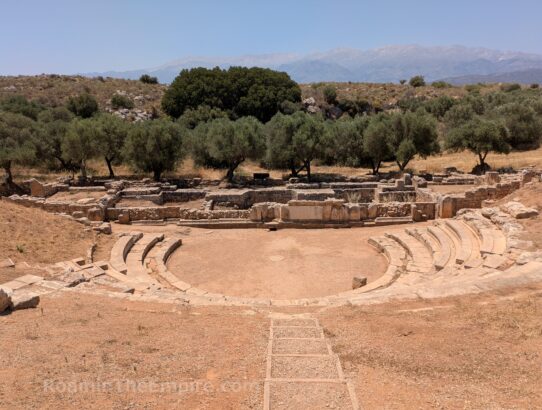
Continued From Aptera Part I The cisterns that supplied the Baths I are located just a few meters from the south end of the bathing complex, though the remnants of that part of the baths are sparse. These covered cisterns are perhaps the main attraction of the site, with the vaulted roofs of the three…

Read More

Aptera, Creta – Part I

Most Recent Visit: June 2025 The ancient city of Aptera (or Aptara) was located on a strategic plateau above the south side of the mouth of the Souda Bay in northwestern Crete. One derivation given for the name is from the mythological singing contest between the Sirens and the Muses that was said to have…

Read More

Carsulae, Umbria – Part II

Continued From Carsulae, Umbria Part I Standing at the west end of the forum is seemingly a single building; the so-called Republican Temple. This has commonly been identified as the Capitolium. Though it appears to be a single edifice, there are actually two buildings constructed on a single podium. While the temple at the south…

Read More

Salona, Dalmatia – Part IV

Continued From Salona, Dalmatia – Part III While the majority of the archaeological remains of ancient Salona are contained within the archaeological park, there are a few things worth seeing outside the park as well. The easiest one to get to from the entrance of the archaeological park Marusinac cemetery complex. Marusinac is located about…

Read More

Salona, Dalmatia – Part III

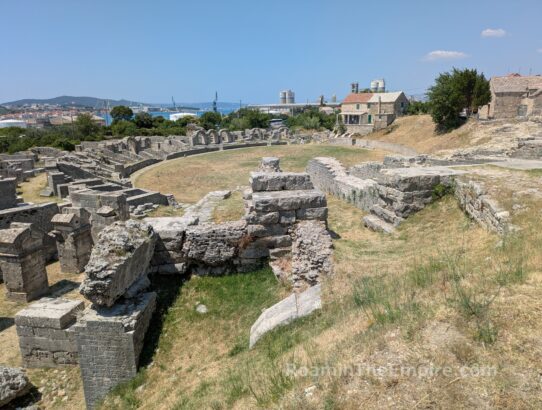
Continued From Salona, Dalmatia – Part II. Along the exterior (east side) of the wall from the Porta Caesarea for about 70 meters north are the remains of portions of some residential insulae dating to the 3rd century CE. The pavement of a cardo running relatively parallel to the walls can be seen and the…

Read More

Salona, Dalmatia – Part I

Most Recent Visit: June 2025 Prior to the arrival of the Romans, the area of Colonia Martia Iulia Valeria Salona was part of the territory of the Dalmatae, an Illyrian tribe whose territory and name would later become the basis for the Roman province and modern region of Dalmatia. The Dalmatae seem to have broken…

Read More