


Most Recent Visit: July 2022
The Roman settlement of Lucus Augusti (also sometimes called Lucus Asturum) seems to have been founded sometime after the conclusion of the Cantabrian Wars in 19 BCE. One of the primary belligerents in the war were the Gallaeci, a broad tribal group that occupied the far northwestern corner of the Iberian Peninsula, roughly equivalent to the modern region named for the tribe; Galicia. In antiquity, the region was also named after the Gallaeci as Gallaecia (or Callaecia). After the capture of the chief settlement of the Capori (a tribe of the Gallaeci) by Paullus Fabius Maximus, likely located nearby, Lucus Augusti was founded by Maximus. Evidence suggests a legionary camp predates the establishment of the colony, probably used during the campaigns of the Cantabrian Wars or perhaps even earlier, as Roman incursions into the area date back to about the middle of the 1st century BCE.
After the establishment of the colony of Lucus Augusti along the banks of the Minius (modern Miño River), the settlement became the seat of the conventus lucensis, one of the three conventus that the region of Gallaecia was subdivided into. The territory was initially included in the province of Lusitania during Marcus Vipsanius Agrippa’s division of Hispania in 27 BCE, but was transferred to Hispania Tarraconensis in Augustus’ revision shortly thereafter. By the 1st century CE, Pliny the Elder would note that the population of the conventus lucensis contained 166,000 freemen and 16 tribal groups. Lucus Augusti was situated along the road between Bracara Augusta (modern Braga) and Asturica Augusta (modern Astorga), a vital route through the gold mining region.
In the early 3rd century CE, Caracalla reorganized the divisions of Hispania, and Gallaecia was briefly split off from Hispania Tarraconensis along with the region of Asturica into their own province. Hispania Tarraconensis was reestablished around 238 CE. Starting around 260 CE, Gothic incursions necessitated the construction of the now-famous fortifications of the city, built in the years following the start of the incursions. Around 293 CE, during Diocletian’s reforms under the tetrarchy, Gallaecia was once again split off into its own province, with Lucus Augusti being one of the chief towns. By 411 CE, the city and region had been conquered by the Germanic Suebi, who established the Kingdom of Galicia.
Getting There: Lucus Augusti is today the Spanish city of Lugo. Lugo is a bit out of the way, as is much of the region. The most accessible airport in the region is the Santiago–Rosalía de Castro Airport near Santiago de Compostela, which hosts flights from select destinations in Europe. The airport is about an hour by car or select buses (though other buses take closer to two hours). There are typically around 10 departures a day for Lugo from the airport (schedules and info here) with prices around 10 Euros for a one way trip. Alternatively, there are a few train departures per day from Madrid, which take between 4 and 5 hours and cost between 50 and 100 Euros depending on the train.
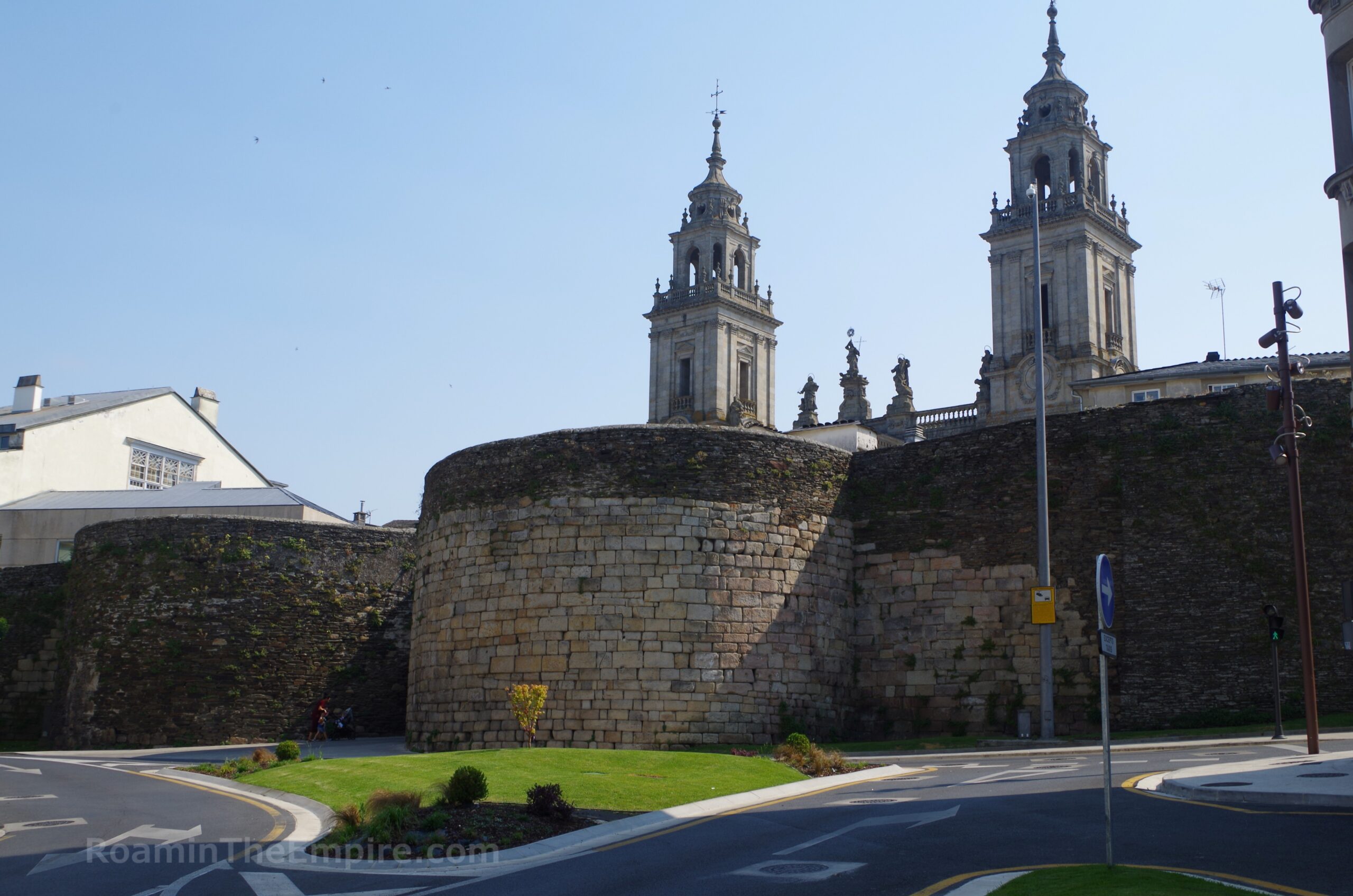
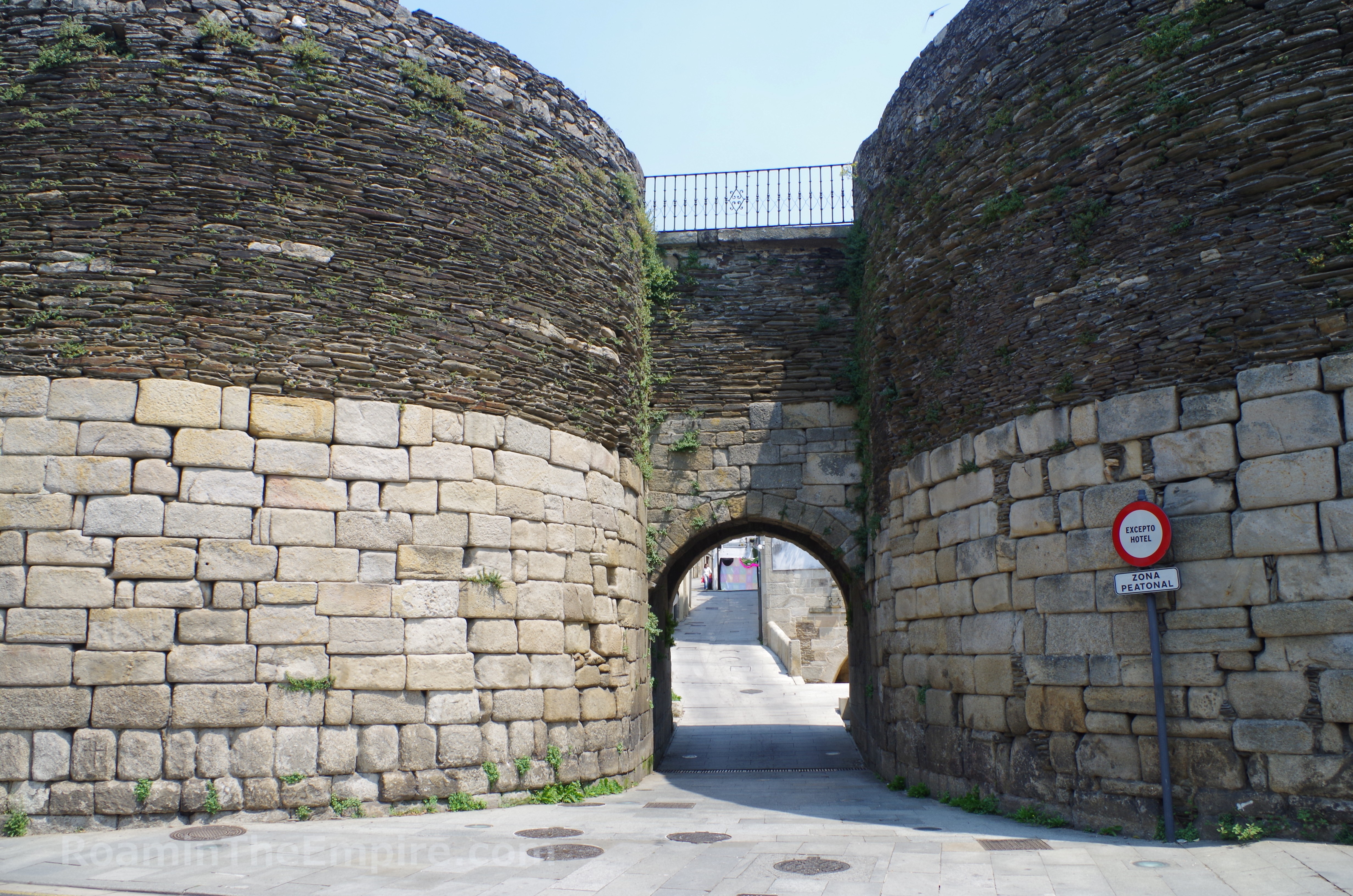
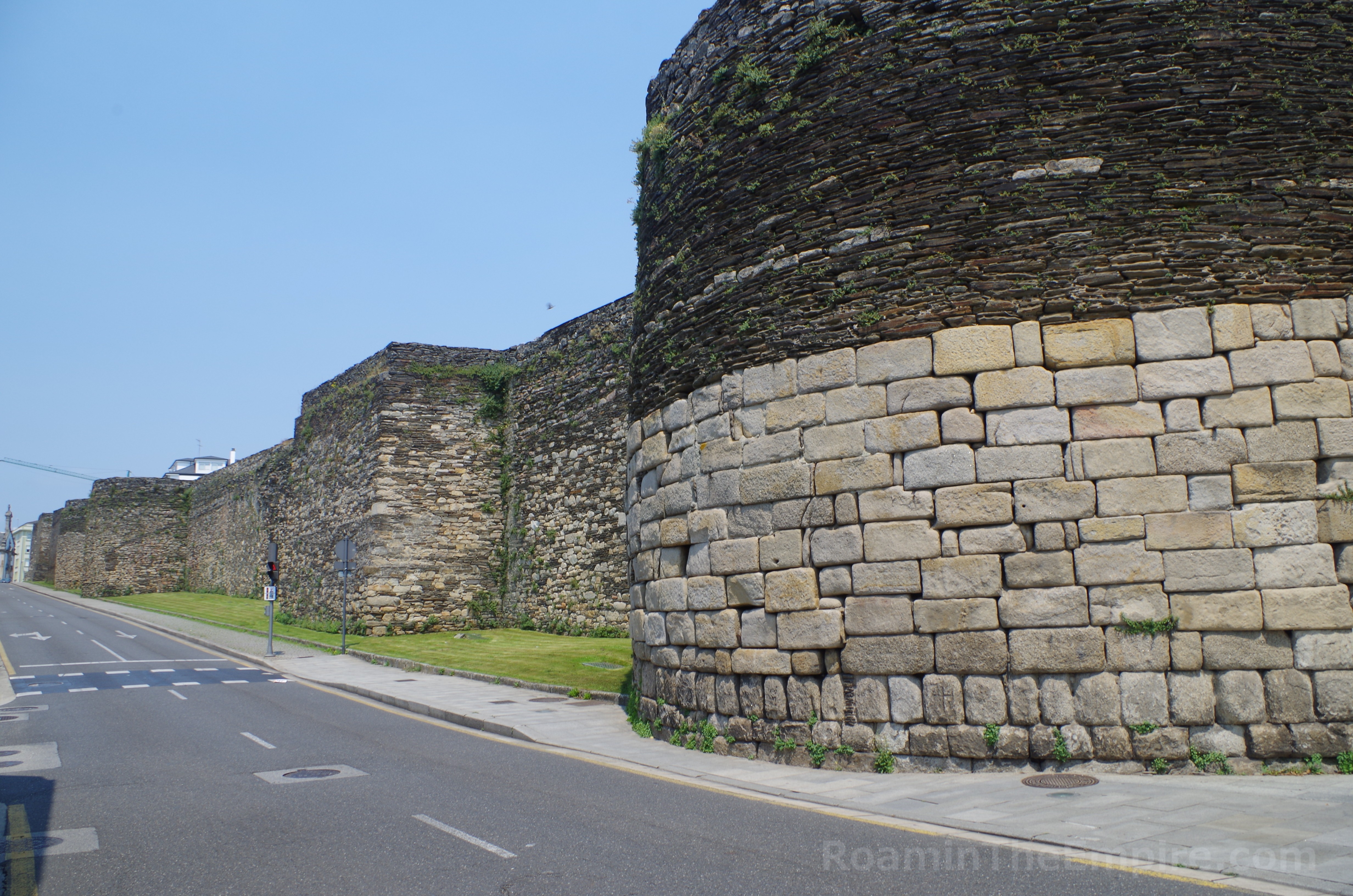
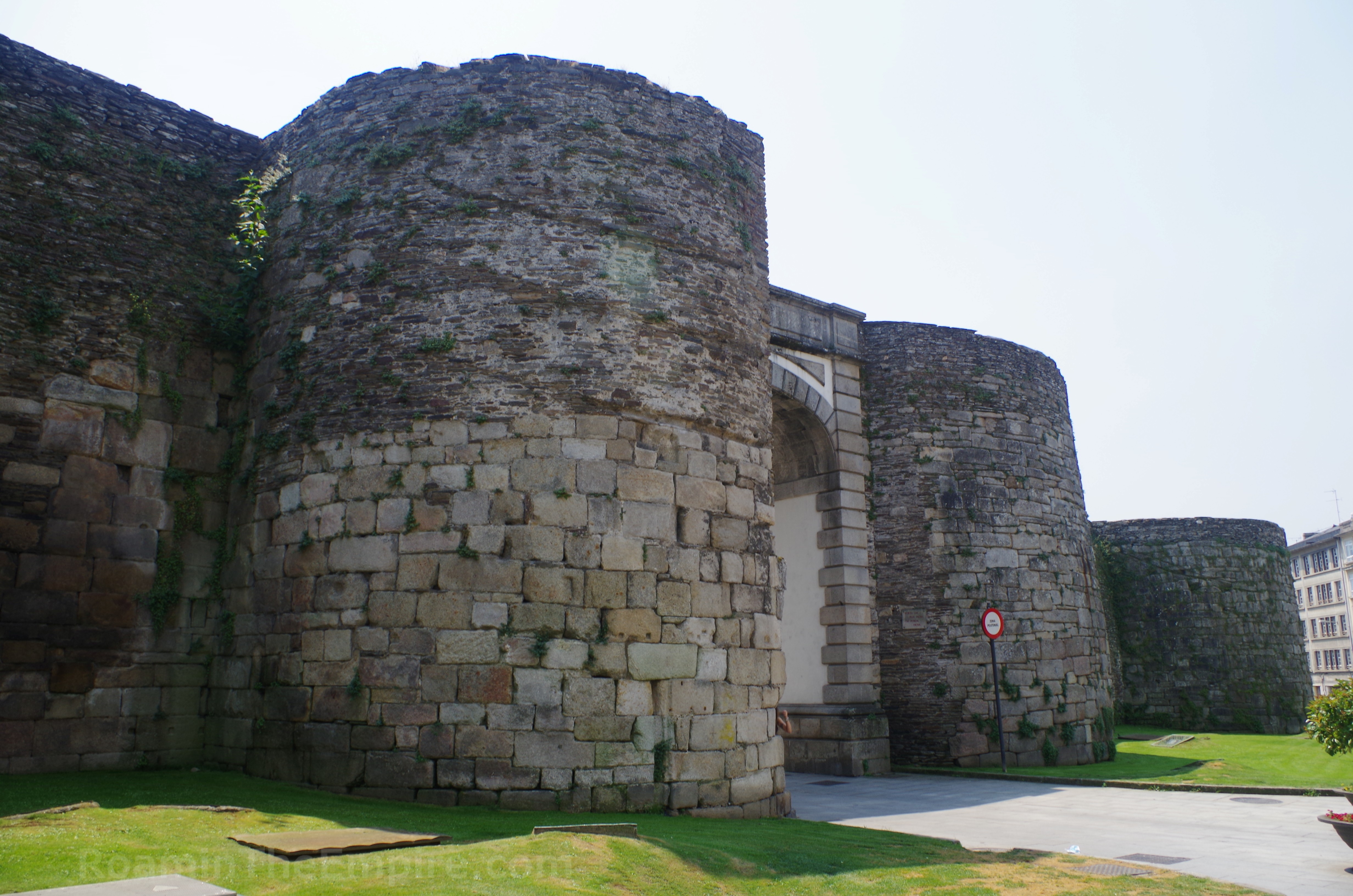
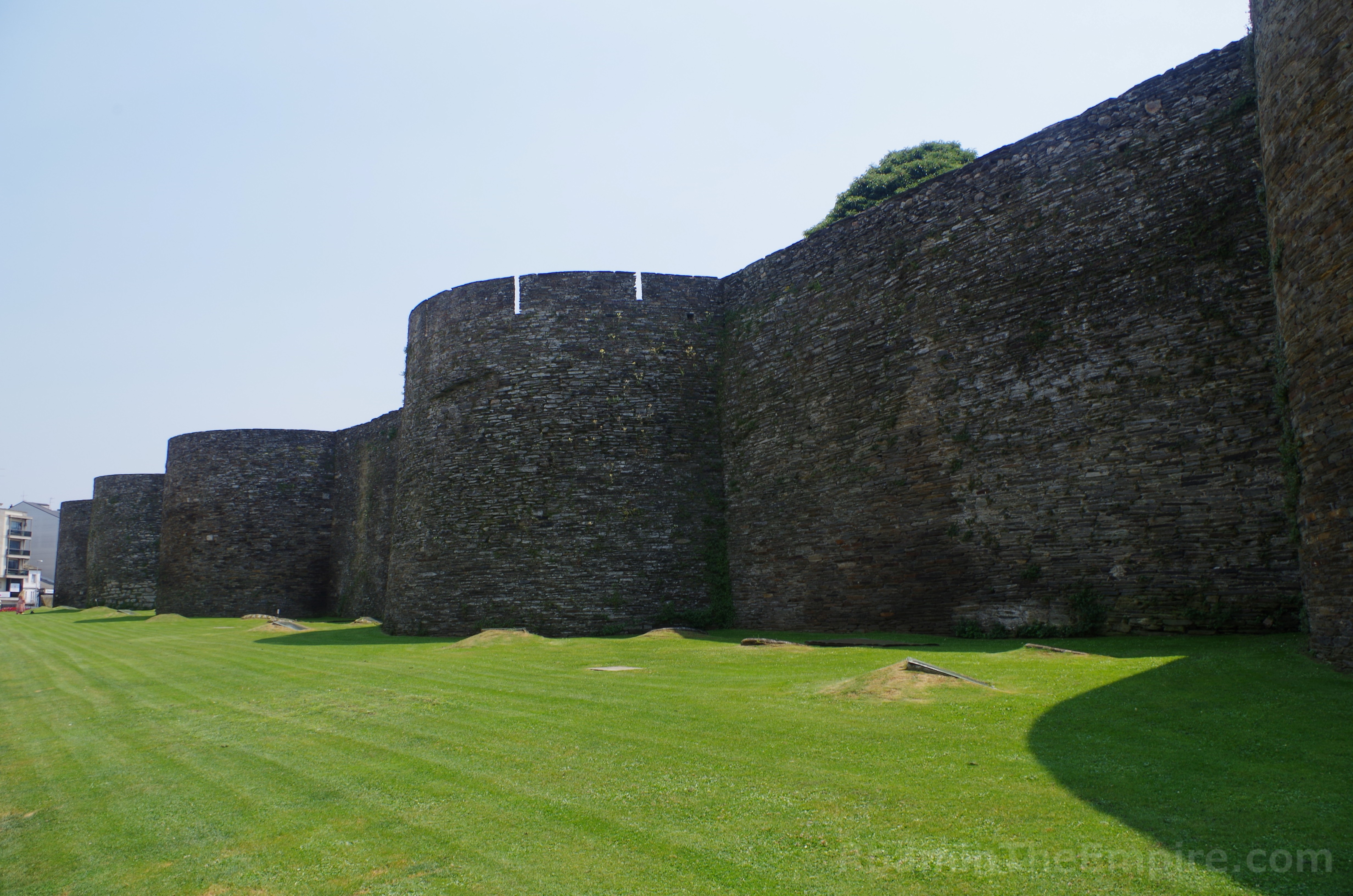
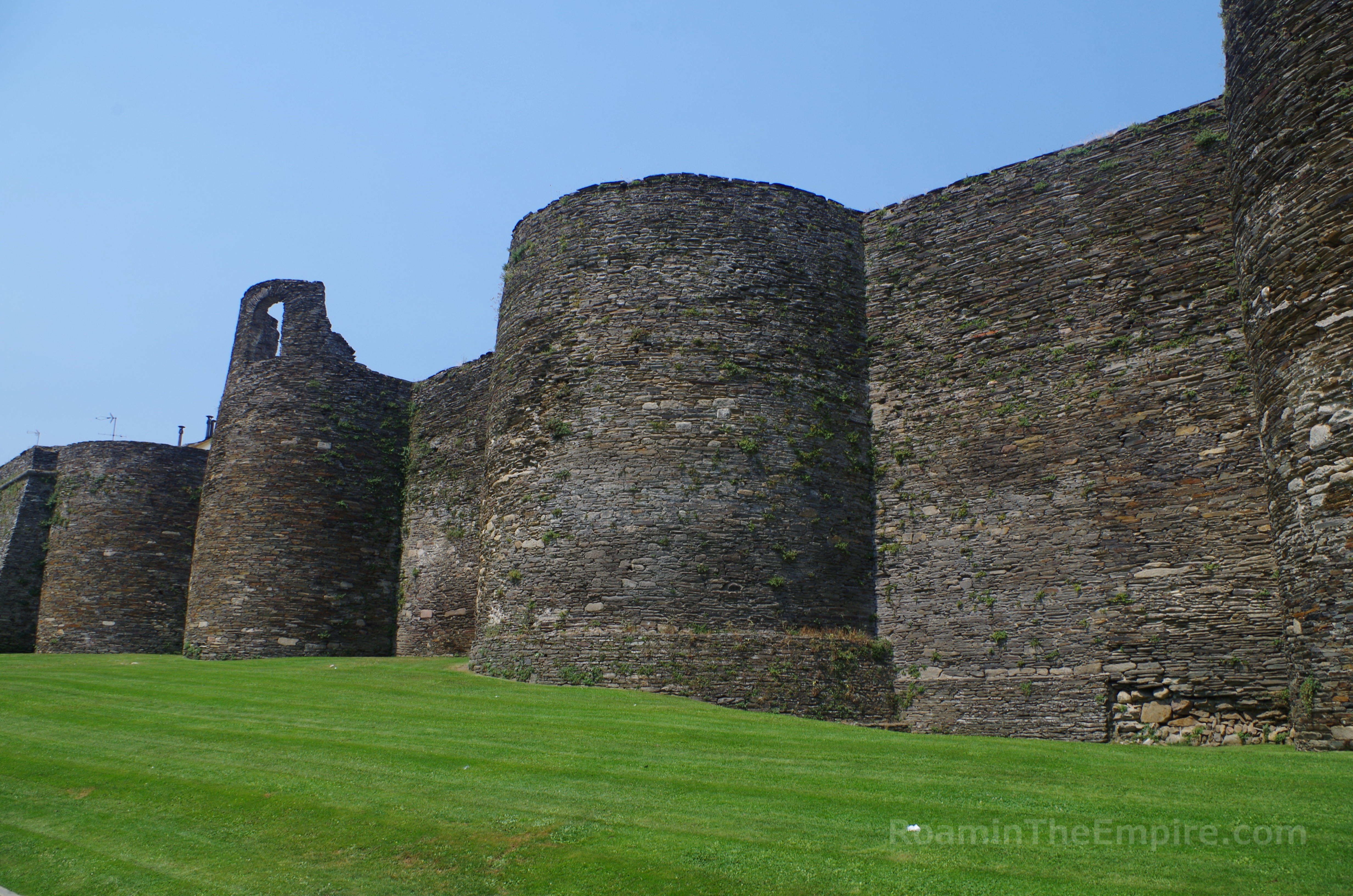
The star attraction of modern Lugo and ancient Lucus Augusti are the intact fortification walls that enclosed the ancient city and now the historic center of the modern city. While there have been repairs and interventions over the centuries, the original course and form of the Roman walls remains largely the same. They are typically considered to be the most complete set of Roman fortification walls in Western Europe. These walls were constructed roughly between 260 CE and 280 CE. The total length of the circuit comes out to a little more than 2.1 kilometers and encloses nearly 35 hectares. The average thickness of the fortifications is about 4 meters, though some sections are as thick as 7 meters. The height of the walls is between 8 and 12 meters.
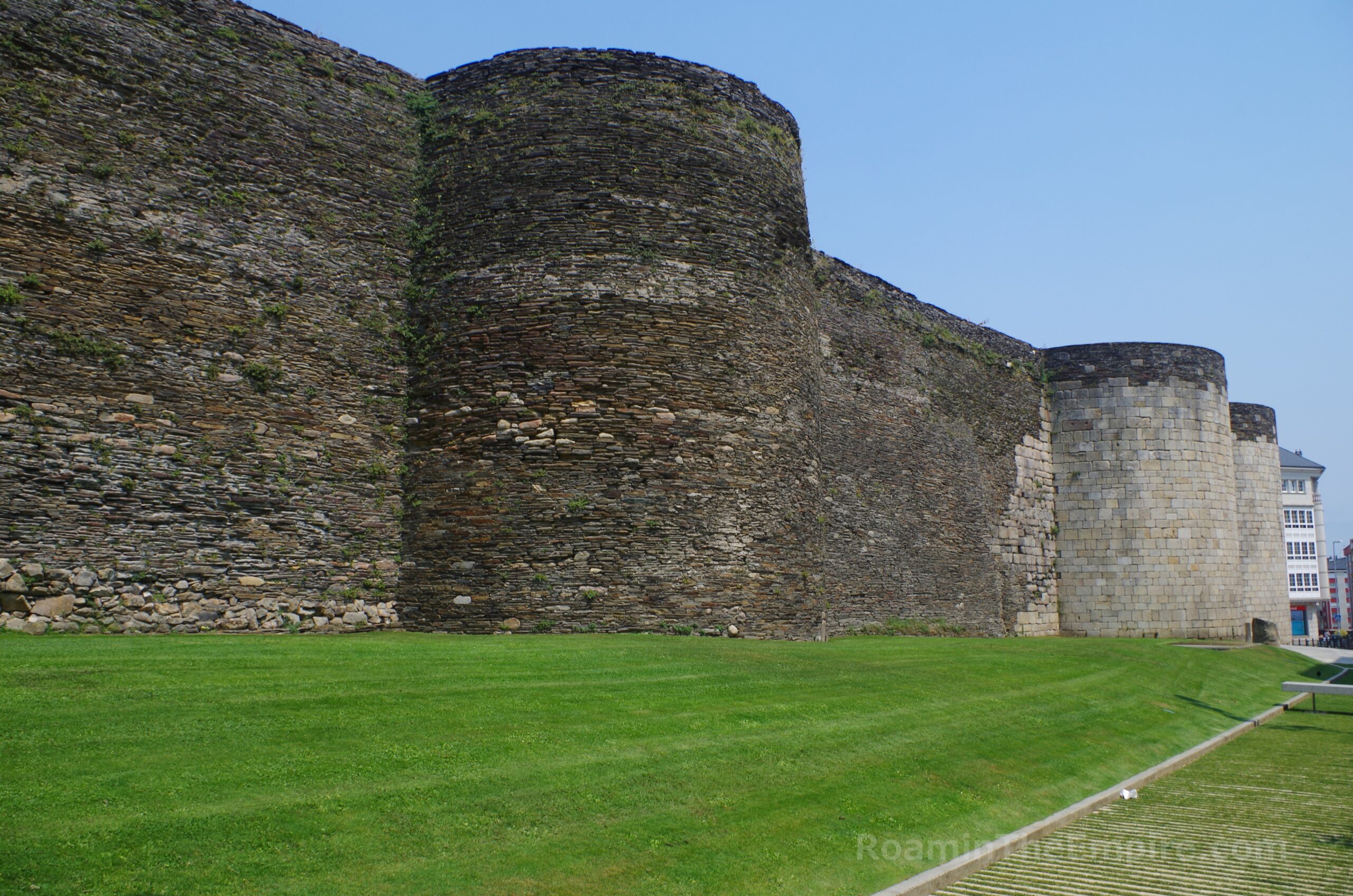
There was a total of 5 gates in the Roman circuit of the walls, though an additional 5 gates were added in the 19th century CE. The original gates were located at the Porta Miña, Porta Falsa, Porta de San Pedro, Porta Nova, and Porta de Santiago. The fortifications included a total of 85-90 towers (depending on interpretation) at irregular intervals and at least 21 staircases gave access to the walls from inside the city. The appropriately named Ronda da Muralla rings around the exterior of the walls; a street that becomes a pedestrian walkway along the southern walls, which makes the exterior of the walls and the towers wholly accessible. The interior facing of the walls are mostly inaccessible except for a few places. The top of the walls is accessible at a few points, most notably just inside the Porta Santiago opposite the cathedral. Of particular note, at the Porta Nova, just inside the gate, the word FVNDAM, found in an inscription in the foundations of the gate, is preserved in the modern pavement.
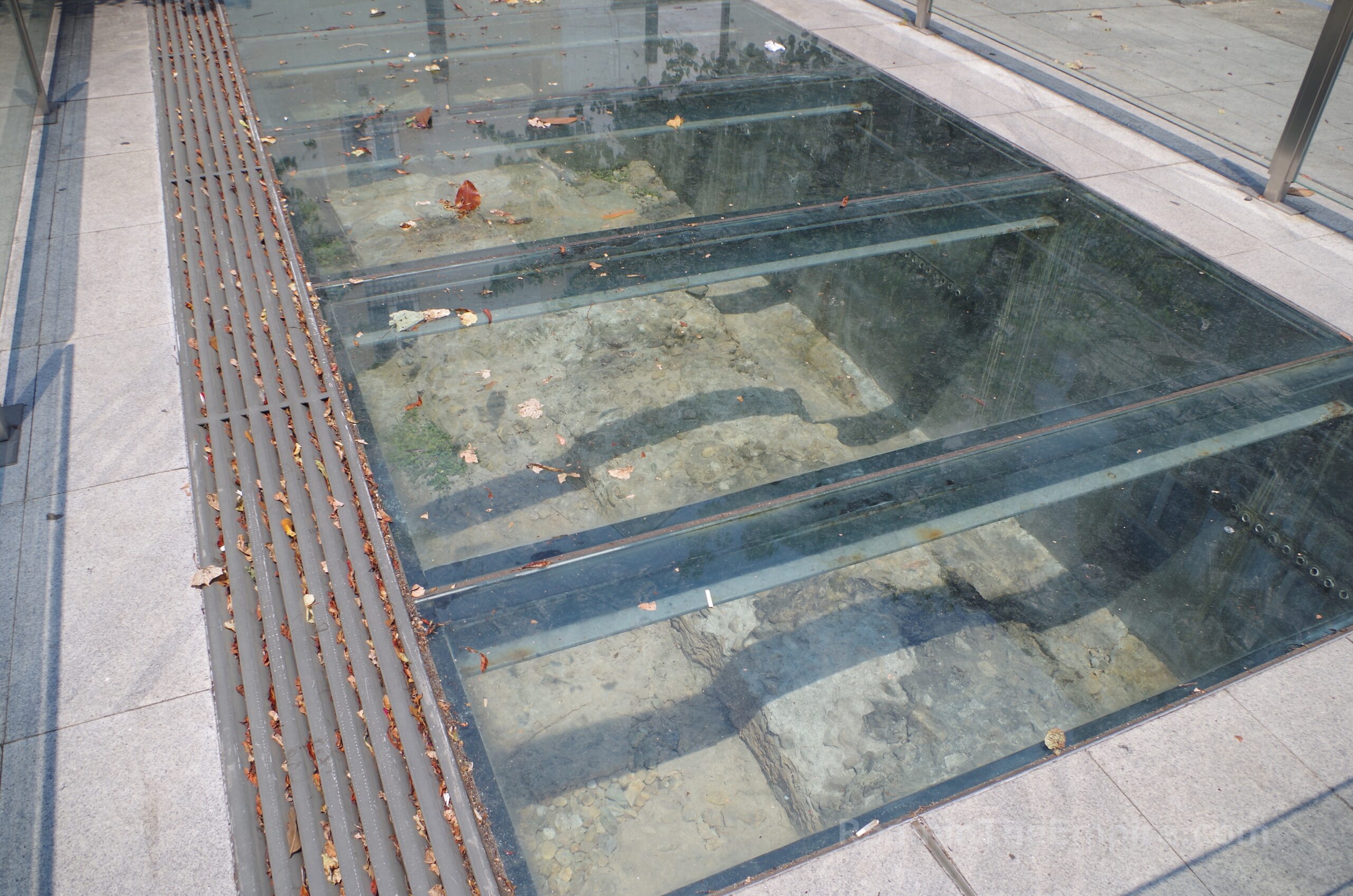
Inside the Porta Falsa, on the northeast side of the walls is the Praza de Ferrol, the Galician equivalent of a plaza. Leading off the southeast end of the praza is Rúa San Marcos, which runs more or less as another plaza in front of the large regional government offices. Toward the north end of this plaza is a small area under glass where excavations have been carried out. Under the glass are a few meters of the remnants of an aqueduct that supplied Lucus Augusti. The aqueduct was constructed in the 1st century CE and is believed to have only been about 2 kilometers long. The source is thought to be around Rúa Flor de Lirio with the castellum aquae about 200 meters southeast in the vicinity of Praza de Santo Domingo. Unfortunately, the glare of the sun on the glass during the day doesn’t do a lot for visibility, and it can be dirty, further obscuring what lies beneath. There’s a sign nearby with information in Galician, Spanish, and English.
Down Rúa San Marcos and to Praza de Santo Domingo, and then west down Rúa Antón Fraguas about 225 meters to Plaza de la Soledad is the Museo Provincial de Lugo. The museum is Tuesday through Saturday from 10:00 to 13:30 and 16:00 to 20:30. On Sunday it is open between 10:00 and 15:00. It is closed on Monday. There is supposedly a distinction between summer (June 1 to October 30) and winter hours, but they’re posted as being exactly the same. Admission is free.
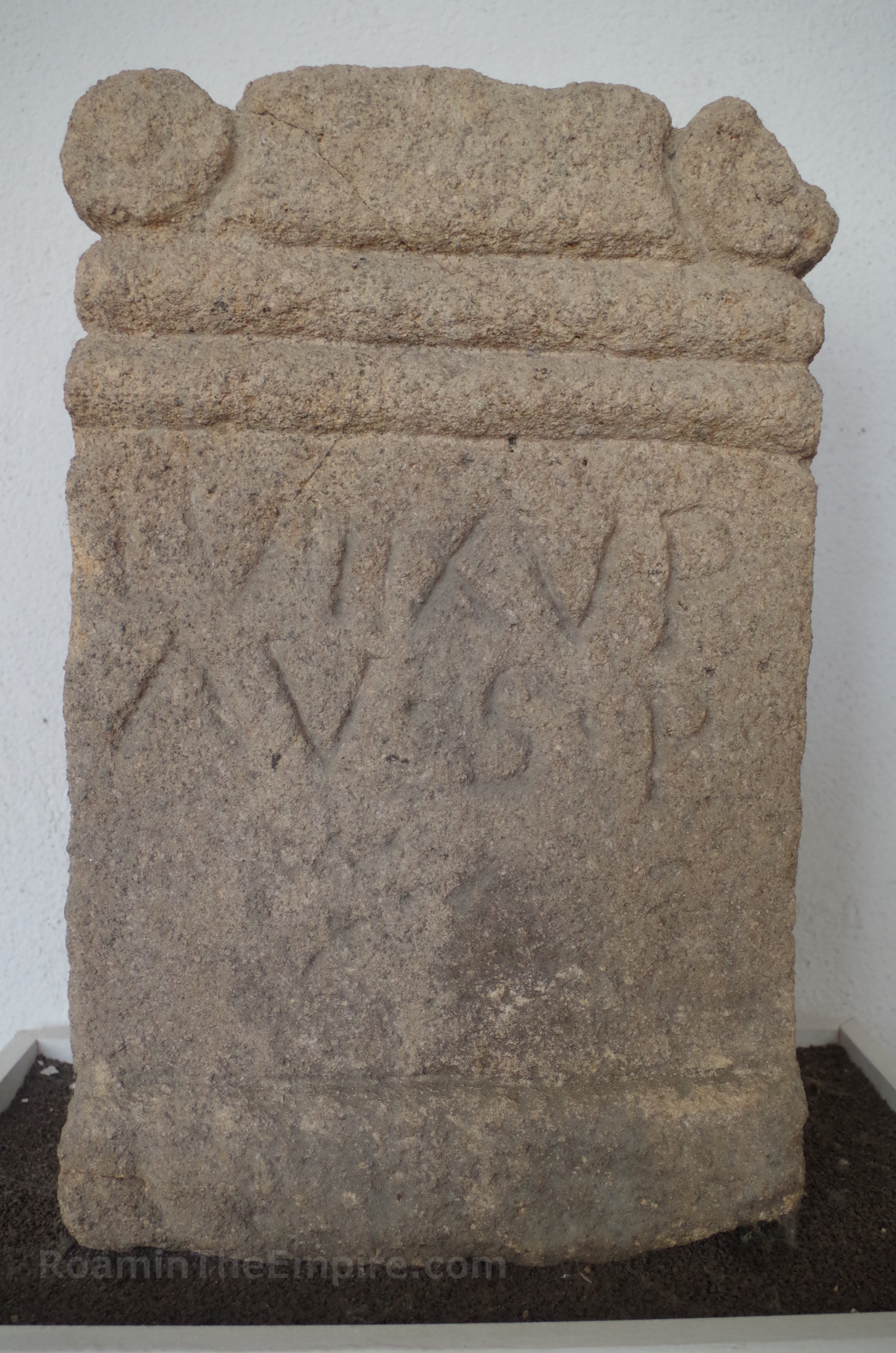
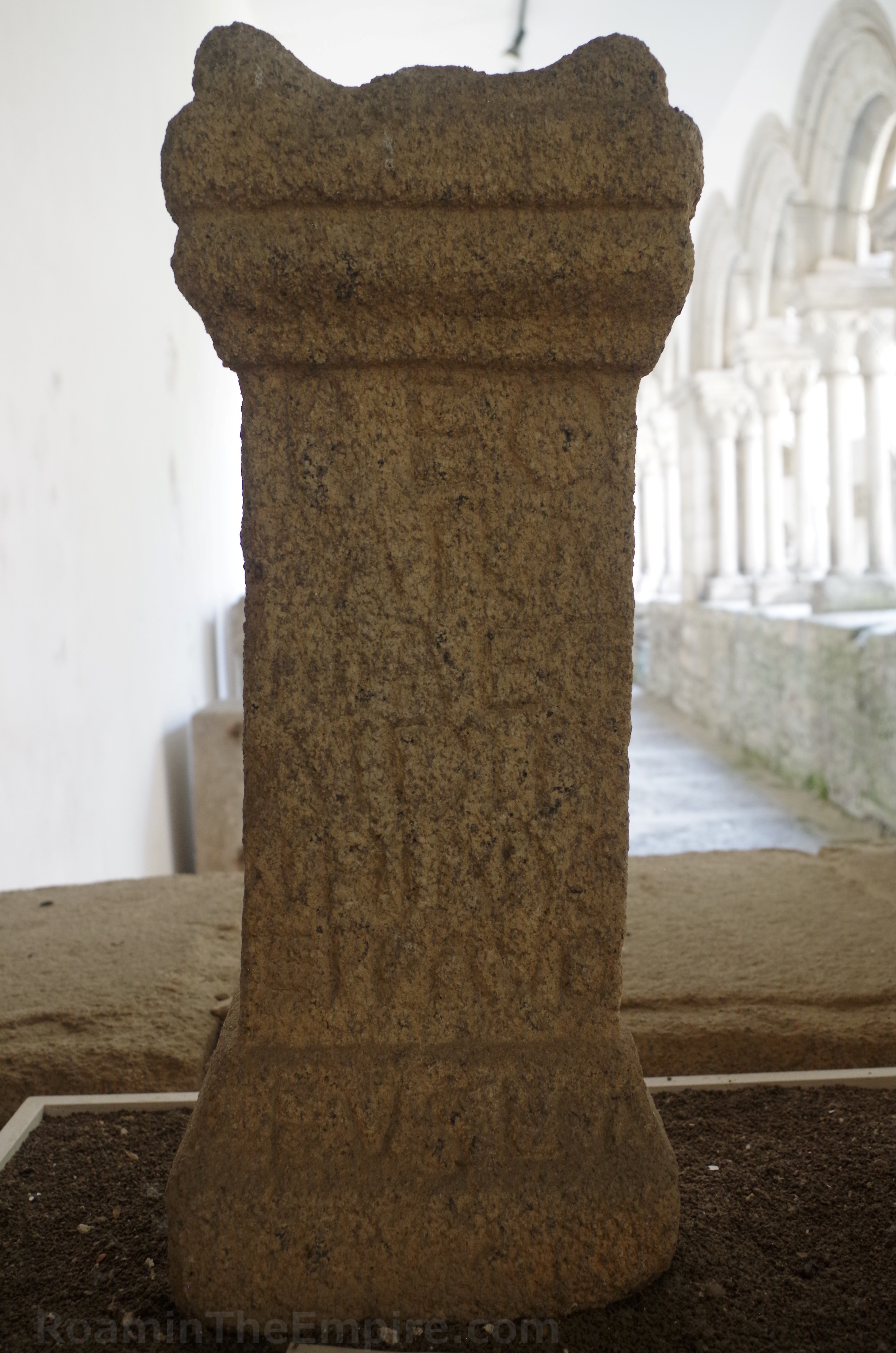
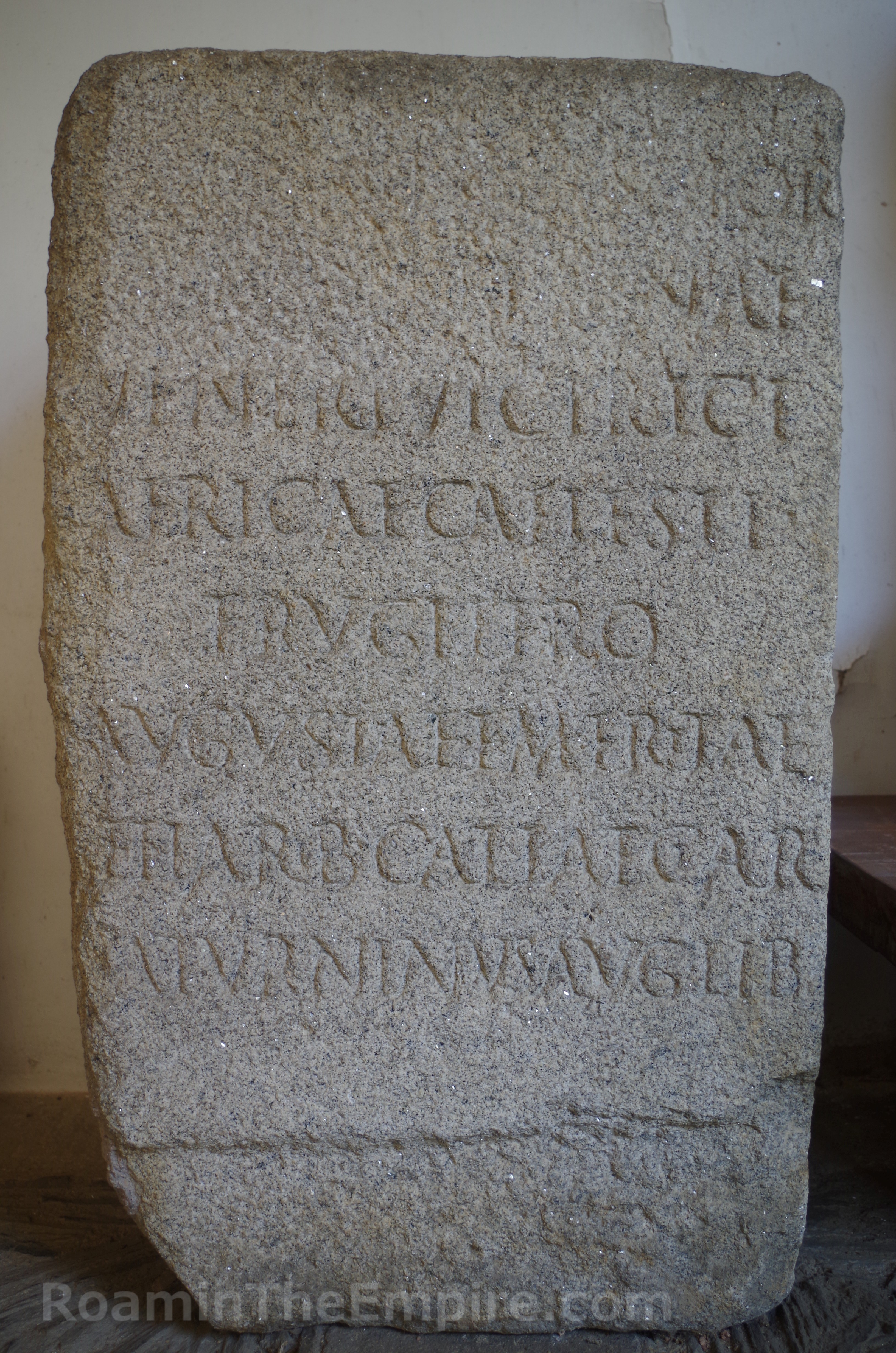
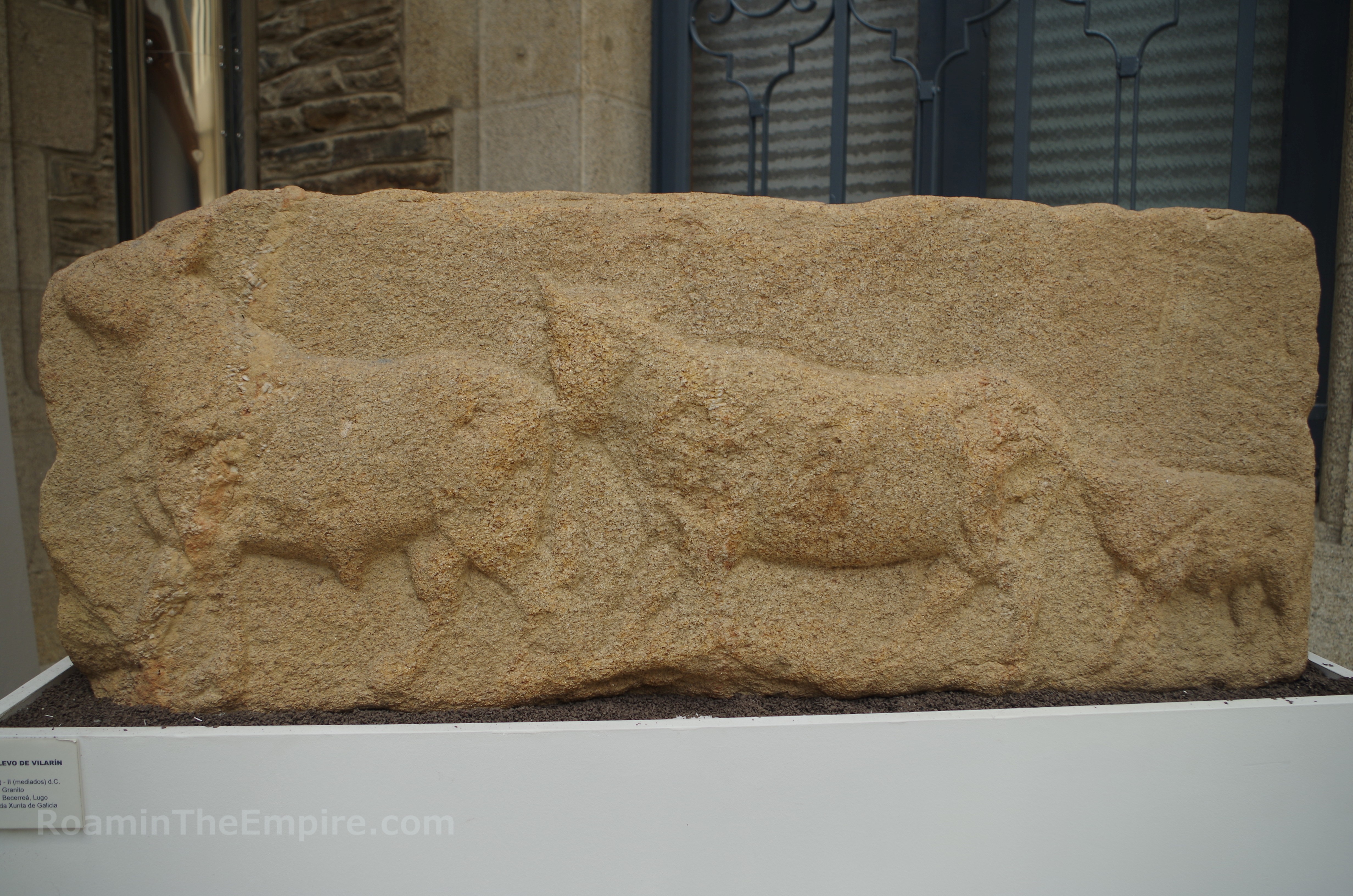
The Museo Provincial de Lugo, housed in a 15th century CE monastery, is more of a general historical and ethnographic museum rather than a strictly archaeological museum, so the collection includes a wide variety of material. It does, however, have a reasonable if not small collection of Roman and pre-Roman artifacts. The bulk of this collection is inscriptions and inscribed altars, split relatively evenly between funerary inscriptions and those dedicated to Roman or Celtic deities. There are some small finds that include terracotta lamps and some jewelry as well.
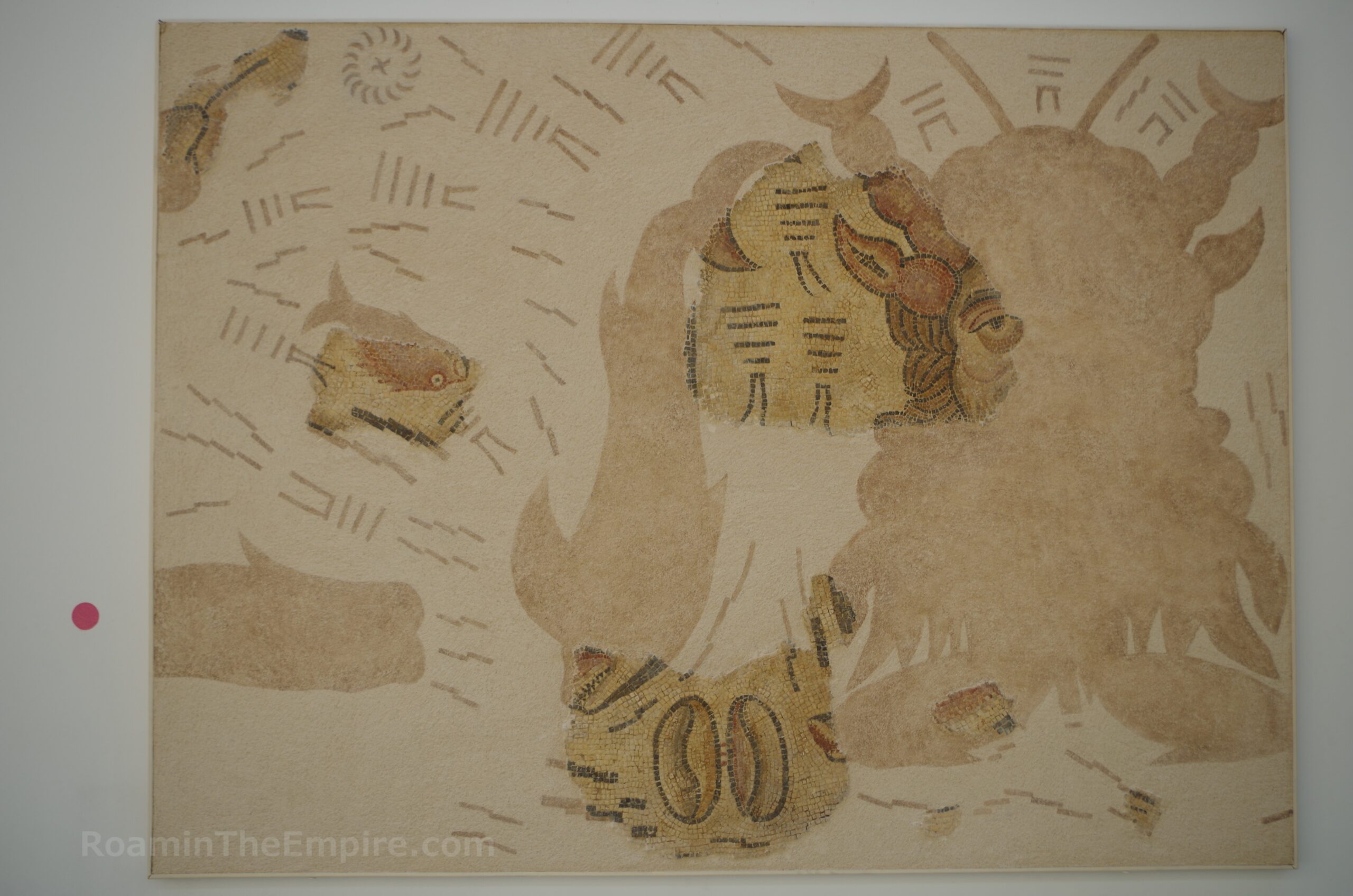
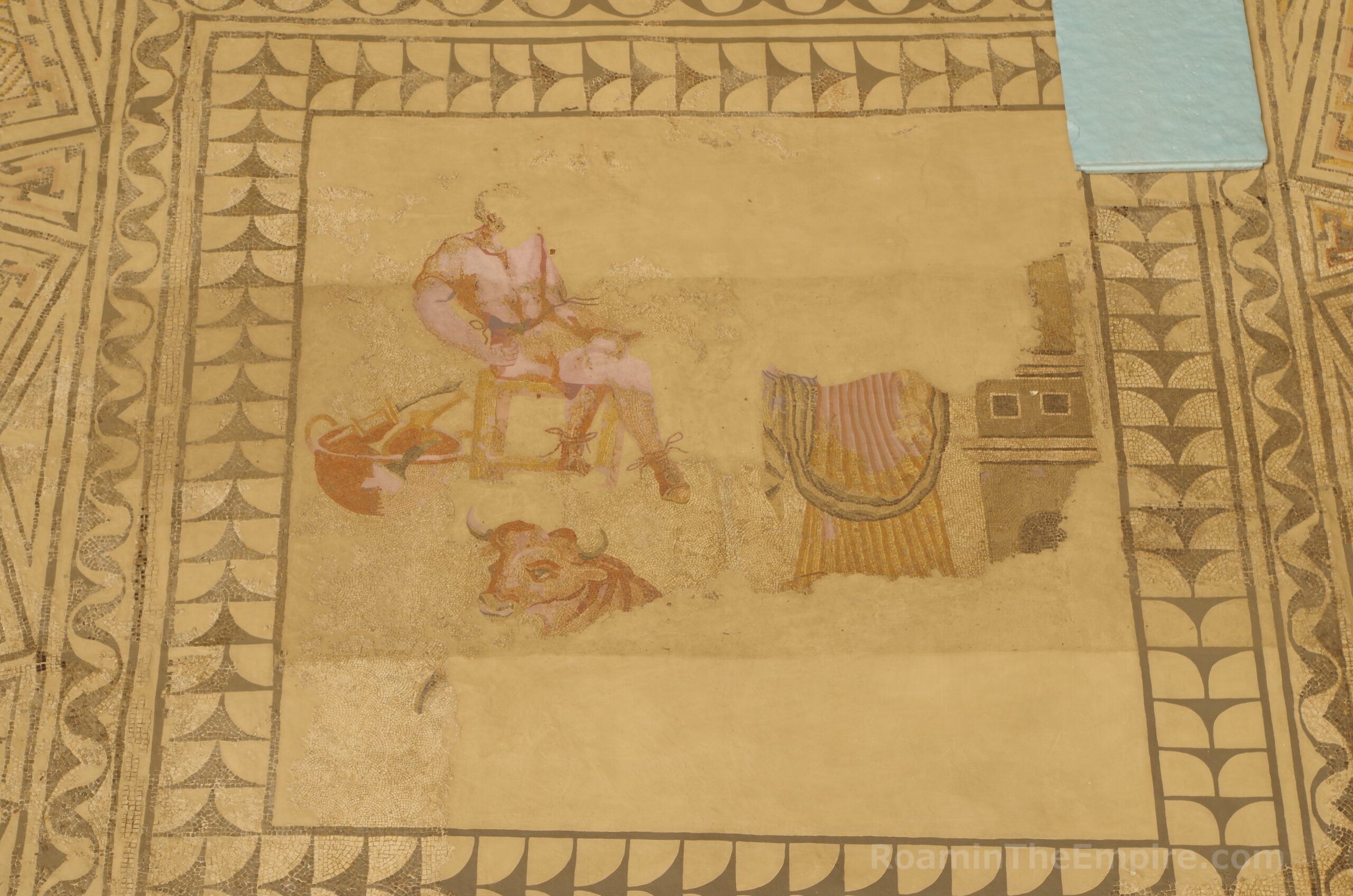
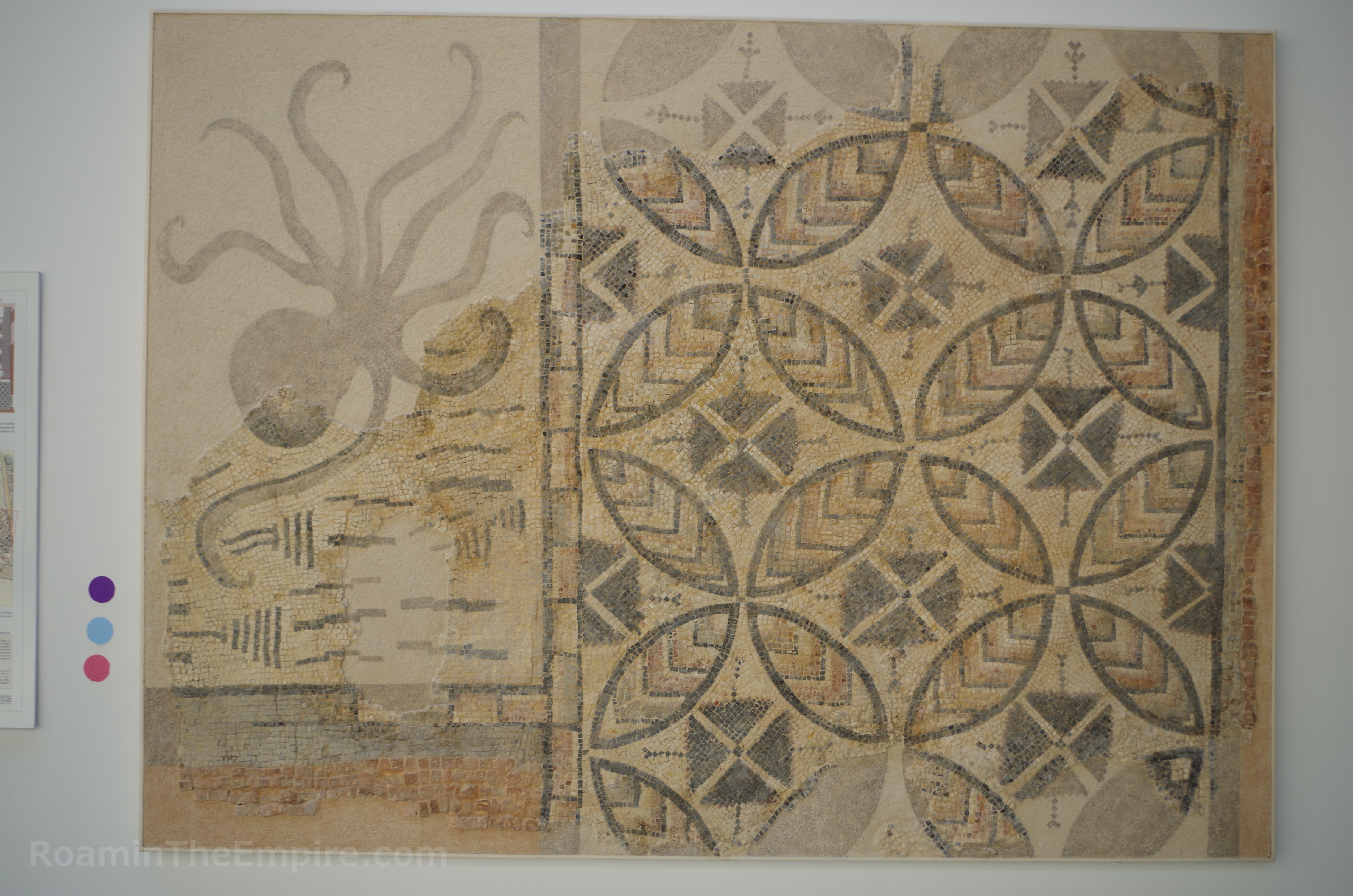
Perhaps the highlight of the archaeological collection area is a series of four mosaics. Two of these were taken from the excavations of a Roman house in the city, now known as the Domus Oceani, which can be visited at the Casa dos Mosaicos. These mosaics come from a peristyle oecus area of the house, with one depicting a fragmentary head of Oceanus and sea life and the other an octopus and part of a geometric area. These date to the late 3rd or early 4th century CE. Two other, larger mosaics on display in a covered courtyard area of the museum come from excavations on Rúa Armanyá. The first is a mosaic is a large area covered by a geometric Solomon’s Knot pattern. The other has geometric elements surrounding a fragmentary figural mosaic depicting Pasiphae and Daedalus. These two are best viewed from the upper gallery of the courtyard. There’s little to no English information in the ancient archaeological section, only Galician and Spanish. I only spent about 45 minutes in the museum, though I was primarily concerned with the archaeological collection and pretty much breezed by everything else since I was on a little bit of a time crunch (I was staying in Astorga, 2 hours away). It’s certainly worth a stop, especially for a free museum, though.
A few blocks to the southeast of the museum, at Rúa Doutor Castro 20, is the Casa dos Mosaicos archaeological area. The entrance is an unassuming door between two shops with just a small sign above it. The area is open daily in the summer (June 1 to October 30) from 10:00 to 14:00 and 16:30 to 20:30. The rest of the year it is open Tuesday to Sunday from 10:00 to 14:00 and 16:30 to 19:30 and closed on Mondays. Admission is free.
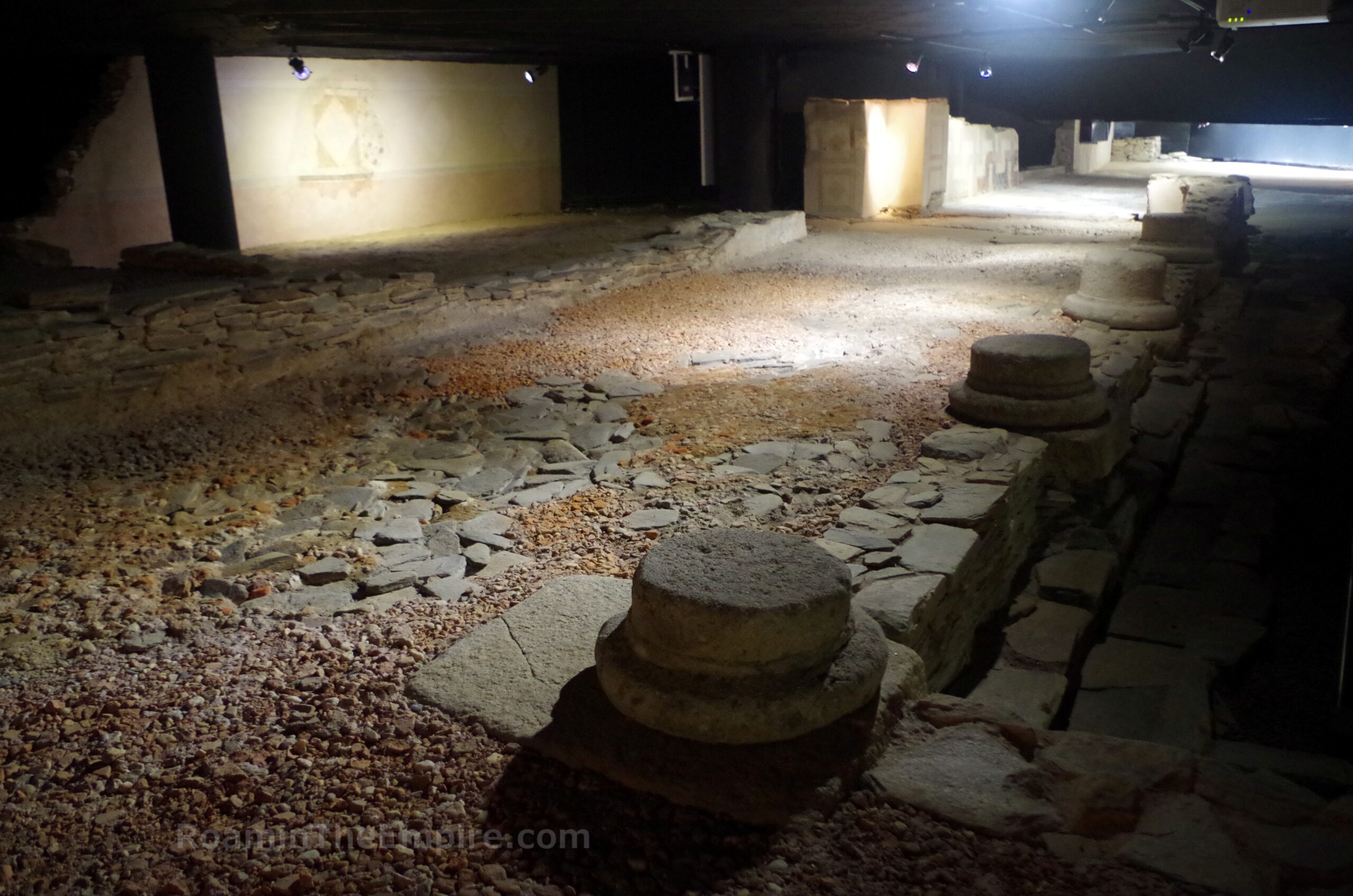
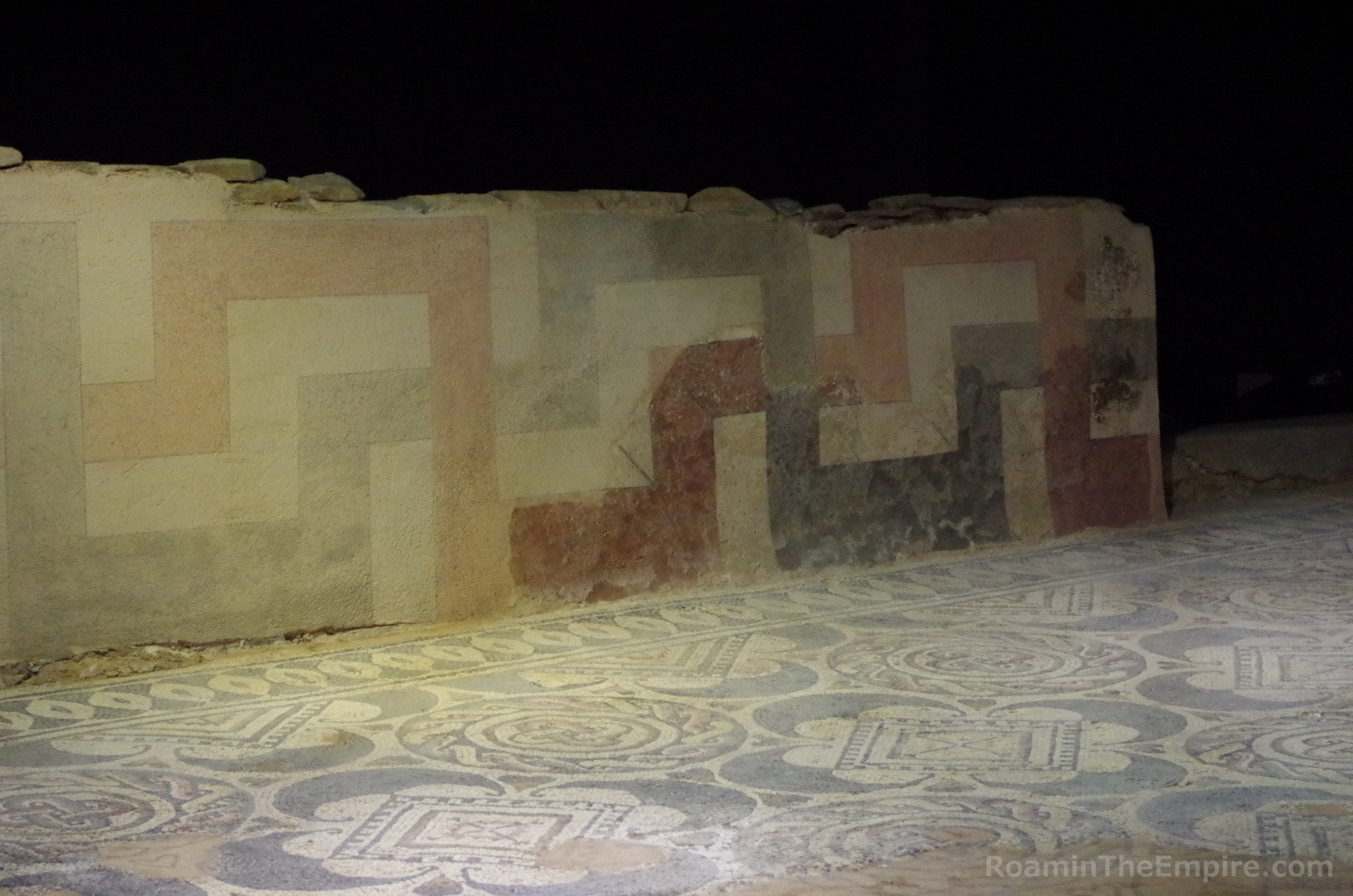
The Casa dos Mosaicos contains the excavated remnants of the so-called Domus Oceani, the house from which two of the mosaics in the Museo Provincial de Lugo were taken. The wealthy residence dates to the late 3rd or early 4th century CE. It was located at an important, central location in Lucus Augusti at the crossroads of the cardo maximus and decumanus maximus, near the forum of the city. What is preserved in the archaeological area is a section of the house around the oecus. Only a small portion of the oecus is preserved in the area that can be visited, though about half of the antechamber at the entrance of the oecus is visible with a well-preserved geometric mosaic covering a significant portion. The small portion of the actual oecus in the excavations includes a reproduction of the octopus mosaic that is now in the museum, and which flanked the Oceanus mosaic (also now in the museum) that decorated the area inside the entrance between the oecus and antechamber.
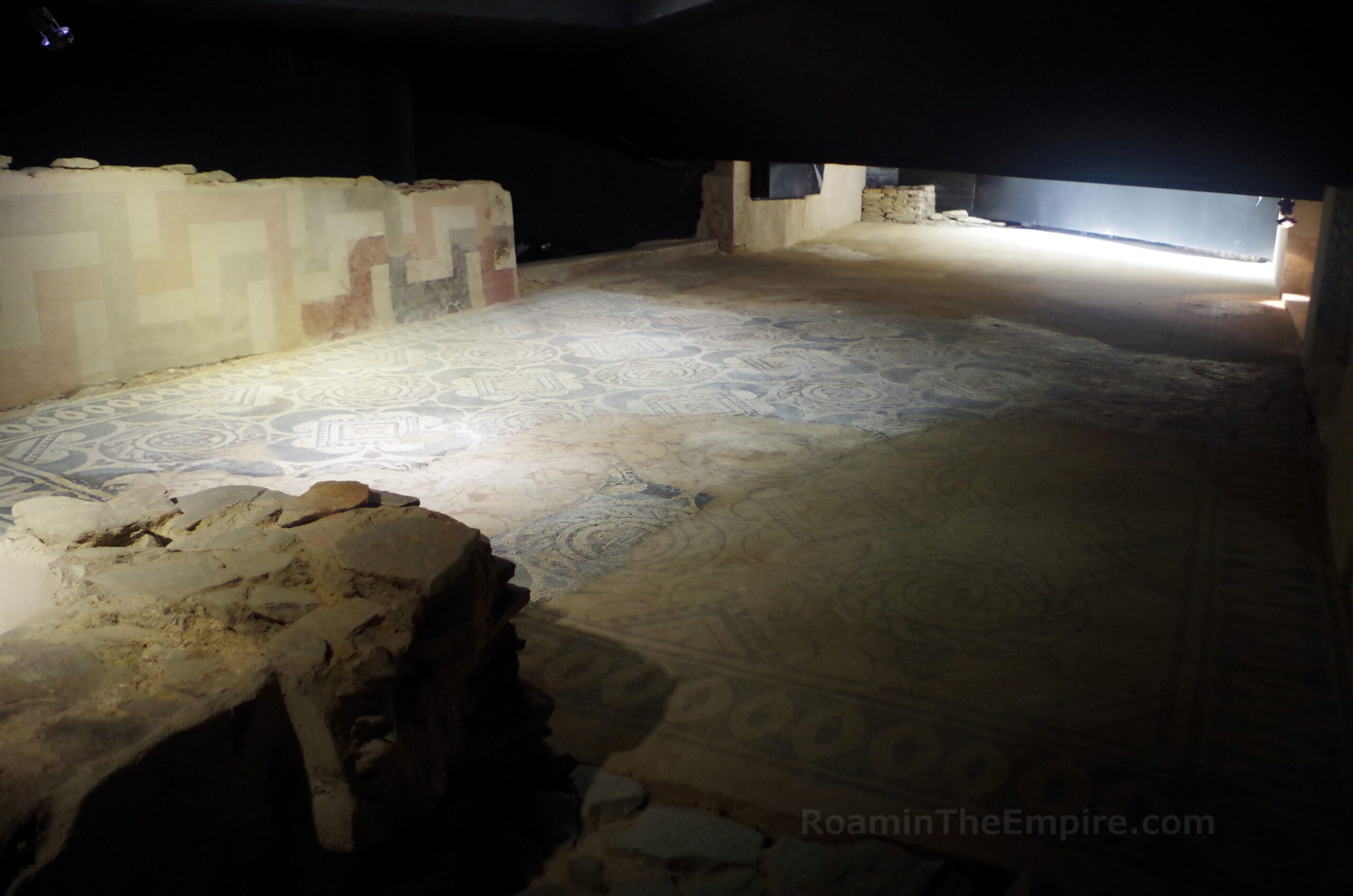
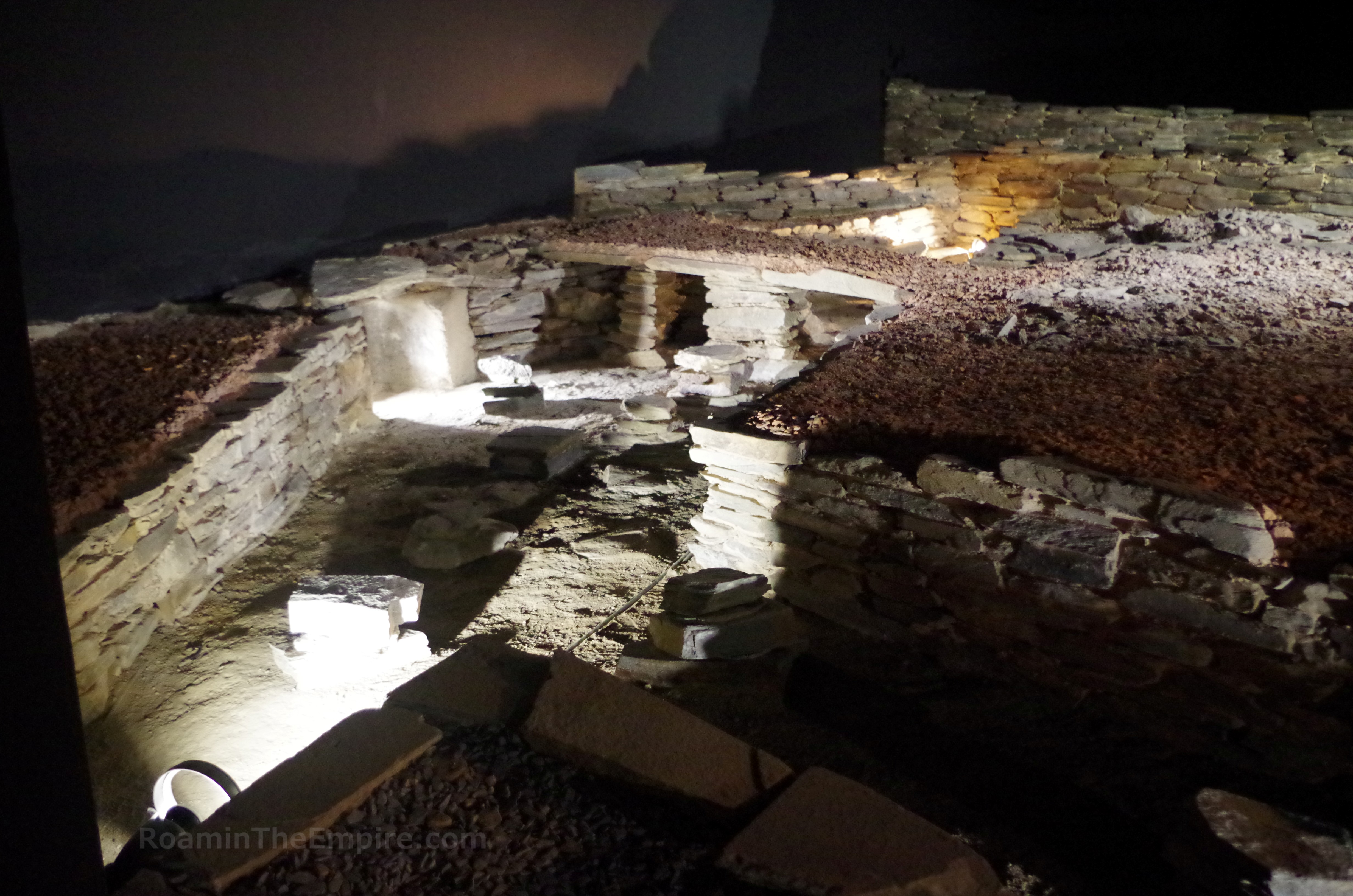
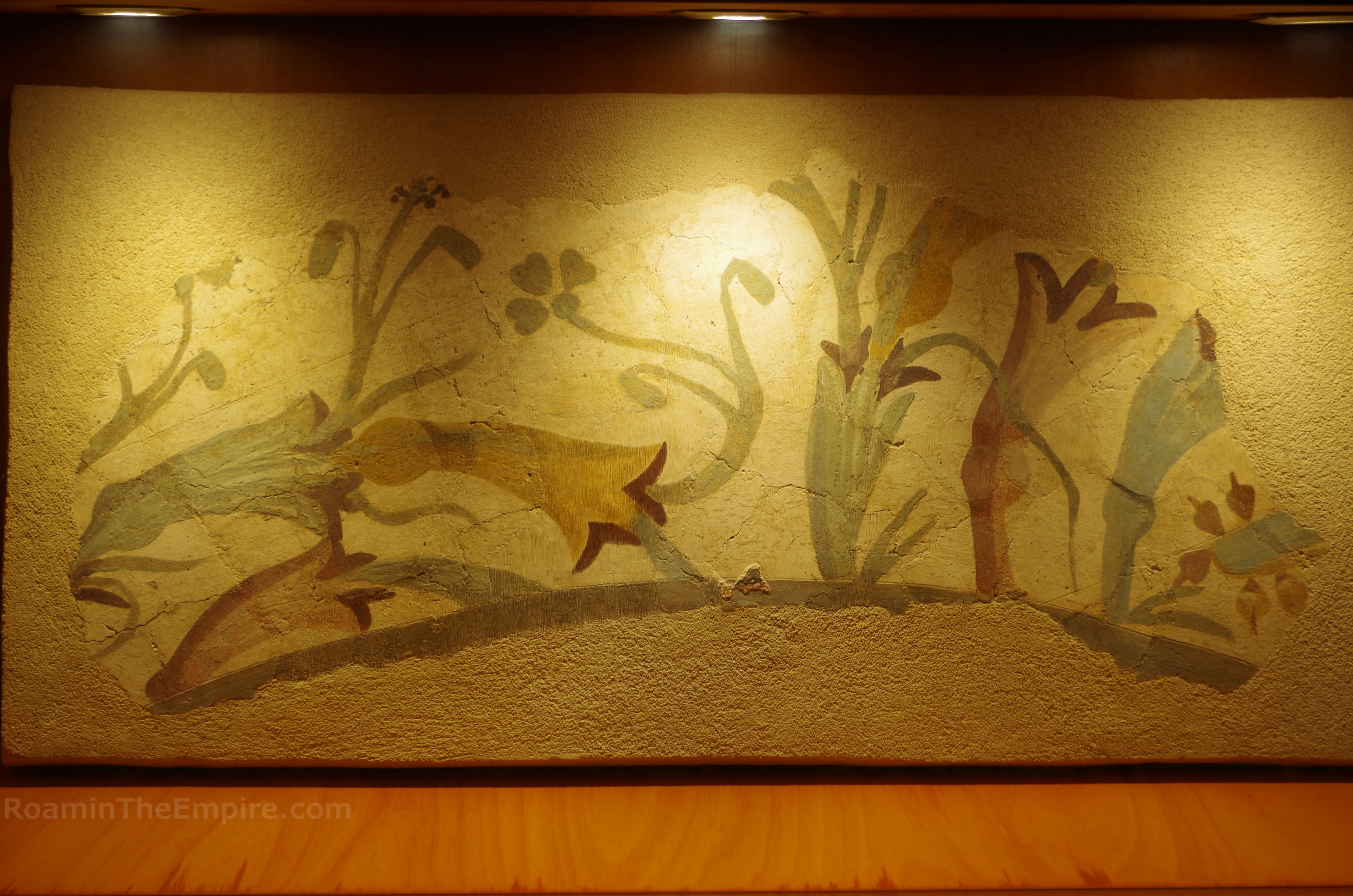
The oecus was flanked by two peristyles, one of which was now in the place that is essentially the space that accommodates visits to the archaeological area, where the visitors walk. None of the archaeological remnants of the peristyle are visible in the accessible area, though. Two halls run along the south of the antechamber and lead north to a room of unknown use, but which had a hypocaust system below the floor. The channels and pilae of the hypocaust system have been excavated and part of the hypocaust system itself has been visible. A few walls on the east side of the antechamber and hallway have also been reconstructed using original sections of fresco recovered from the site. A section of floral fresco, not incorporated on a wall, is also on display. Unfortunately, there is not much information on site (in any language), just a very basic map of the house.
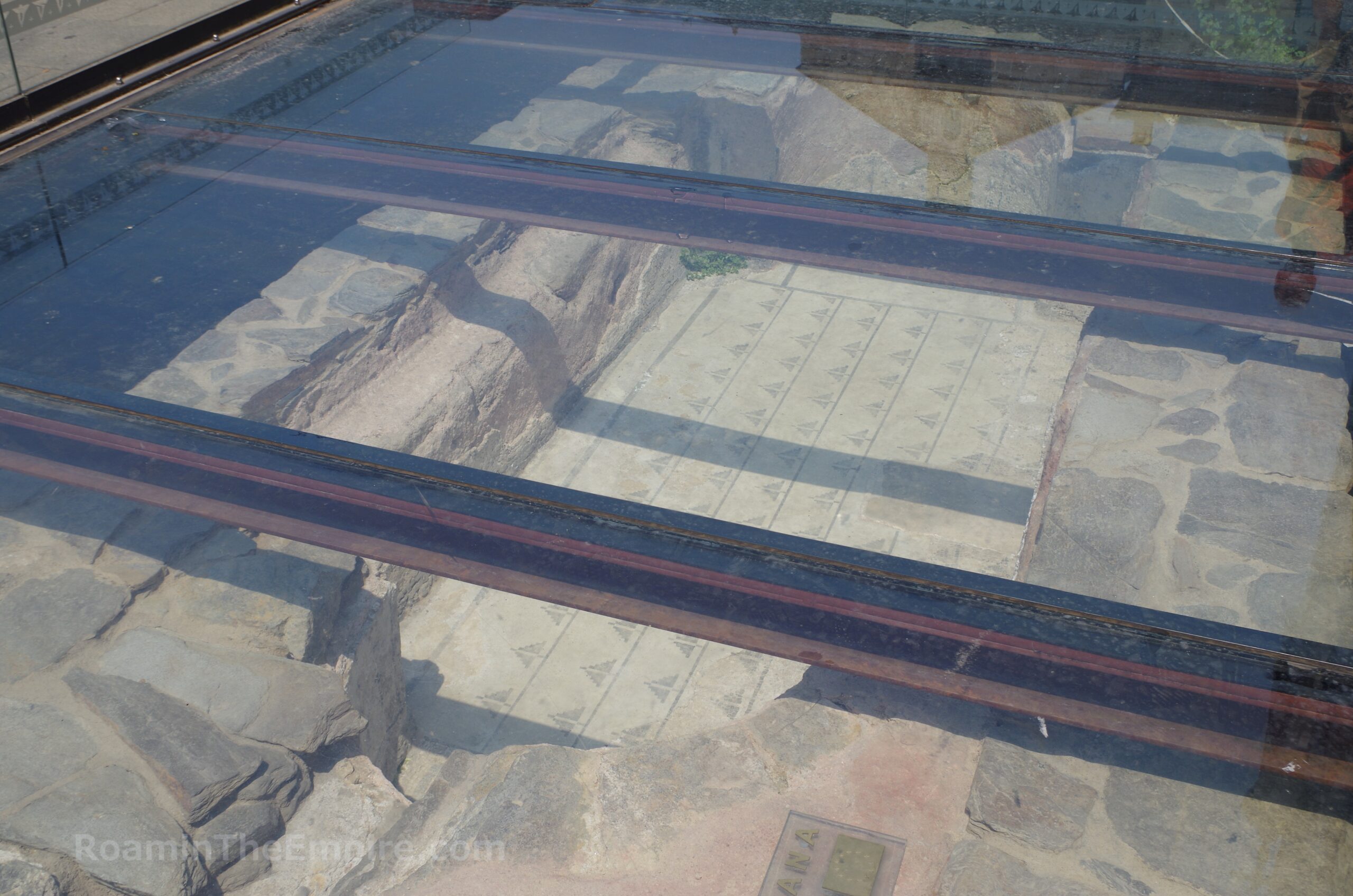
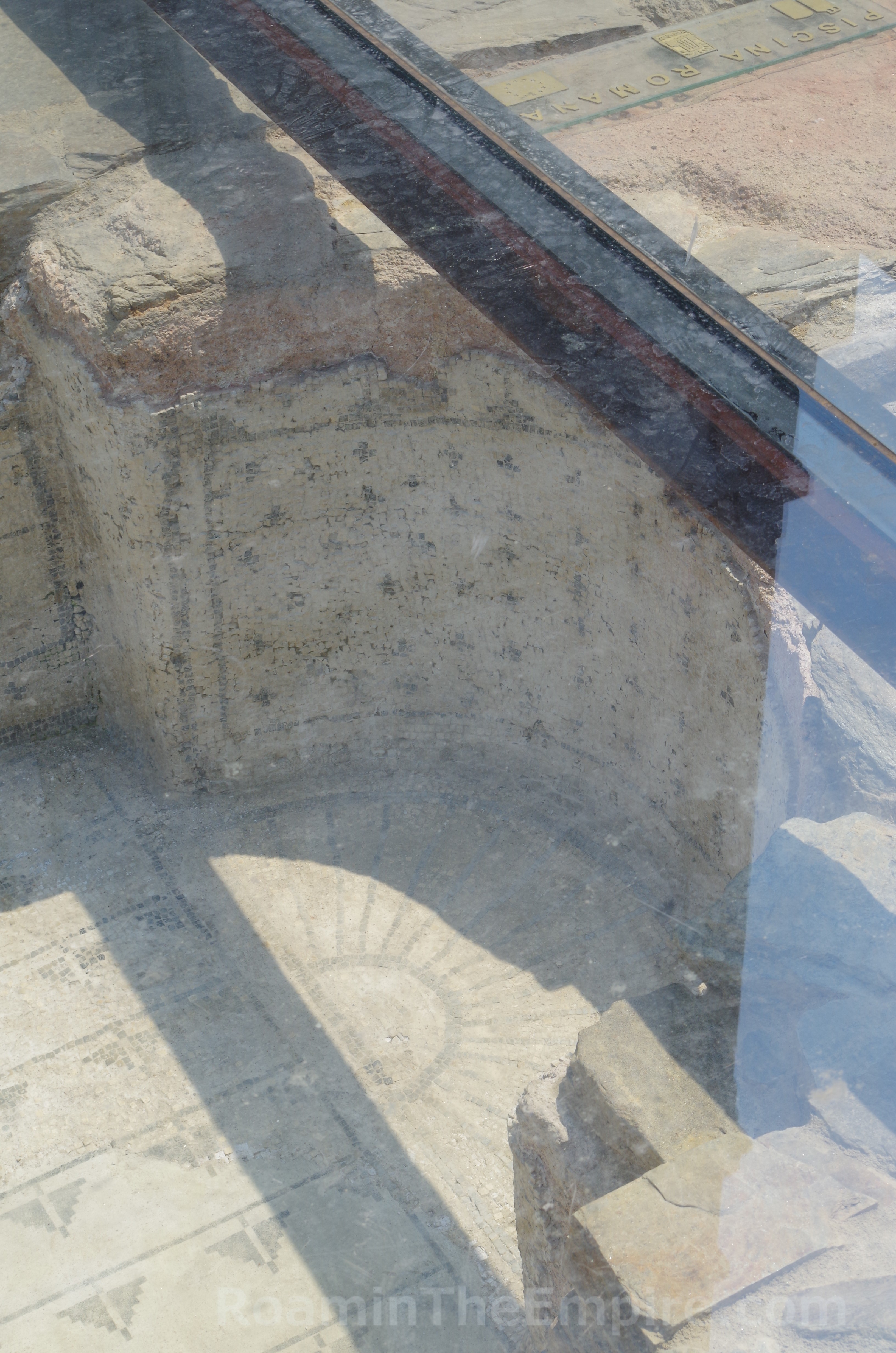
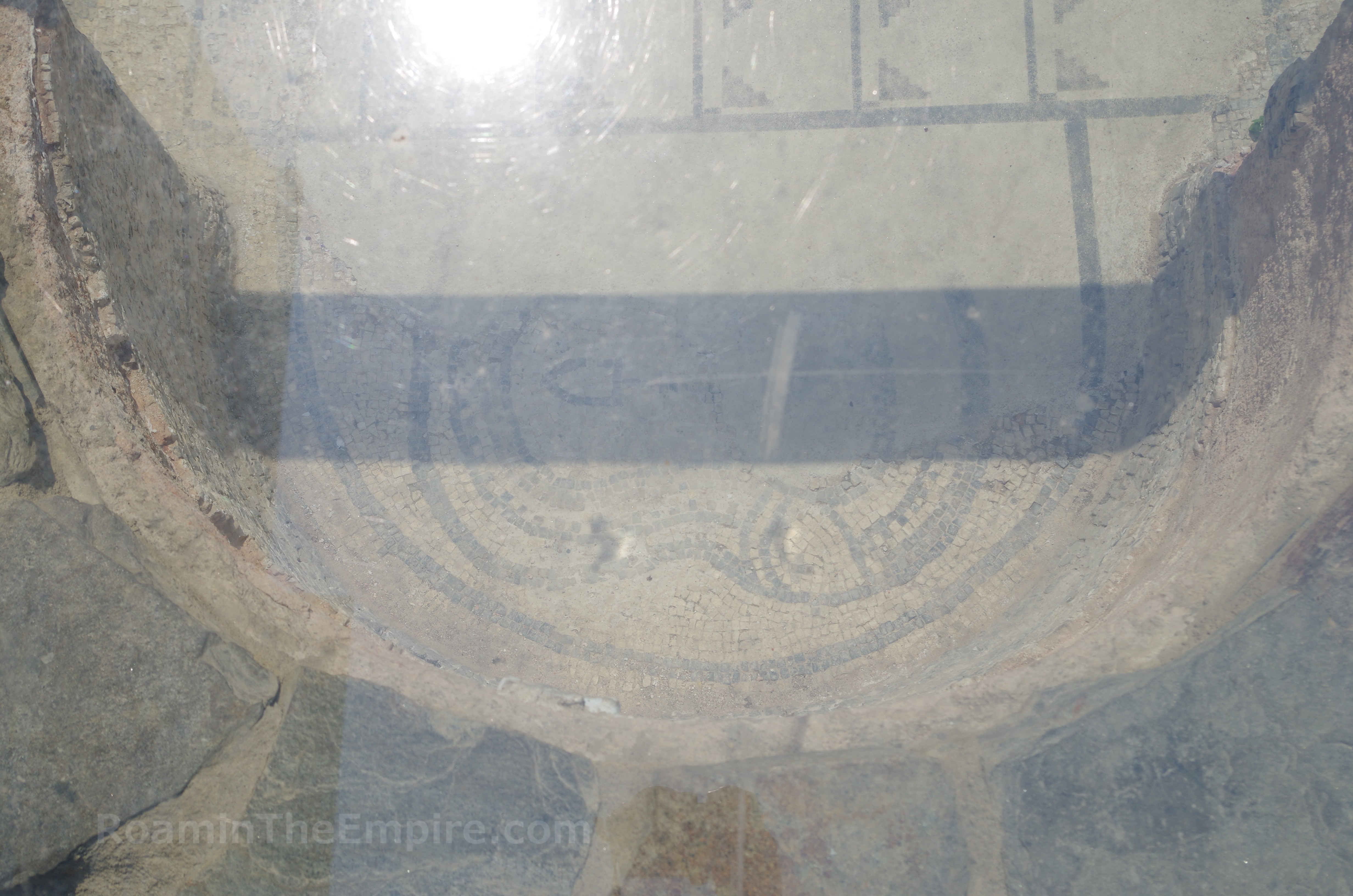
Just a short 2-minute walk to the southwest is Praza de Santa Maria, located on the east side of the cathedral. Just behind the large circular Capilla de la Virgen de los Ojos Grandes of the cathedral is a glass window in the pavement of the praza offering a view of the excavations beneath the square. The so-called Piscina Romana is a 4th century CE basin decorated with mosaics. The proximity to the cathedral, which has definitely been used as a Christian religious site since at least the 8th century CE and probably dating back further than that, and the design of the mosaics has led to the belief that this was possibly a baptismal pool. It is also possible that it was a basin associated with a bathing complex, though. There is an informational sign in Galician, Spanish, and English nearby with a short explanation and diagram of the excavations.
Continued In Lucus Augusti Part II
Sources:
Grant, Michael. A Guide to the Ancient World: A Dictionary of Classical Place Names. New York: Barnes & Noble Books, 1997.
Montenegro Rúa, Enrique Jorge. The Monument of Santa Eulalia De Bóveda, a Summary of the Known History. Xunta de Galicia, 2008.
Pliny the Elder. Historia Naturalis, 3.18, 3.28, 4.111.
Smith, William. Dictionary of Greek and Roman Geography. Walton & Murray, 1870.
Stillwell, Richard, William L. MacDonald, and Marian Holland. McAllister. The Princeton Encyclopedia of Classical Sites. Princeton, NJ: Princeton U Press, 1976.