


Continued From Spalatum – Part II
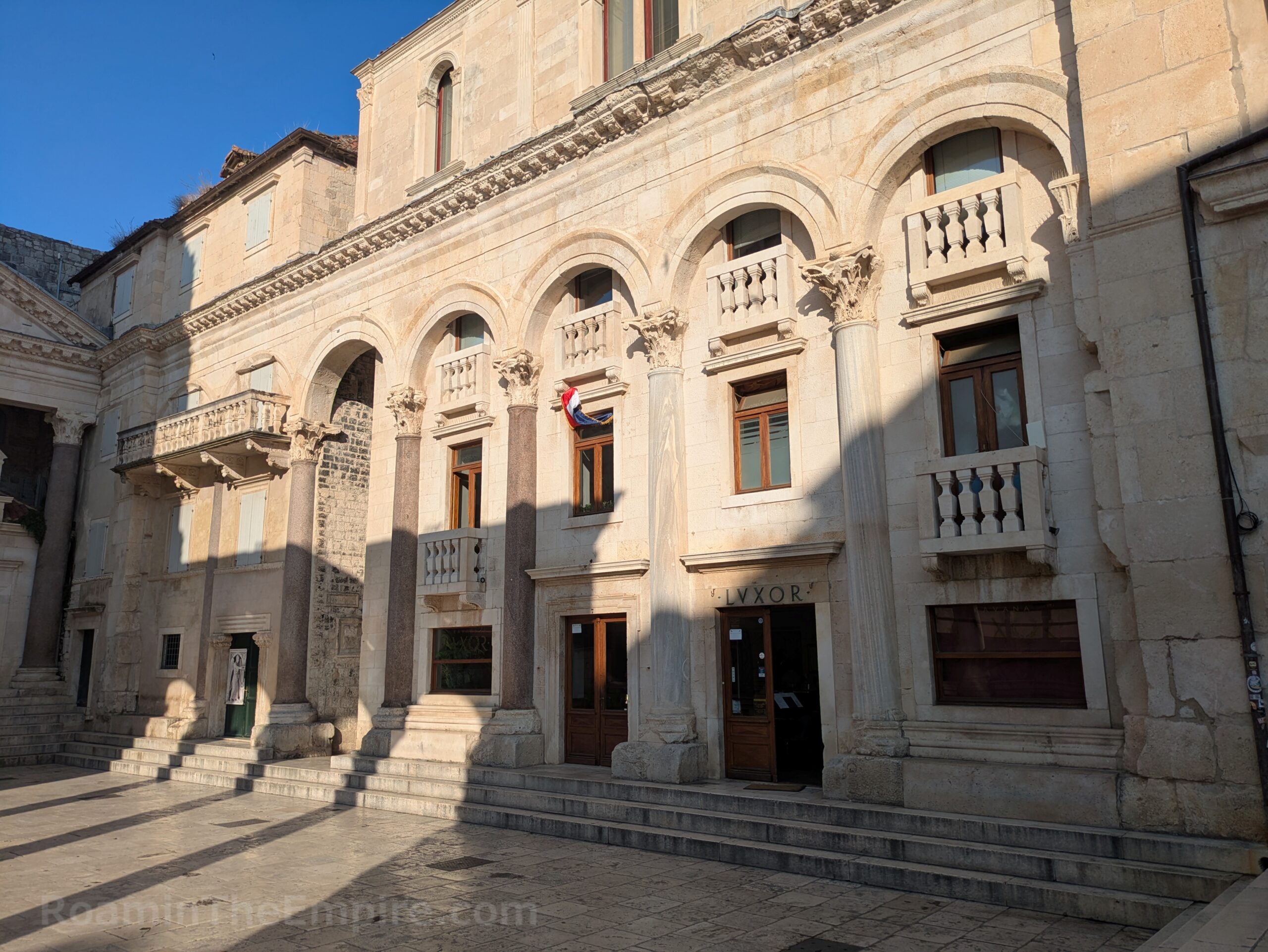
At the southwest corner of the peristyle is the Skočibušić-Lukaris Palace, rebuilt in the 15th century CE but with an uncertain original construction date. The building now houses the Treasury of the Split Cathedral as well as the ticket office for a number of sites managed by the cathedral. Those sites are the Saint Dominus Cathedral itself, the cathedral’s belltower, the Crypt of Saint Lucy, the Treasury of the Split Cathedral, and the baptistry/Temple of Jupiter. Tickets can be purchased individually for each site, or in one of a series of 5 combination tickets with 3 to 5 sites ranging between 9 and 15 Euros (I chose the 10 Euro ticket for the cathedral, crypt, treasury, and baptistry on my most recent visit, as I had been up the belltower my previous visit). The ticket office is open Monday through Saturday from 8:00 to 19:30, with a daily break from 13:15 to 14:15. It is open on Sunday from 10:00 to 17:30. The treasury is generally open the same hours, except is open half an hour later than the ticket office. Single admission to the treasury is 5 Euros.
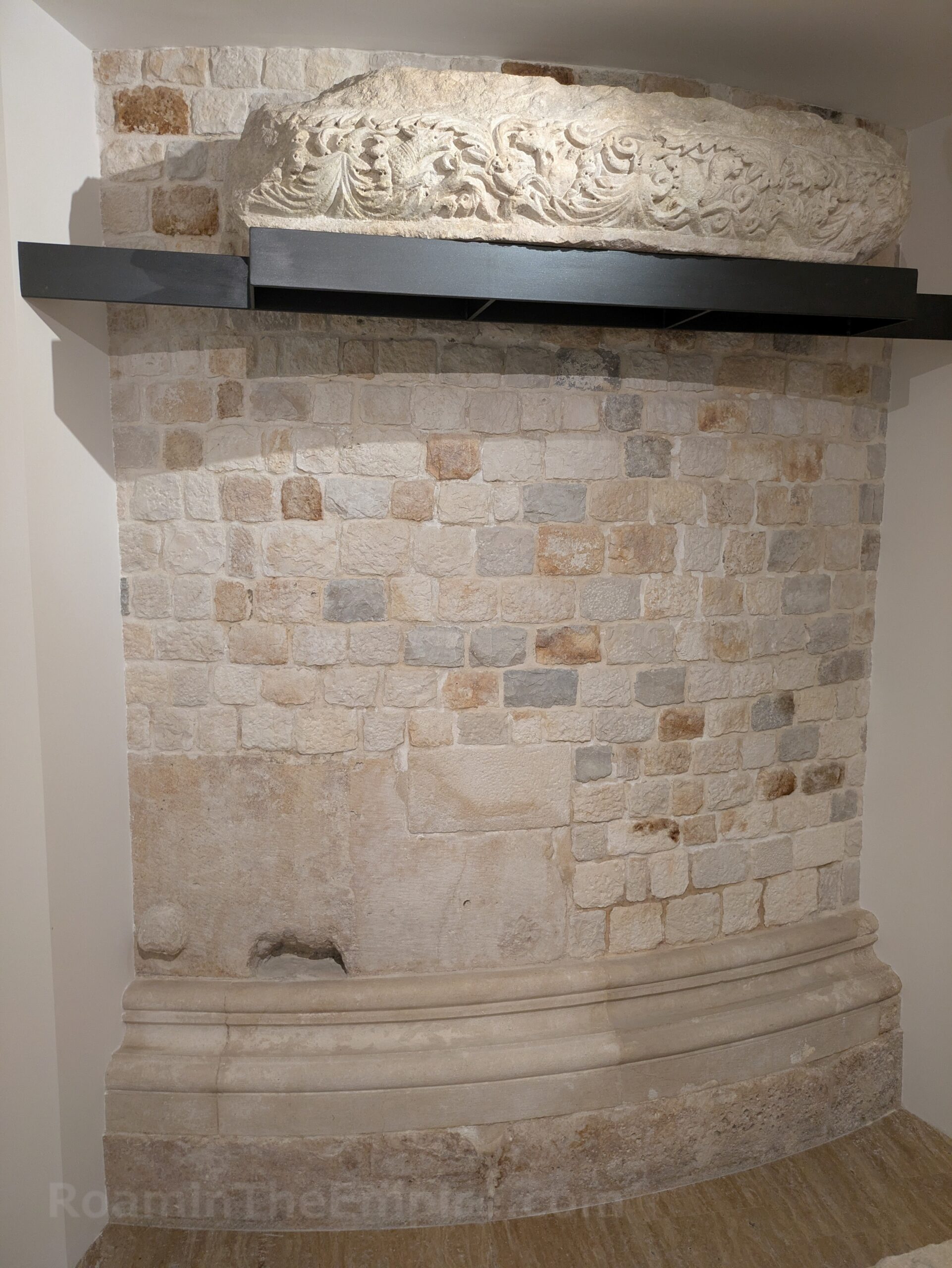
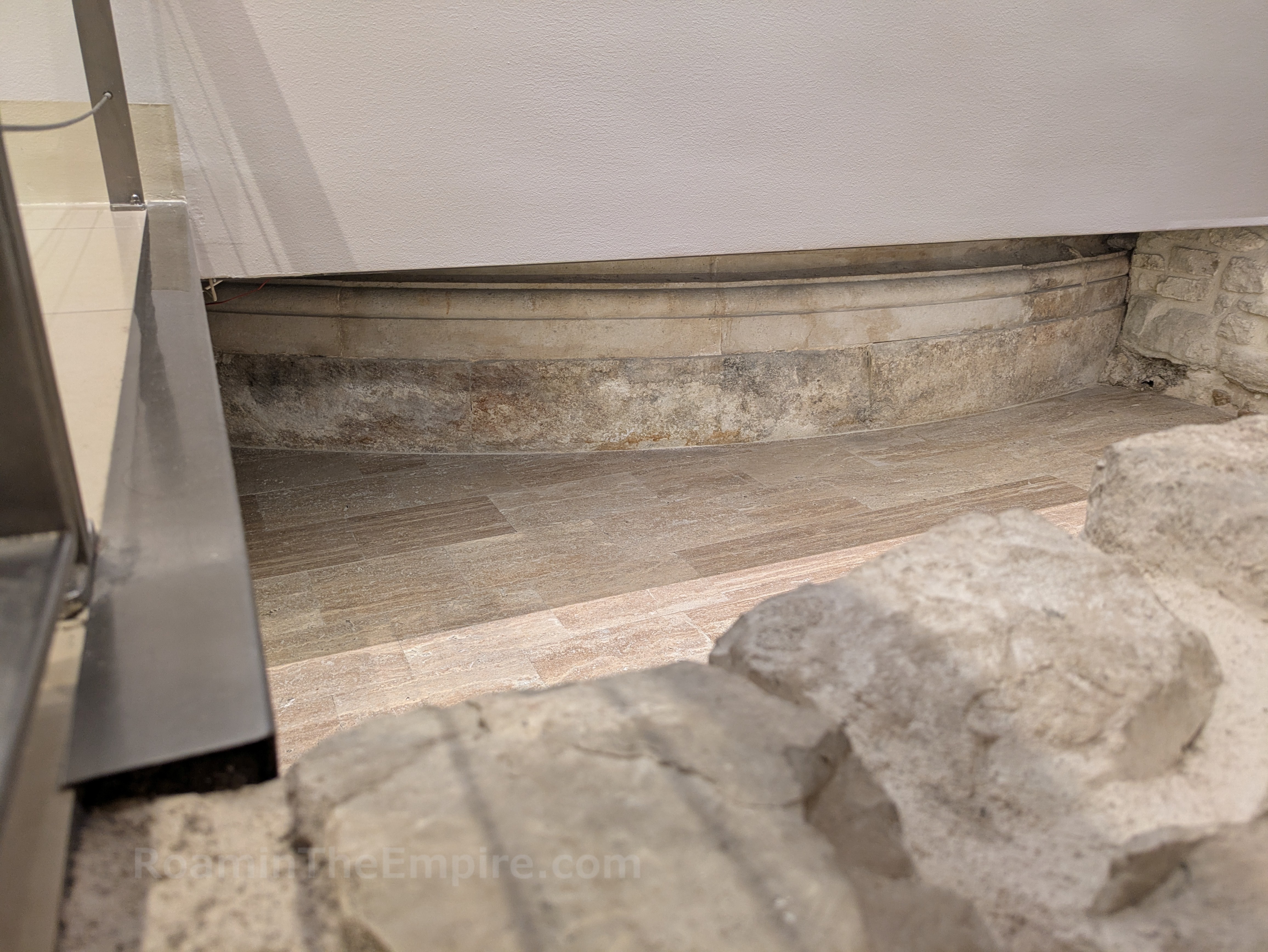
The primary reason that I visited the treasury is that it claimed to have the remnants of the southern of two circular temples that flanked west side of the peristyle and made up a religious precinct in that area. This southern temple is often attributed to Cybele, while the northern temple is commonly attributed to Venus. Nothing remains of the northern temple, though a circular outline on the floor of the Café & Restaurant Lvxor, next door to the treasury, supposedly marks the footprint of the temple. The remains of the temple in the treasury are scant, though. It’s a about a one-meter section of the west exterior wall that has been reconstructed with primarily modern materials. The stylobate is mostly original as well as a section of frieze at the top. A few fragments of the coffered ceiling of the temple are displayed alongside the wall. Oddly, there seems to be more of the temple remaining, but it is largely hidden except for this small section. More of the stylobate can be seen around a screen. There are a few other ancient objects in the treasury; some parts of funerary inscriptions/sarcophagi and some other architectural odds and ends. The treasury is mostly concerned with religious objects, and that makes up the vast majority of the collection. Most have information in English and Croatian. It’s hard to justify the 5 Euro standalone entrance fee if you are primarily interested in the ancient materials, but as part of a combination ticket, it’s worth a look. It took me about 15 minutes to go through everything.
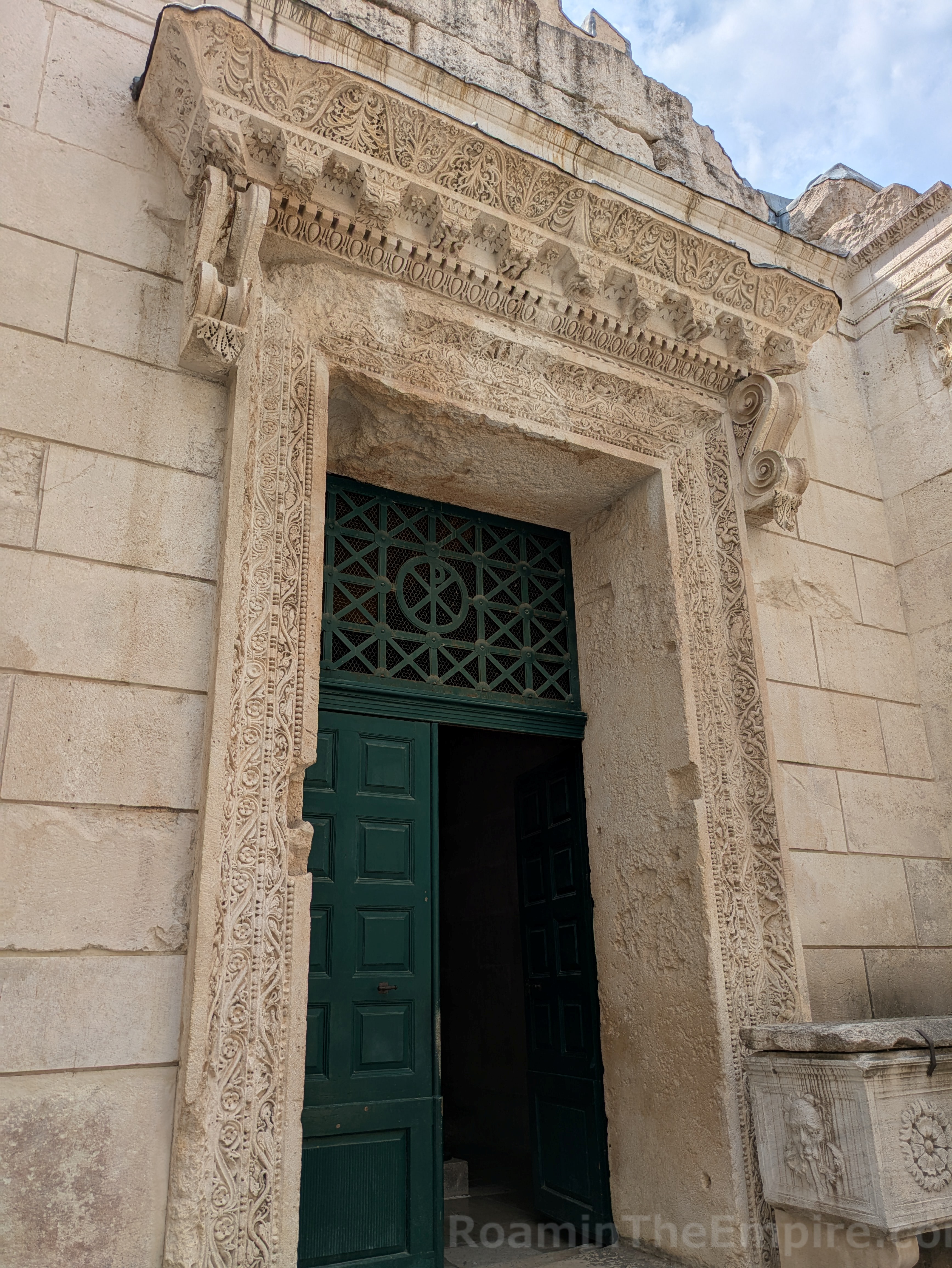
A pedestrian passageway between the treasury and the Café & Restaurant Lvxor leads about 30 meters west to the Temple of Jupiter, later used as a baptistry for the cathedral. The temple is open Monday through Saturday from 8:00 to 20:00 and on Sunday from 10:00 to 18:00. Single admission is 3 Euros. Construction on the temple was probably started in 295 CE, but was unfinished by the time Diocletian took up residency in 305 CE and left in that state. The temple was converted into a baptistry dedicated to St. John the Baptist in the 6th or 7th century CE.
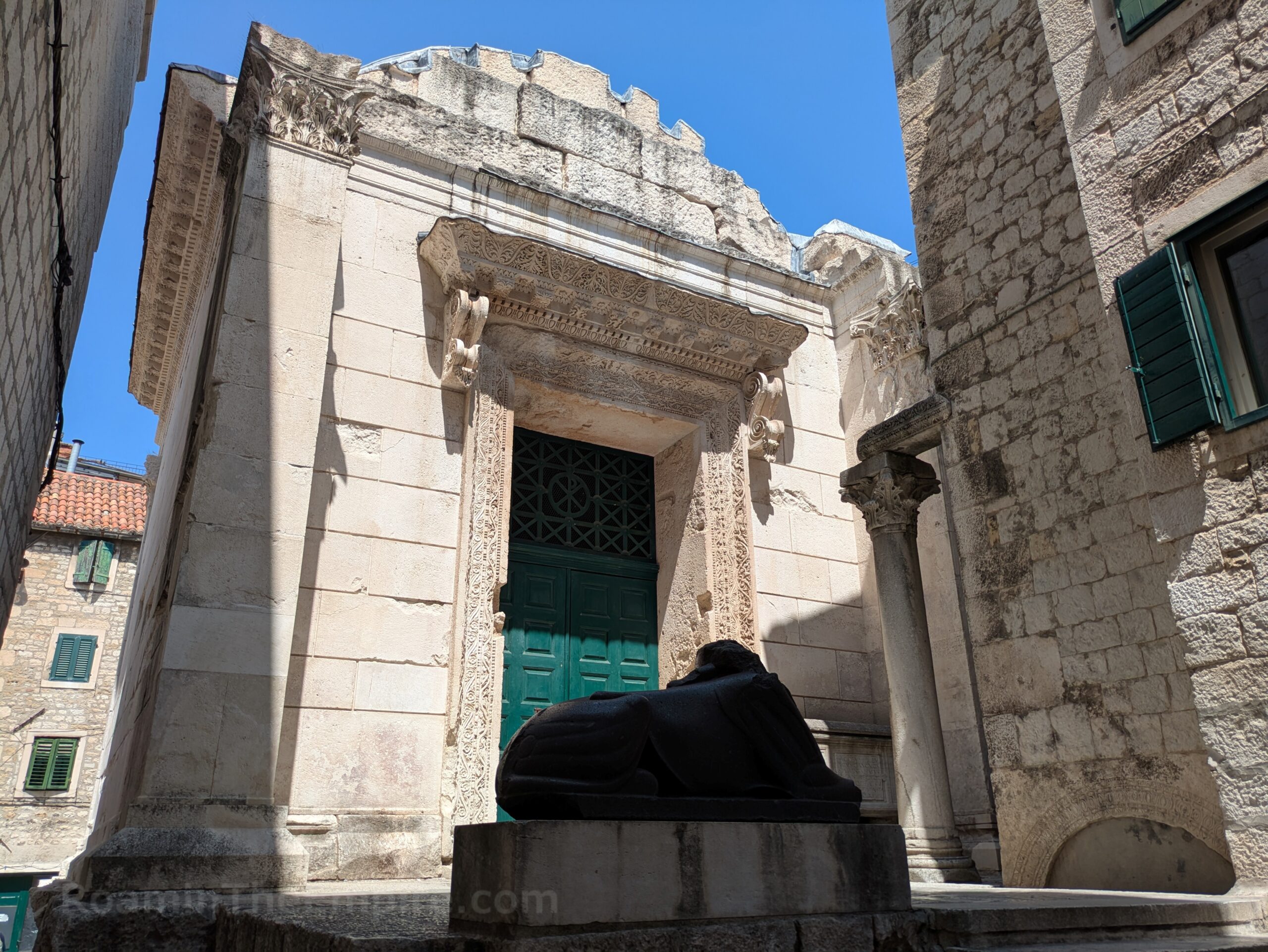
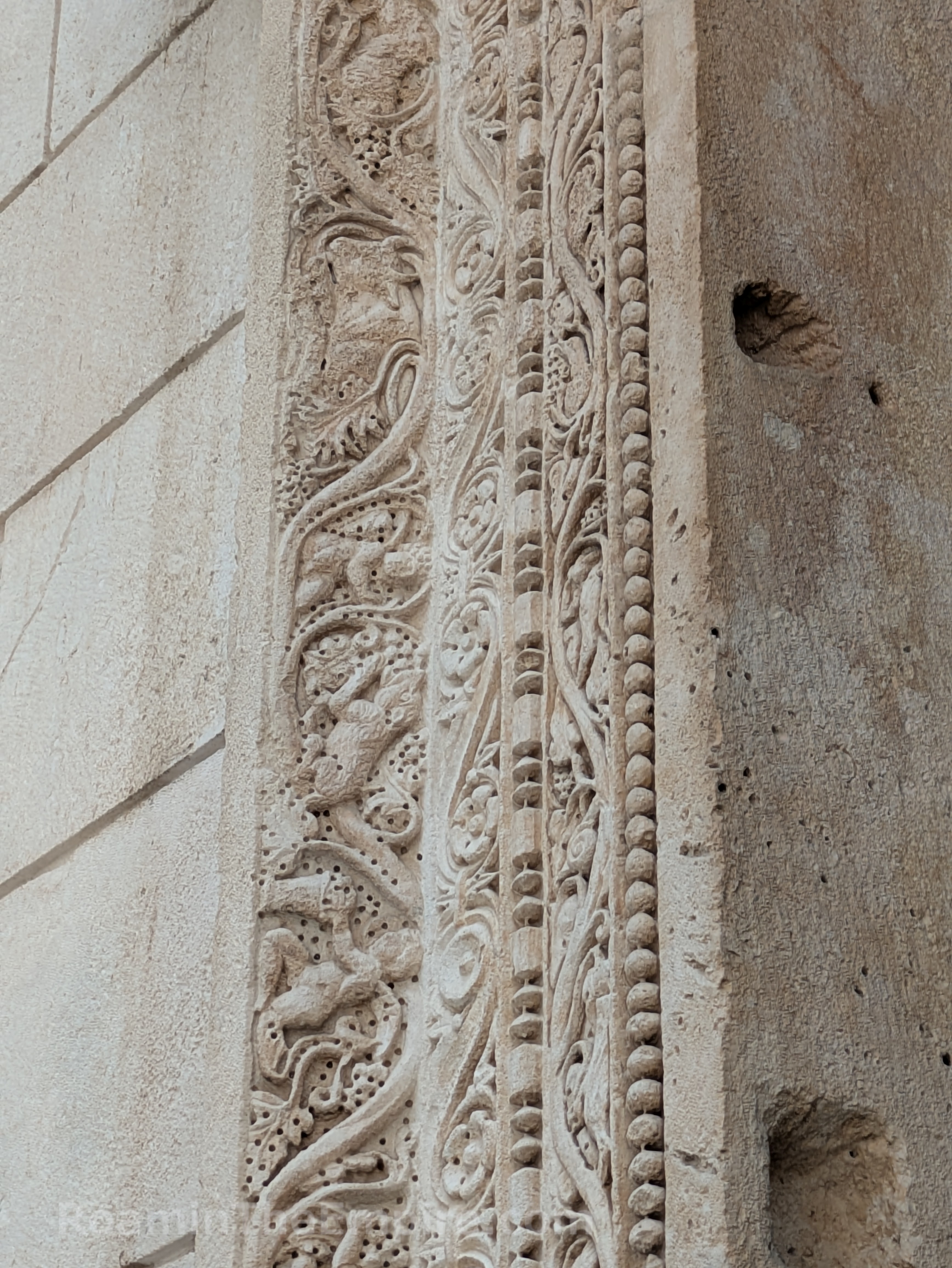
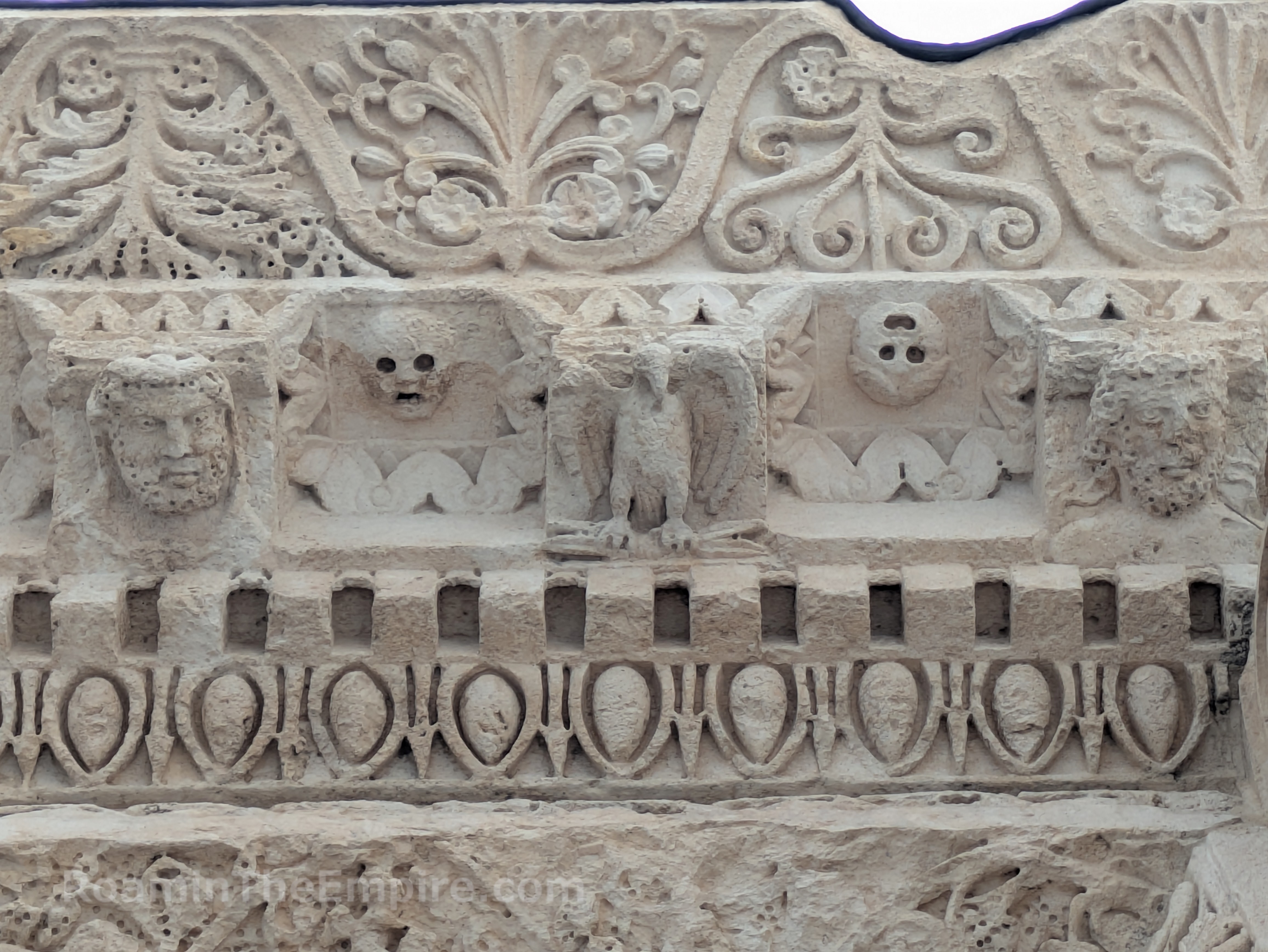
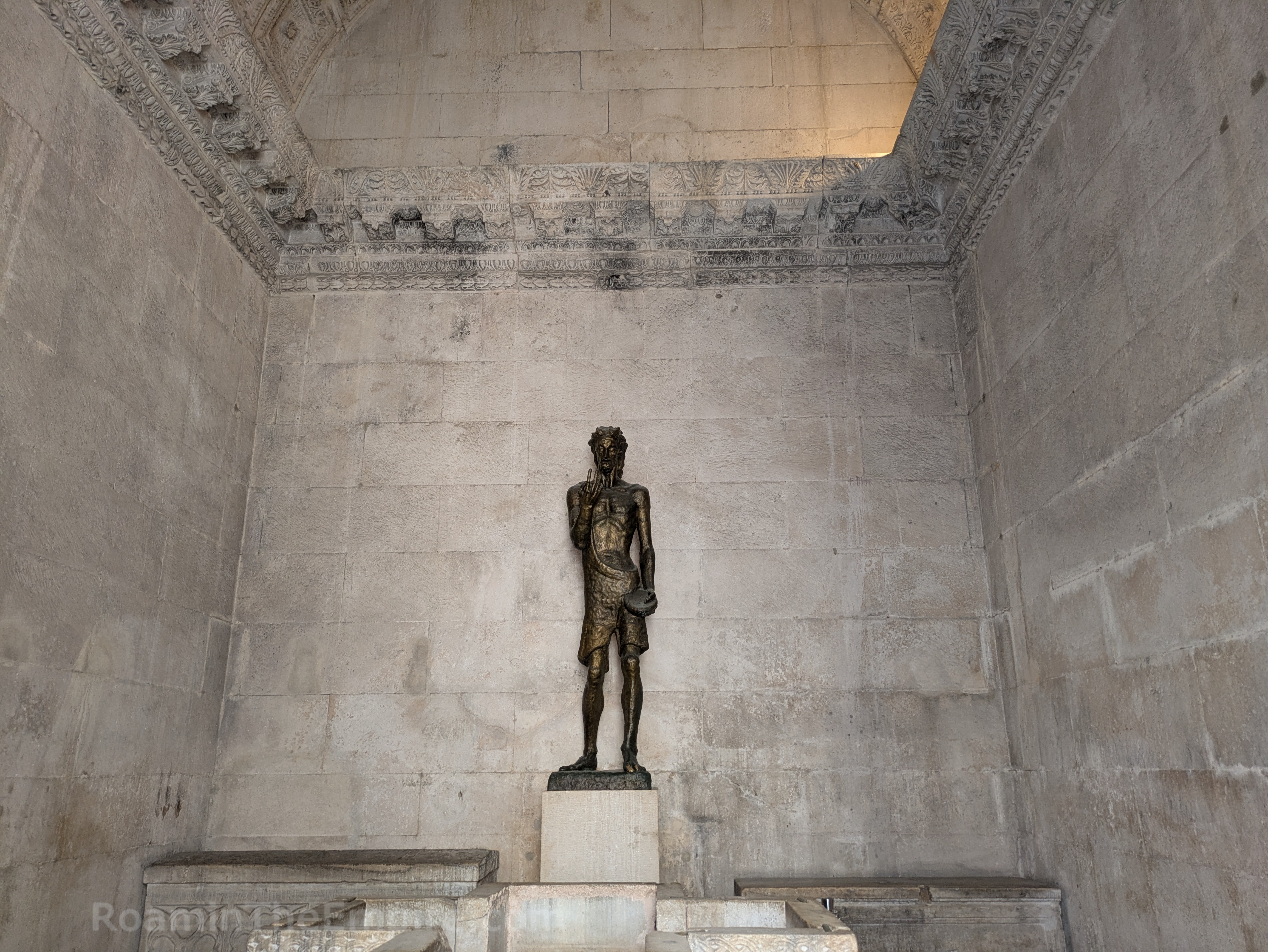
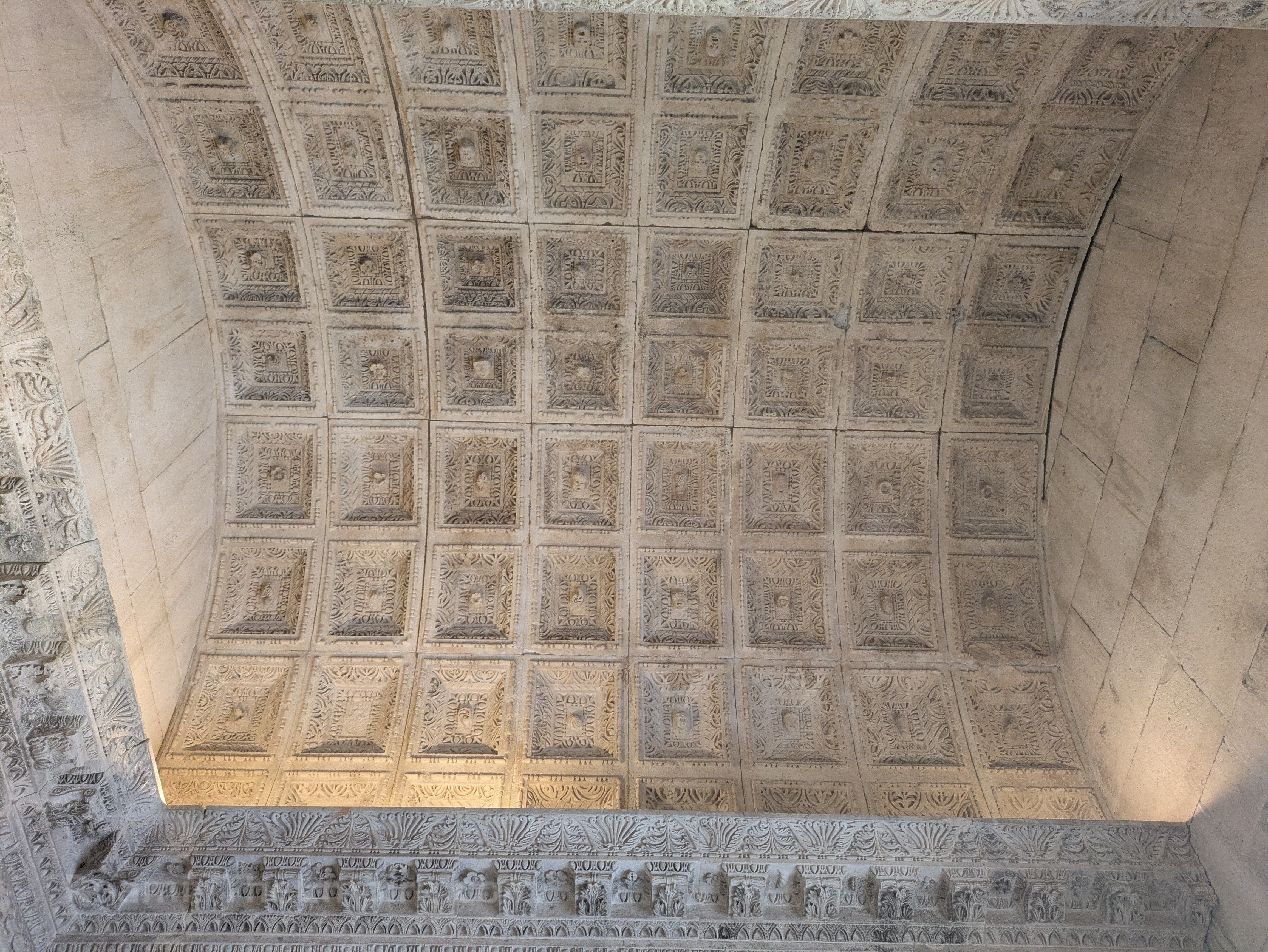
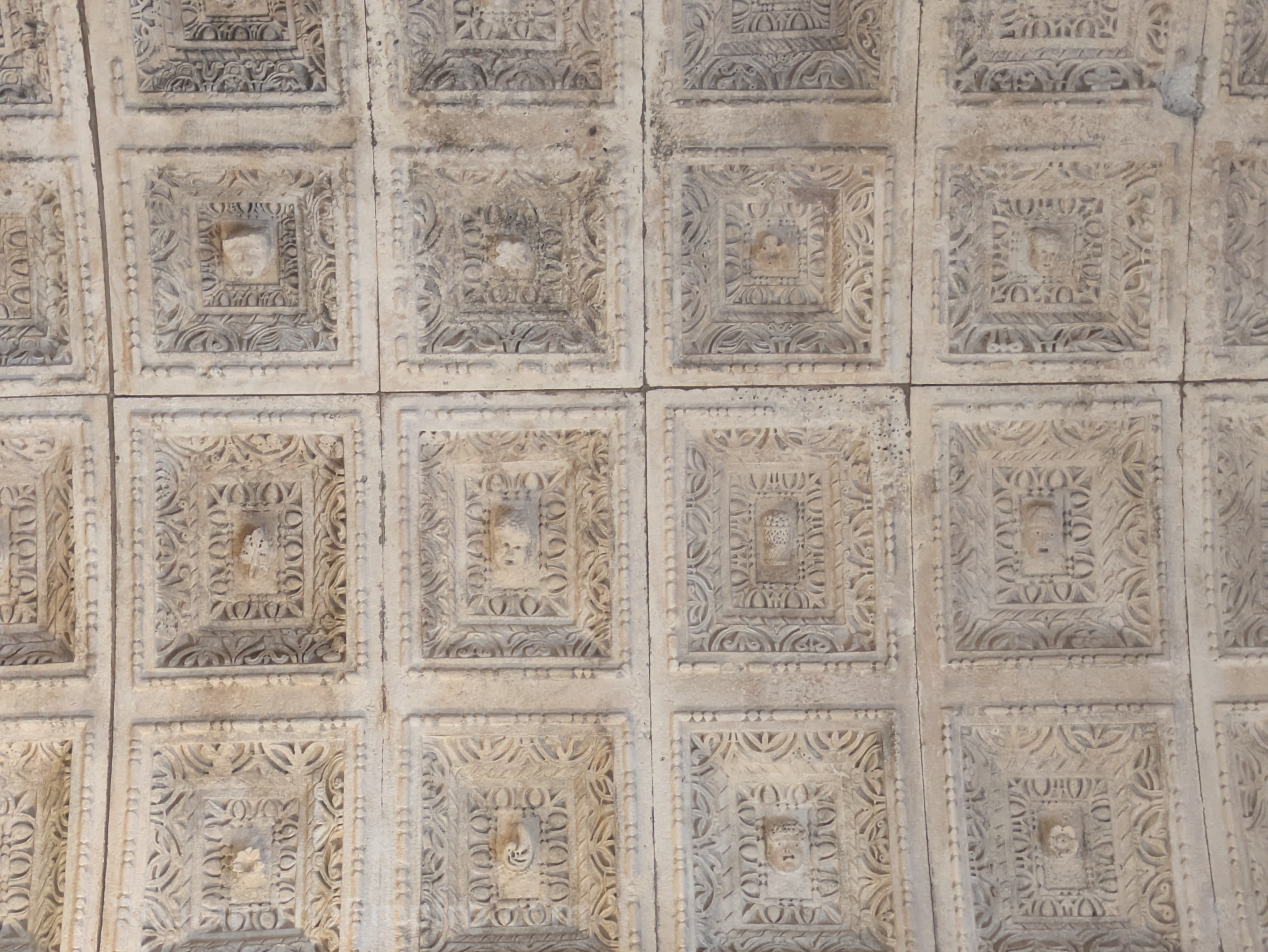
Nothing of the porch of the temple remains aside from the platform. Another of the Egyptian sphinxes sits outside the entrance of the temple, this one headless from defacement after the conversion of the temple. The original reliefs around the doorway of the temple are present with images of cupids, animals, and vegetal motifs. Depictions of Jupiter, Victory, Triton, Helios, Hercules, and Apollo grace the reliefs on the lintel above the doorway. Inside the temple, the vaulted, coffered ceiling survives from antiquity. In each of the 64 coffers that make up the ceiling, an image of a face or plant is carved at the center. Architectural elements along the base of the vault also date to the Roman temple. The baptismal font constructed of elements of an 11th century CE rood screen dates to the 13th century CE. The sarcophagi of two arch bishops (Ivan of Ravenna from the 7th century CE and Lovre from the 11th century CE) are also on display as well as modern statue of St. John. There is one informational board about the temple in English inside.
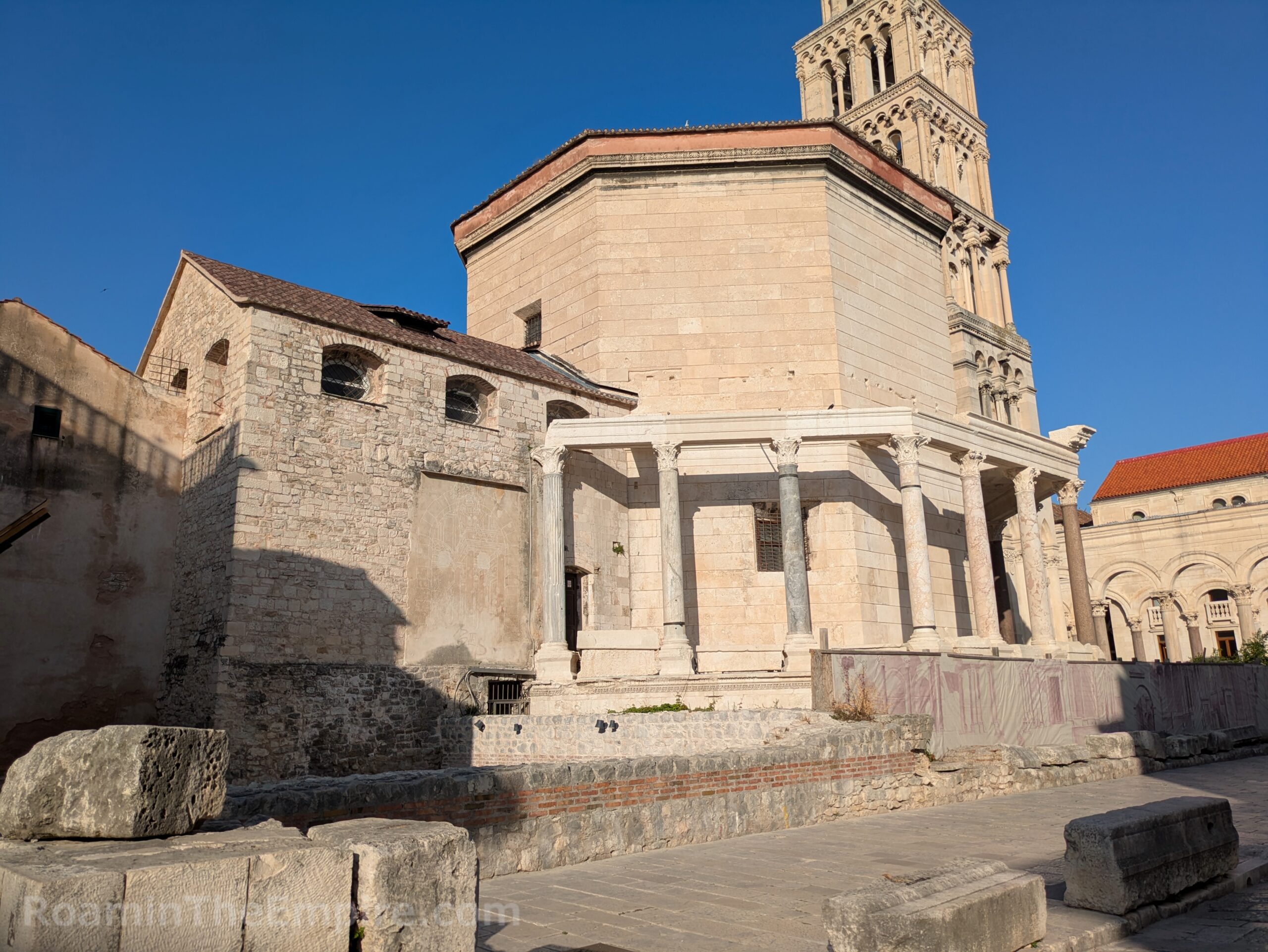
Back out to the peristyle, the Katedrala Svetog Duje, the Cathedral of Saint Dominus, dominates the area to the east of the peristyle. The cathedral is open Monday through Friday from 8:00 to 20:00 and on Sunday from 12:00 to 18:00. Single admission to the cathedral is 5 Euros. The main octagonal building of the church was constructed in 305 CE to serve as a mausoleum for Diocletian. When the emperor died in 311 or 312 CE, he was laid to rest in a porphyry sarcophagus in the mausoleum. Despite the damnatio memoriae issued against Diocletian, the mausoleum seems to have remained undisturbed though the 4th and 5th centuries CE. It is possible the interment was desecrated and the sarcophagi destroyed by Totilia the Ostrogoth king around 549 CE.
With the sack of nearby Salona in the 7th century CE, the population migrated to the relative safety of the walled palace and the mausoleum was consecrated as a church dedicated to Saint Dominus, who was executed on orders from Diocletian in the amphitheater of Salona in 304 CE. If the burial had not been destroyed earlier by Totilia, it was certainly destroyed after the conversion of the mausoleum to a church. Porphyry fragments were found in the mausoleum, but it is unclear if they belong to the sarcophagi or other architectural decoration. In the 12th century CE, a belltower was constructed. The choir, the extension off the east side of the original mausoleum structure, was built in the 17th century CE.
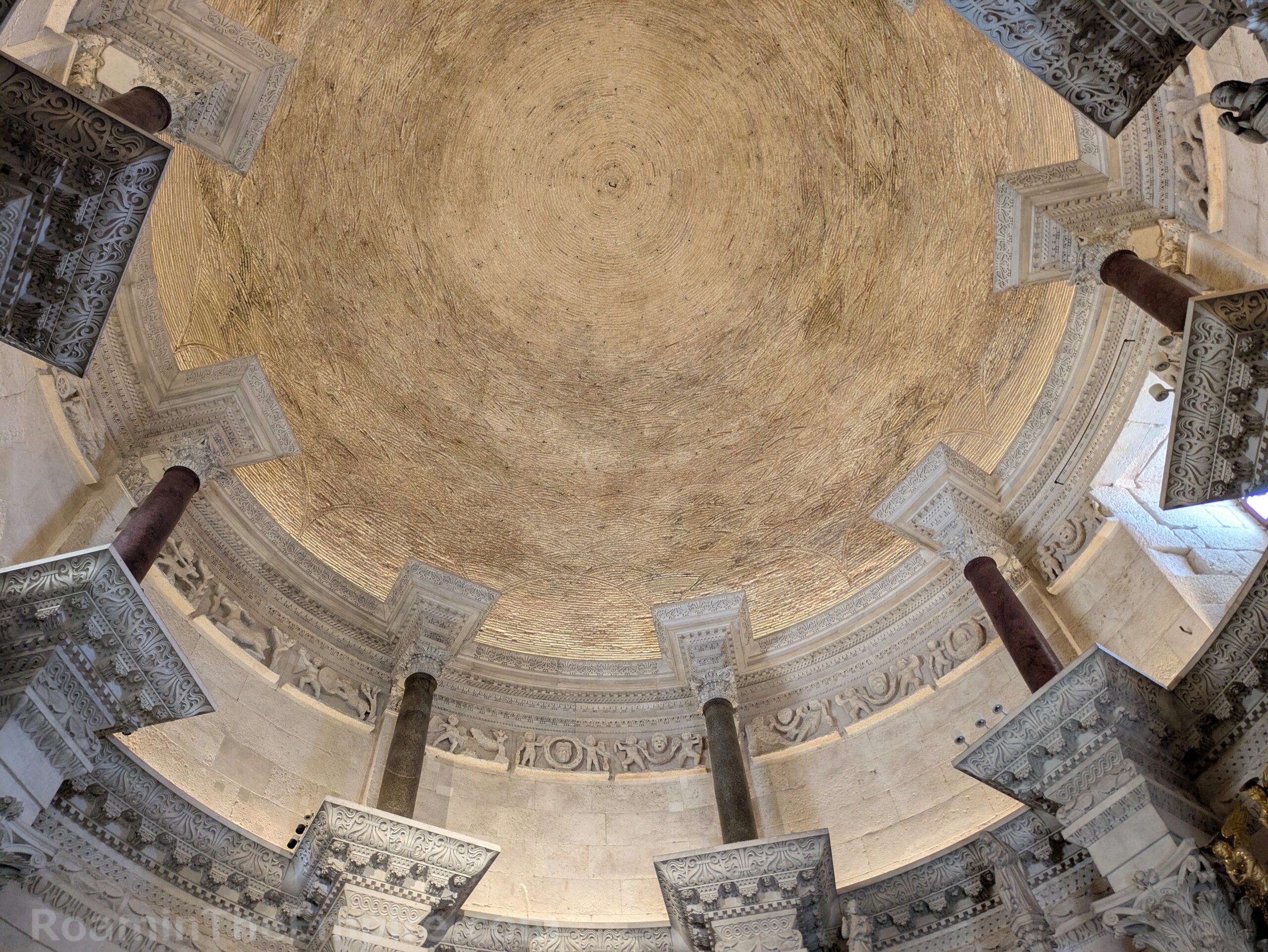
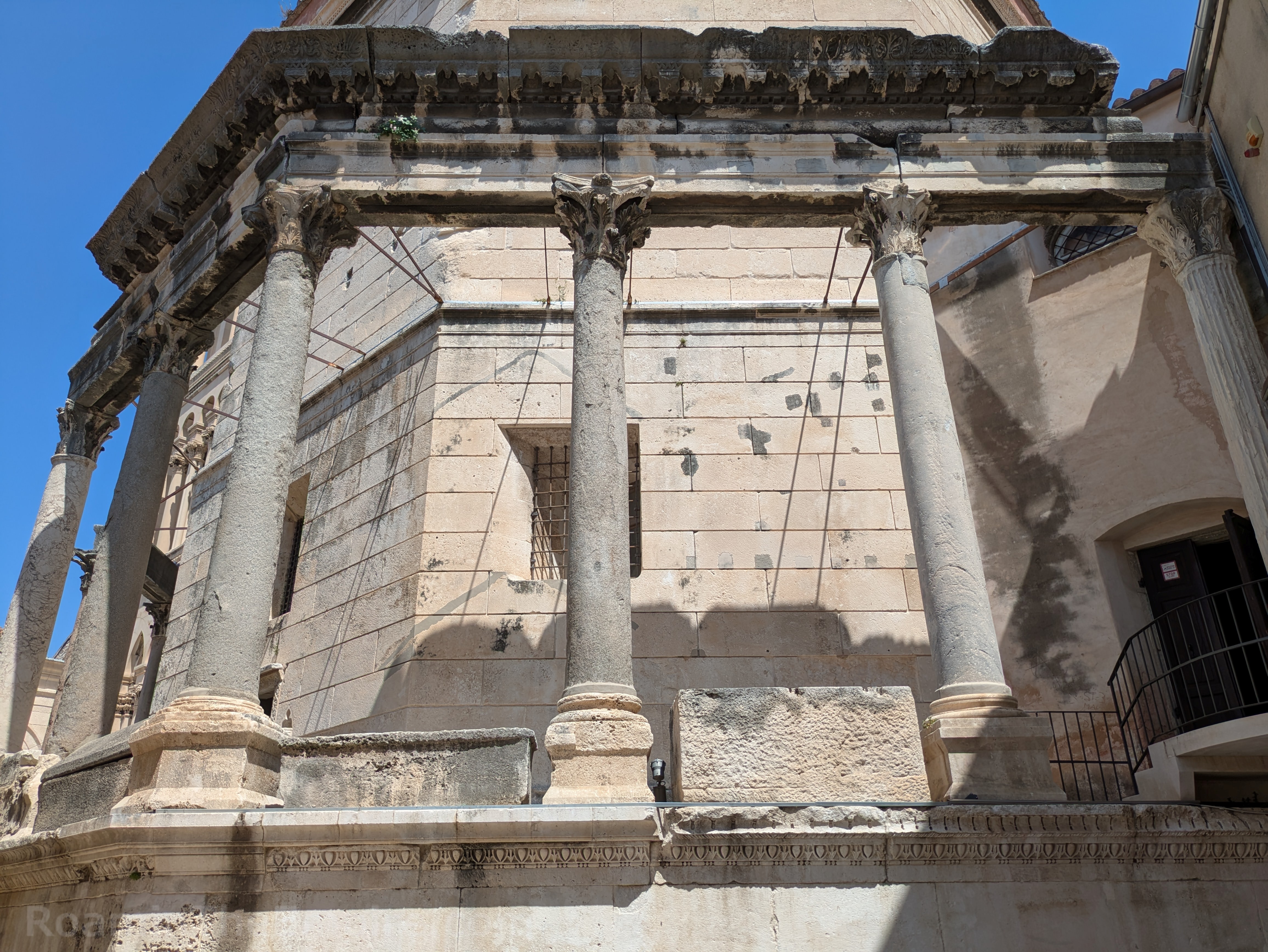
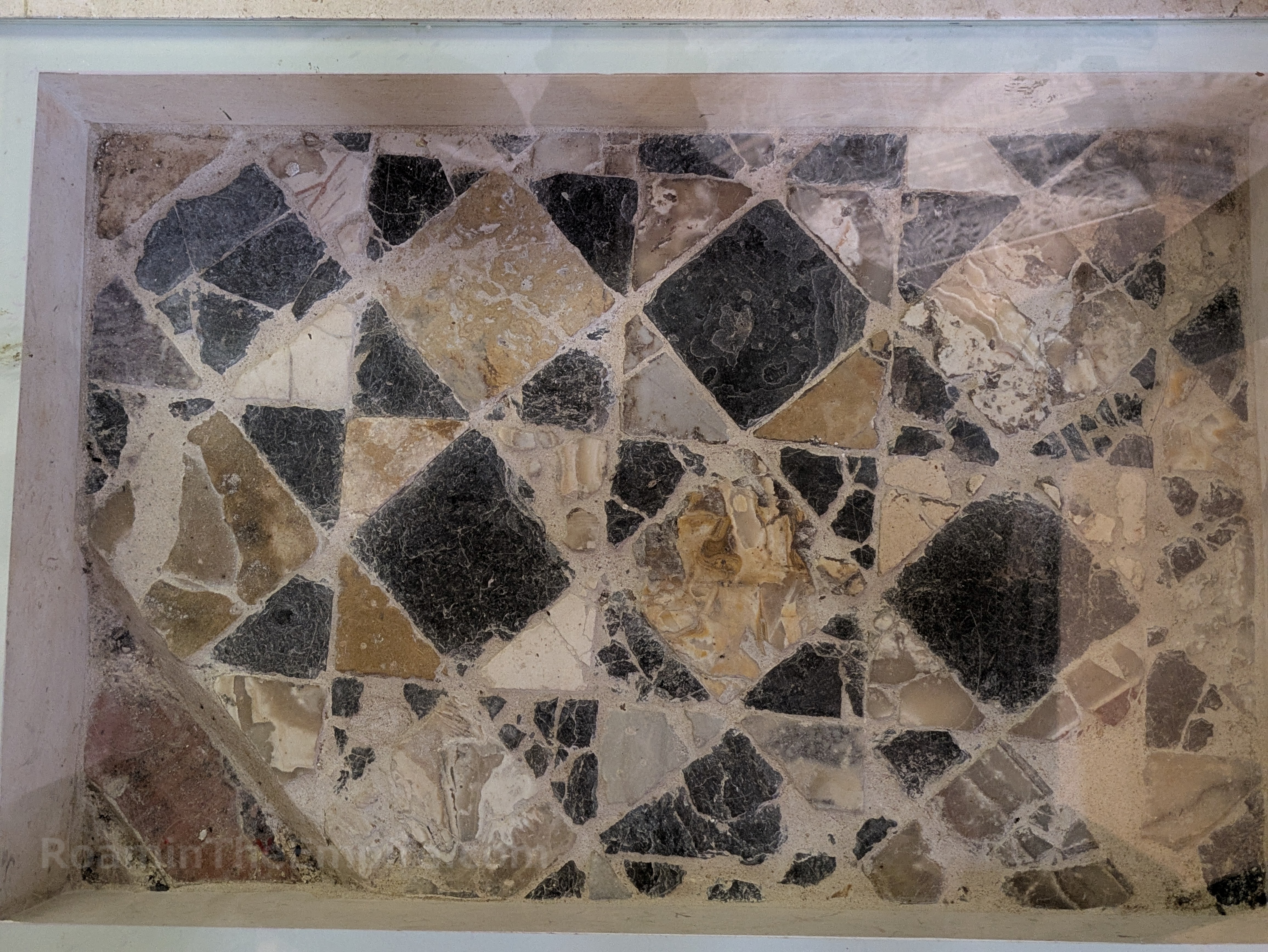
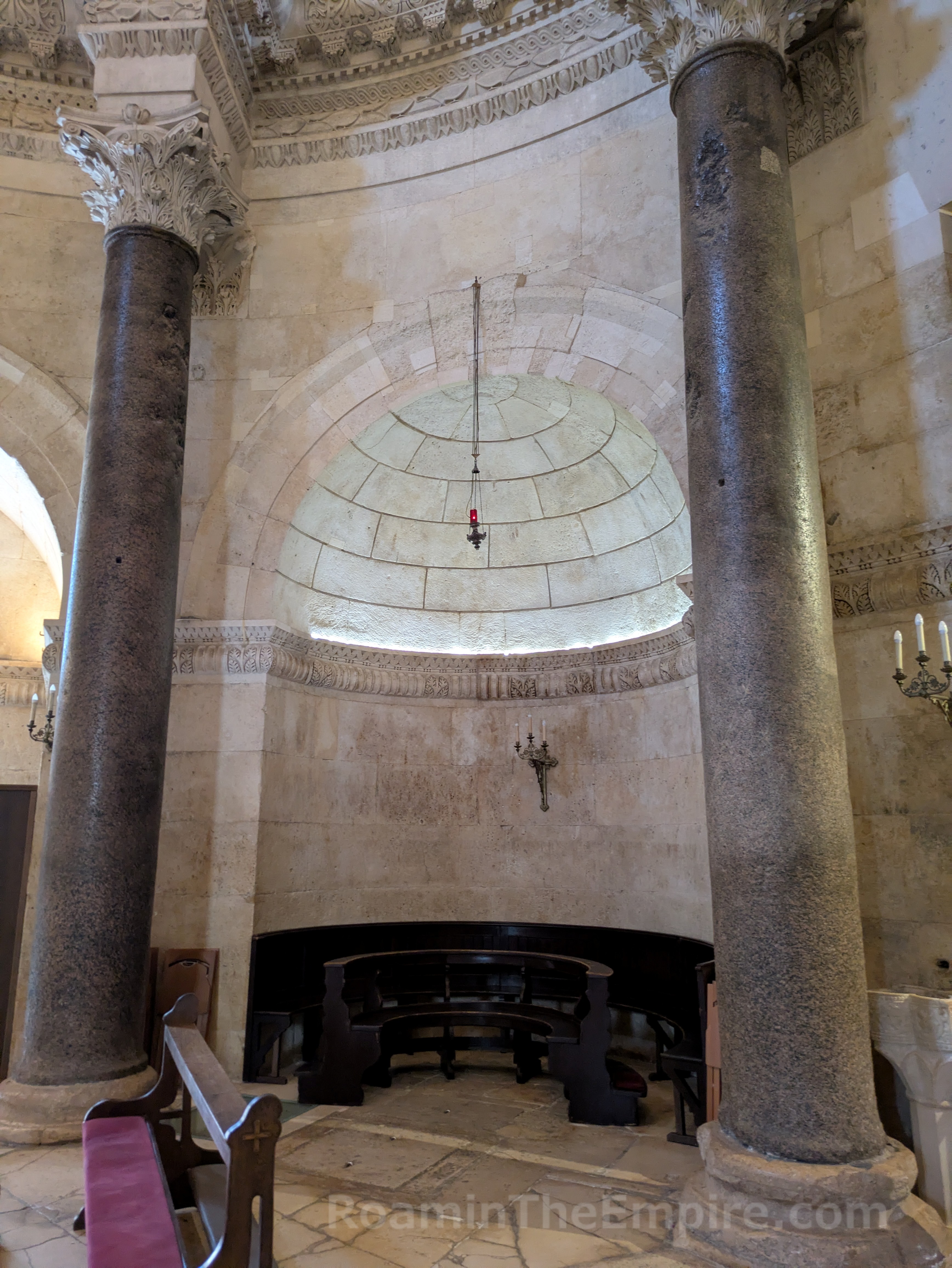
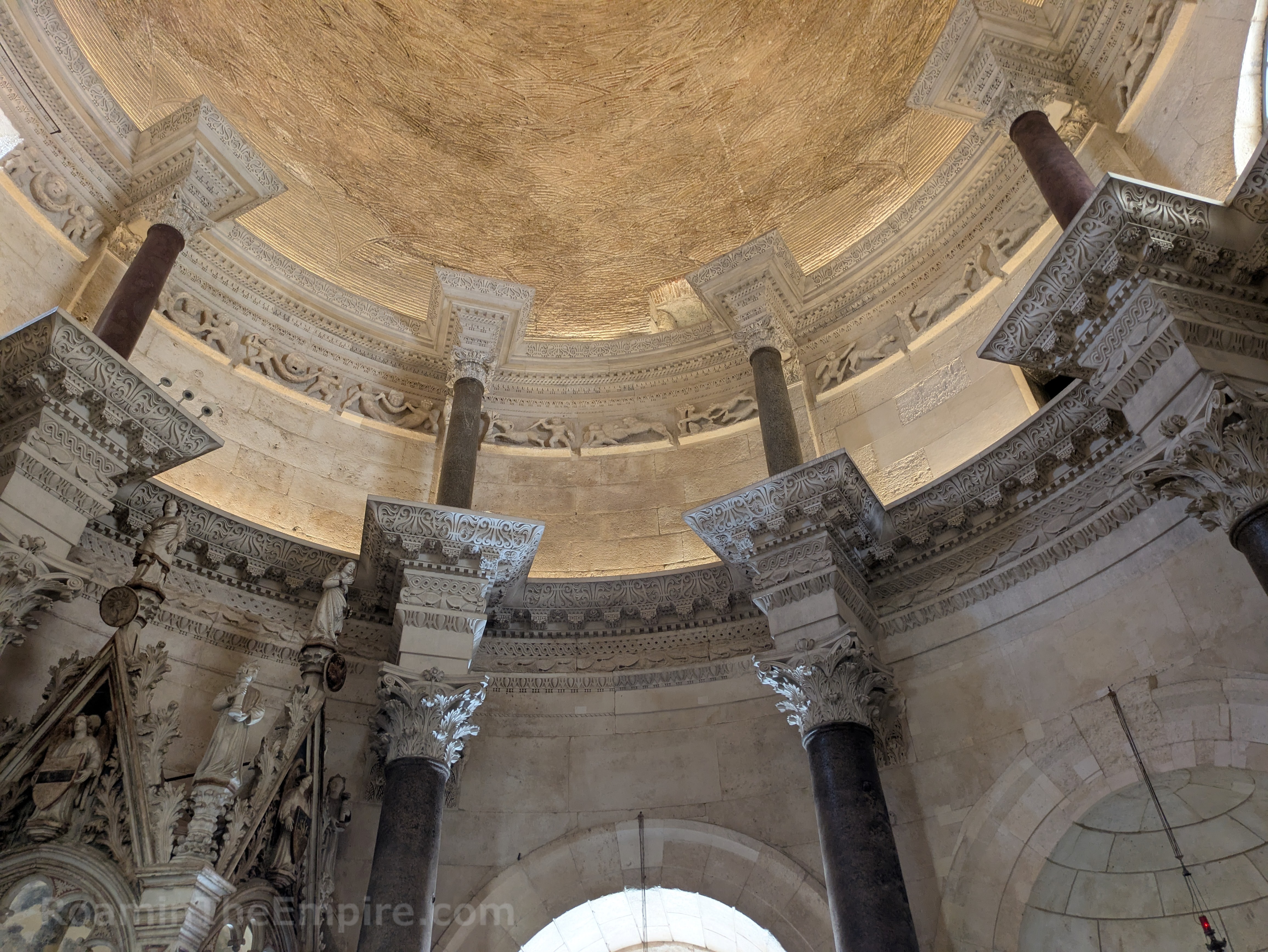
The exterior of the mausoleum was surrounded by a peripteral ambulatory, which extended out to the west to link the building with the peristyle, where the belltower was later constructed. Many of the columns and the entablature of this ambulatory remain, though none of the roof covering it survives. Inside, the mausoleum is circular in form. It is believed Diocletian would have been interred in the center and two large niches on the north and south would have been used for the burial of his wife Prisca and daughter Galeria Valeria. Both were killed in Thessaloniki in 315 CE and had their bodies cast into the sea, so they were never interred at the mausoleum. Eight large columns ring the lower part of the interior of the mausoleum, while eight smaller columns create a second register. Earlier mosaic and stone flooring is exposed beneath the present floor in a few places. Below the domed roof, a series of reliefs ring the building. These including hunting scenes and cupid driven chariots, typical motifs in a funerary context, as well as portraits of Diocletian and Prisca.
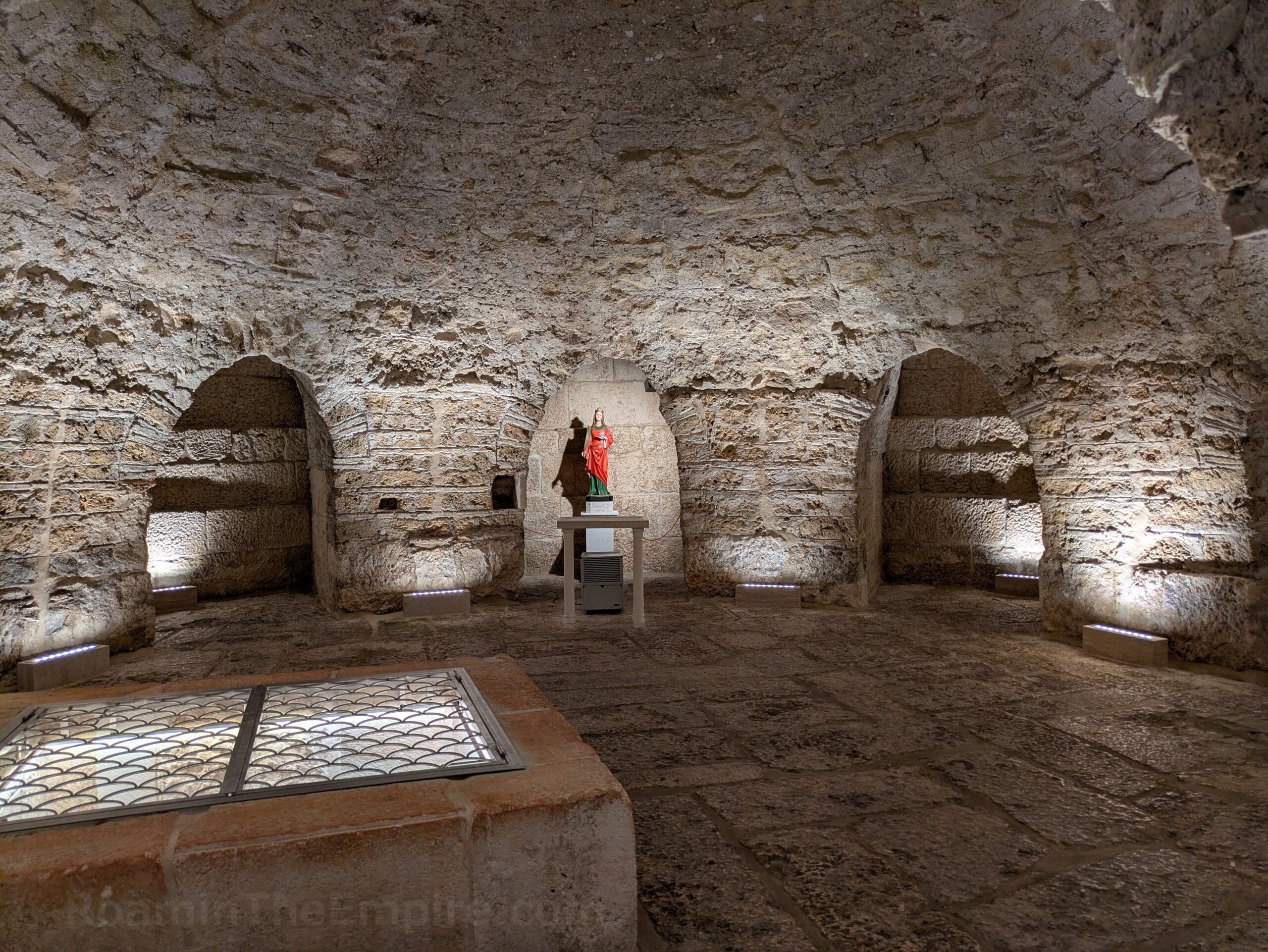
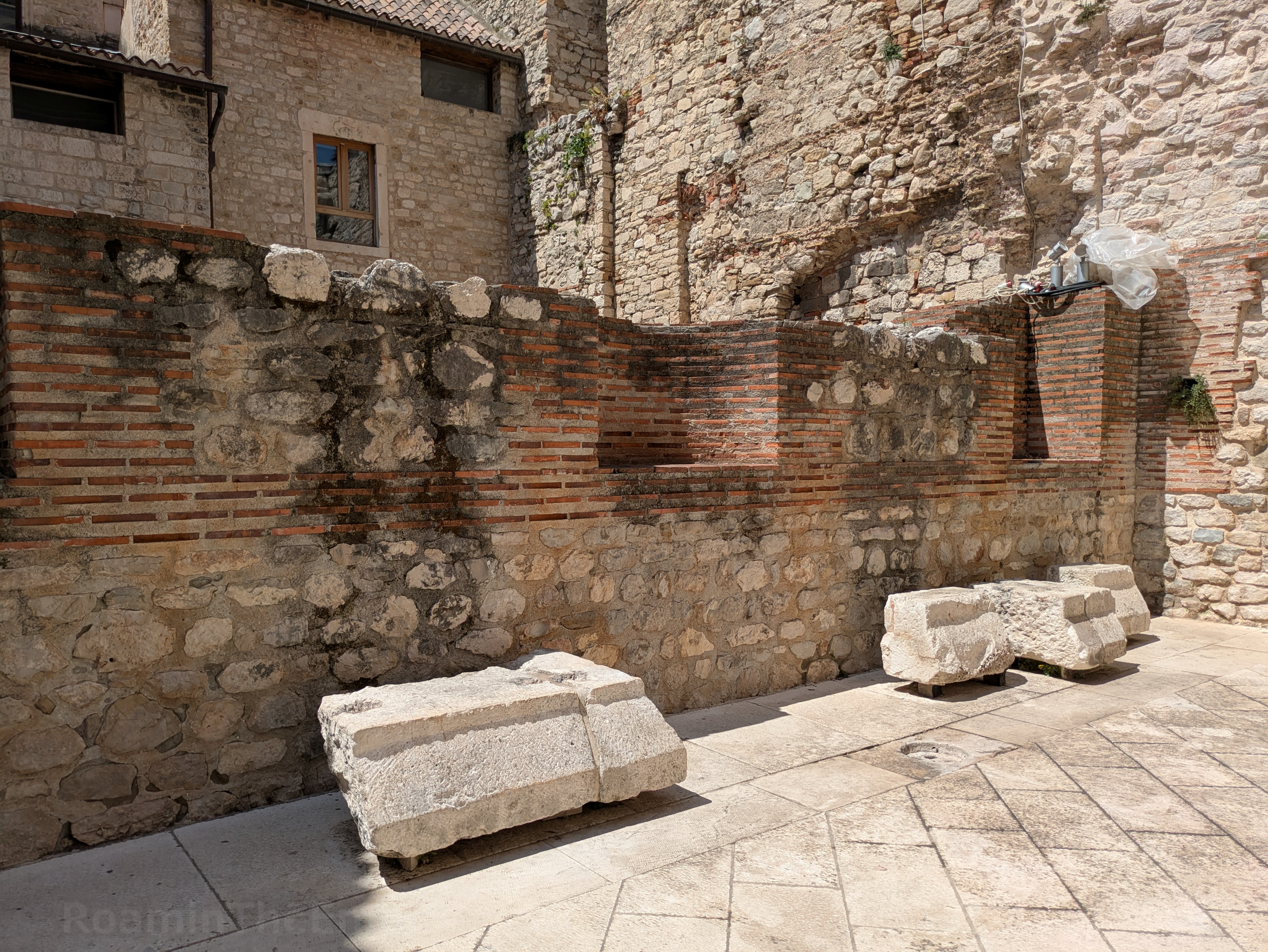
A separate entrance (and separate ticket) at the south side of the mausoleum, in an area enclosed by an ancient niched wall on the south, leads to the Crypt of St. Lucy beneath the mausoleum. The crypt is open Monday through Saturday from 8:00 to 20:00 and Sunday from 10:00 to 18:00. Single entrance is 3 Euros. St. Lucy was another martyr attributed to the persecutions of Diocletian, executed in Syracuse in 304 CE. The crypt is constructed under the cathedral and seemingly dates to the Roman period, though I have yet to see any definitive dating or previous use for the space. As part of a mausoleum, however, it easily could have housed additional family burials. Not surprisingly, there is no information on site.
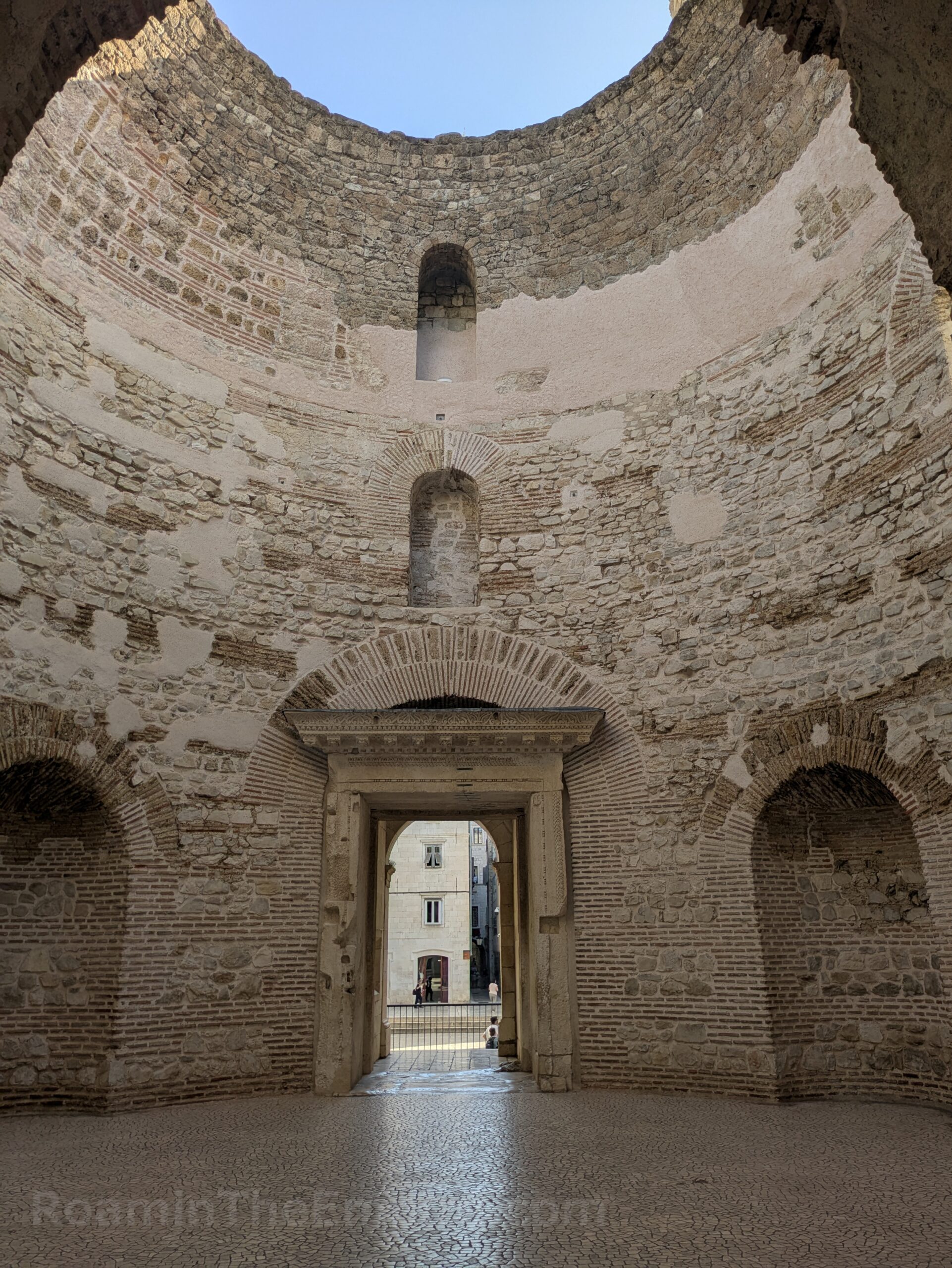
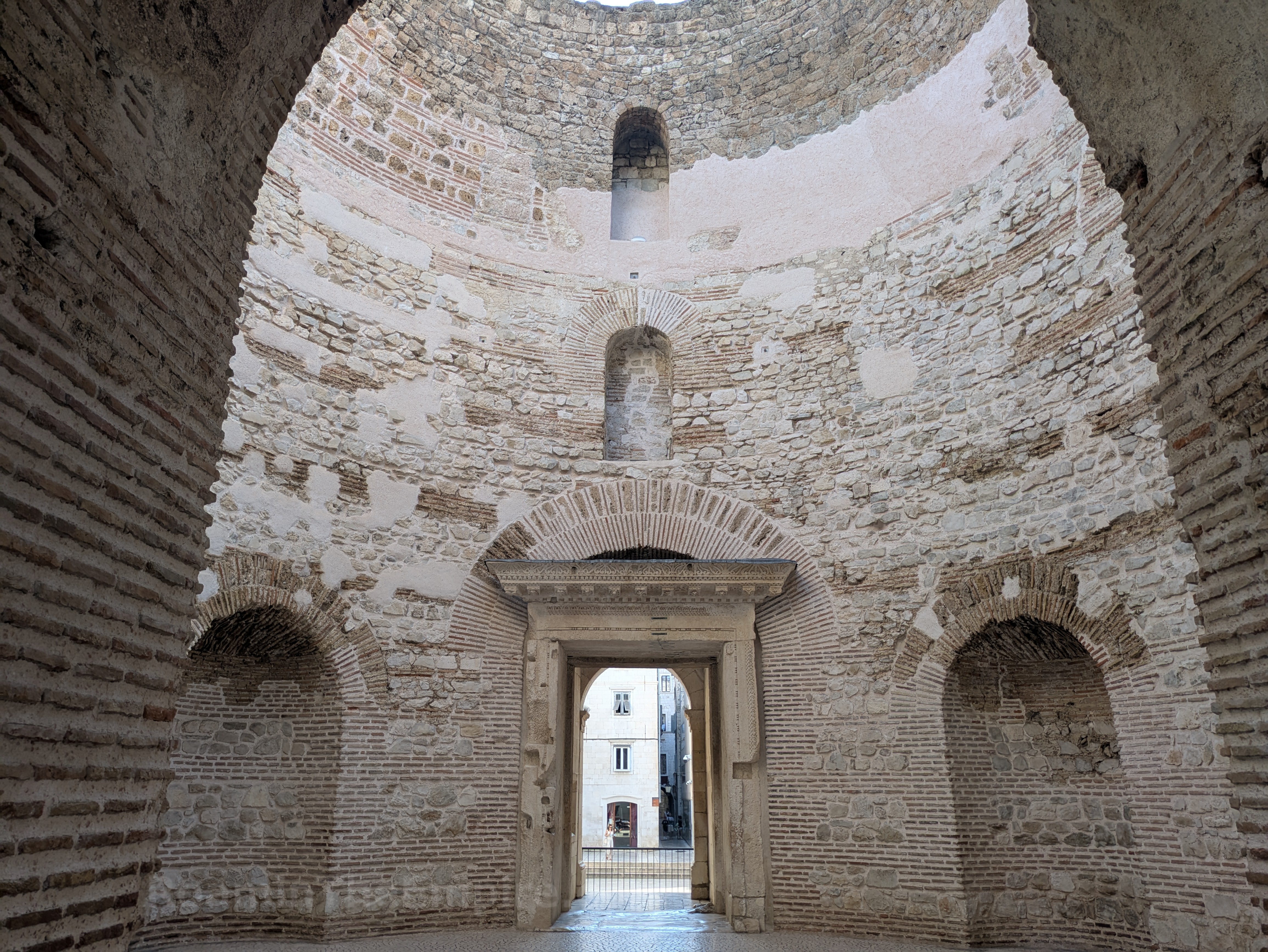
Up the staircase and through the prothyrum on the south side of the peristyle is a circular room commonly referred to as the vestibule, but also sometimes called the rotunda or atrium. This served as a sort of reception and entrance to the imperial apartment area. Originally a domed room about 17 meters tall, the lower parts of the dome survive, but the terminal elements of it are missing and the room is now open to the sky. Four niches at the ground level fill the space between the two doors, while there are two levels of niches and windows in the dome above the ground level. The doorway that exits onto the peristyle has surviving embellishments around the doorframe and lintel.
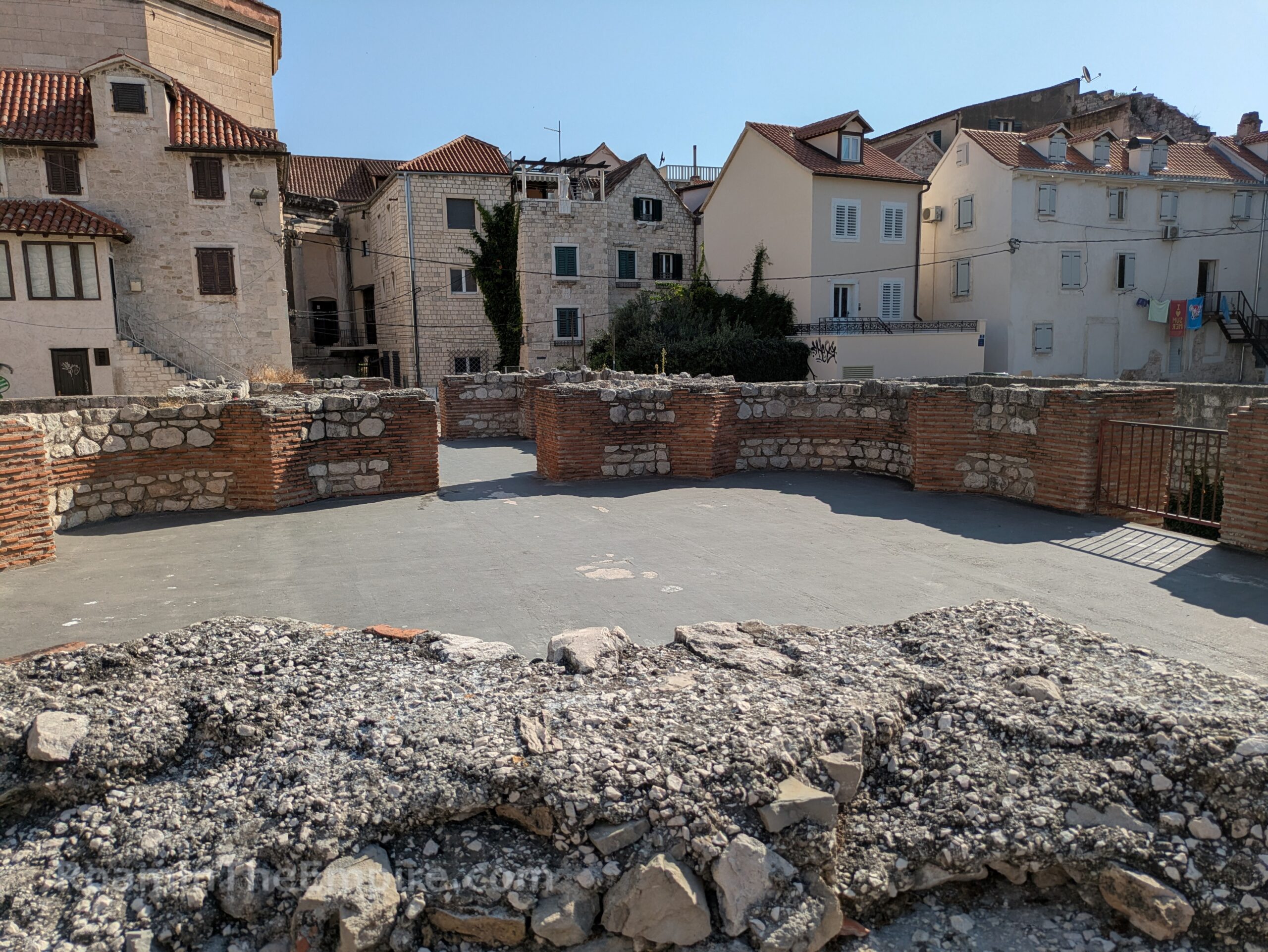
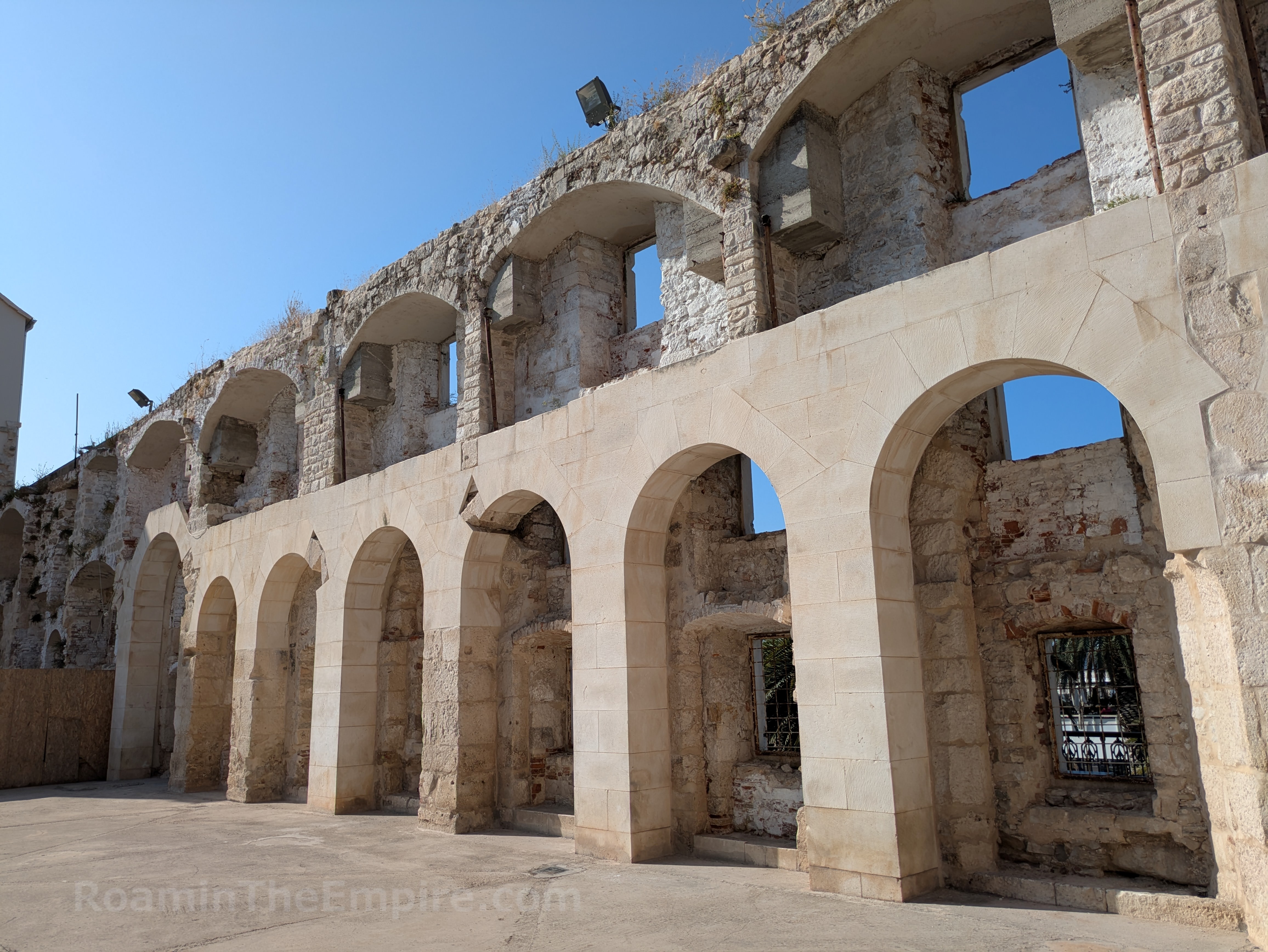
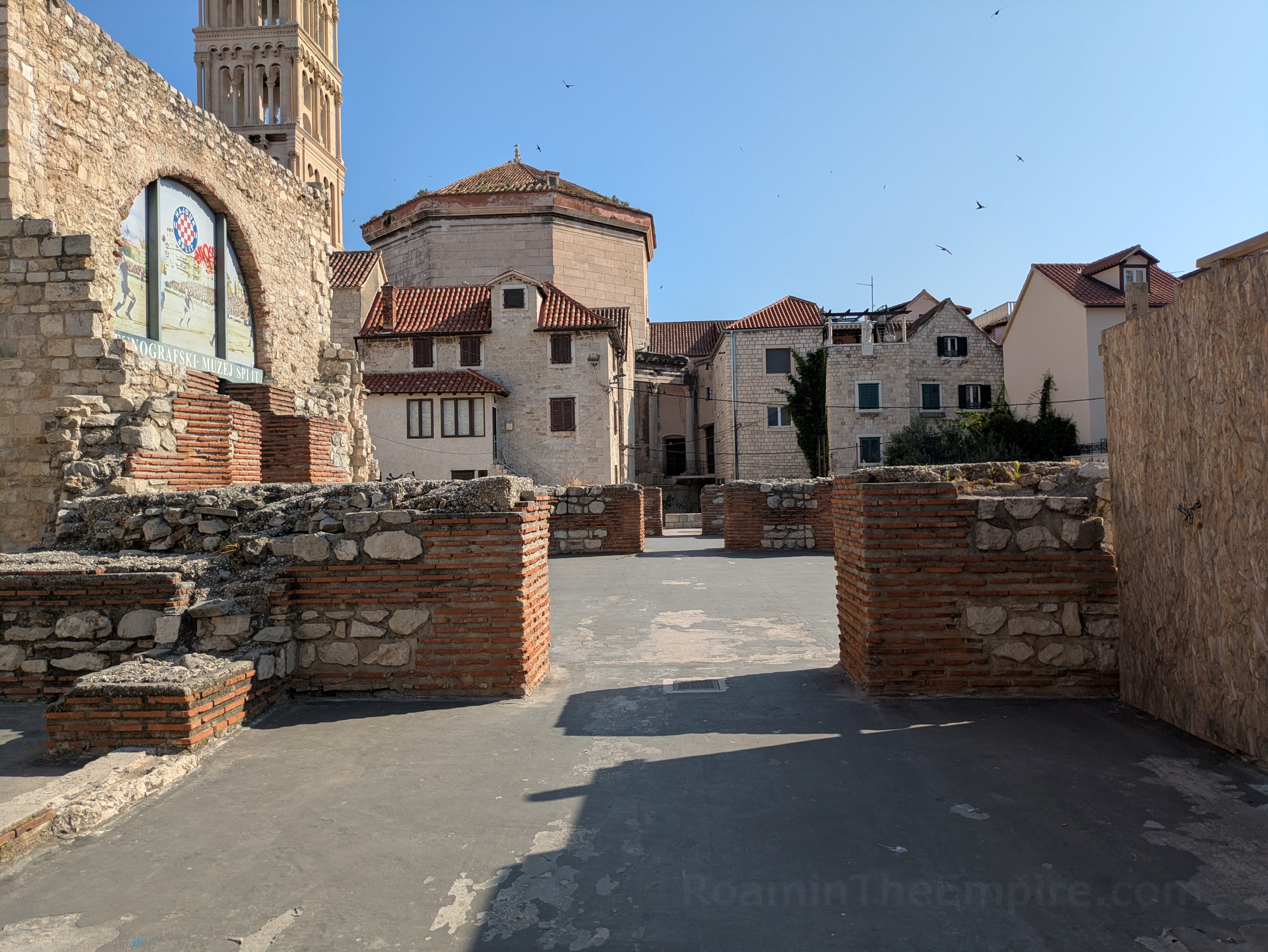
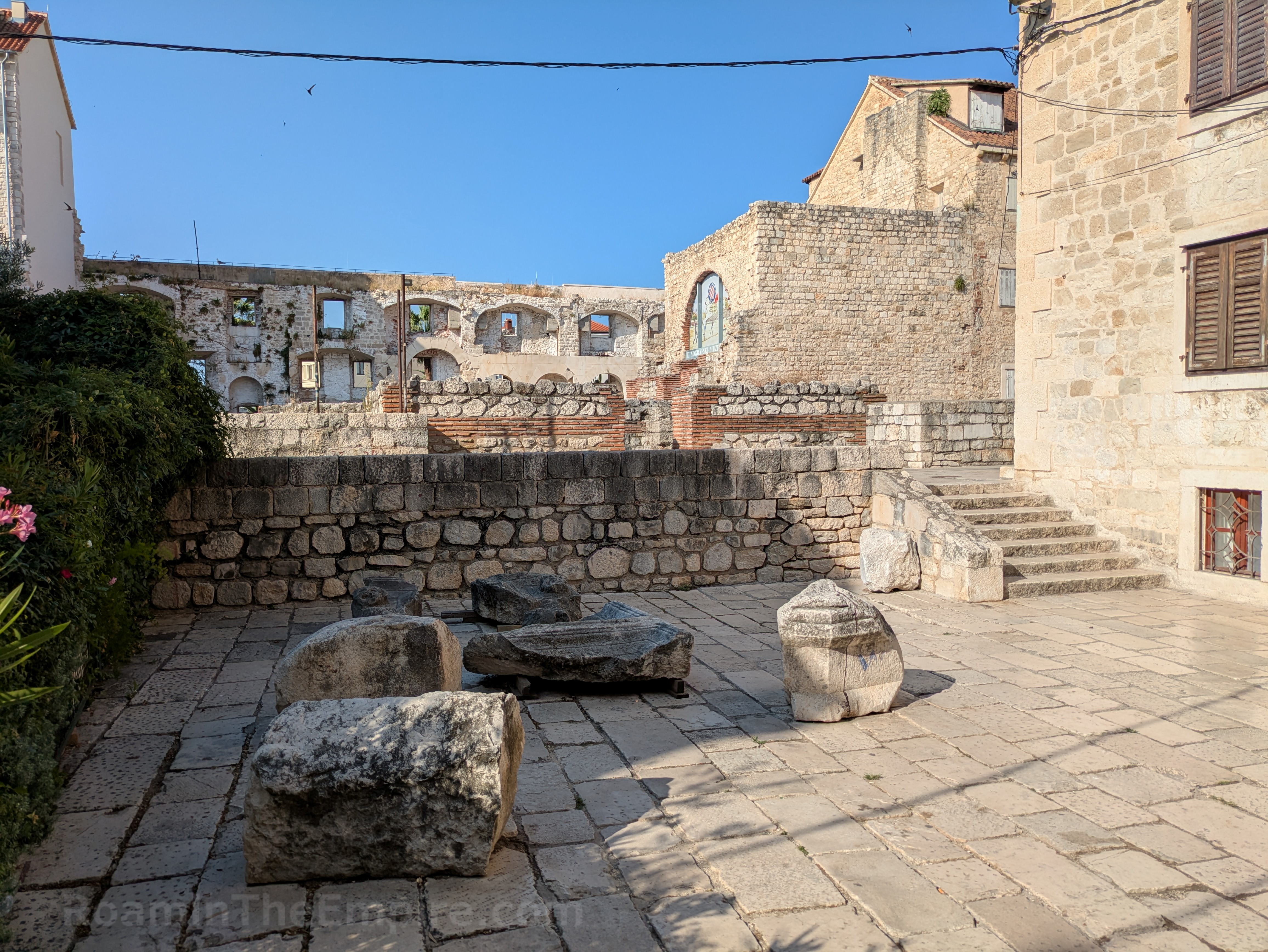
Opposite the door leading to the peristyle is another door that leads to the south. A short walk through a small square and alleyway (which is believed to have been the area of a tablinum or aula palatina in the original palace floorplan) leads to the interior of the upper level arcade that runs along the top of the south wall of the palace. This interior arcade is reconstructed with modern materials, but gives a sense of what would have been a viewing area out over the sea from Diocletian’s private residence. The east end of this walkway leads into an area above the eastern part of the basement, which mirrors the room layout of the basement. Three smaller rooms along the south lead north into a larger niched hall, identified as a triclinium. This room corresponds with 17b in the basement. Evidence found here suggests the room was richly decorated with various marbles used. That then continues into a smaller rectangular room. These rooms seem to be heavily reconstructed. The open air courtyards of the basement level are visible over the west side of these rooms, as are the inaccessible eastern courtyards off the eastern side. Though now just indistinct concrete and modern stone, the northern and eastern platforms around the triclinium made up more space that was part of Diocletian’s residence. A few bits of architectural elements sit in a square to the north.
Continued In Spalatum – Part IV


Sources:
Brcic, Inga Vilogorac. “Venus et Cybele. Matres Romanorum,” The Century of the Brave: Roman Conquest and Indigenous Resistance in Illyricum During the Time of Augustus and His Heirs. Stoljeće Hrabrih (Ed.), FF Press: Zagreb, 2018.
Bužančić, Radoslav. Diocletian’s Palace, 2009.
Bužančić, Radoslav. “Diocletian’s Palace, Restoration of the S–E Quadrant.” 50 Years (1972–2022) of the Convention Concerning the Protection of World Cultural and Natural Heritage, 2024.
Smith, William. Dictionary of Greek and Roman Geography. Walton & Murray, 1870.
Stillwell, Richard, William L. MacDonald, and Marian Holland. McAllister. The Princeton Encyclopedia of Classical Sites. Princeton, NJ: Princeton U Press, 1976.
Grant, Michael. A Guide to the Ancient World: A Dictionary of Classical Place Names. New York: Barnes & Noble Books, 1997.