


Continued From Spalatum – Part IV
There are a few other archaeological points of interest in Split outside the walls of Diocletian’s Palace. There’s a large park area out in front of the Golden Gate crisscrossed by a few connecting roadways that eventually link up with Ulica Domovinskog Rata, one of the main arteries through the central part of Split. This road begins about 350 meters, as the crow flies, from the Golden Gate. Recent (and perhaps ongoing) excavations along the east side of the road, just north of the intersection with Ulica Bihaćka, seem to have revealed some elements from what is traditionally identified as some kind of entertainment venue; a circus, theater, or amphitheater. Unfortunately, when I visited these were not visible. There are also apparently some remains from an early Christian basilica and perhaps a 1st century CE Roman building located on the west side of Ulica Domovinskog Rata, again just north of the intersection with Ulica Bihaćka, where they were discovered during construction. Similar to the excavations on the opposite side of the road, I was not able to get in any position where I could see what was here, as the view was limited by ongoing works.
Several blocks to the northwest, about a 10-15 minute walk from the basilica (or directly from the Golden Gate), is the Arheološki Muzej u Splitu, the Archaeological Museum of Split. The museum is located at Ulica Zrinsko Frankopanska 25. It is open during the summer (June 1 to September 30) Monday through Saturday from 9:00 to 14:00 and 15:00 to 20:00. It is closed on Sunday. The rest of the year, the museum is open the same times but the afternoon hours on Saturday are cut, so it is only open in the morning. Admission is 8 Euros, though it may be reduced during the seemingly frequent closure of the main permanent collection. There is also a combination ticket that allows a visit to the Archaeological Area of Salona within 7 days for 10 Euros.
When I visited the museum in 2012, the entirety of the museum was open and accessible, but this last time in 2025, the indoor portion of the museum was closed and only the outdoor lapidarium in the courtyard was open (with a reduced entrance fee; I think they were charging a few Euros, but I already had the combination ticket from Salona). This type of closure seems to be relatively frequent and has to do with the changing out of temporary exhibitions that either require the space normally reserved for the permanent collection and thereby displacing it, or require a set up that renders the permanent collection inaccessible during the process.
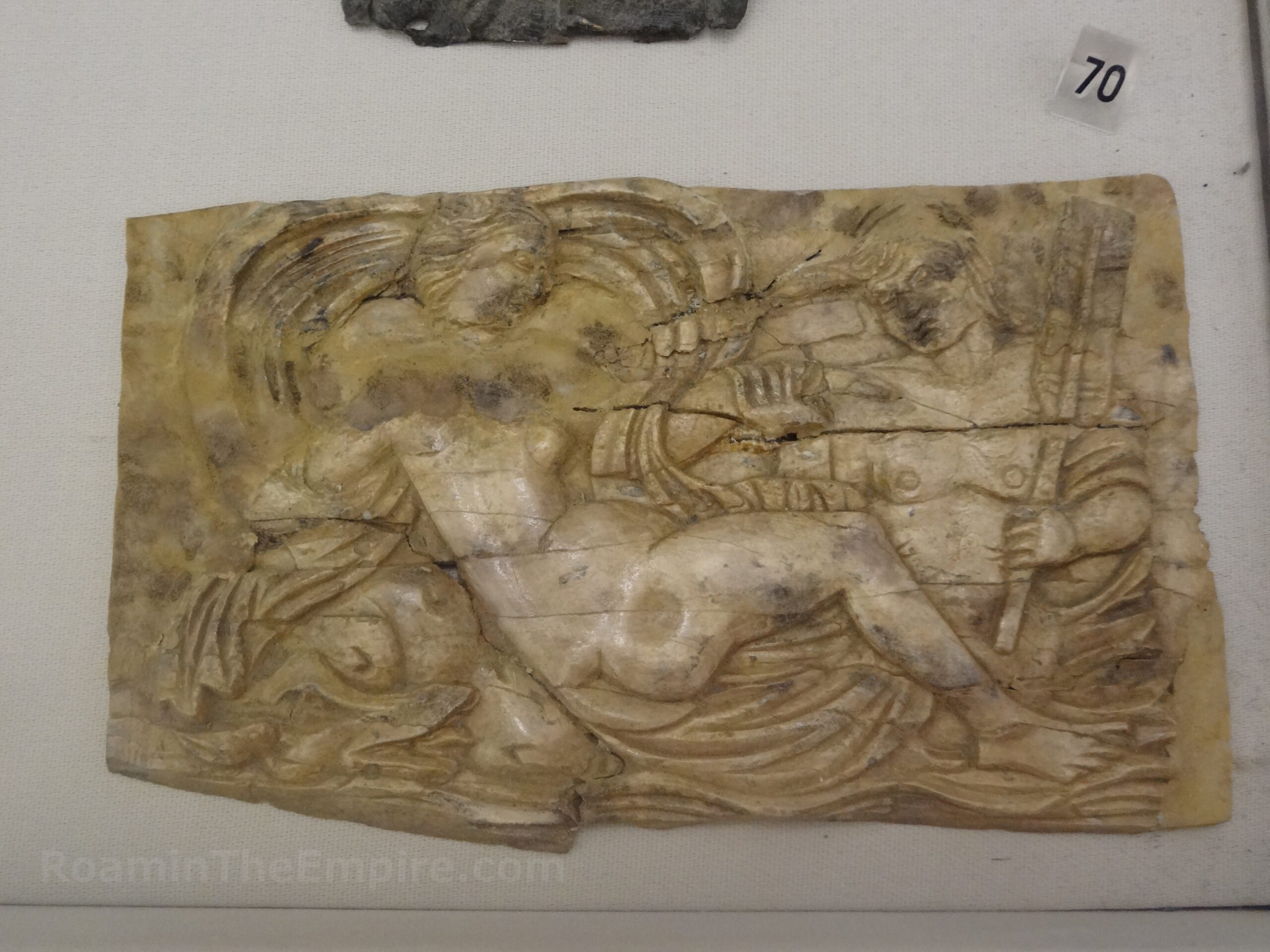
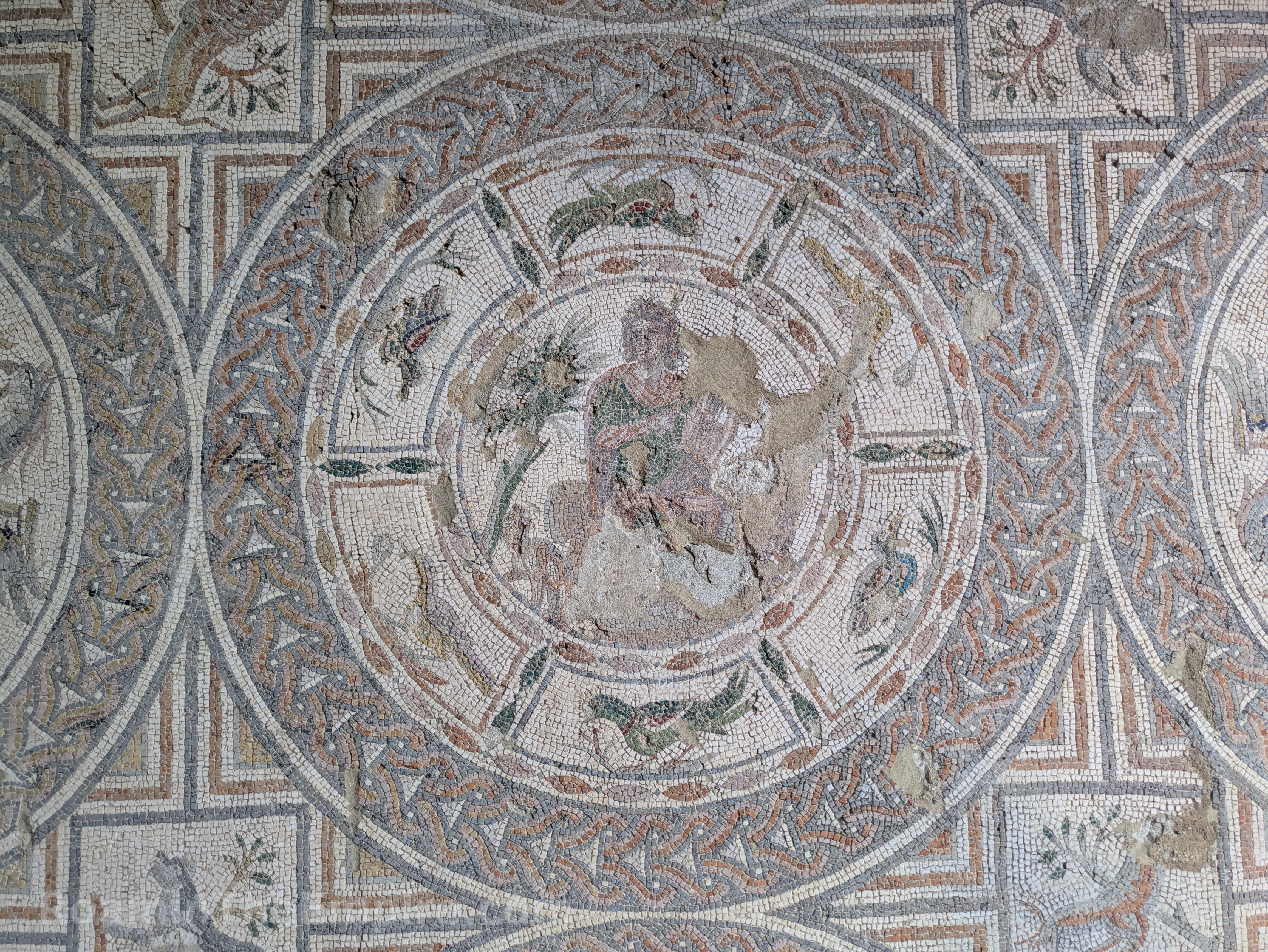
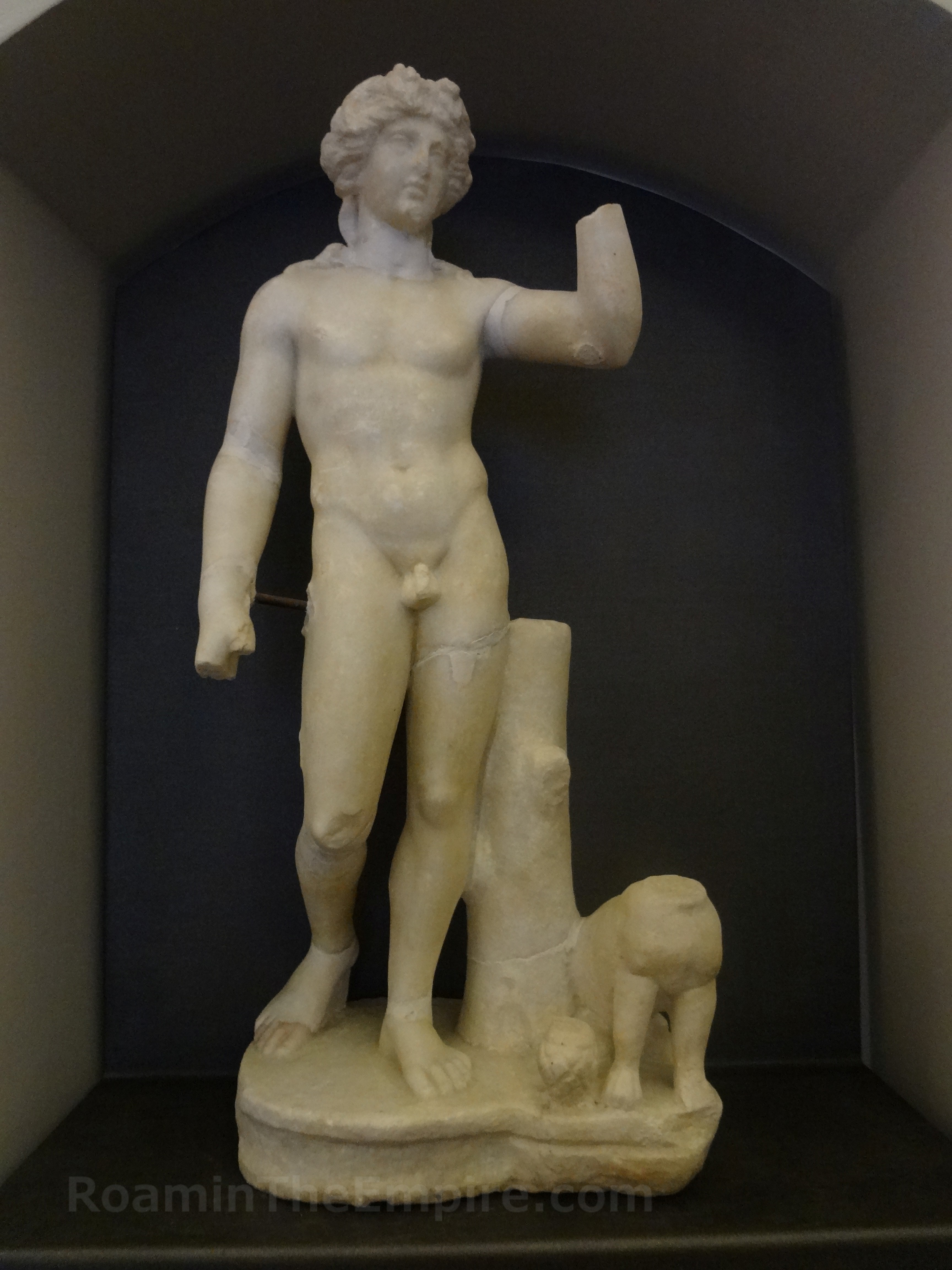
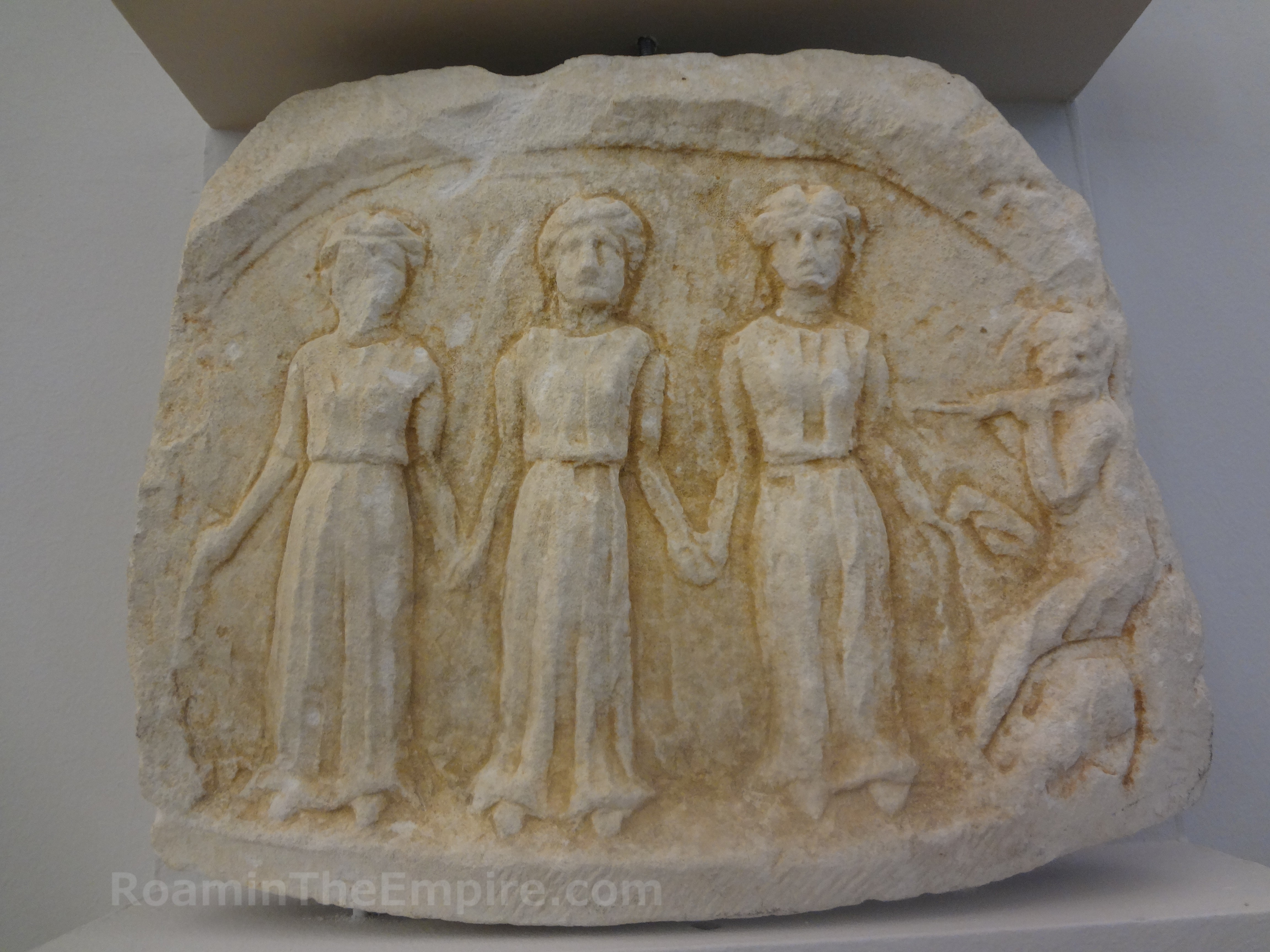
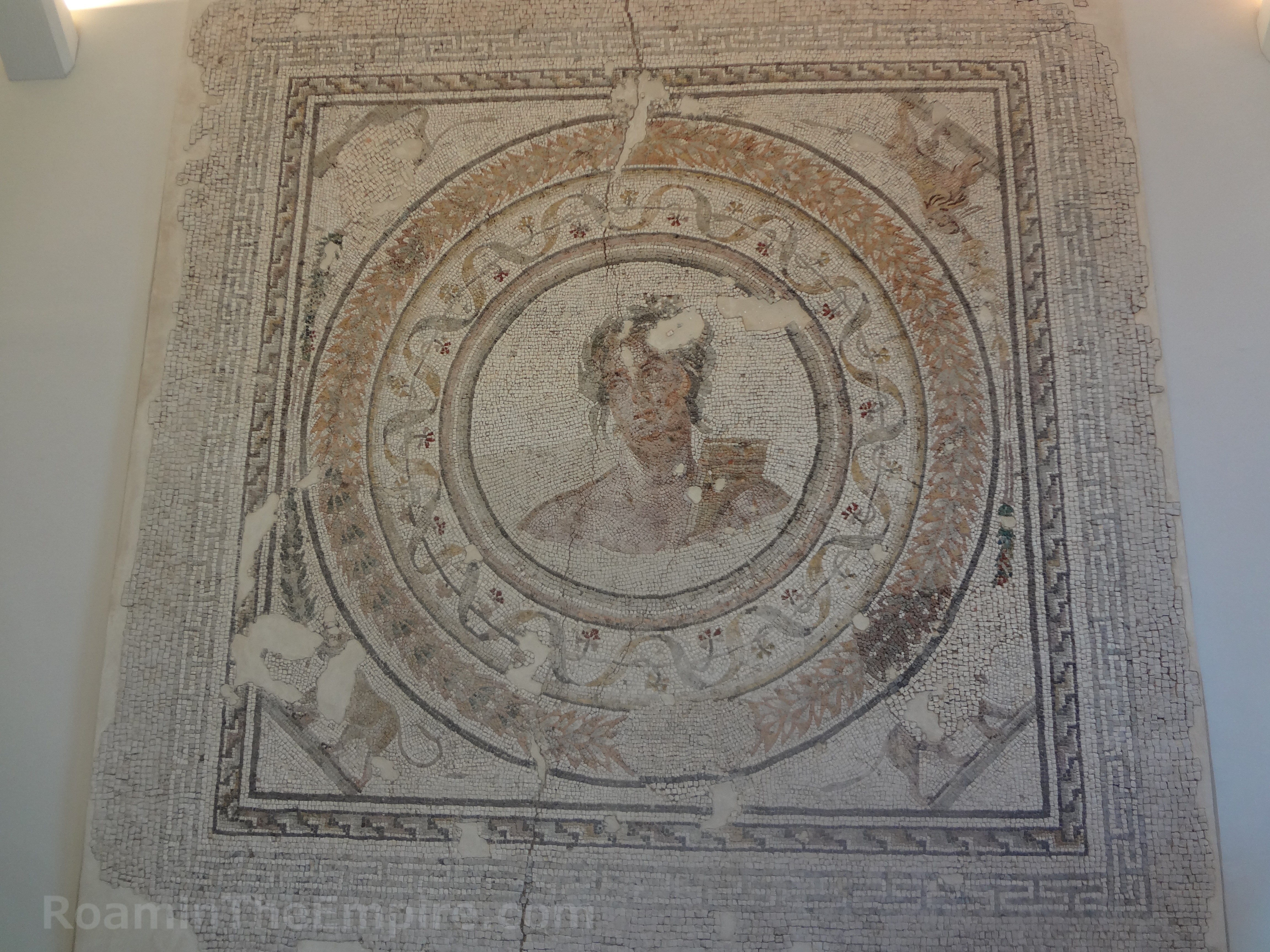
The main collection is relatively small. There is one large room that is about 2/3rds Roman or Greek material, with the remaining being medieval finds and a smaller room with pre-Roman/Greek material. The ancient coin collection is fairly impressive, with several cases of coins. The glass collection is relatively significant as well. There’s the usual spread of pottery and other terracotta objects (figures and lamps) as well as smaller bronze pieces like fibulae and some smaller figures. The collection contains a couple large statue fragments and several smaller statuettes, busts, some relief votives, and a few inscriptions (the majority of the inscriptions are kept in the courtyard lapidarium). A mosaic of Apollo is on display in the entryway. Most objects had identifications in English. The main permanent collection took me about an hour to go through in 2012; I’d estimate it might take me a bit longer these days, probably more like an hour and a half.
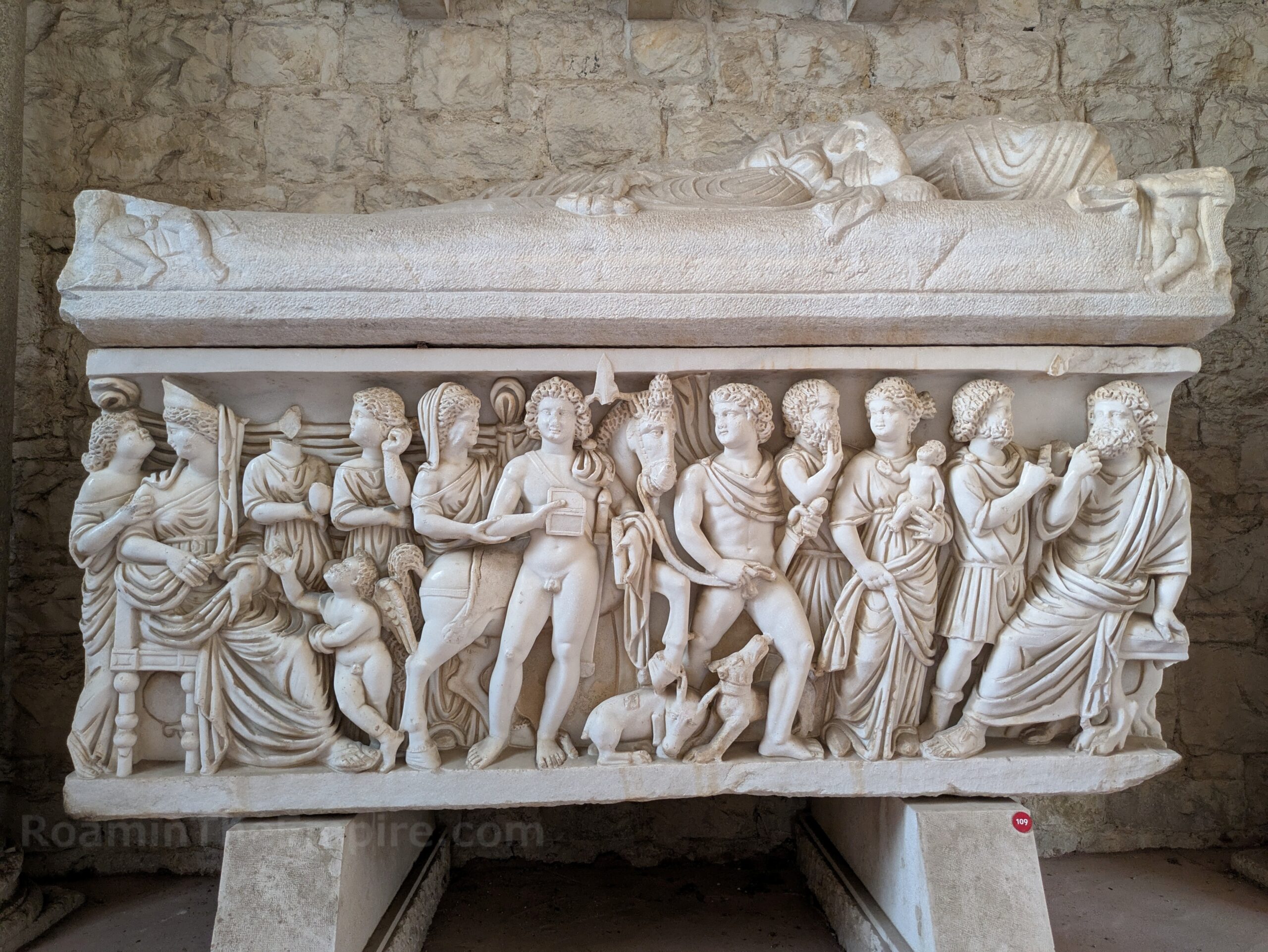
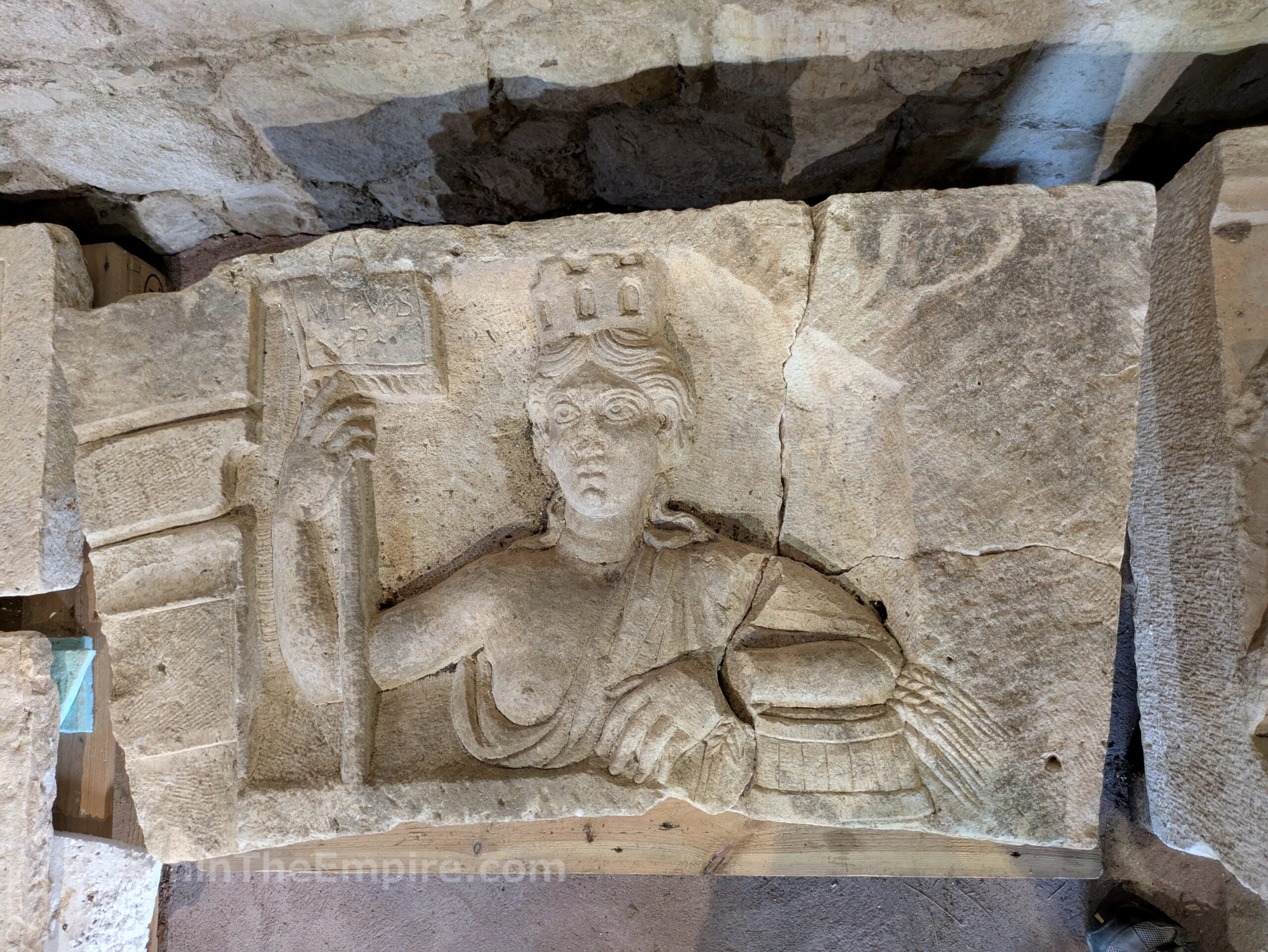
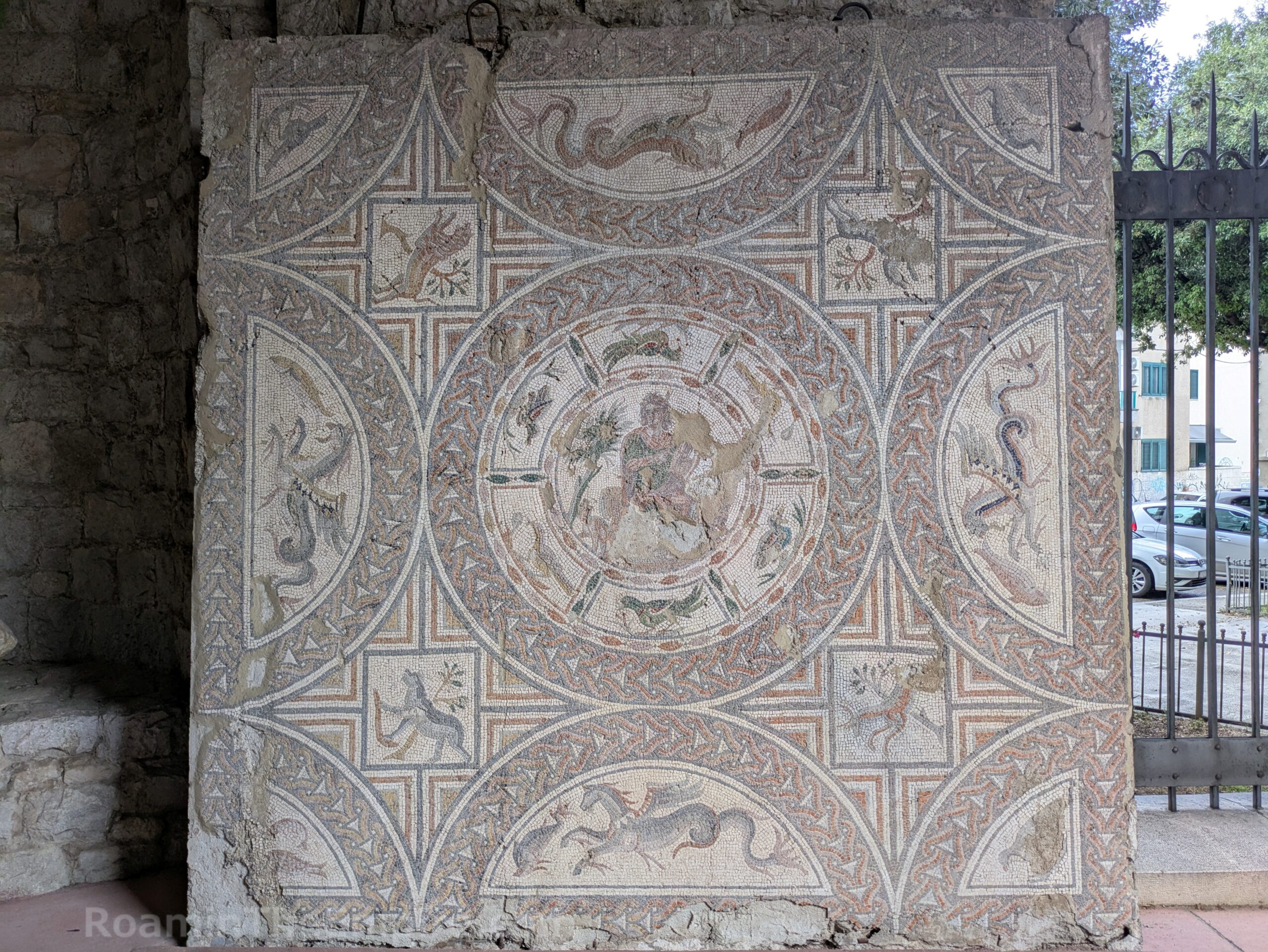
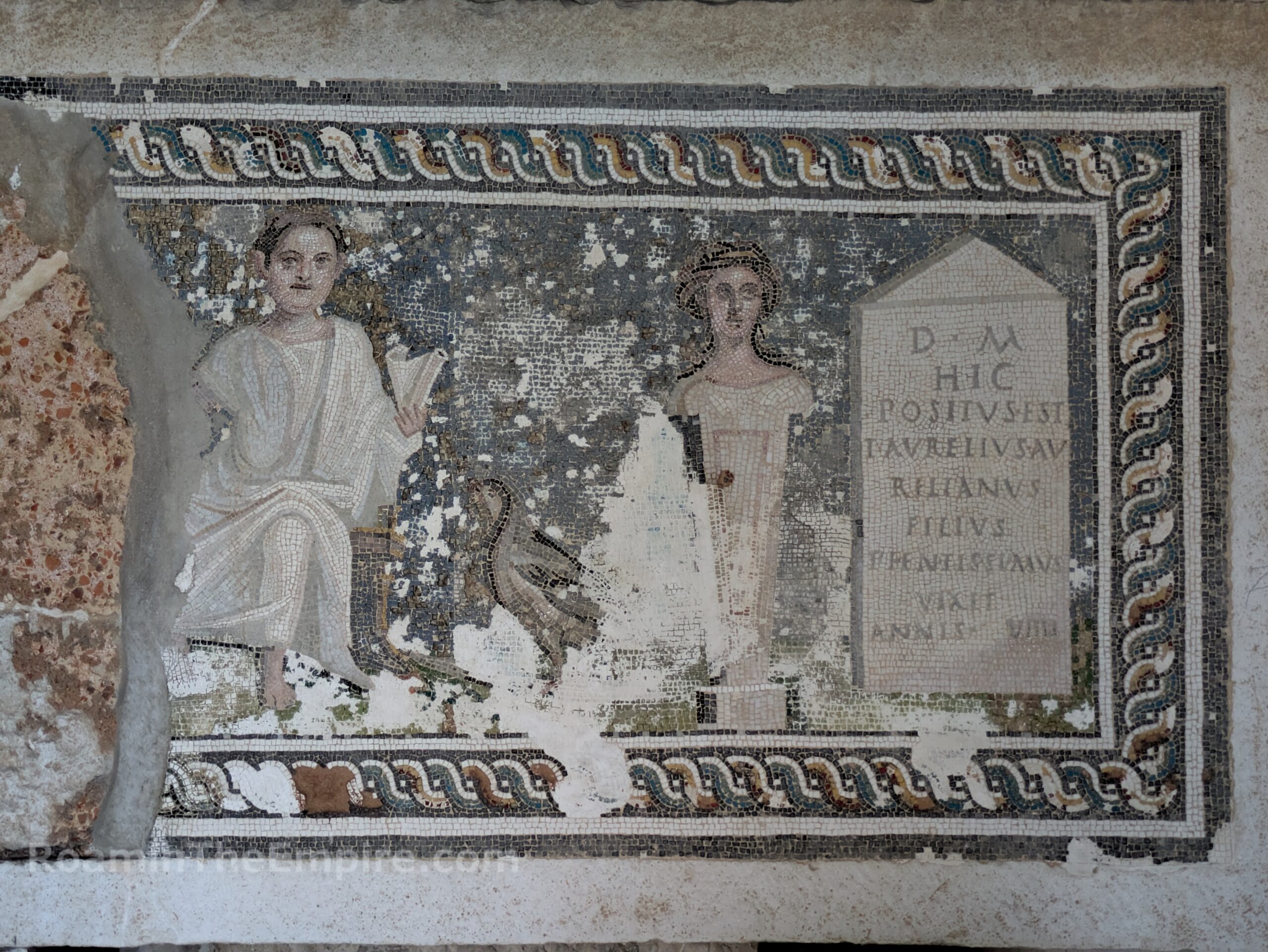
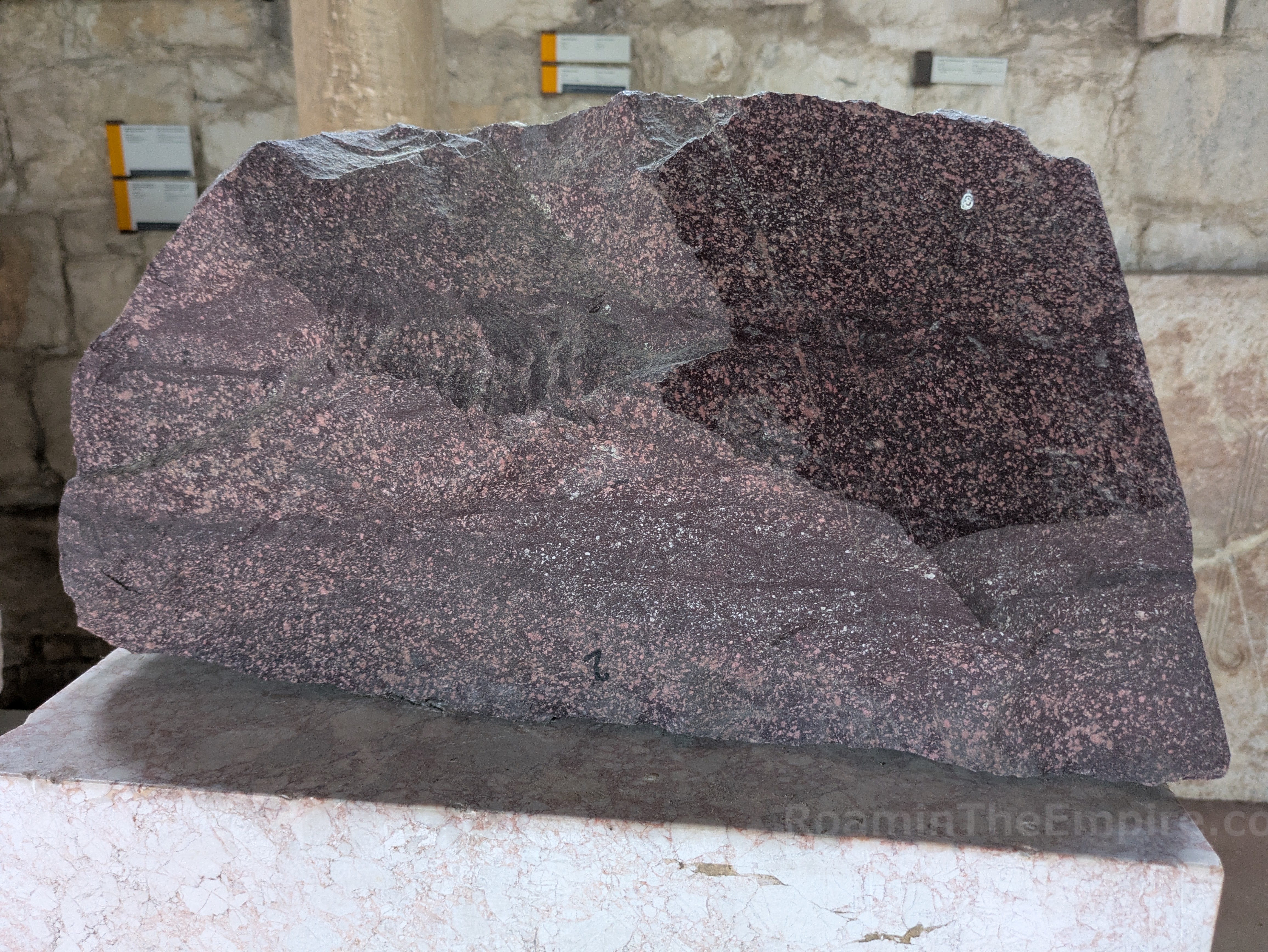
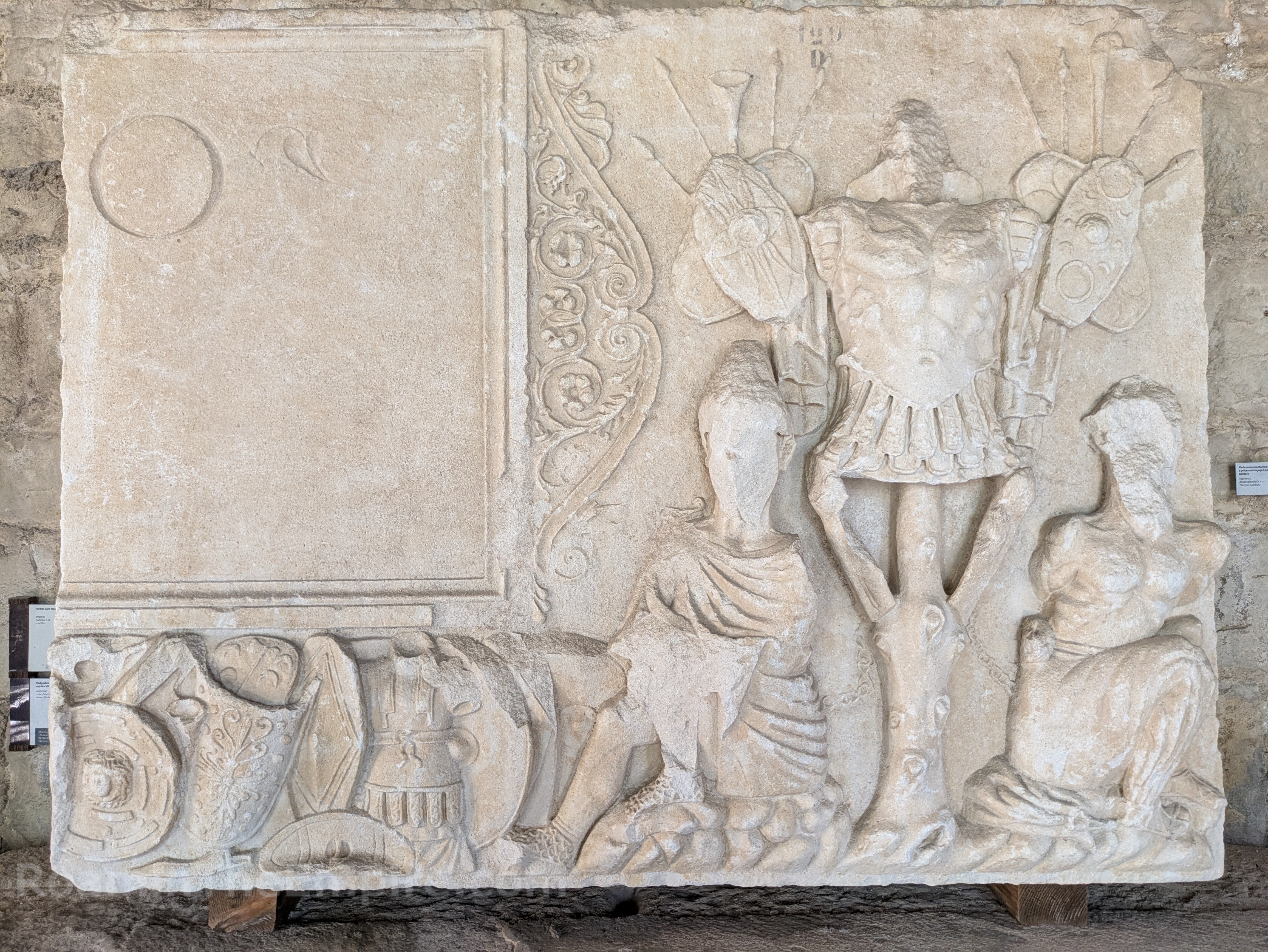
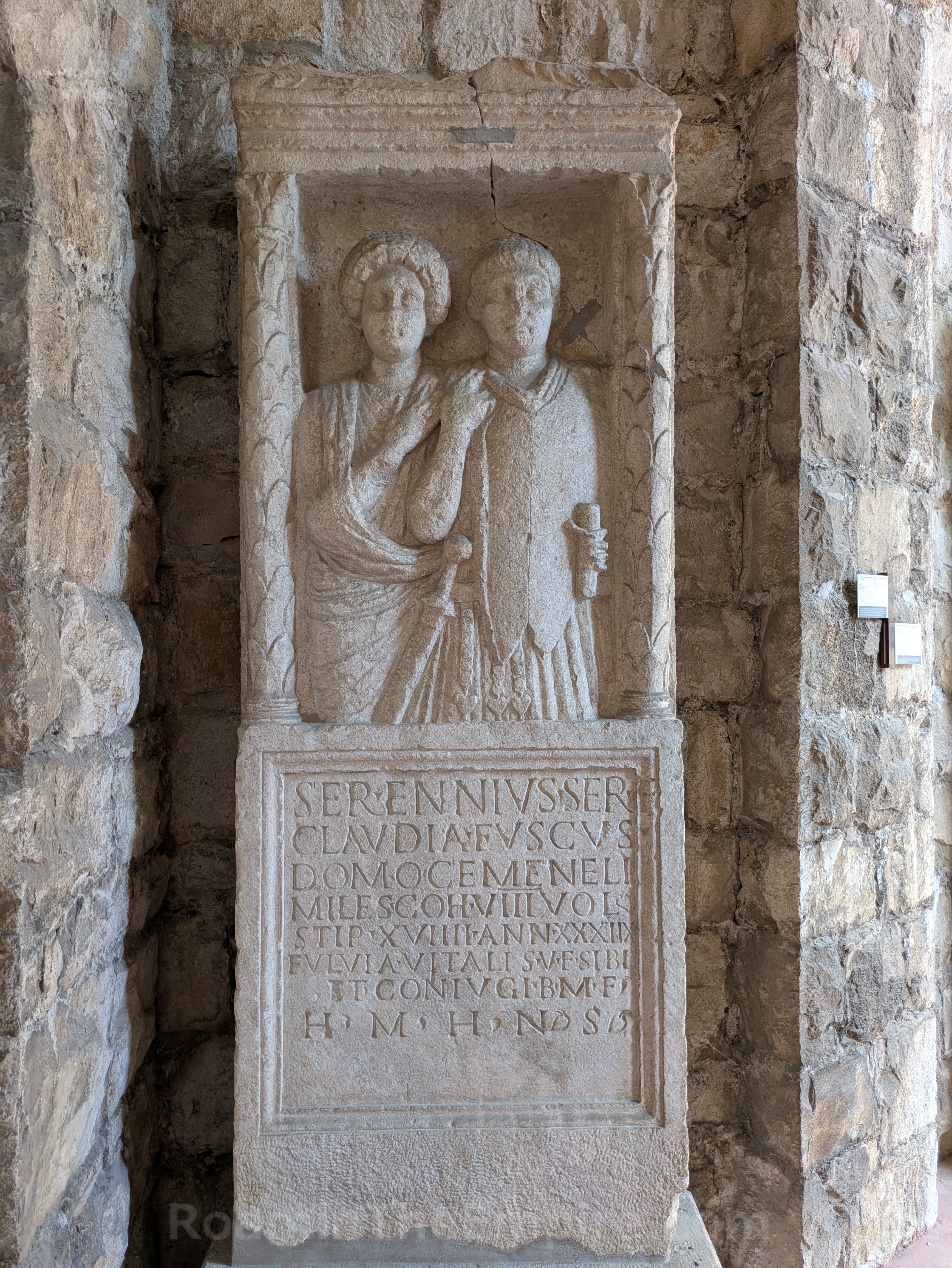
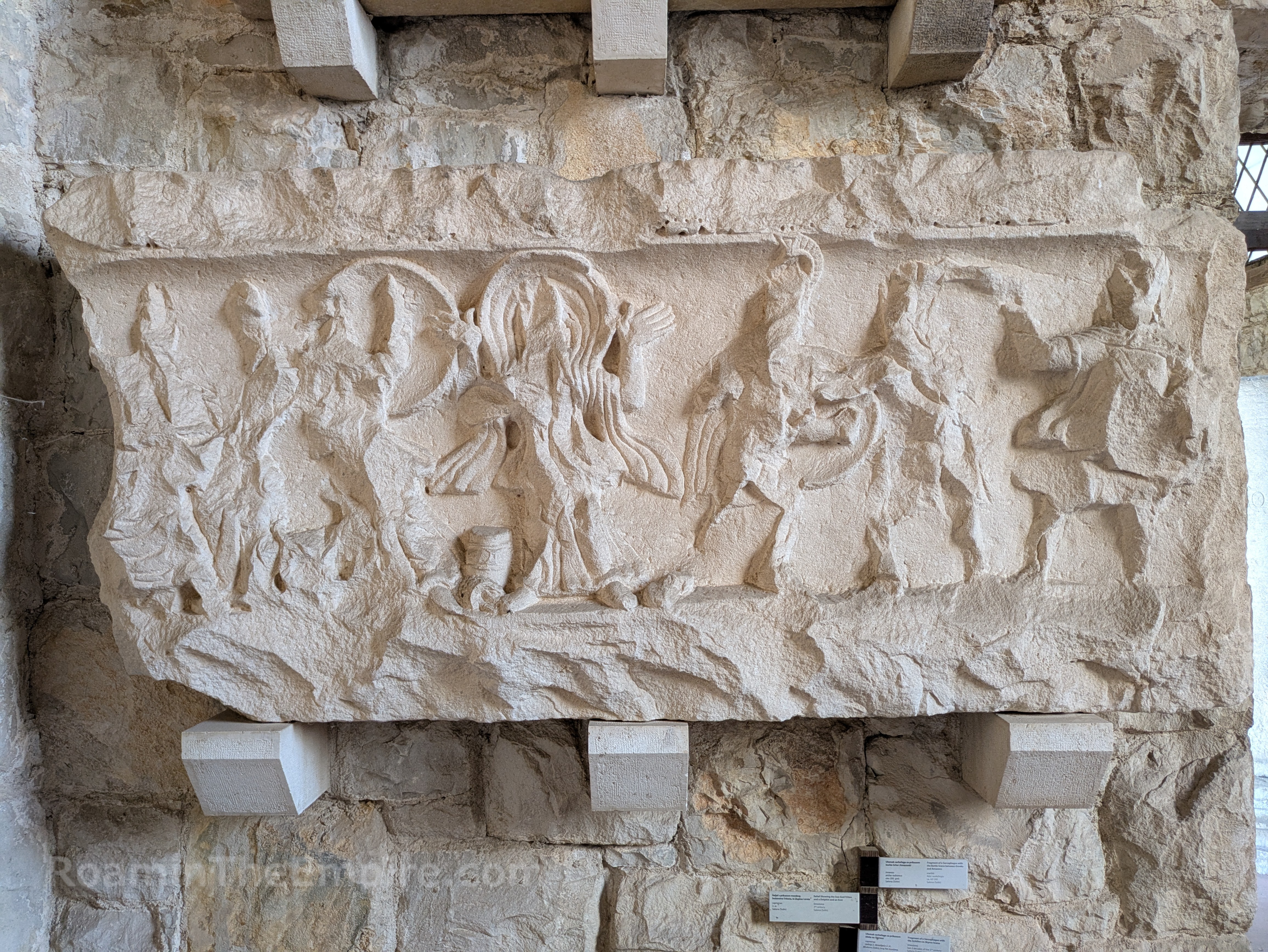
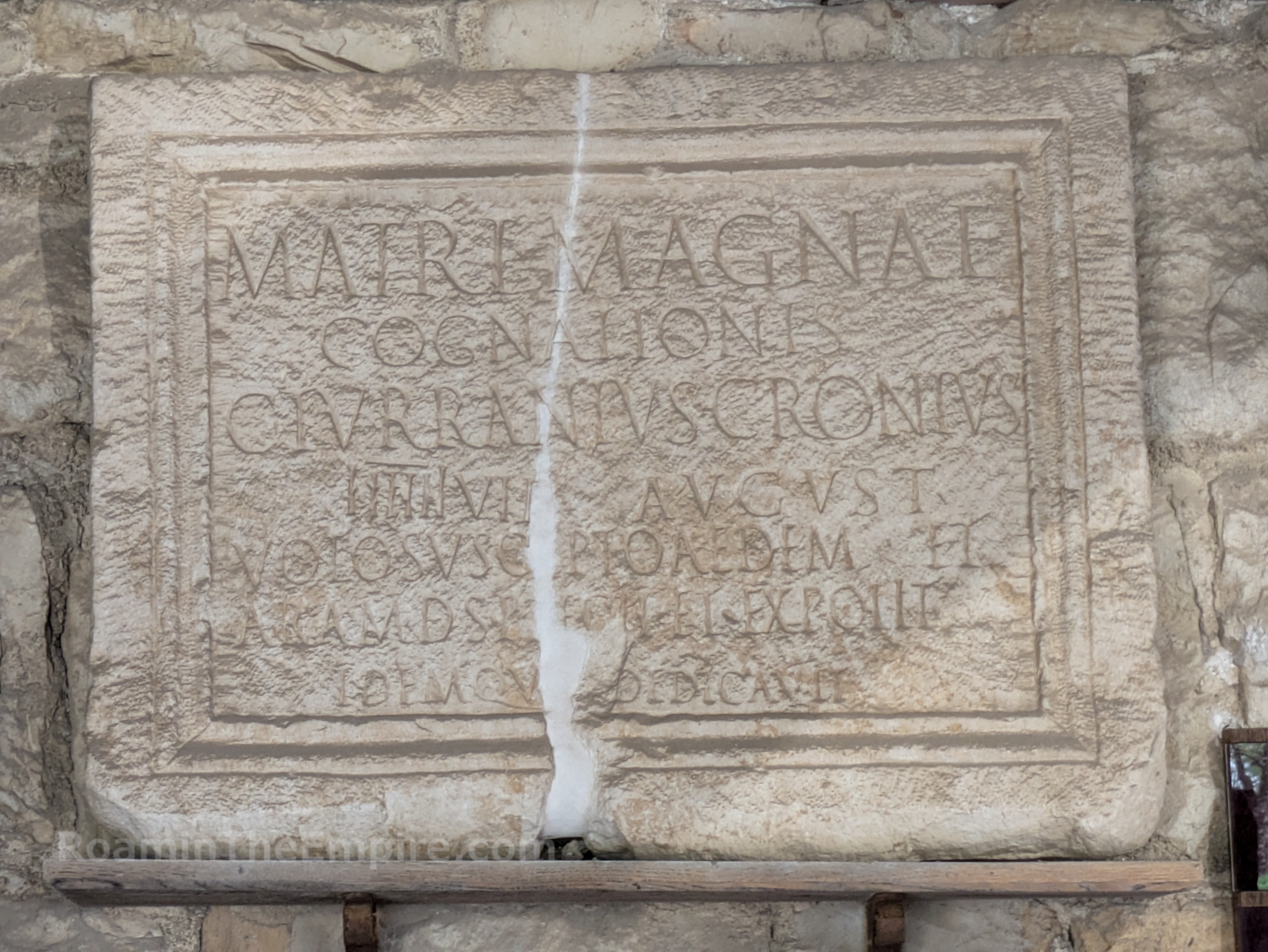
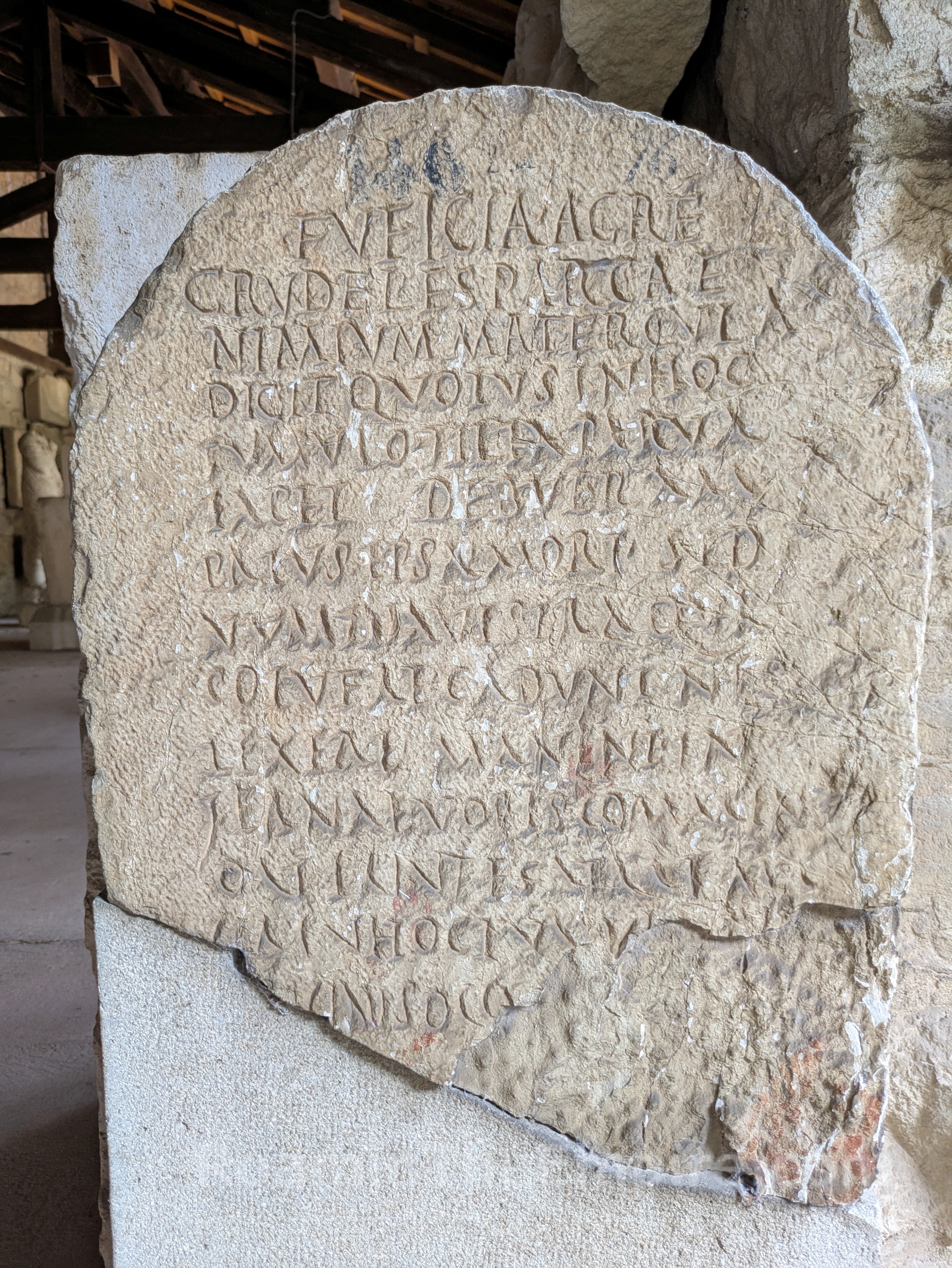
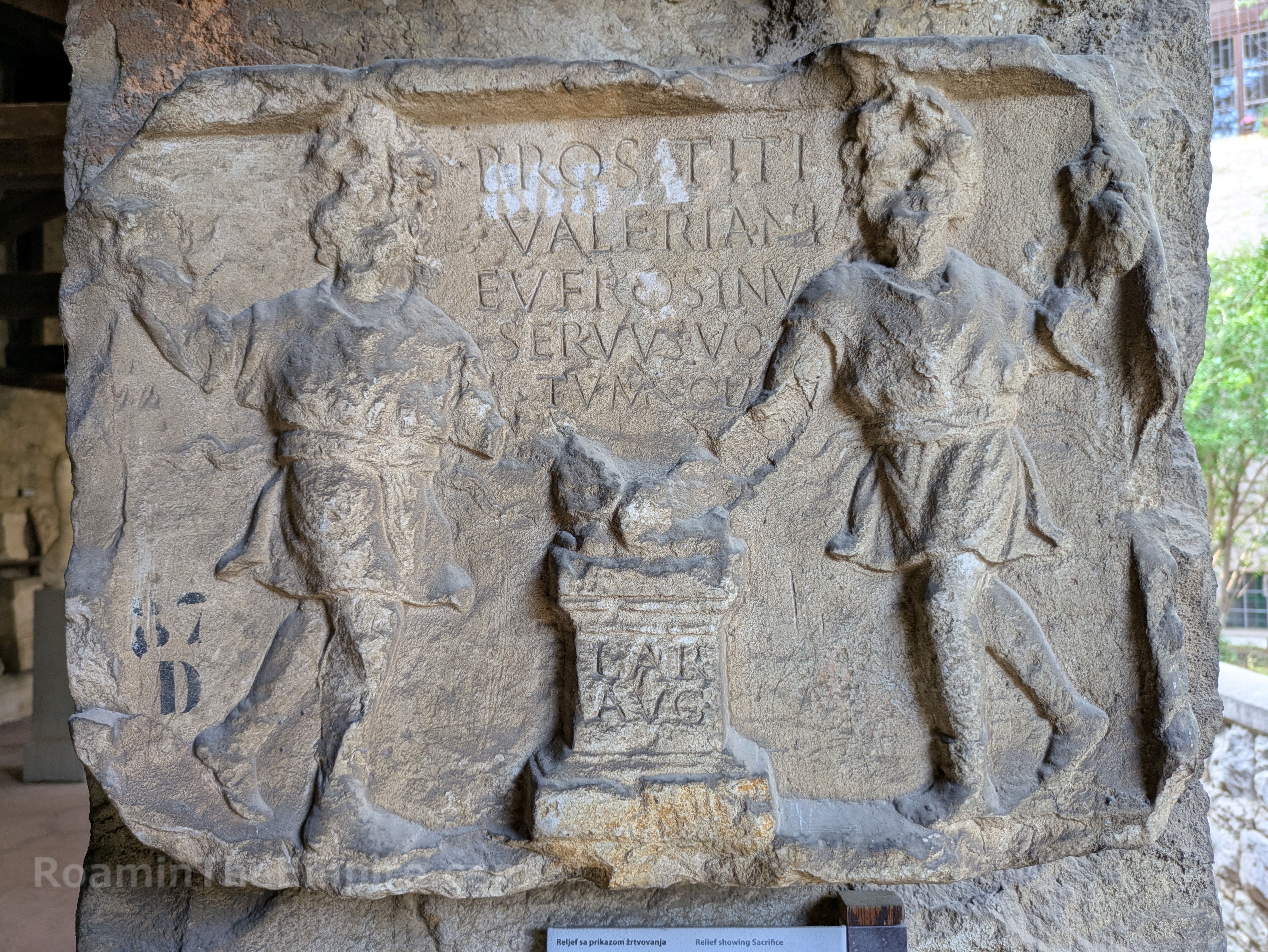
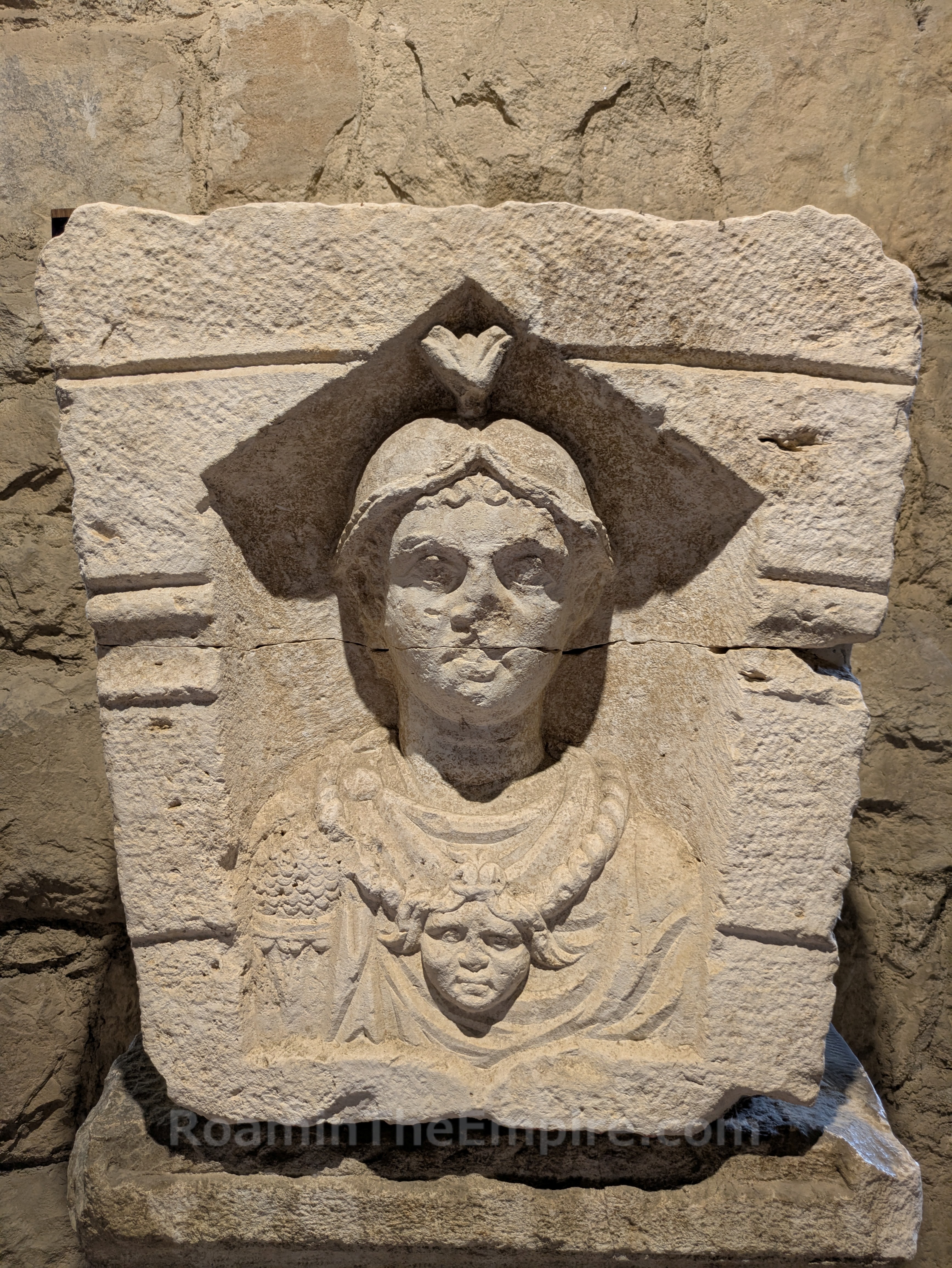
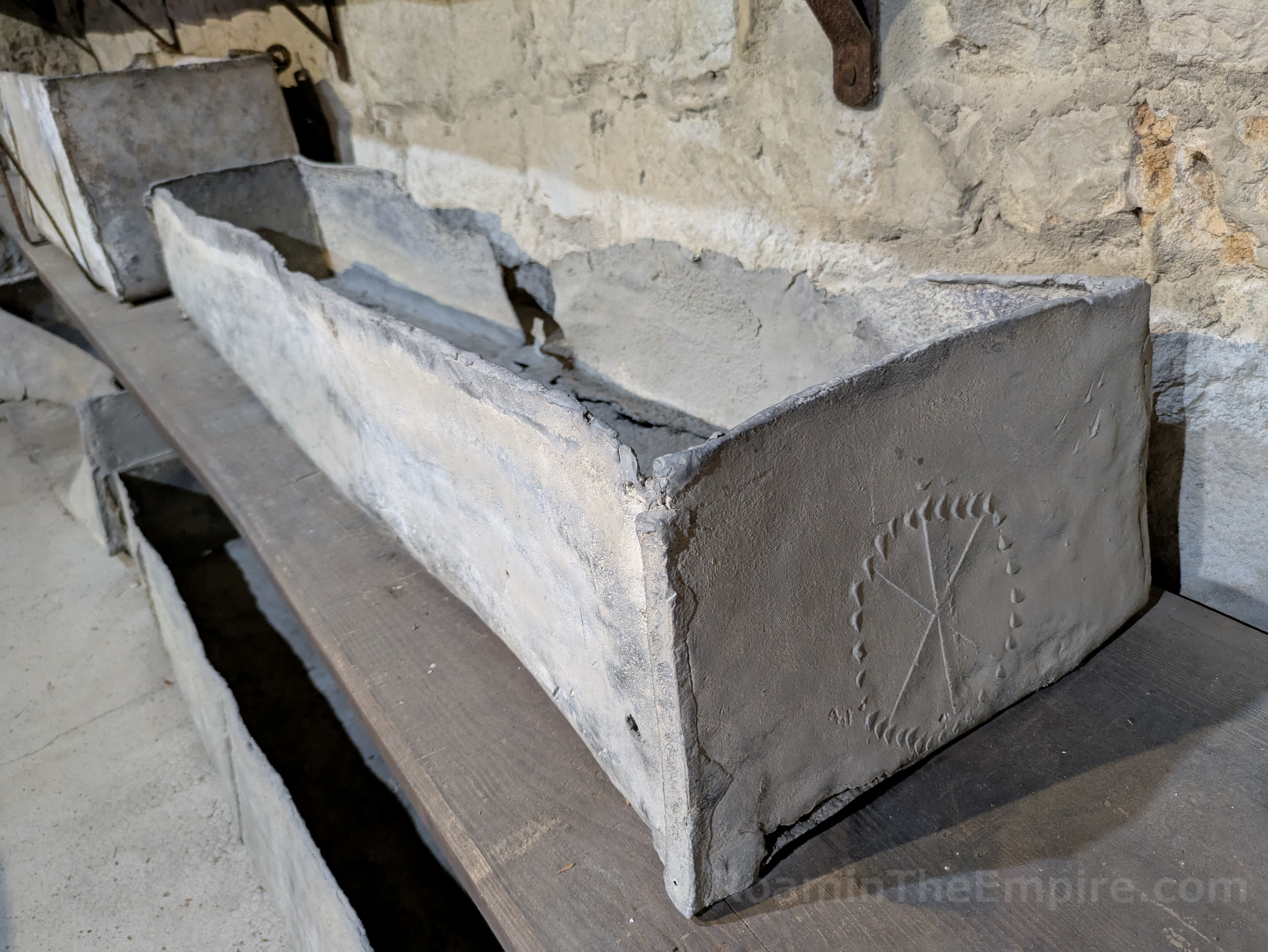
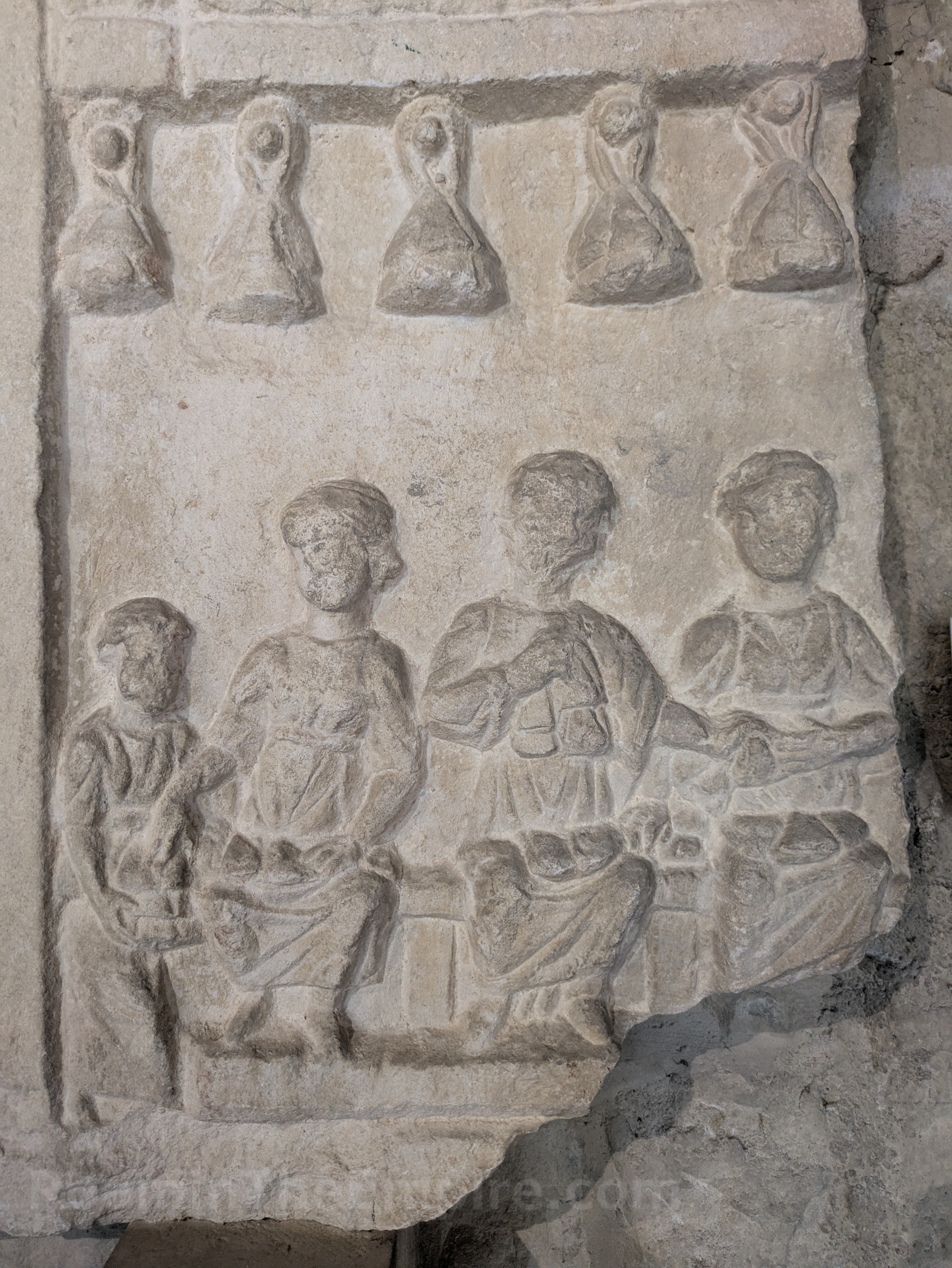
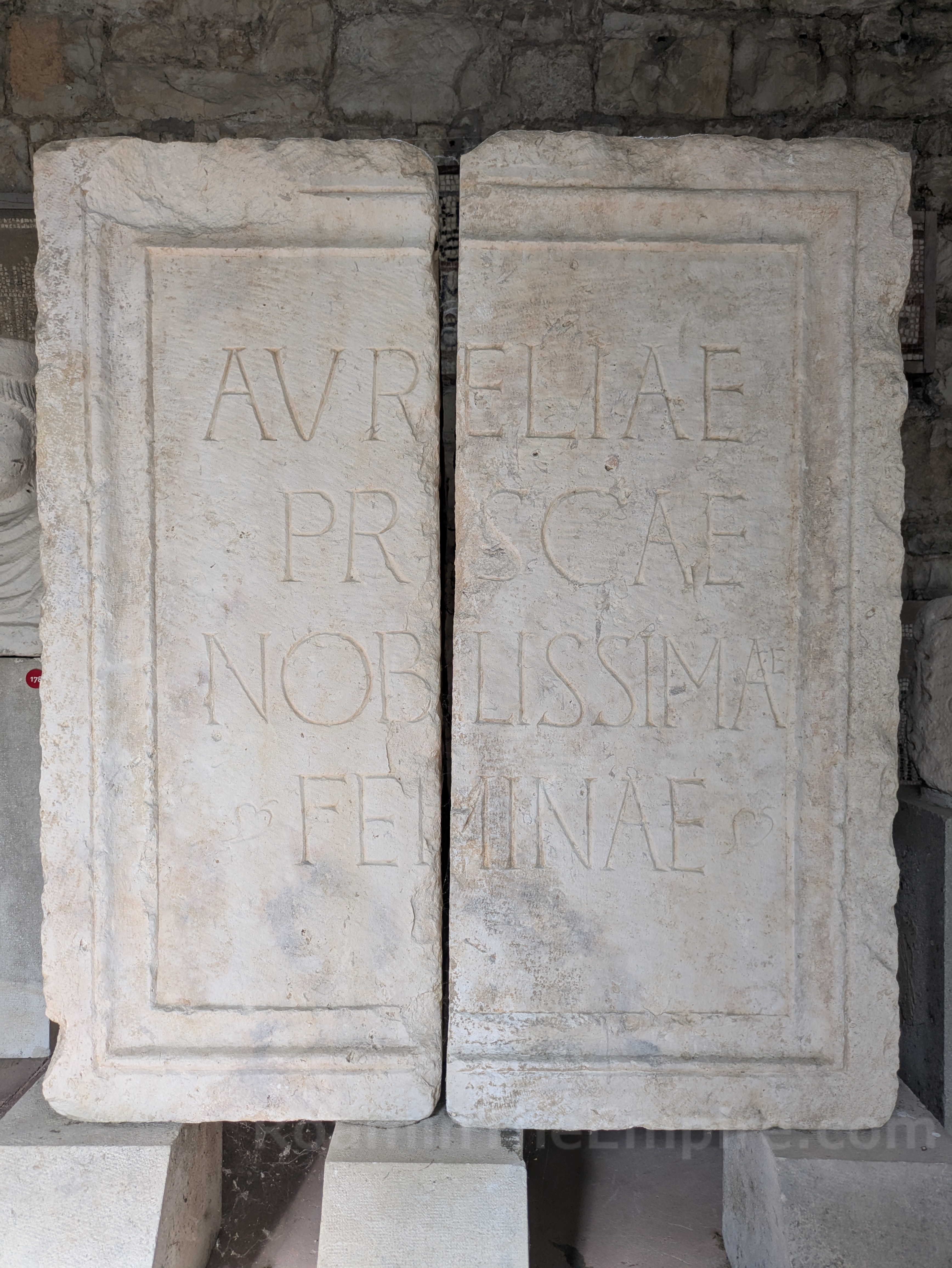
The courtyard lapidary collection is seemingly a little more extensive than the main museum collection. As one would expect, it is primarily inscriptions and reliefs (many funerary in nature) as well as architectural elements, sarcophagi, and some statuary (also mostly funerary in nature). More surprisingly, there were a number of mosaics on display; also interestingly a number of these were also funerary in nature. One of the jewels of the collection is a large floor mosaic depicting Orpheus among the animals, which was found at the house of the provincial governor in Salona. Other highlights include a mosaicked funerary inscription to a boy named Titus Aurelius Aurelianus, mosaicked inscriptions from the Early Christian religious buildings at Salona, the Tyche relief from the Porta Caeserea at Salona, and a sarcophagus depicting the myth of Hippolytus and Phaedra. Unfortunately, many of the objects in the courtyard had no identifying information at all (including the Tyche relief). Those objects that were identified had information in English and Croatian. There was a lot of material in the courtyard, it took me a solid two hours to get through the lapidary collection.
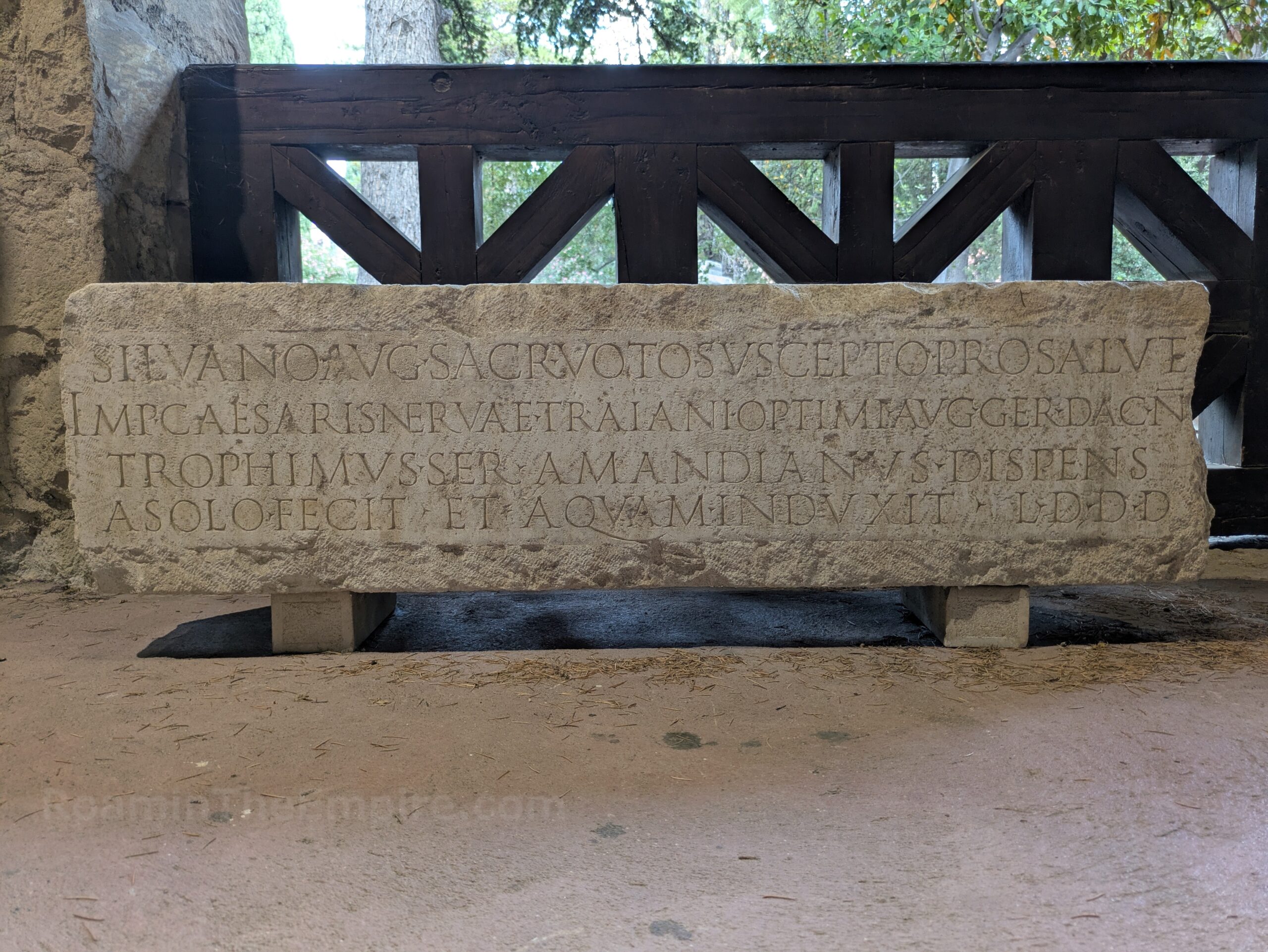
As the Palace of Diocletian was constructed, at the same time an aqueduct was built to carry water from the Jadro Springs (about 7.5 kilometers to the northeast) to the palace. The length of the course of the aqueduct was about 9 kilometers. The aqueduct originally functioned until the middle of the 6th century CE, when sections were destroyed by the Goths. It remained in ruins until the 19th century CE, when Austrian engineers restored and rebuilt the aqueduct to once again carry water, which continued to function until about 1932. About a third of the original constructions of the ancient aqueduct were used, while other portions required heavy intervention to make useful or needed to be entirely rebuilt. There are a few points at which elements of the original aqueduct can be visited relatively easily.
The closest point to the palace at which the aqueduct is supposedly visible, is at the Atrium Hotel located at Ulica Domovinskog Rata 49, a little over a kilometer from the palace. There is apparently a section of the underground channel of the aqueduct preserved in an underground car park owned by the hotel. Unfortunately, I visited and couldn’t find the channel on my own, and when I asked about it at reception, they looked at me as if I were absolutely out of my mind. The most recent reference I can find to the channel being accessible is over 10 years old, so it’s also possible it can no longer be visited.
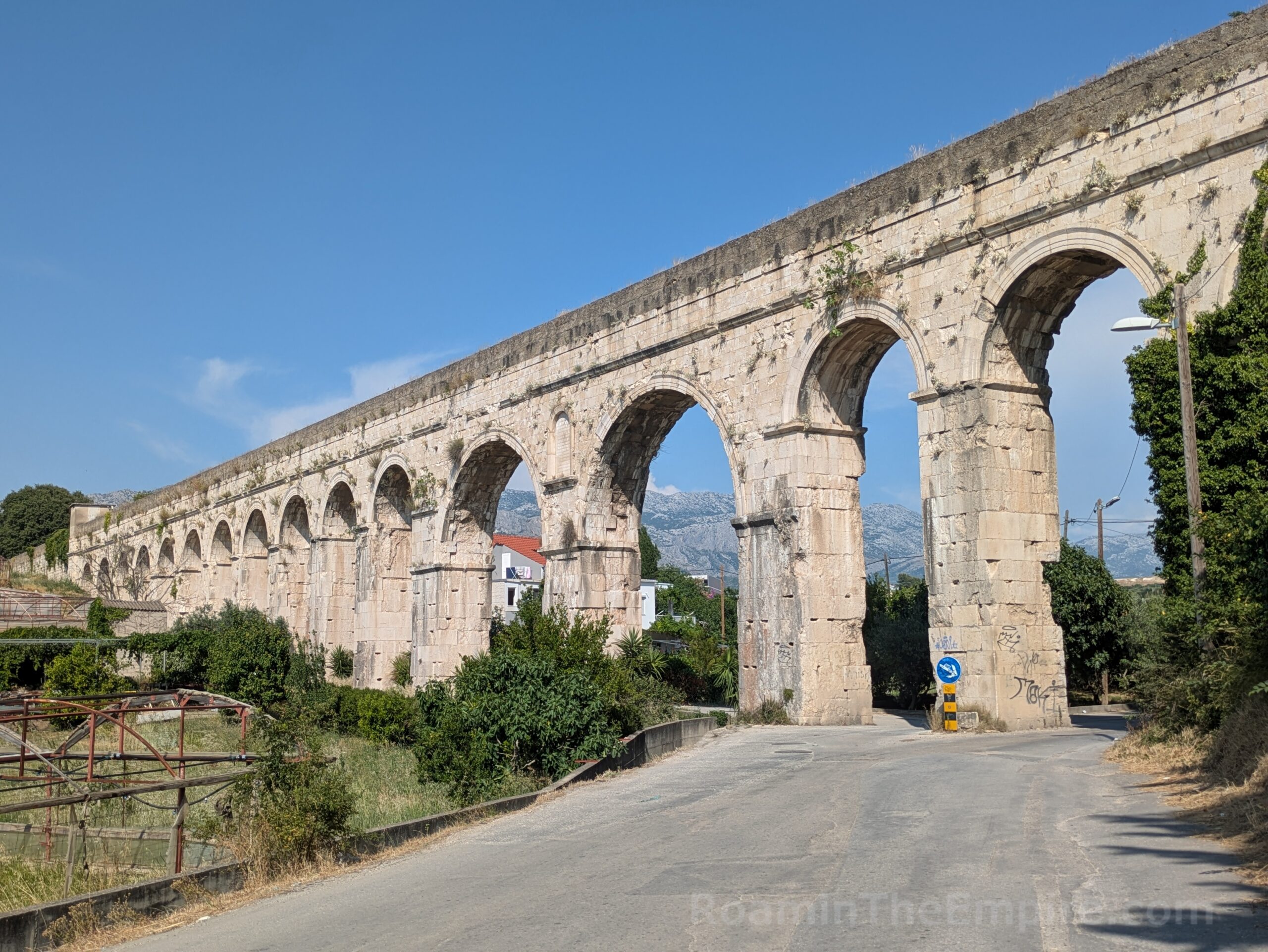
About 3.5 kilometers northeast of the hotel, just off the main artery out of Split, the Ulica Zbora Narodne Gardne, is perhaps the most prominent part of the aqueduct; a 17 arch bridge that peaks at about 16.5 meters tall. Unfortunately this aqueduct bridge, though maintaining the style of a Roman aqueduct, is almost completely a reconstruction from 1999 and apparently uses very little original material. There are a few other points at which the course of the aqueduct is visible between the hotel and the bridge, including a section near the Mall of Split and not far southwest of the bridge, but these two points appear to be sections that were completely rebuilt in the 19th century CE, retaining none of the original character or materials of the Roman aqueduct.
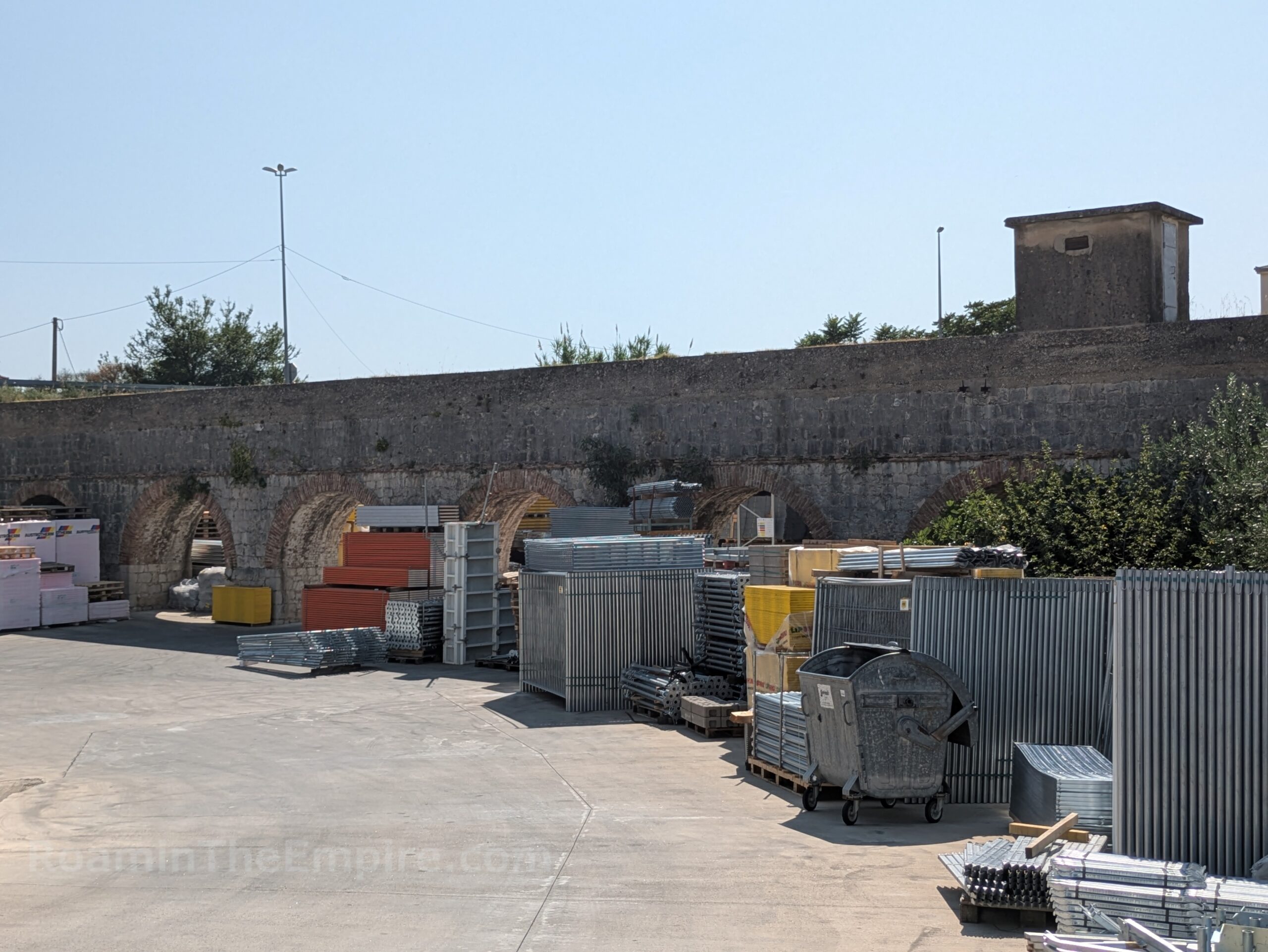
The only other place I was able to see part of the aqueduct that retained any of the original form of the aqueduct was another 700 meters to the northeast, on the property of a business located at Zoraniceva 1a. Though it is private property and not directly accessible, the aqueduct can be seen from the street and runs along the back of the property. Concrete from the Austrian construction can be seen atop the Roman style arches, which may be complete or partial reconstructions dating to the Austrian works.
There’s a lot to see from ancient Spalatum in Split with regard to the remnants of the palace as well as the archaeological museum. That’s not even counting nearby Salona, which is a big chunk of time worth spending as well. Just for the archaeological museum, the palace, and the aqueduct, it’s certainly the better part of a day or longer worth of time. I spent two days more or less seeing everything covered in this series of posts, but that also included chasing down some things that didn’t pan out and just general wandering in the historic center to see what remnants of the palace I could just come across. Also the old town gets quite crowded during the day; the peristyle is basically a mass of people starting between about 8:00 and 9:00 and carrying well through to the evening in the summers. So after about 8:30, it also becomes a waiting game to get good pictures of things that aren’t jammed with people; it’s better to have plenty of time to see everything rather than trying to pack everything in. The status of the museum also plays a part in how long you might need to see everything. Split changed a lot in the 13 years between my visits; some things for the better and some not. But the Palace of Diocletian is certainly worth the time, particularly if you can arrive early and beat the crowds to have the most scenic parts to yourself for a bit.
Sources:
Brcic, Inga Vilogorac. “Venus et Cybele. Matres Romanorum,” The Century of the Brave: Roman Conquest and Indigenous Resistance in Illyricum During the Time of Augustus and His Heirs. Stoljeće Hrabrih (Ed.), FF Press: Zagreb, 2018.
Bužančić, Radoslav. Diocletian’s Palace, 2009.
Bužančić, Radoslav. “Diocletian’s Palace, Restoration of the S–E Quadrant.” 50 Years (1972–2022) of the Convention Concerning the Protection of World Cultural and Natural Heritage, 2024.
Smith, William. Dictionary of Greek and Roman Geography. Walton & Murray, 1870.
Stillwell, Richard, William L. MacDonald, and Marian Holland. McAllister. The Princeton Encyclopedia of Classical Sites. Princeton, NJ: Princeton U Press, 1976.
Grant, Michael. A Guide to the Ancient World: A Dictionary of Classical Place Names. New York: Barnes & Noble Books, 1997.