

Argos, Achaea – Part II

Continued from Argos Part I Just across the street to the east is the archaeological area of Argos’ agora. The agora has the same hours as the theater and is included in the admission ticket. Though it may generally be open. Two guys seemed to be there watching over things and acknowledged me when I…

Read More

Sanctuary of Asclepius, Achaea – Part III

Continued From Sanctuary of Asclepius Part II East of the Tholos and south of the west end of the Enkoimeterion stands the remains of the temple to Asclepius, one of the central and most important structures of the sanctuary. The temple was constructed around 375 BCE, during the height of the building program at the…

Read More

Odessus, Moesia

Ancient Odessus (also called Odessos, Odesopolis, and Odyssos), the precursor to the bustling Black Sea port city of Varna in present-day Bulgaria, was originally founded by Greek colonists from Miletus in the first half of the 6th century BCE. Prior to the arrival of the Greeks, the area was inhabited by Thracian populations dating back…

Read More

Segusium, Aples Cottiae

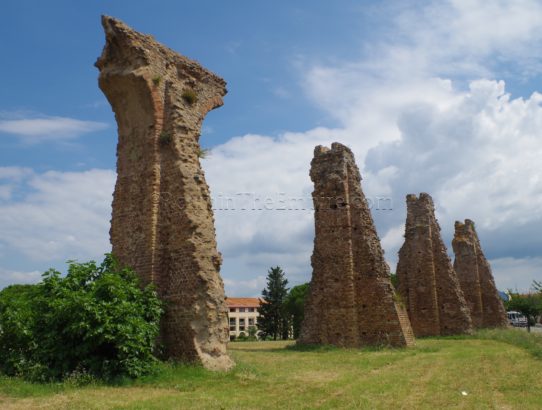
Tucked away among the foothills of the Cottian Alps in Northern Italy, the ancient settlement of Segusium is today located in the Val di Susa, which takes its name from the modern successor of Segusium, Susa. The settlement at the confluence of the modern Cenischia stream and the Dora Riparia (Dura Minor in antiquity) was…

Read More

Philippopolis, Thracia – Part III

Continued from Philippopolis Part II Theater The ancient theater of Philippopolis is located on the saddle between Taksim Hill and Dzhambaz Hill (two of the three hills of Trimontium) straddling Boulevard Tsar Boris III Obedinitel, which runs through the hill directly below the theater. The actual address of the theater is Tsar Ivaylo Street 4….

Read More

Olbia, Sardinia

History Located on the northeast coast of the Sardinia, Olbia is today, as it was in antiquity, the primary city on the eastern coast of the island. The city has taken on a number of names throughout history; Civita, Phausania, and Terranova Pausania, before being changed back to Olbia under Mussolini. Historically, the founding of…

Read More

North Sardinia (North)

For the final roundup of miscellaneous sites on Sardinia, we focus on the most northern part of the island, or more accurately, the northwestern part of the island. This route will cover roughly the northern part of the Sassari region. As with the other itineraries of this nature, the caveat is that most of these…

Read More

Tharros, Sardinia

Like the settlement of Nora, Tharros was established by Phoenician colonists on a narrow promontory to allow for the construction of two harbors, and ensuring the ability for ships to come and go regardless of the wind conditions. Founded in the 8th century BCE by colonists from Tyre, in the same wave as those that…

Read More

Caralis, Sardinia – Part II

Continued from Caralis Part I. Orto Botanico di Cagliari Just down the street from the amphitheater is the Orto Botanico di Cagliari, the botanical gardens. The Orto Botanico, located at Via Sant’Ignazio da Laconi 11, are open every day except Monday from 9:00 to 18:00 in the summer (April through October) and 9:00 to 14:00…

Read More

Forum Julii, Gallia Narbonensis

History The exact date of the founding of Forum Julii, the ancient predecessor to modern Fréjus, is a bit unclear. The name suggests that it was founded by Julius Caesar, and as such, it is likely that it was founded somewhere around 49 BCE, perhaps as some sort of camp or supply station during Caesar’s…

Read More