


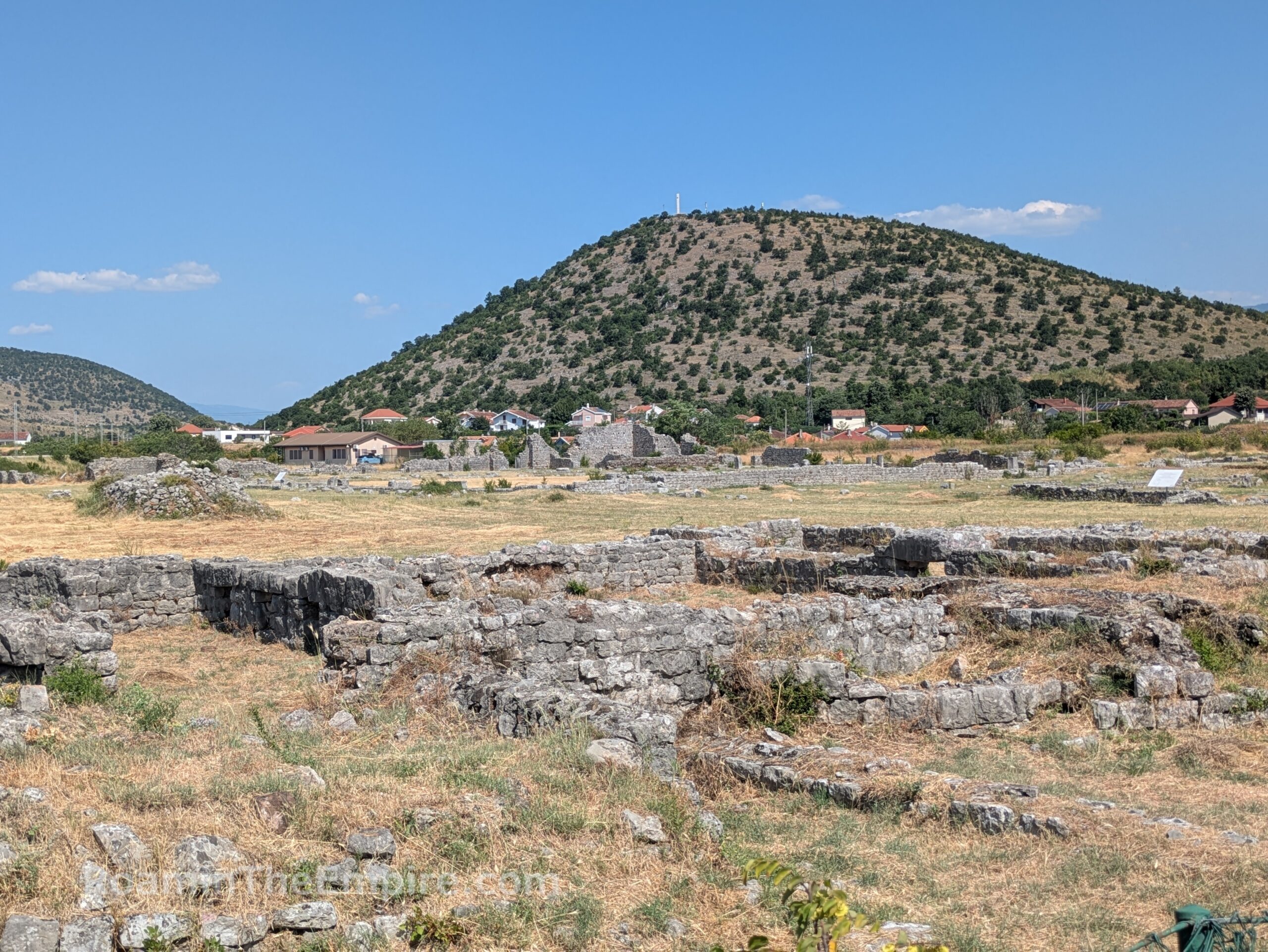
Most Recent Visit: June 2025
The remnants of the ancient city of Doclea lie just outside the northern suburbs of the Montenegrin capital of Podgorica, at the confluence of the Senta (modern Zeta) and Oriundus (modern Morača) rivers. The area is today called Duklja, after the ancient city. Prior to the arrival of Roman hegemony, the area was occupied by Illyrian tribes. Though a group called the Docleatae would eventually be associated with the area and the city derived from their name, there is some conjecture as to whether they were an indigenous tribe that inhabited the area prior to Roman contact or were a later amalgamation of tribes under the Romans. During the Illyrian Wars of the 3rd and 2nd centuries BCE, nearby Meteon (modern Medun, about 8 kilometers to the east) was a city of the Labeatae, who produced the final king of the Illyrian Kingdom, Gentius. His capture, and the capture of his family at Meteon, ended the Third Illyrian War. The Docleatae are not mentioned at all.
It is not until after the conclusion of the Illyrian Wars that Illyrian groups are forcibly resettled in an effort to prevent further unrest in Illyricum. The Labeatae, Endirundini, Sasaei, Grabaei, Taulantii, and Pyraei are noted as being resettled in the territory of the Docleatae. Whether the Docleatae existed as a distinct group prior to that is where the question arises, but it seems more likely the resettled tribes were amalgamated into a new group and called the Docleatae. The Docleatae are then mentioned as providing Octavian with hostages to guarantee peace during his campaigns in Illyria between 35 BCE and 33 BCE, remaining on friendly terms with the Romans following the campaigns. Their role in the Bellum Batonianum between 6 CE and 9 CE is unclear, but they seem to have come under direct control of Rome following the conflict and incorporated into the province of Illyria.
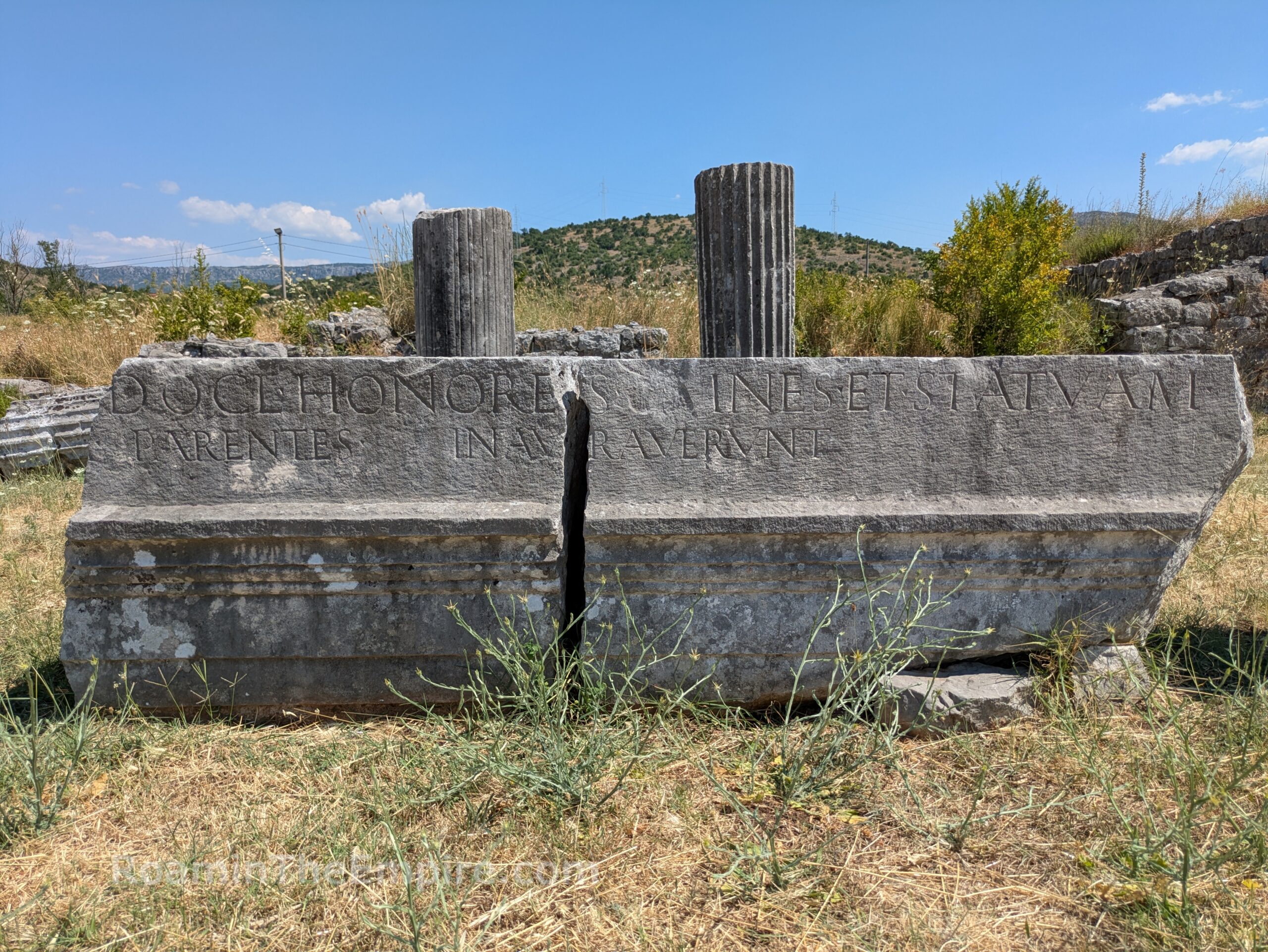
The timeframe of the foundation of Doclea is a matter of some question as well. It would make sense that it was founded in the early 1st century CE following the Bellum Batonianum. It seems to have been a completely Roman city, though there may have been an Illyrian settlement in the hills around where Doclea was founded. It was certainly founded by the Flavian period, at which time it had received municpium. Sometime in the first half of the 1st century CE, Illyria is dissolved into Pannonia and Dalmatia, with Doclea being assigned to Dalmatia.
Doclea is noted by Pliny the Elder as being famous for its cheese production and seems to have been a relatively prosperous city through the early empire. Tradition sometimes assigns connection between Doclea and the emperor Diocletian, claiming he was born in Doclea and his name derived from the city (reinforced by the likely apocryphal information provided in De Administrando Imperio by Constantine VII porphyrogenitus in the 10th century CE). More likely, it was his mother who was born there and her name derived from the name of the city. Diocletian did make Doclea the capital of the province of Praevalitana in 297 CE, following his reorganization of the provinces of the empire in 293 CE. The pressures of gothic invasions in the 4th and 5th centuries CE probably led to a decline at Doclea. It was likely sacked by the Goths in 489 CE and the city seemingly suffered greatly as a result of the 518 CE earthquake. Doclea was reconstructed under Justinian, but in 609 CE, the city was captured by the Avars.
Getting There: The site of Doclea is in the northern suburbs of Podgorica, the capital of Montenegro. Though relatively small as far as European capitals go, it does have an airport that connects regionally as well as bus and train service that has limited connection to other major Balkan cities. Bus 20 (toward Rogami) leaves once an hour from the Crveni Krst stop in central Podgorica and goes to Doclea in about 15 minutes (at a cost of 0.90 Euro each way). This stop can be reached from the main bus terminal and train station on bus 20, but is also only about a 2 kilometer walk through the city. Having had issues with bus schedules in North Macedonia the previous summer, I opted not to rely on the bus and drove out. There’s a small area right at the entrance that could fit maybe one car. I opted to park a little to south near the old school (just east of the railroad tracks), which has a larger parking area.
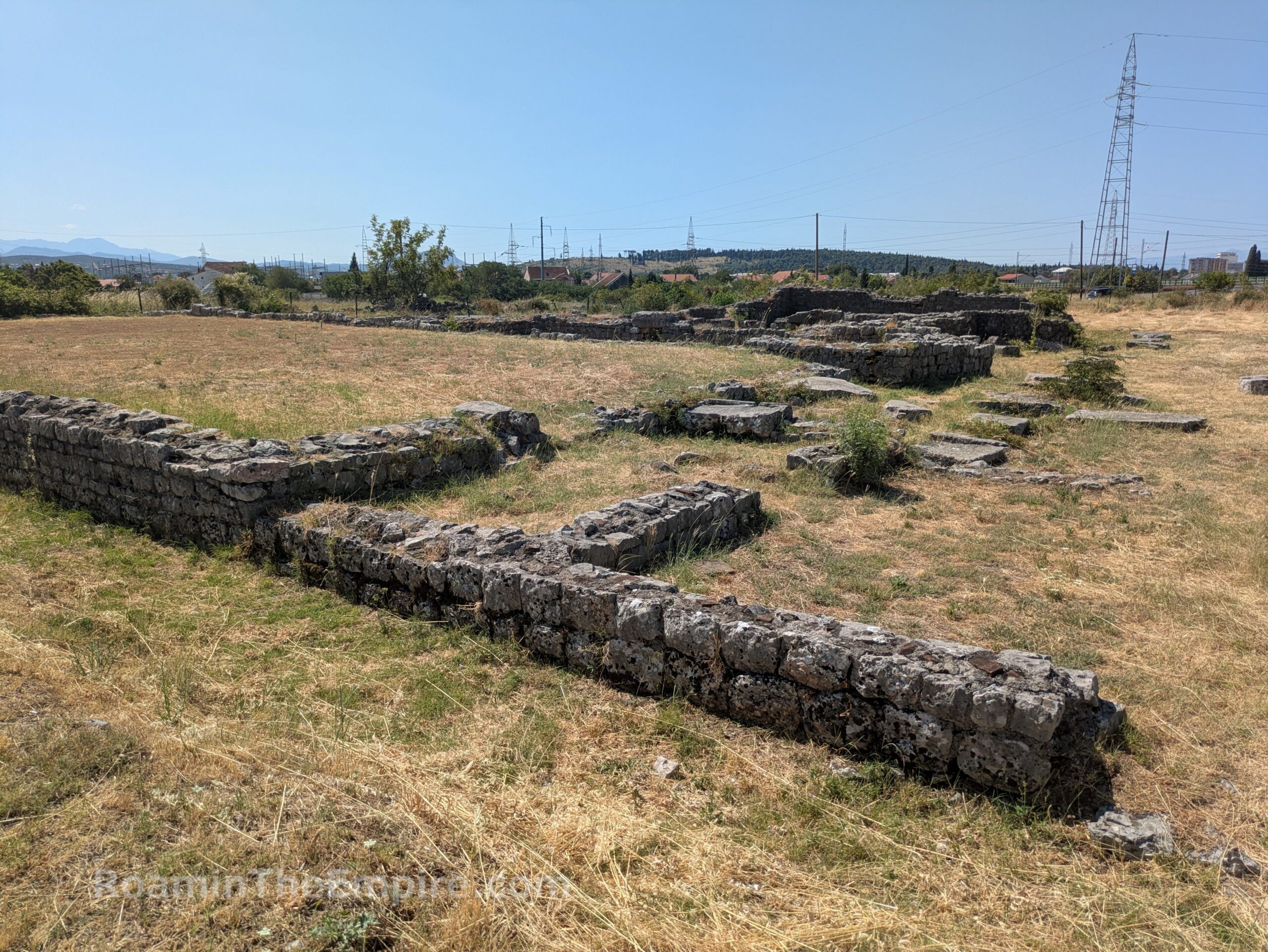
The archaeological area of Doclea is unattended and more or less open access. There’s a gate that can technically close the site, but there are no hours posted to indicate any sort of closing or opening period, so it seems to just be open access at any time. The site itself is pretty open access as well, none of the buildings really have any barriers or restrictions in place to keep visitors out of certain locations. With that being said, I definitely ran into a few snakes, so exercise caution and care when deviating from the well worn paths (and even on the well worn paths, honestly).
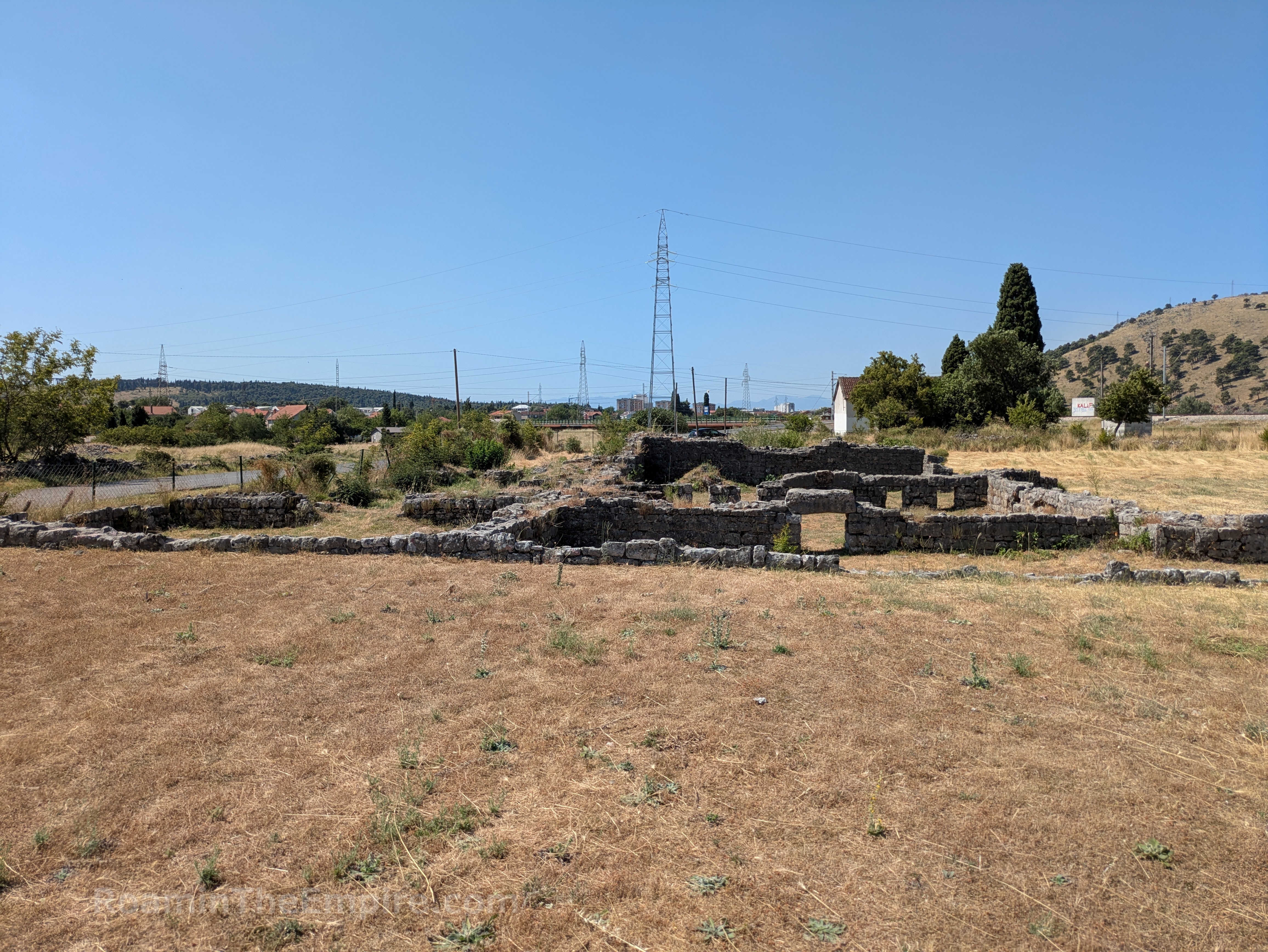
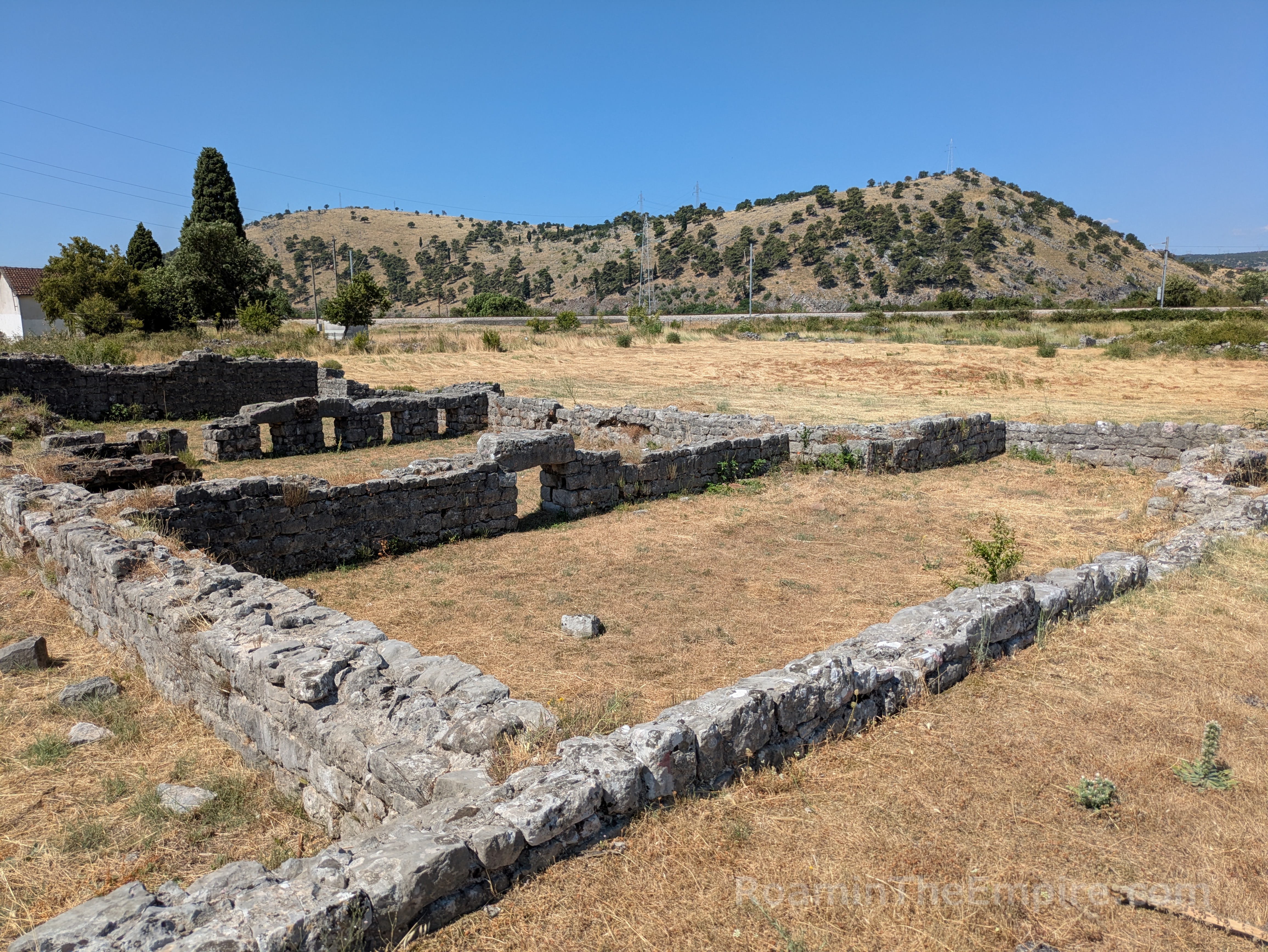
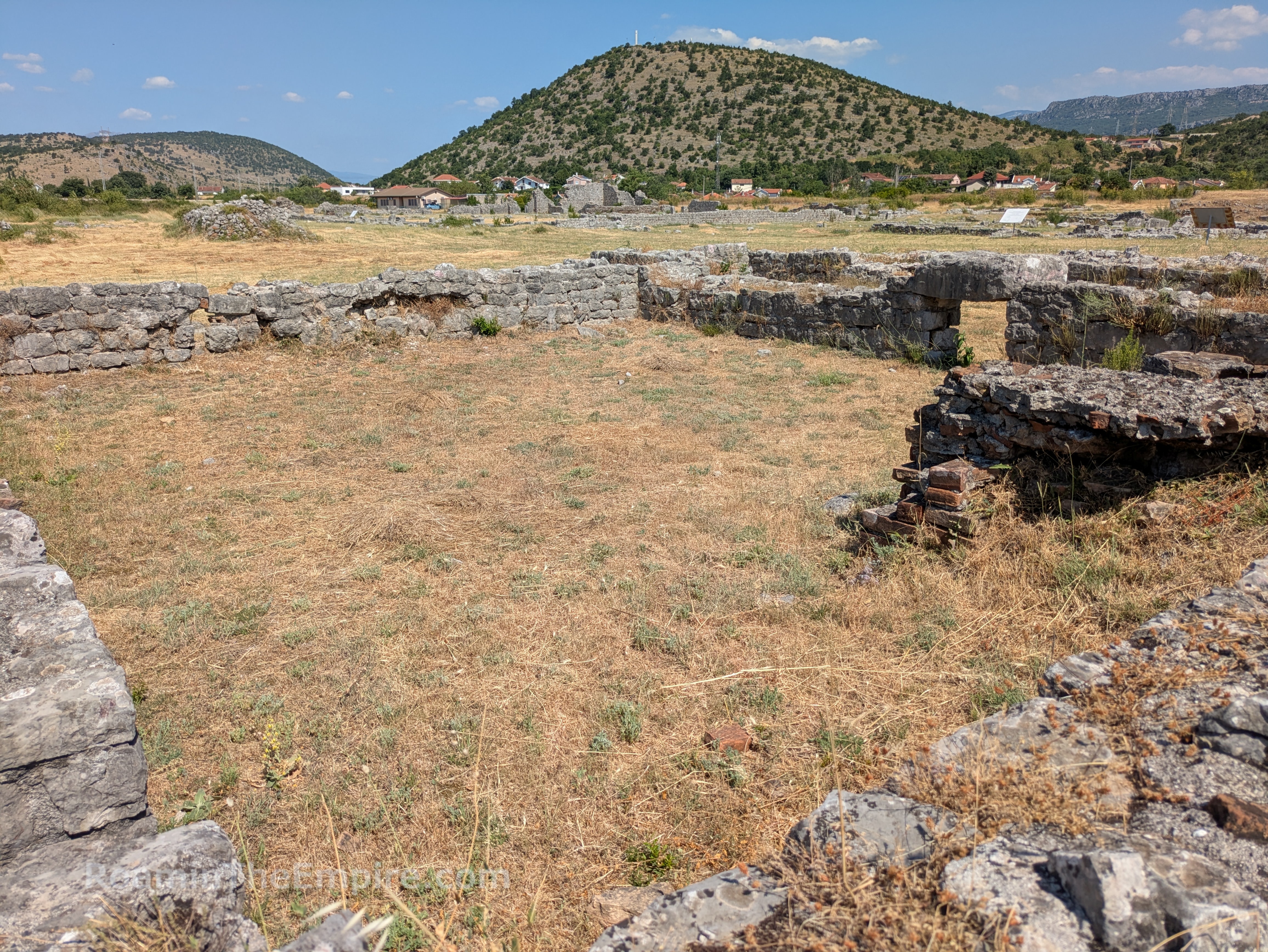
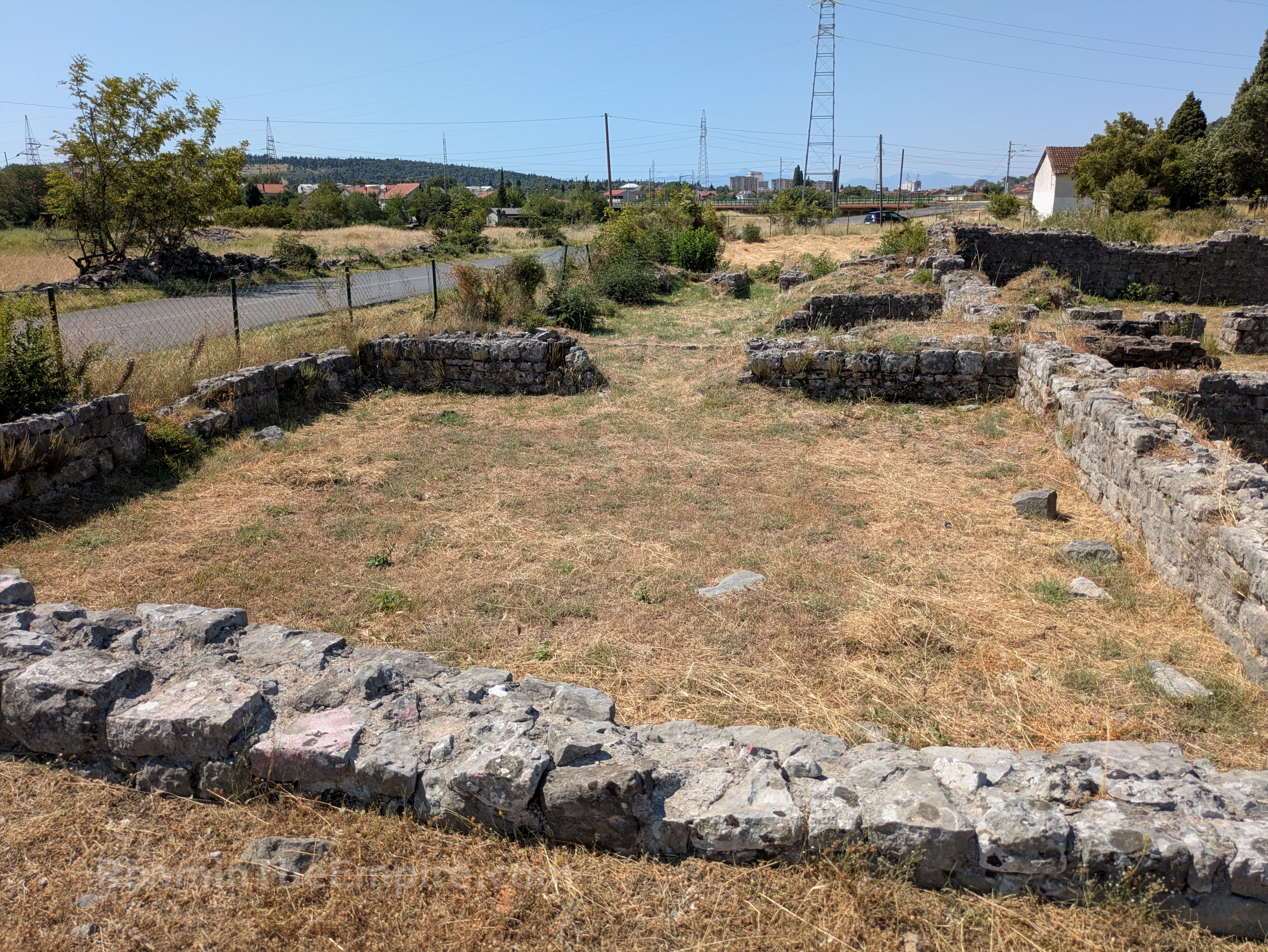
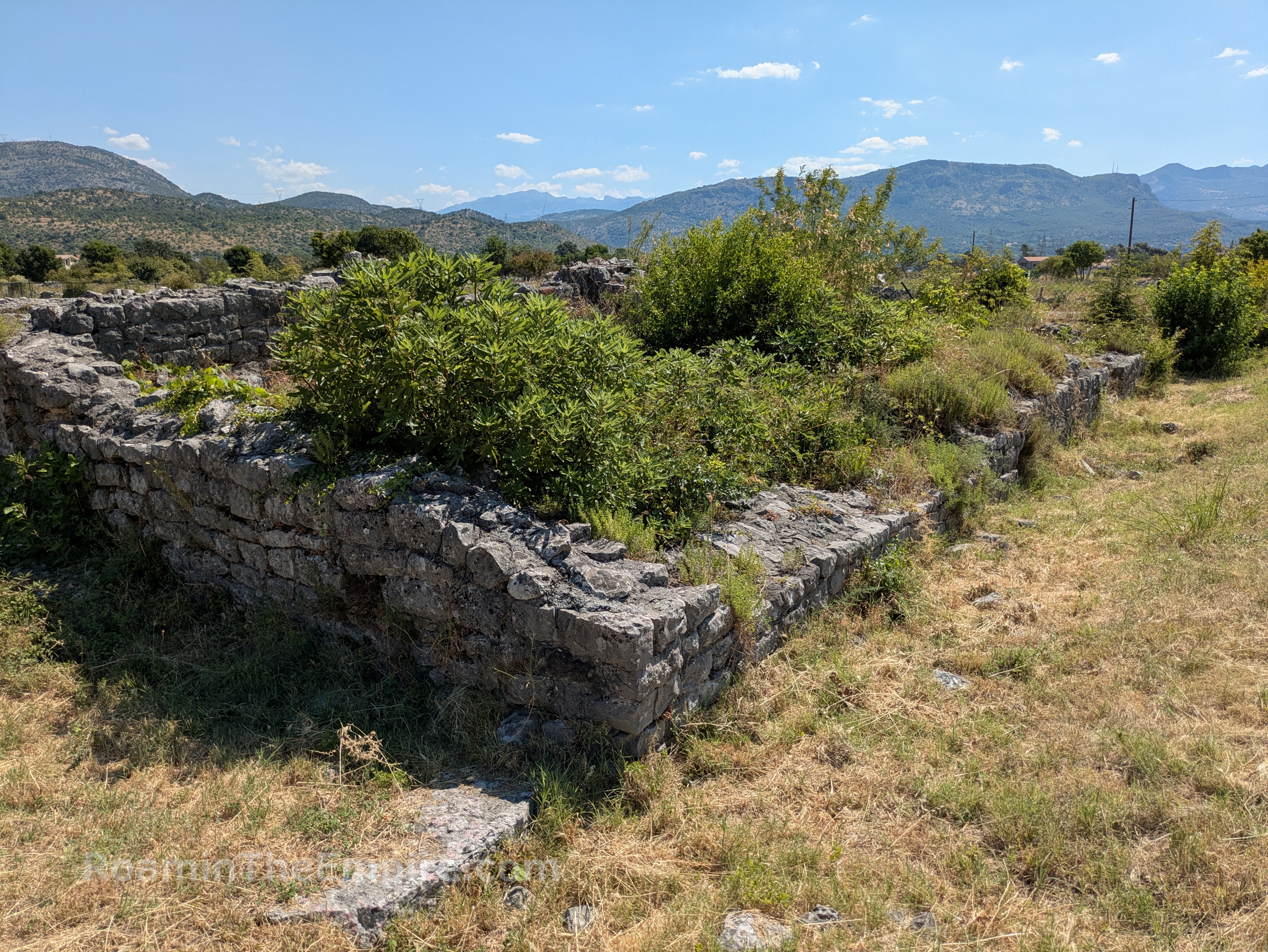
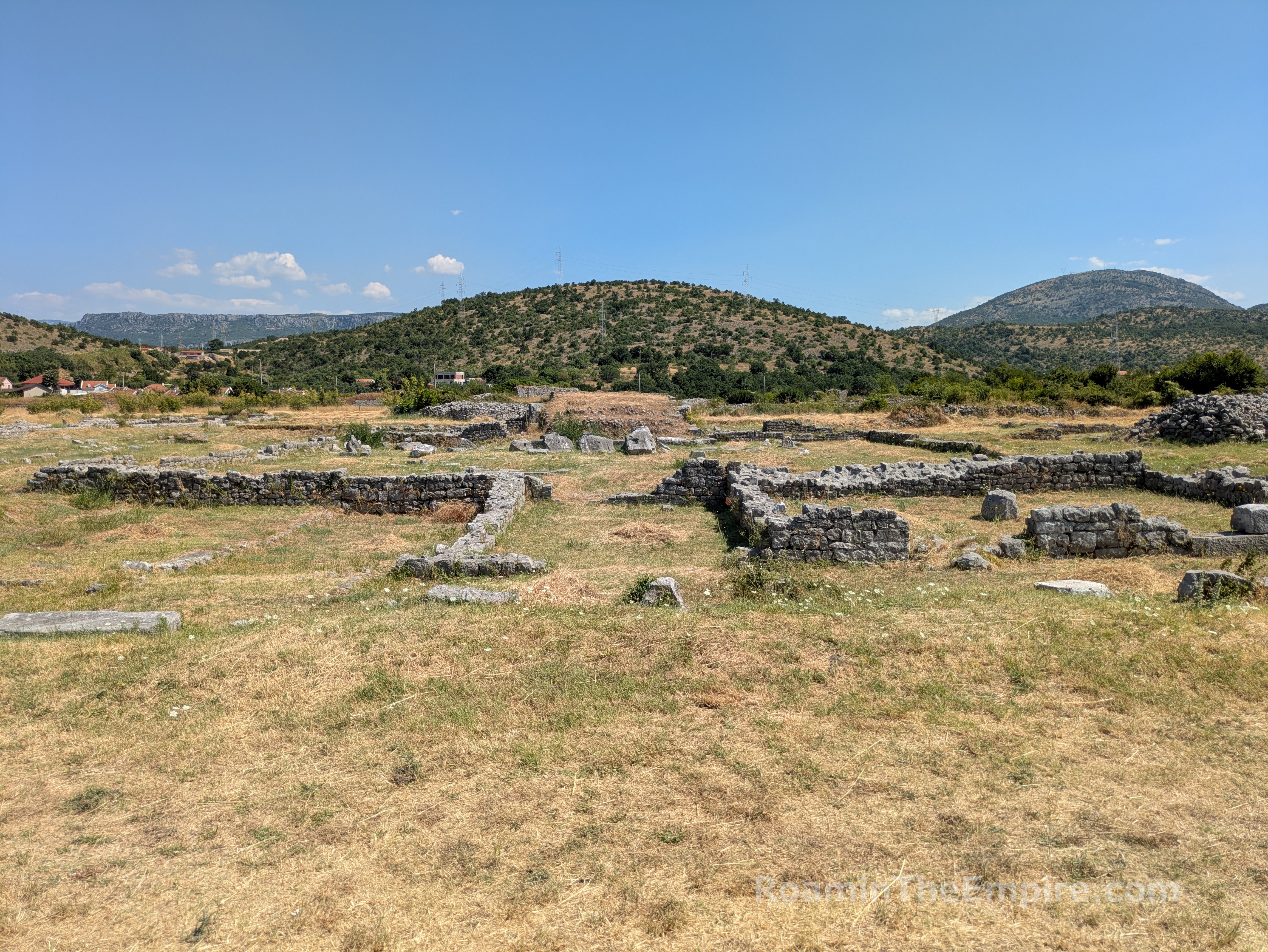
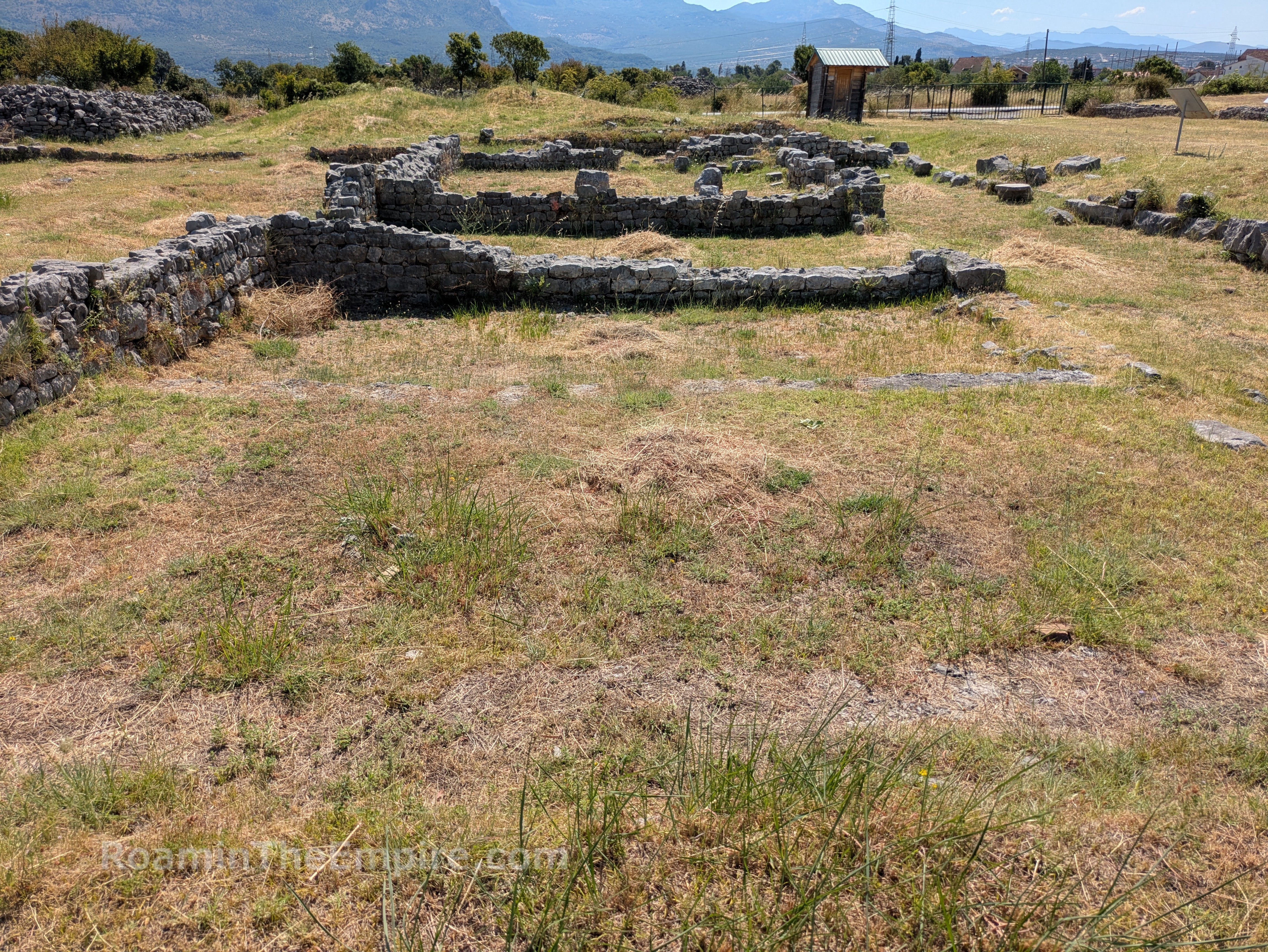
The archaeological area encompasses excavations around the forum of Doclea. Upon entering, immediately on the left hand side are the so-called small thermae. This small bathing complex is thought to have originally been constructed as part of the large thermae, located about 40 meters to the west. Imaging of the open space between these two structures seems to reveal the presence of architecture connecting the two buildings. The entire bathing complex may have been built during the assumed construction during the Flavian dynasty, or perhaps in the early 2nd century CE. At some point following that, this series of bathing rooms was physically separated from the main part of the baths and partitioned on two occasions. It has been posited that these smaller baths may have been used as a women’s bathing area or perhaps some other private bathing function. These baths appear to have been in use until the 5th century CE.
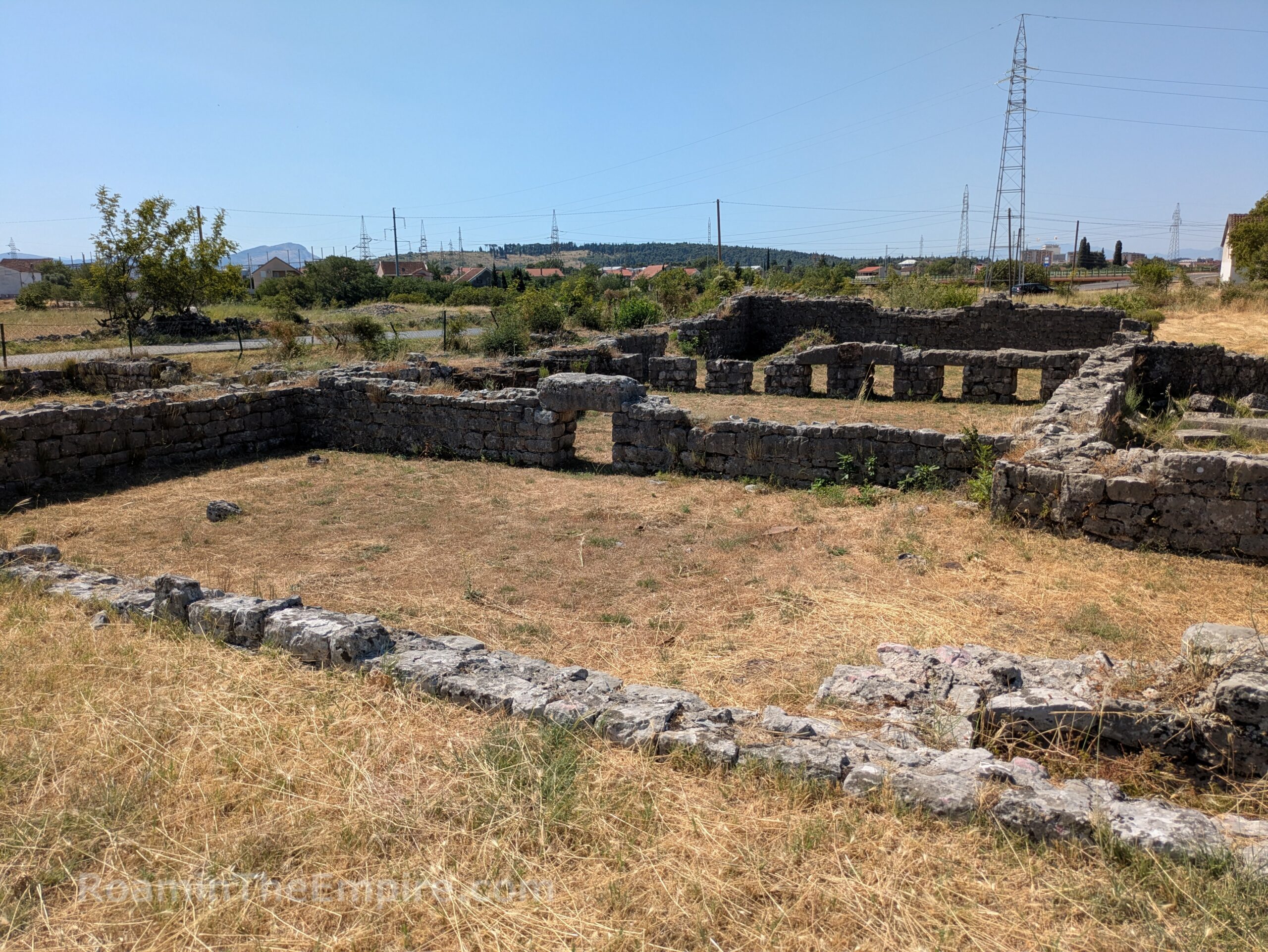
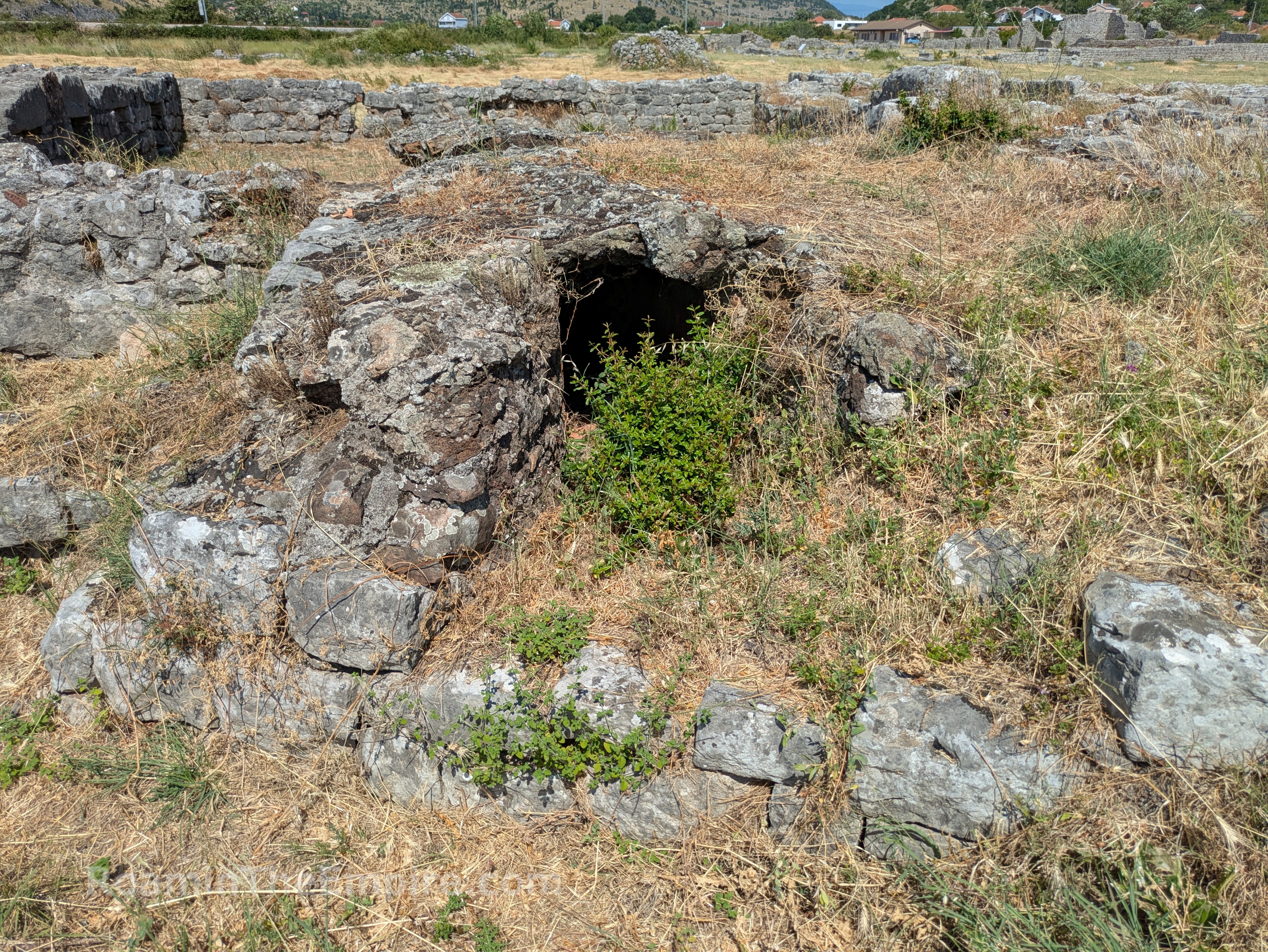
I couldn’t find any plans with concrete identification of the room uses, but the structure leaves some clues. The large room at the north side seems to be some sort of entrance area or apodyterium. The rectangular room to the south (on the west side) with an alcove on the west side may likely have been the frigidarium, with the alcove housing the cold-water pool. The two rooms to the south of this are easily identifiable as the heated rooms with the multiple connecting passages between them and what would appear to be praefurnia off the east side of each room. The northern of these two also has a small bit of hypocaust and raised flooring. They are probably the tepidarium and caldarium, in that order. The chambered and usually overgrown structure to the south of the caldarium could be a cistern.
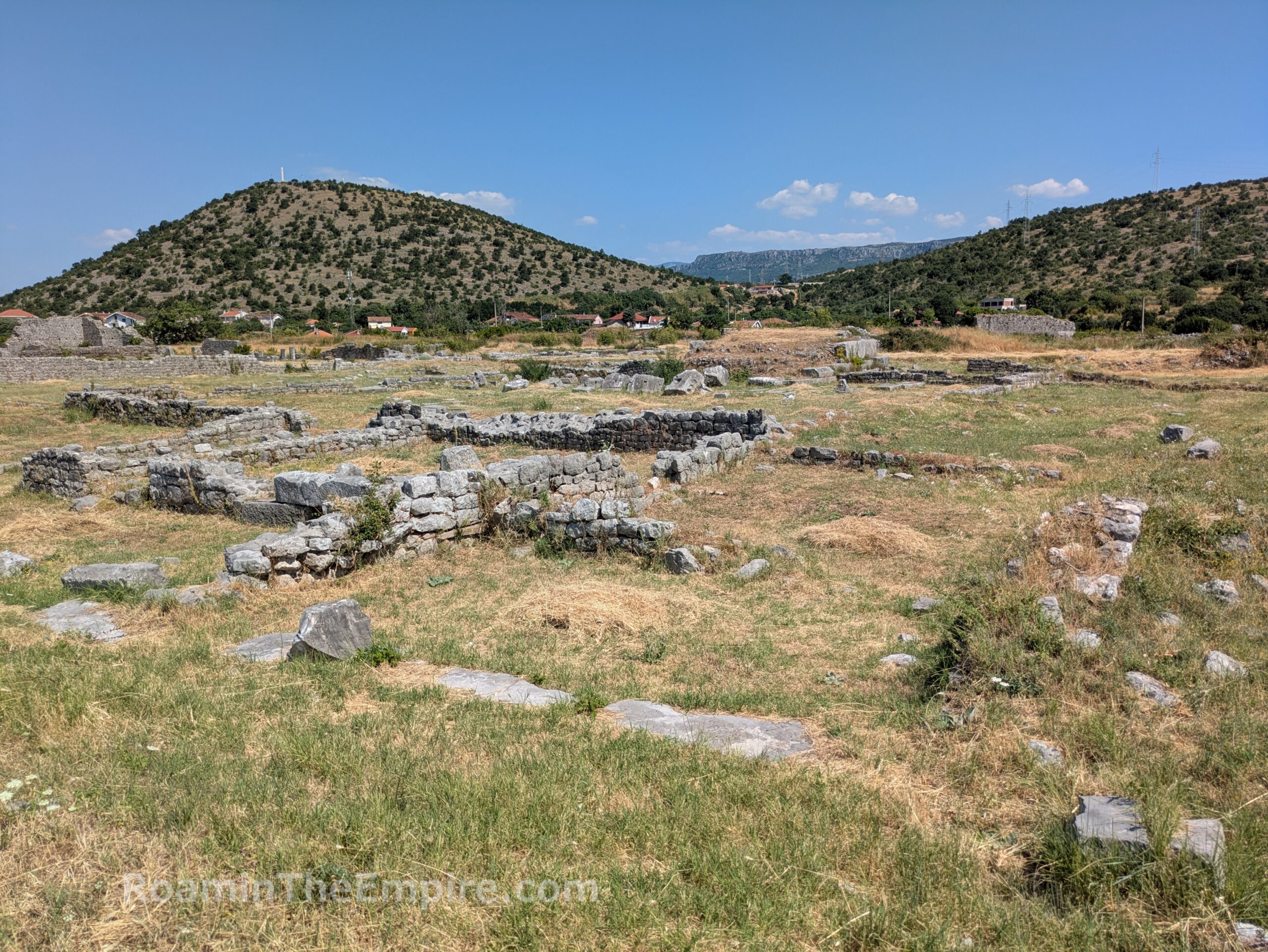
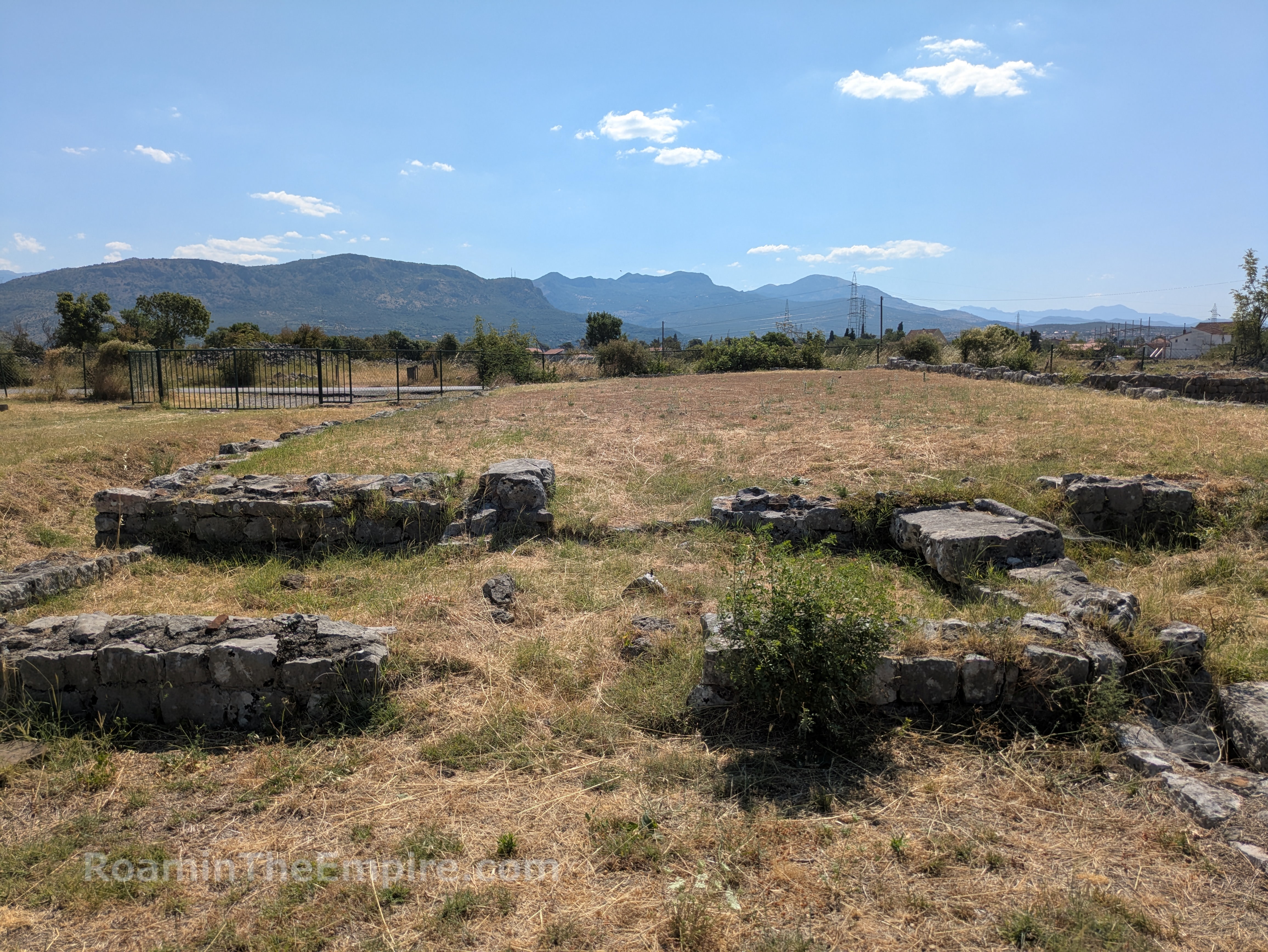
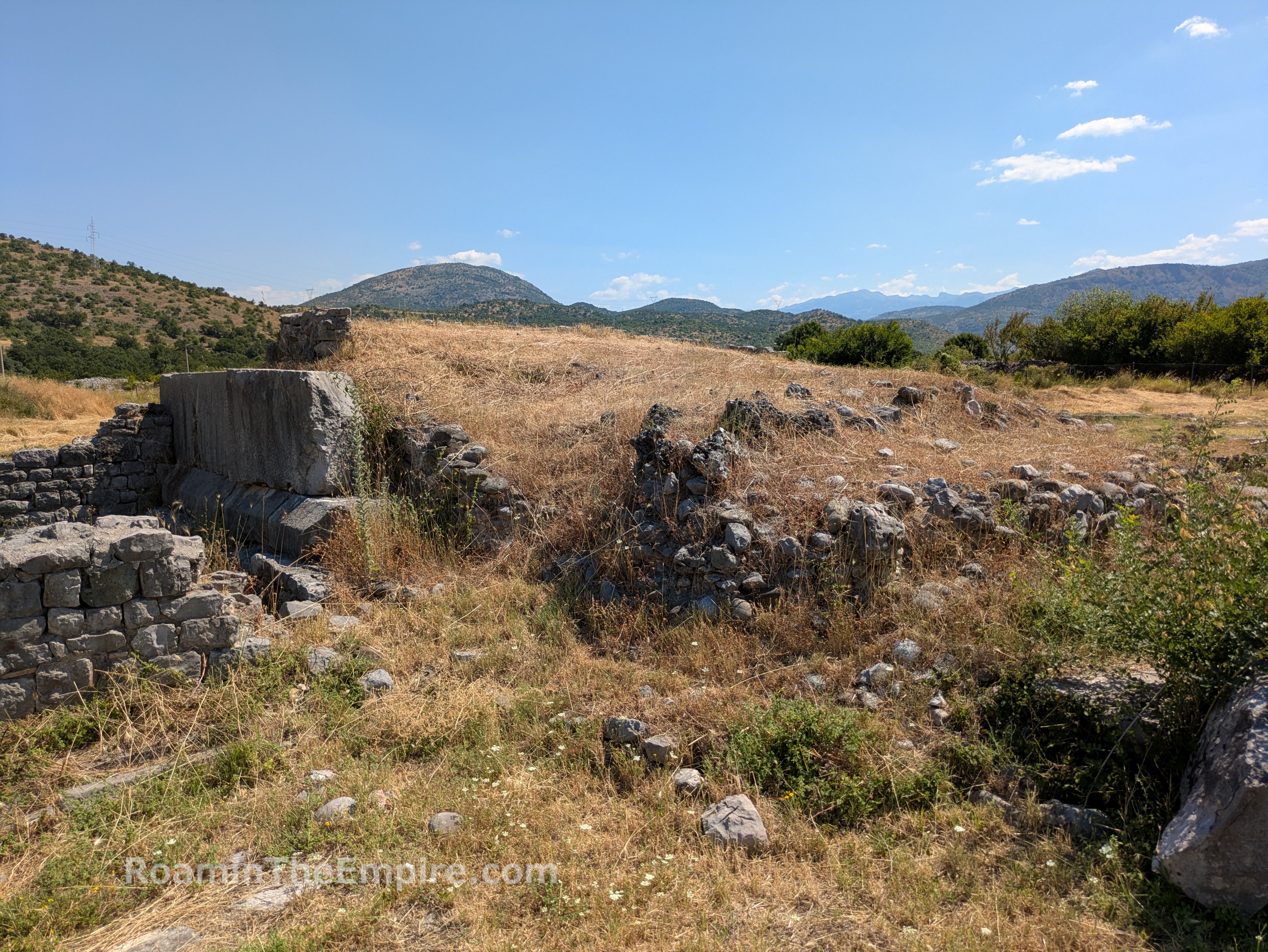
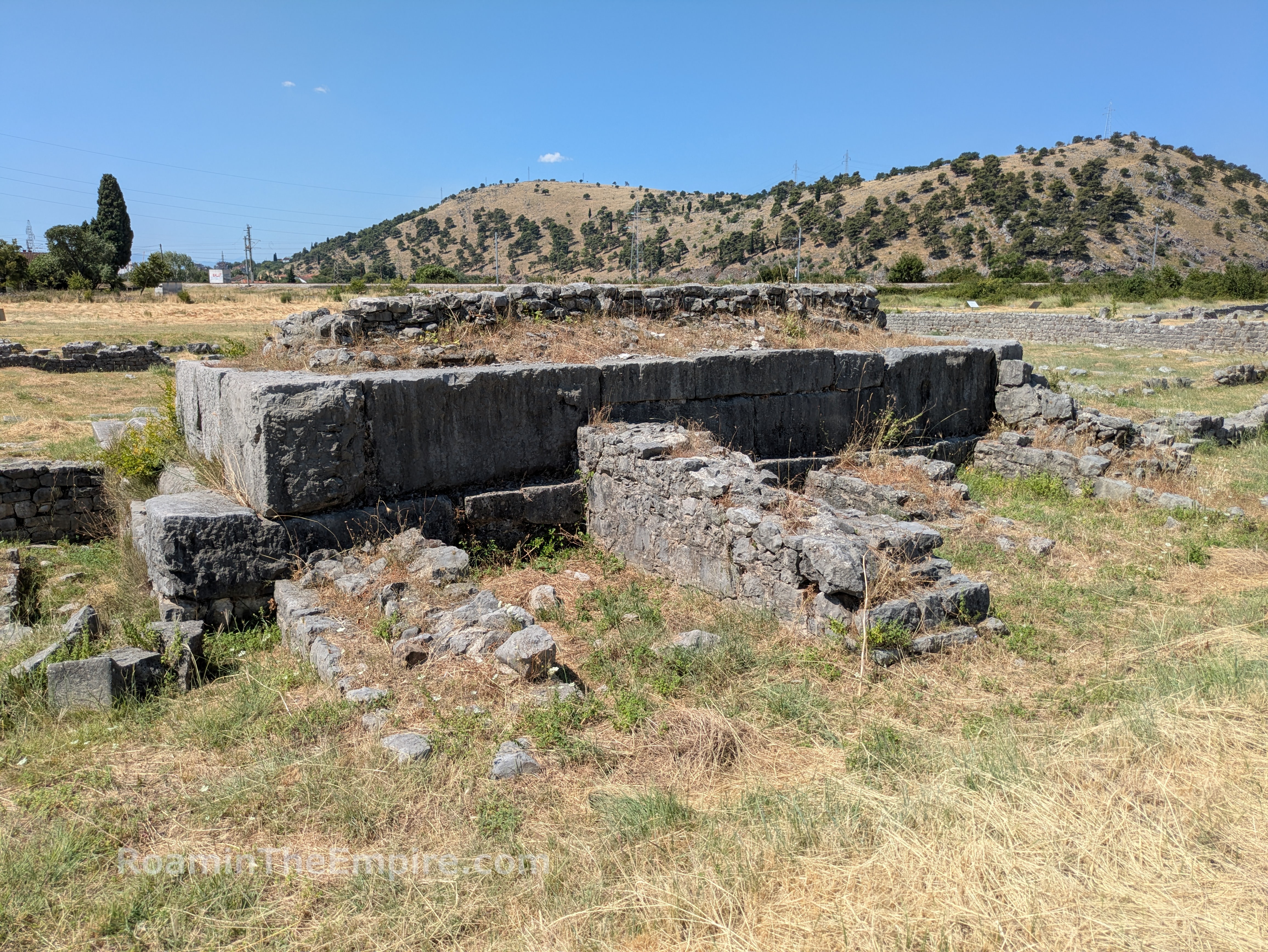
Across the large main visitor’s path, which in antiquity was the decumanus maximus, to the north of the small thermae is a temple complex identified as being that of the Capitolium. The identification as the Capitolium does not come from specific archaeological evidence indicating which god or gods were venerated in the sanctuary, but from other factors. The location at the crossroads of the decumanus maximus (which runs south of the temple) and the cardo maximus (which runs east of the temple, separating it from the forum) occupies a prominent position in the city, one which would be reserved for a temple of that importance. The temple is also constructed on an elevated location, the highest in the city. Architectural elements also indicate the temple was monumentally adorned, also indicating a building of some importance. It was likely built at the end of the 1st century CE, and the presence of a burial from the mid to late 4th century CE implies it was no longer functioning as a temple by that time.
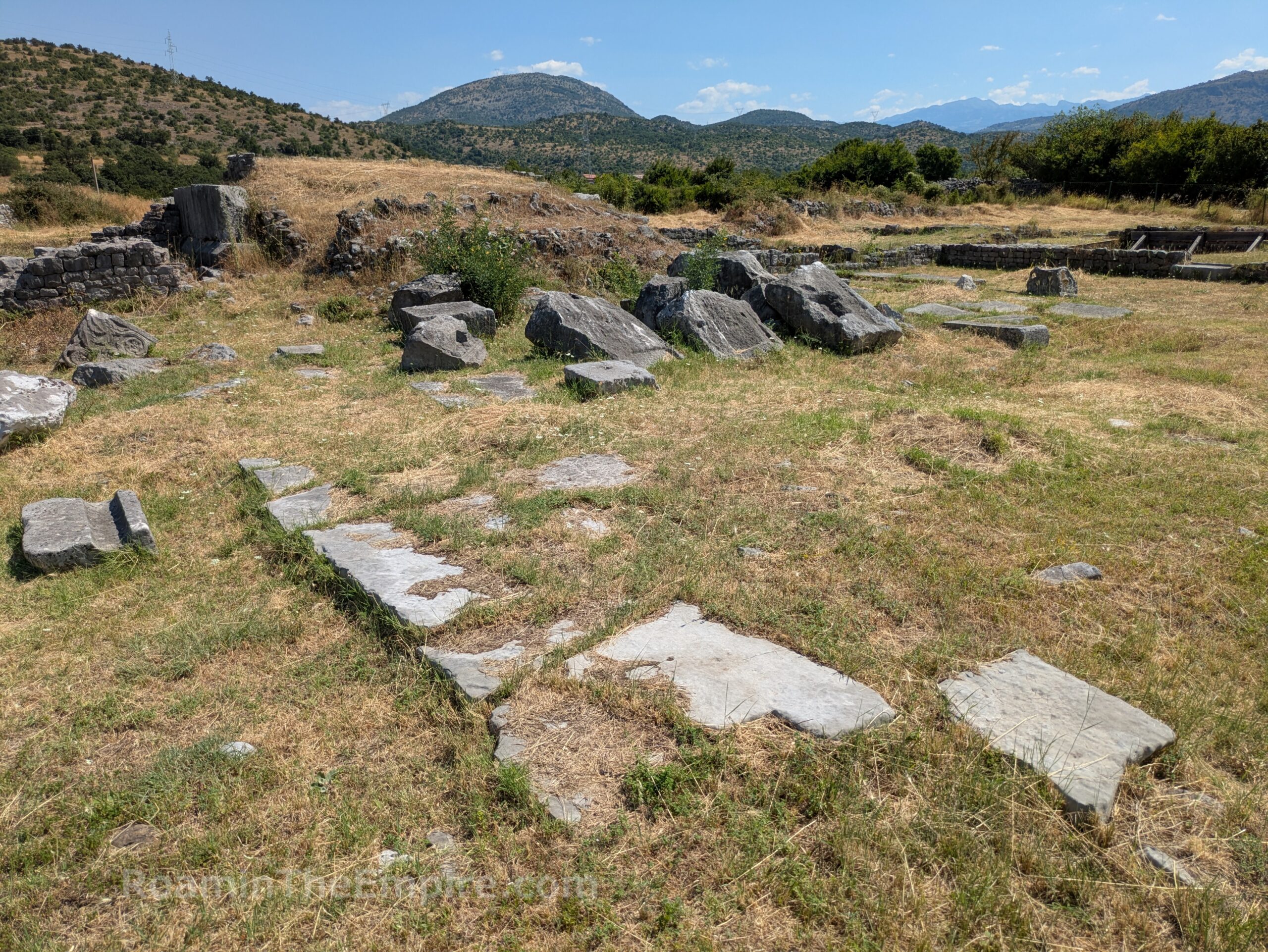
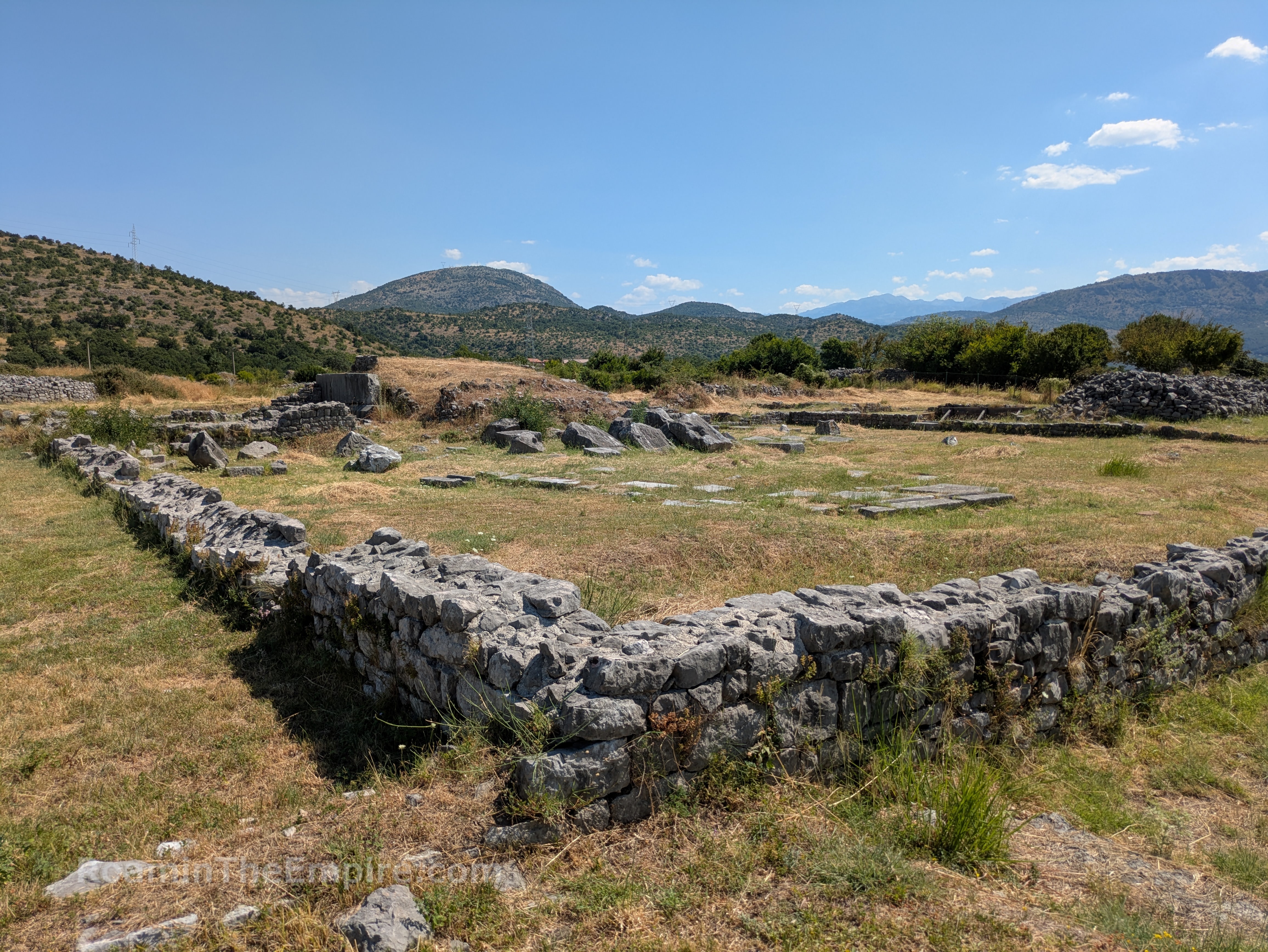
The temple itself is just one part of the sanctuary complex. Located toward the rear (north side) of the complex, it is distinguishable by the remnants of the rubble core, which rise above the rest of the remnants of the temple complex. The sides and rear of the temple also have large ashlar blocks remaining in the facing of the temple as well as parts of the crepidoma. Some parts of the cella are also preserved, best visible from the rear of the temple. The temple faced south, toward the decumanus maximus, and into a large open area referred to as the atrium. A monumental entrance led from the decumanus maximus into the atrium, though there were also smaller entrances to the east and west.
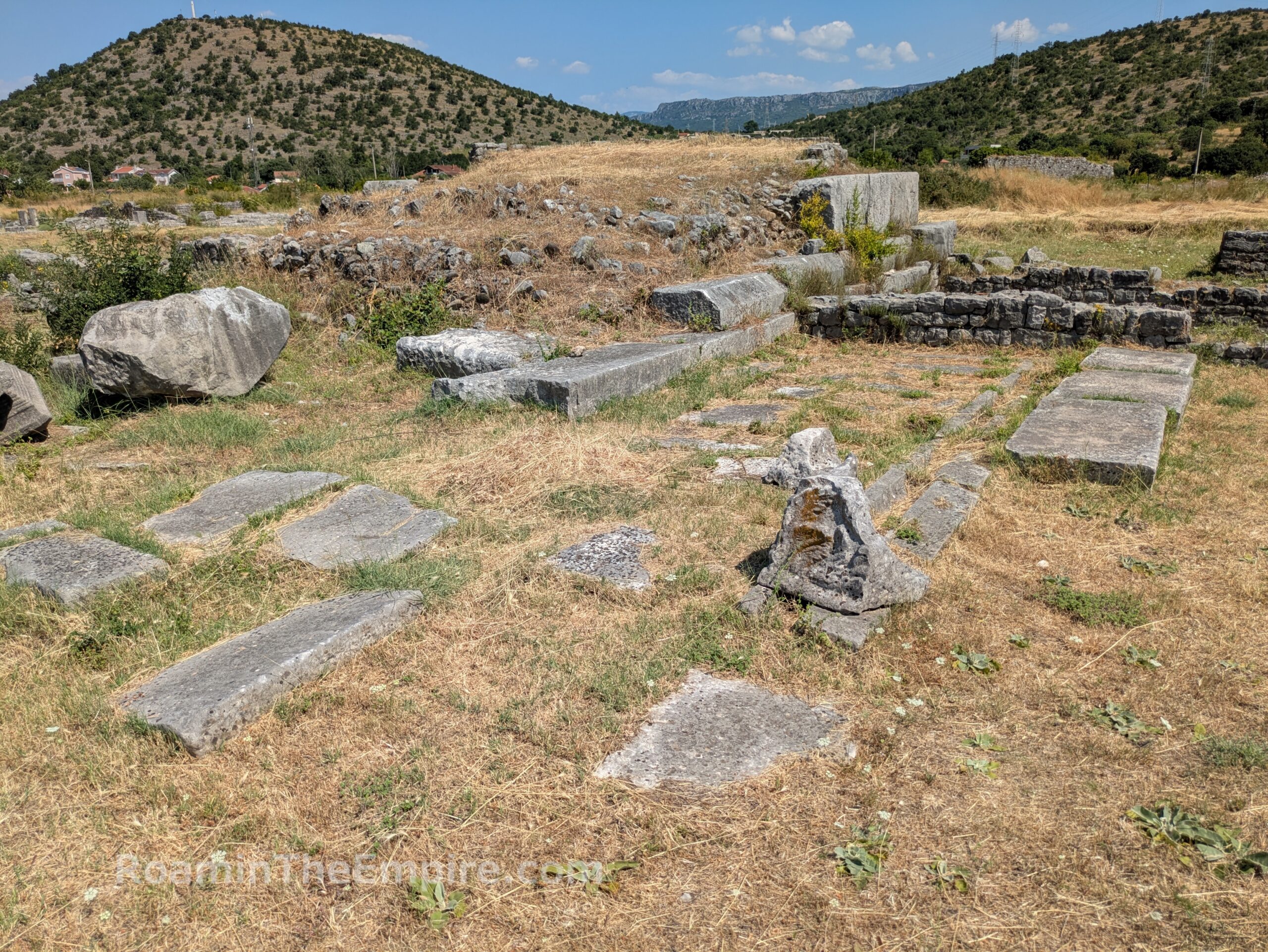
The atrium area was paved in stone, which is visible in a few places. One of the best of these is just to the east of the rubble core of the stairway to the temple, where a whole section of the paving stones as well as the drainage channel are relatively intact. Some stones that seem to form a bit of a platform in front of the temple probably indicate where the altar was placed. No particular function has been assigned to the rooms adjacent to the temple. After the temple stopped functioning as a religious building, the other rooms were repurposed. The southernmost probably onto the decumanus maximus and there were likely other rooms in the complex to the north, which has not been excavated. To the east of the temple is an L-shaped series of rooms, which again do not appear to have had any particular function yet determined for them.
Continued In Doclea Part II
Sources:
Baković, Mile. “Preliminary Results of the Research into the Area of the Capitol Temple of the Doclea Site.” Nova Antička Duklja II, Dragan Radović (Ed.), 2011.
Barnes, Timothy David. The New Empire of Diocletian and Constantine. Cambridge, MA: Harvard University Press, 1982.
Bowman, Alan K., Edward Champlin, and Andrew Lintott (Eds.). The Cambridge Ancient History Vol. 10: The Augustan Empire, 43 B.C.-A.D. 69. Cambridge: Cambridge University Press, 1996.
Koprivica, Tatjana. Religion and Cults in Roman Doclea.
Koprivica, Tatjana. “Sacral Topography of Late Antique and Early Christian Doclea (Montenegro): The First Modern Preliminary Investigation.”
Oettel, Andreas and Milos Zivanovic. “Doclea, Montenegro. Eine Römische Stadt in Illyrien. Die Begehung Des Jahres 2019.” e-Forschungsberichte Des Deutschen Archäologischen Instituts, Vol. 11, 2020, pp. 9-21.
Oettel, Andreas and Milos Zivanovic. “Doclea and its Urban Centre: New Reflections on the So-Called Private House and the Beneficiarii Consularis.” Nova Antička Duklja XIII, Dragan Radović (Ed.), 2022.
Sfameni, Carla and Tatjana Koprivica. “The Main Public Buildings of Doclea: Archival, Archaeological and Architectural Research.” The Archeolab Project in the Doclea Valley, Montenegro (Campaign 2017): Archaeology, Technologies and Future Perspectives, Lucia Alberti (Ed.), Supplemento 11, 2019.
Sfameni, Carla, Valerio Bruni, Tatjana Koprivica, and Lucia Alberti. “The Forum-Basilica Complex in Doclea (Montenegro): Studies on Architecture and Architectural Decoration.” Journal of Roman Archaeology, Online publication, September 2026.
Smith, William. Dictionary of Greek and Roman Geography. Walton & Murray, 1870.
Stevovic, Ivan. Early Byzantine Doclea and its Citizens: Longe ab Patriam. International Symposium Nis and Byzantium XIV (2015), Nis, 2016, pp. 121-136.
Sticotti, Piero, Luka Jelić, and Ćiril Metod Iveković. Die Römische Stadt Doclea in Montenegro. Vienna: Alfred Hölder, 1913.
Stillwell, Richard, William L. MacDonald, and Marian Holland. McAllister. The Princeton Encyclopedia of Classical Sites. Princeton, NJ: Princeton University Press, 1976.
Suić, Mate. Antički Grad na Istočnom Jadranu. Zagreb: Sveučilišna naklada Liber, 1976.
Turkovic, Tin and Nikolina Maraković. “Reconsideration of the So-Called ‘Diana’s Temple’ in Ancient Doclea.” Peristil, Vol. 64, 2021, pp. 9–21.
Turkovic, Tin. “Object IX in Doclea (Dioclea) – Diocletian’s Rearrangement of the Complex.” Nova Antička Duklja XIII, Dragan Radović (Ed.), 2022.