


Continued From Sirmium Part I
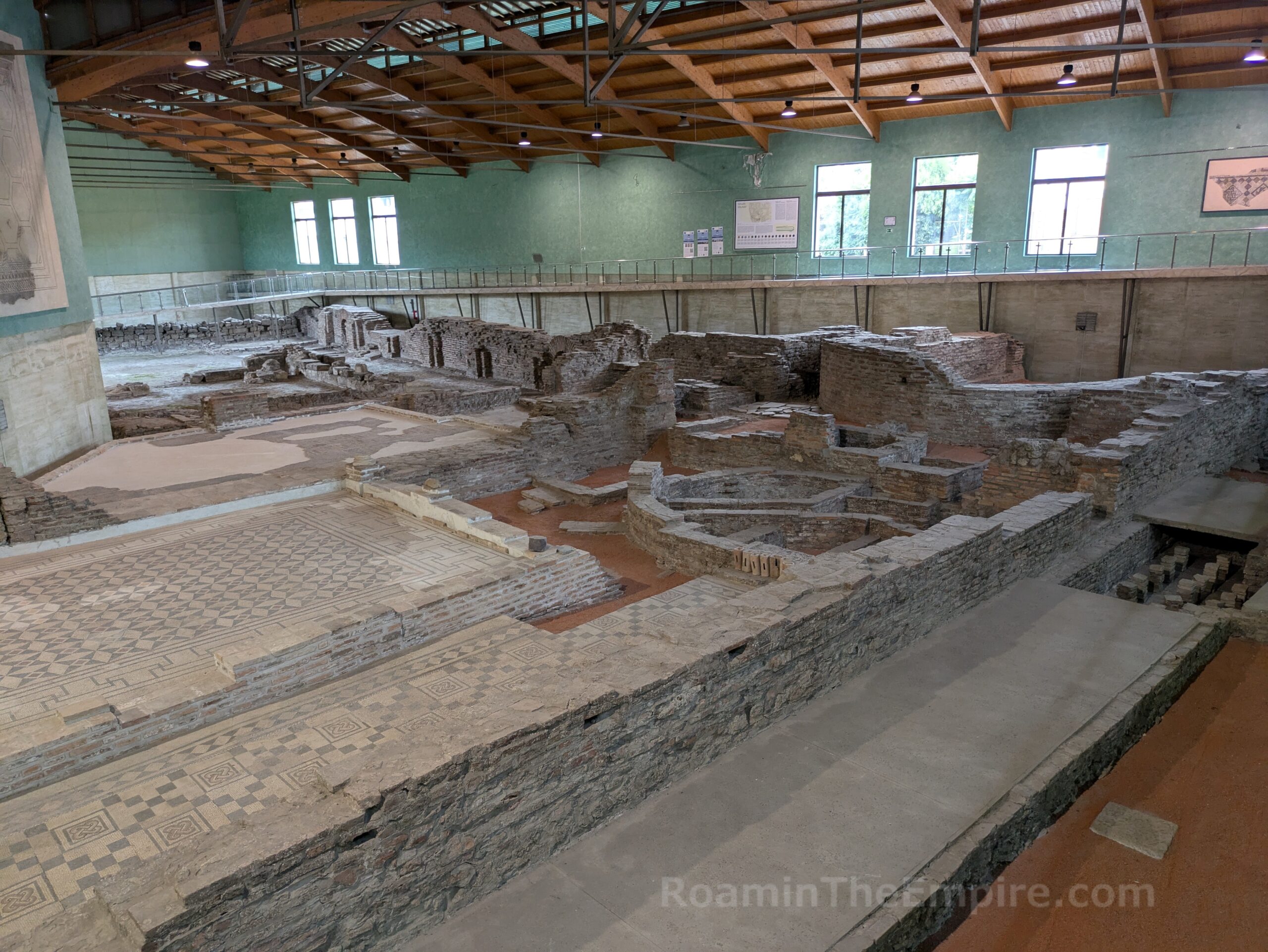
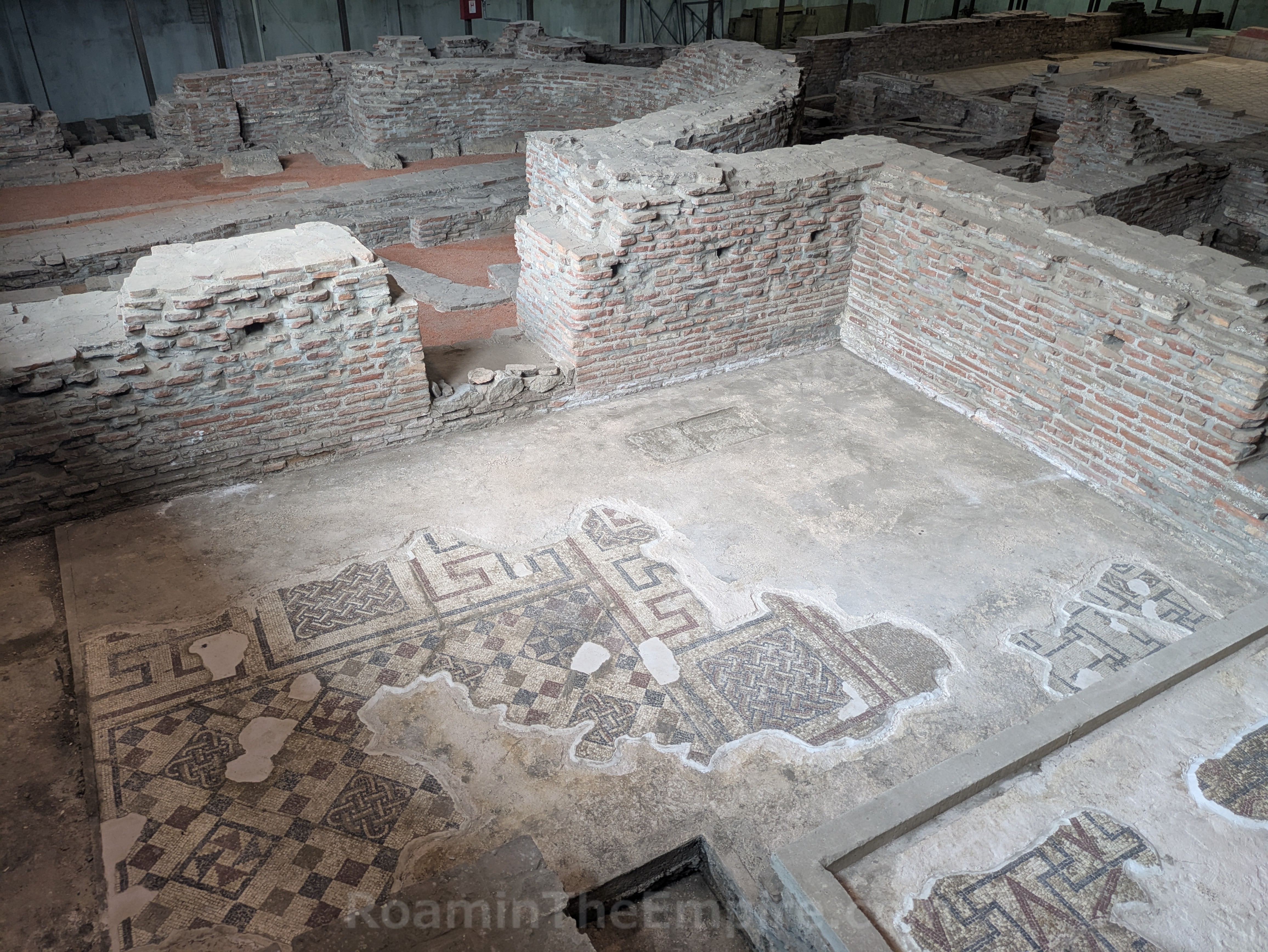
A few blocks to the southeast of the basilica are what remains of an imperial palace. Located at Pivarska 2, the excavations of the palace are open every day during the week from 8:00 to 17:00 and on Saturday and Sunday from 8:00 to 16:00. Admission is 300 RSD. The imperial palace appears to have initially been constructed in the late 3rd century CE, coinciding with Sirmium’s selection as an imperial capital. It underwent an additional phase of construction and renovation in the early 4th century CE, including some of the surviving mosaic work. A second major phase of construction occurred in the middle of the 4th century CE, when the remainder of the mosaics found here were created. In the latter half of the 4th century CE, the palace seems to have undergone a deliberate destruction, after which smaller domestic structures were constructed in the 5th and 6th centuries. A large hippodrome, which so far is the only building of this kind discovered in present-day Serbia, was constructed adjacent to the palace, but nothing is presently visible to the public.
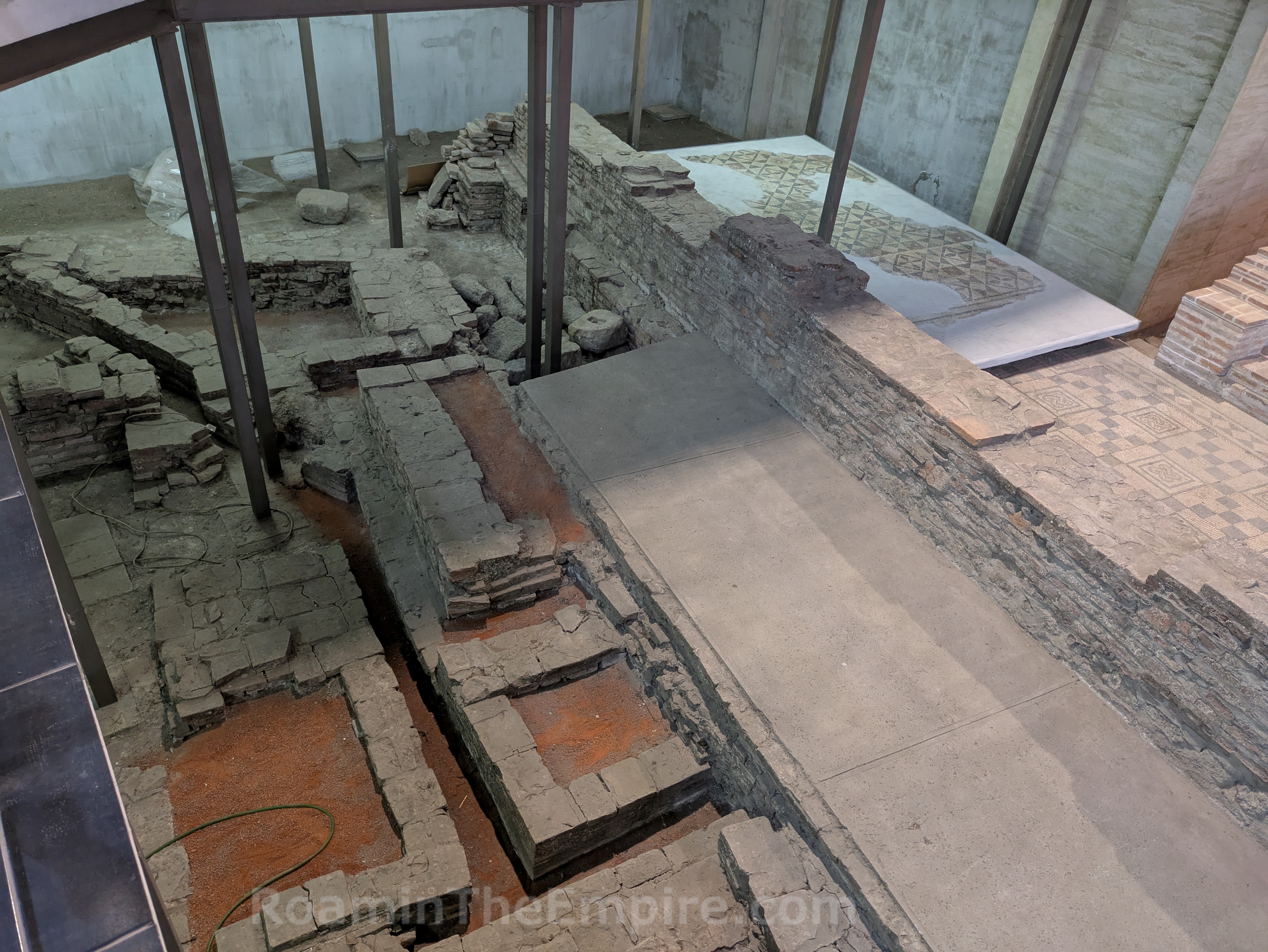
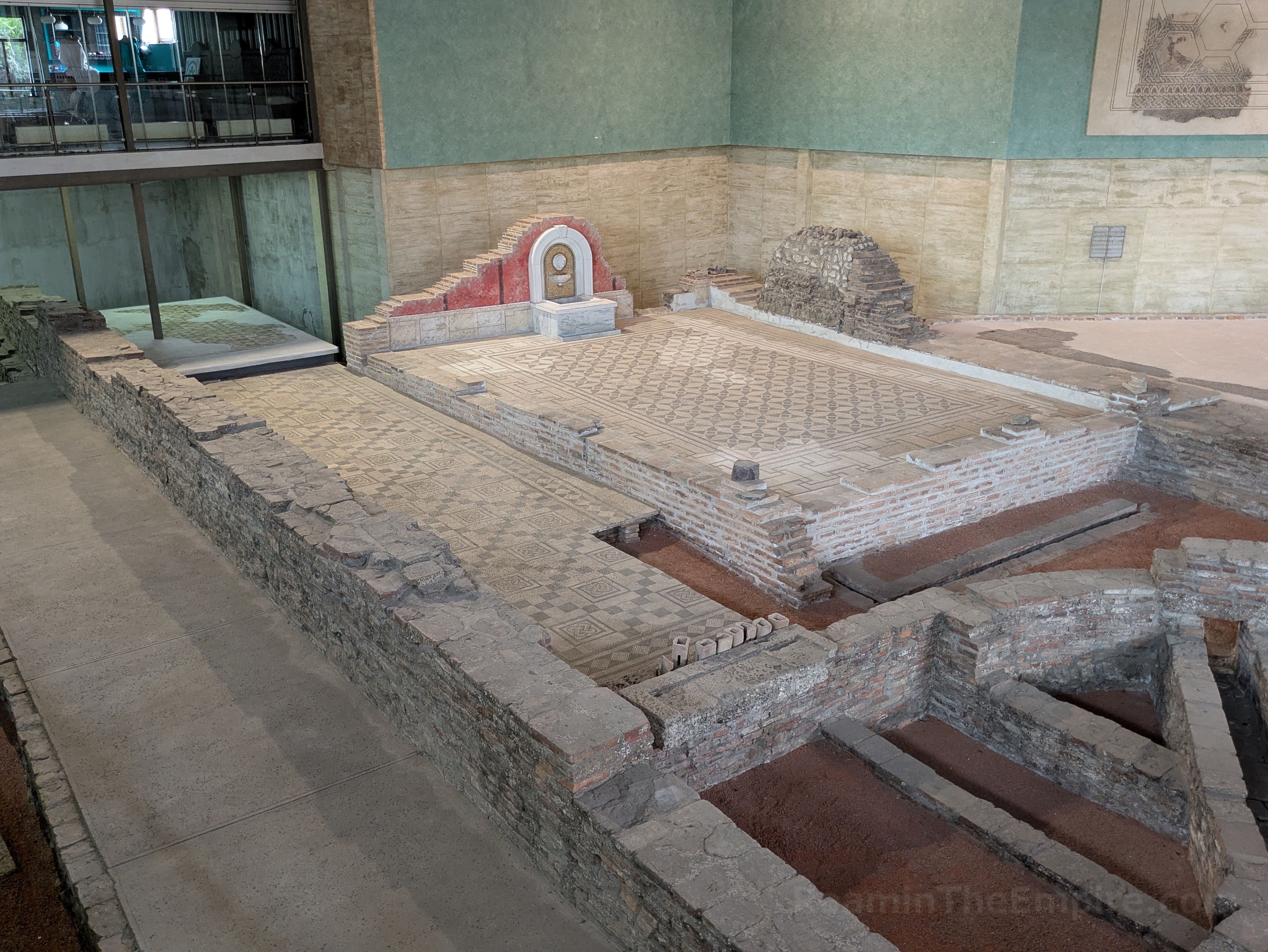
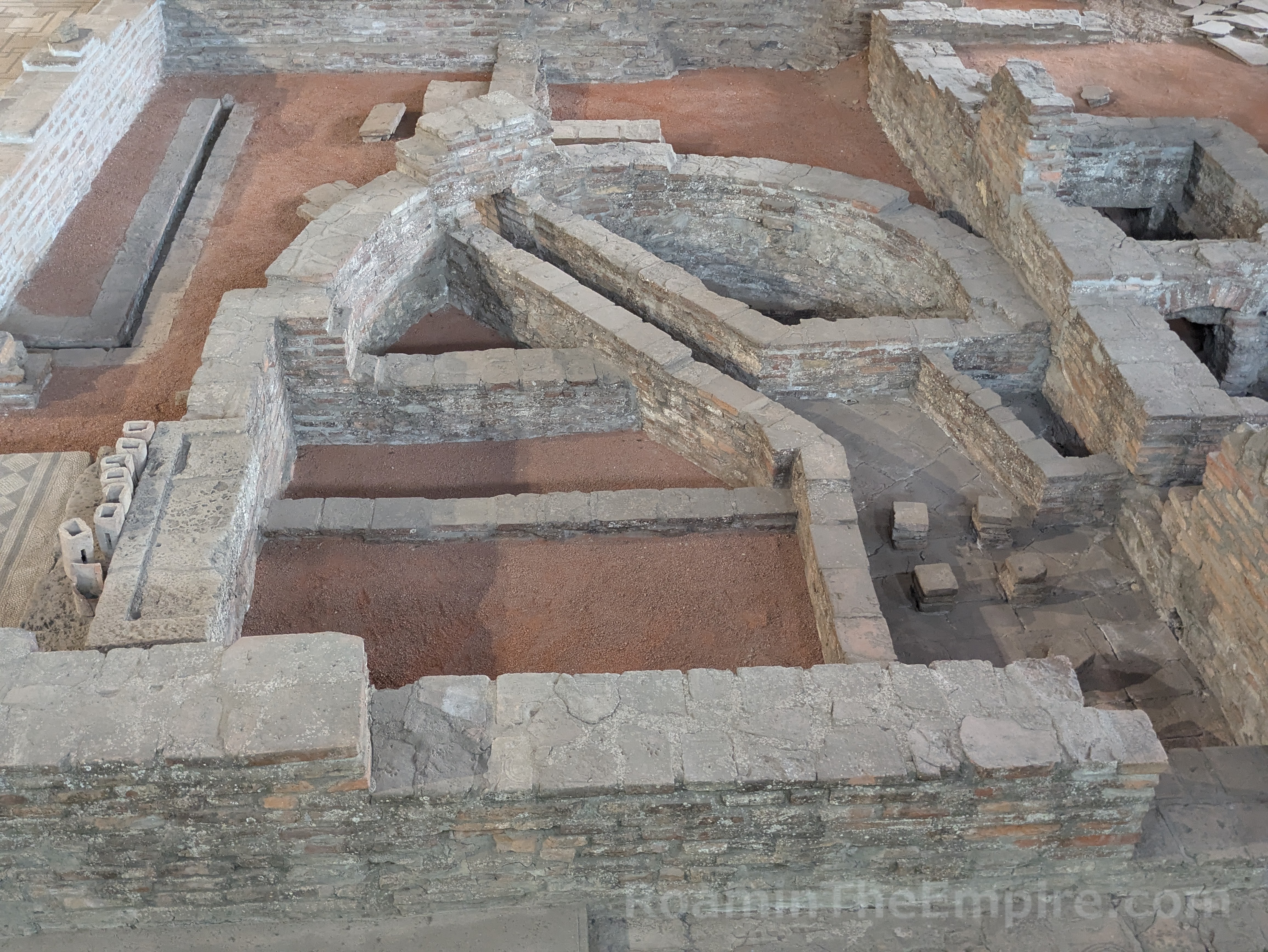
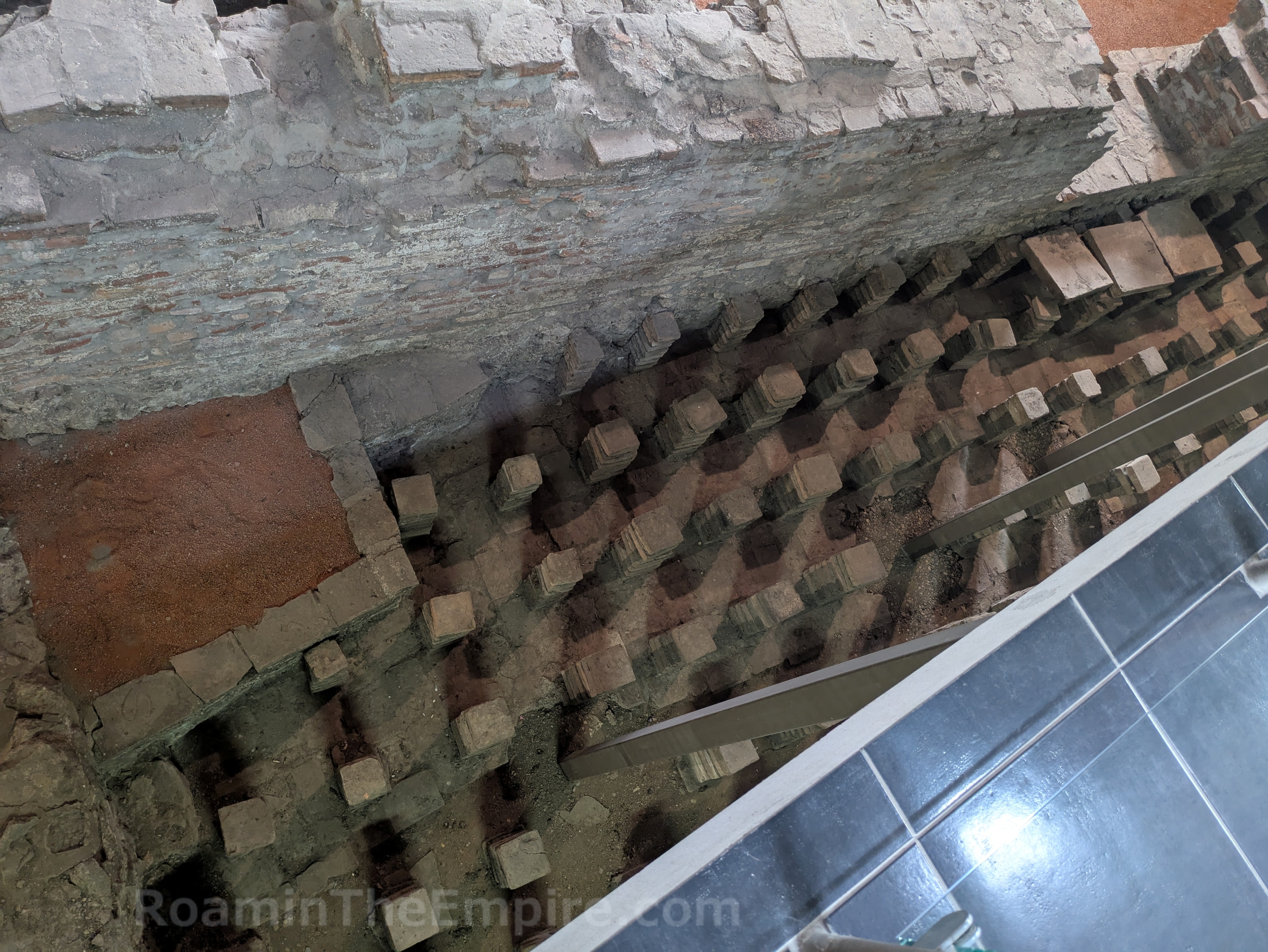
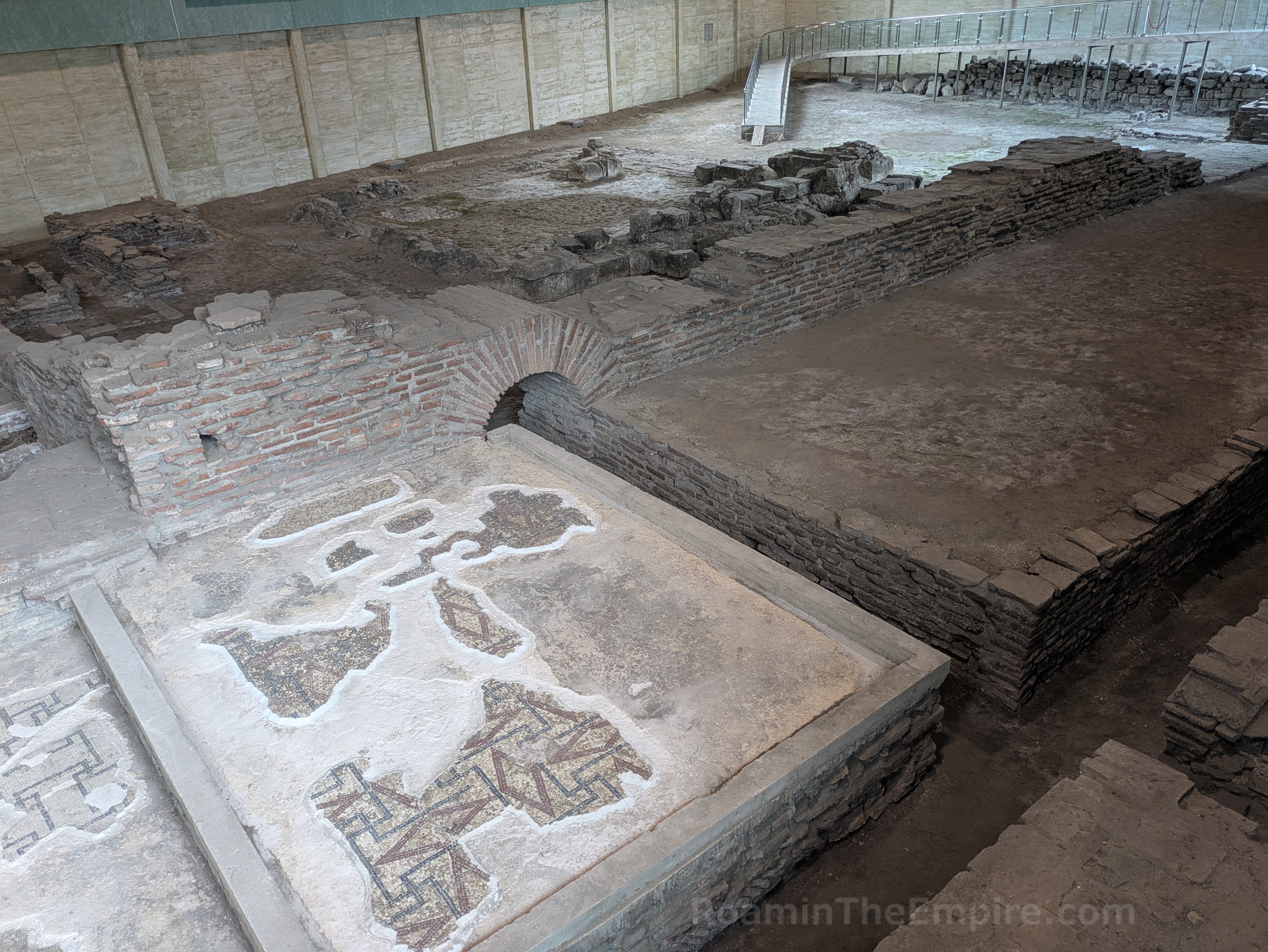
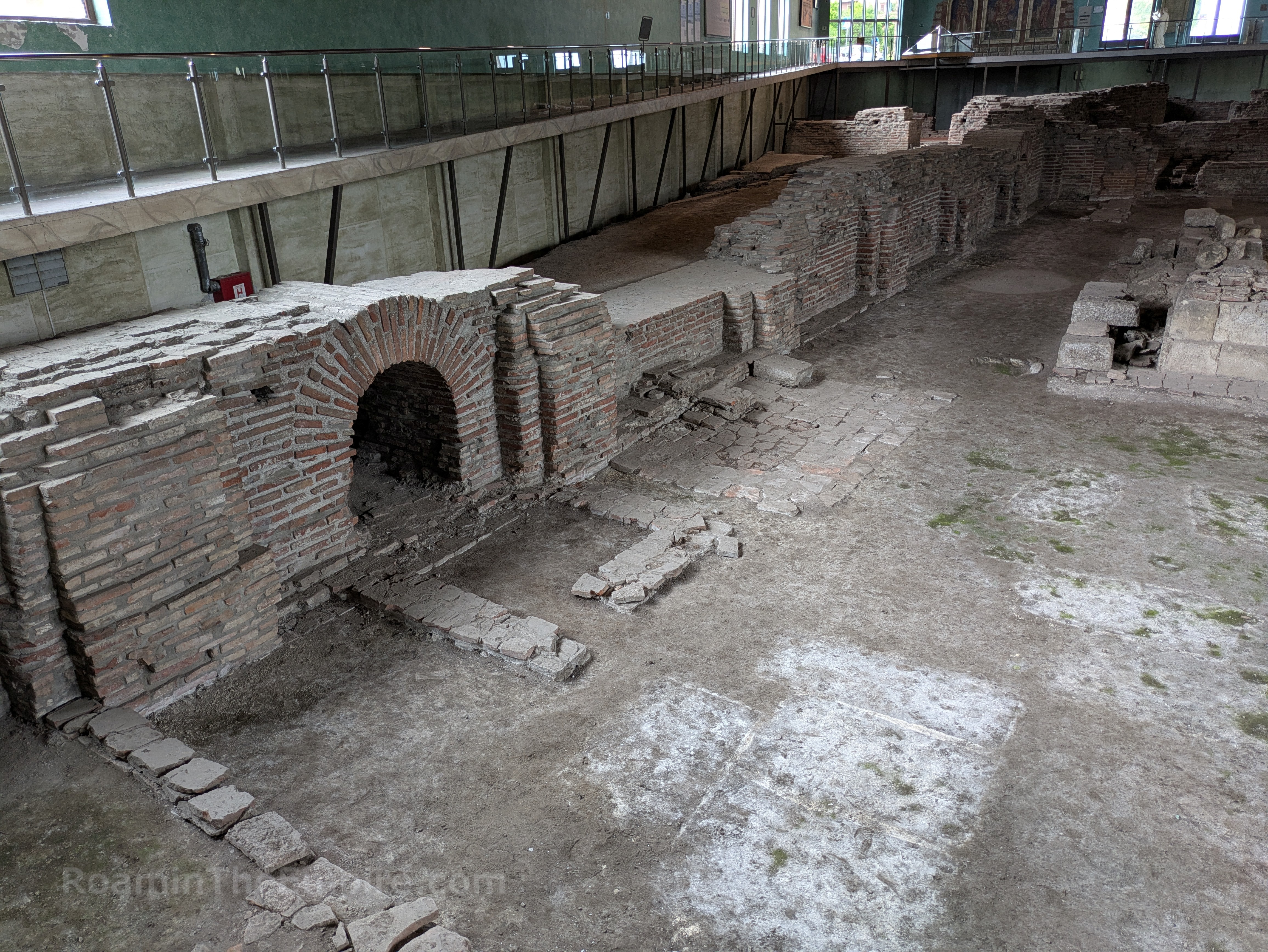
What is preserved is only a small portion of the imperial palace; an interior courtyard along with a number of rooms that surrounded it. Toward the entrance is a long mosaiced corridor that runs along the raised catwalk that serves as the visitor path. A hypocaust system that heated the flooring in this area is visible to the area south of the corridor. Adjacent, but not accessible from the corridor is a large room in which three levels of mosaic pavement were found. Along the eastern wall, which has been partially reconstructed with remnants of fresco, was a marble fountain. A small area at the west end of the corridor with an apsidal niche on the north served as a stairwell to an upper level of the palace. The floor level here is actually the bottom of a hypocaust heating system, with a few of the pilae reconstructed. Beyond the stairwell is another larger apsidal room which seems to have been some kind of hall. Significant remnants of the hypocaust system of the area to the south of this room have been exposed.
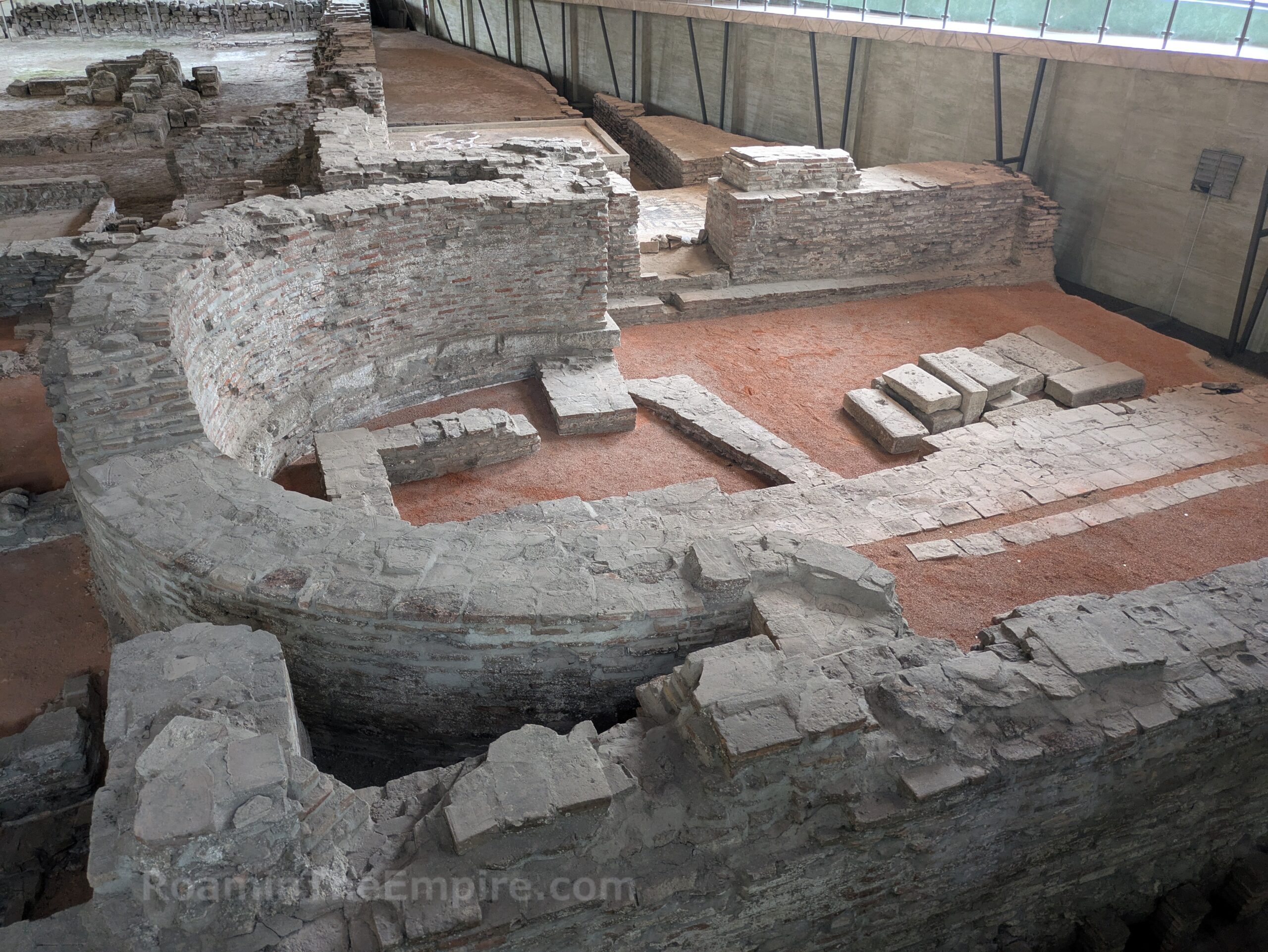
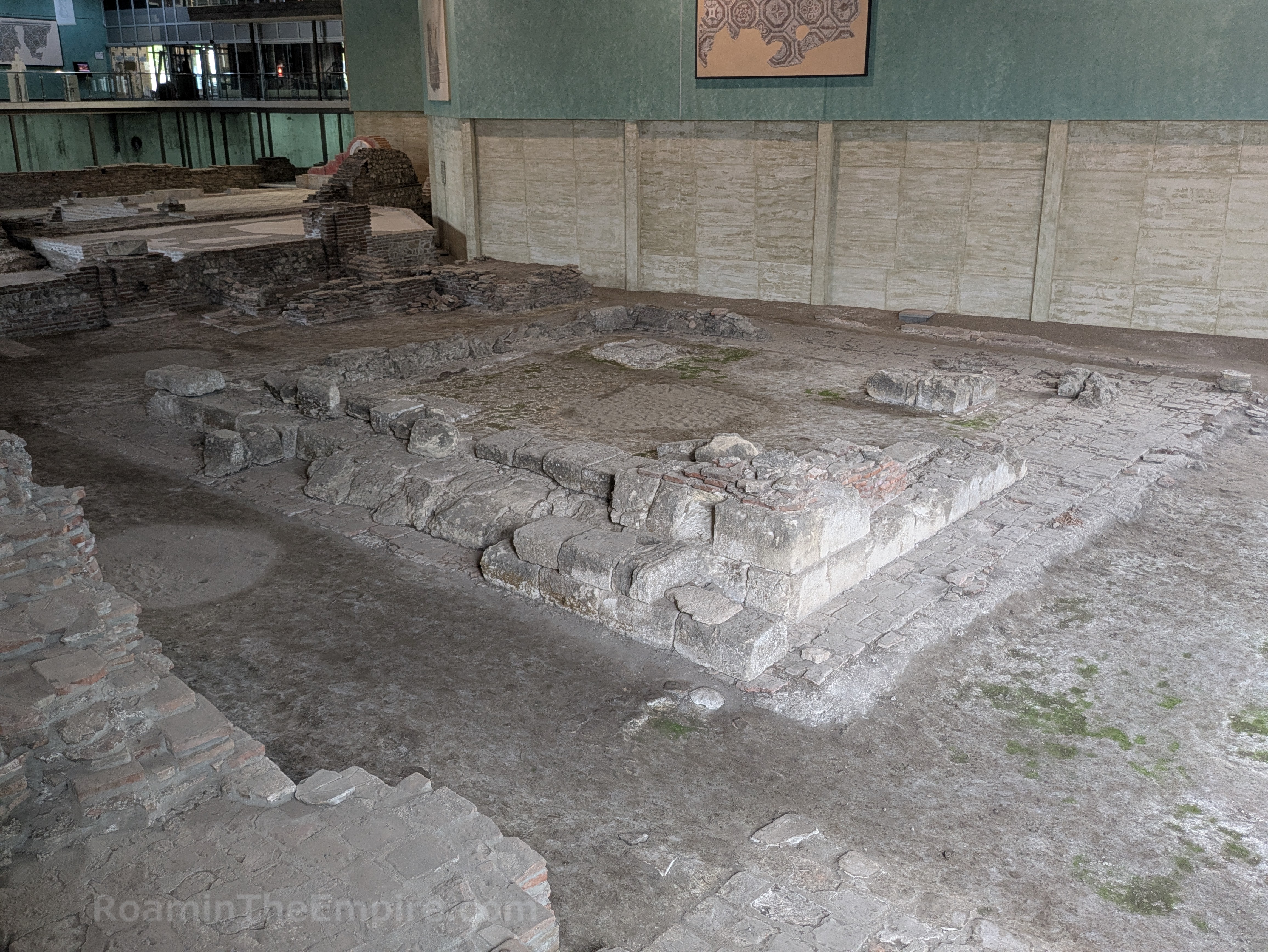
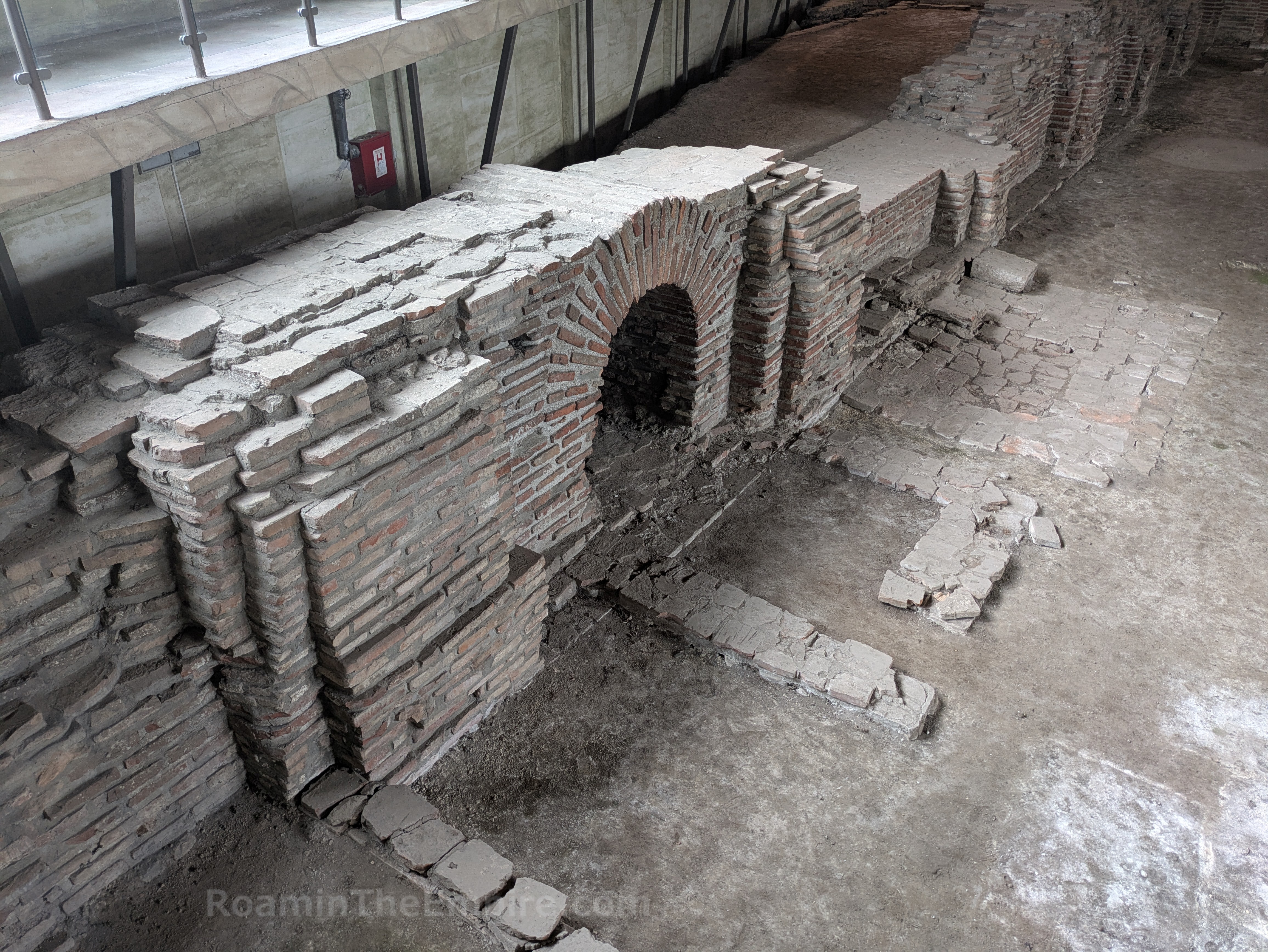
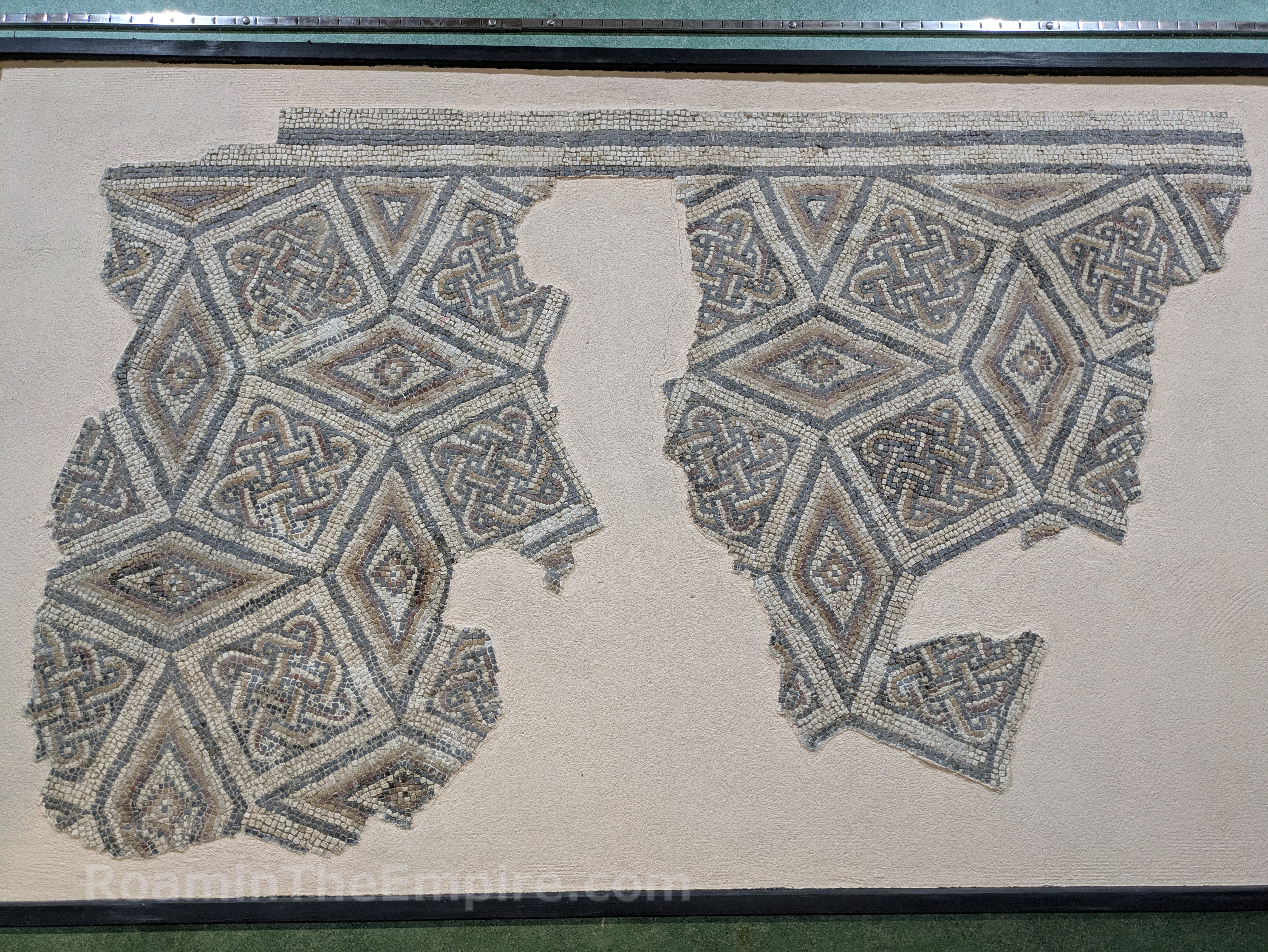
As the orientation of the rooms turns to the south, there are a few more partially mosaicked rooms with no particular purpose assigned. The southern of these two rooms is bisected by an exposed channel from the hypocaust system which lead directly the praefurnium on the east side of the room, of which only the foundations and the reconstructed arch remain. Further south was another praefurnium that heated the rooms along the west side of the courtyard, though again, it is really only discernable by the arch into the heating channel and the foundations. In the center of the open courtyard area was a roughly square structure of unknown function. It seems to have been richly decorated, though. Along the north side of the courtyard were two more mosaic areas that made up the flooring if the portico around the courtyard. A number of other mosaics that have been found in the area, but are not in situ are displayed on the walls, as are a few altars dedicated to Jupiter. Information in English and Serbian is presented throughout the exhibition.
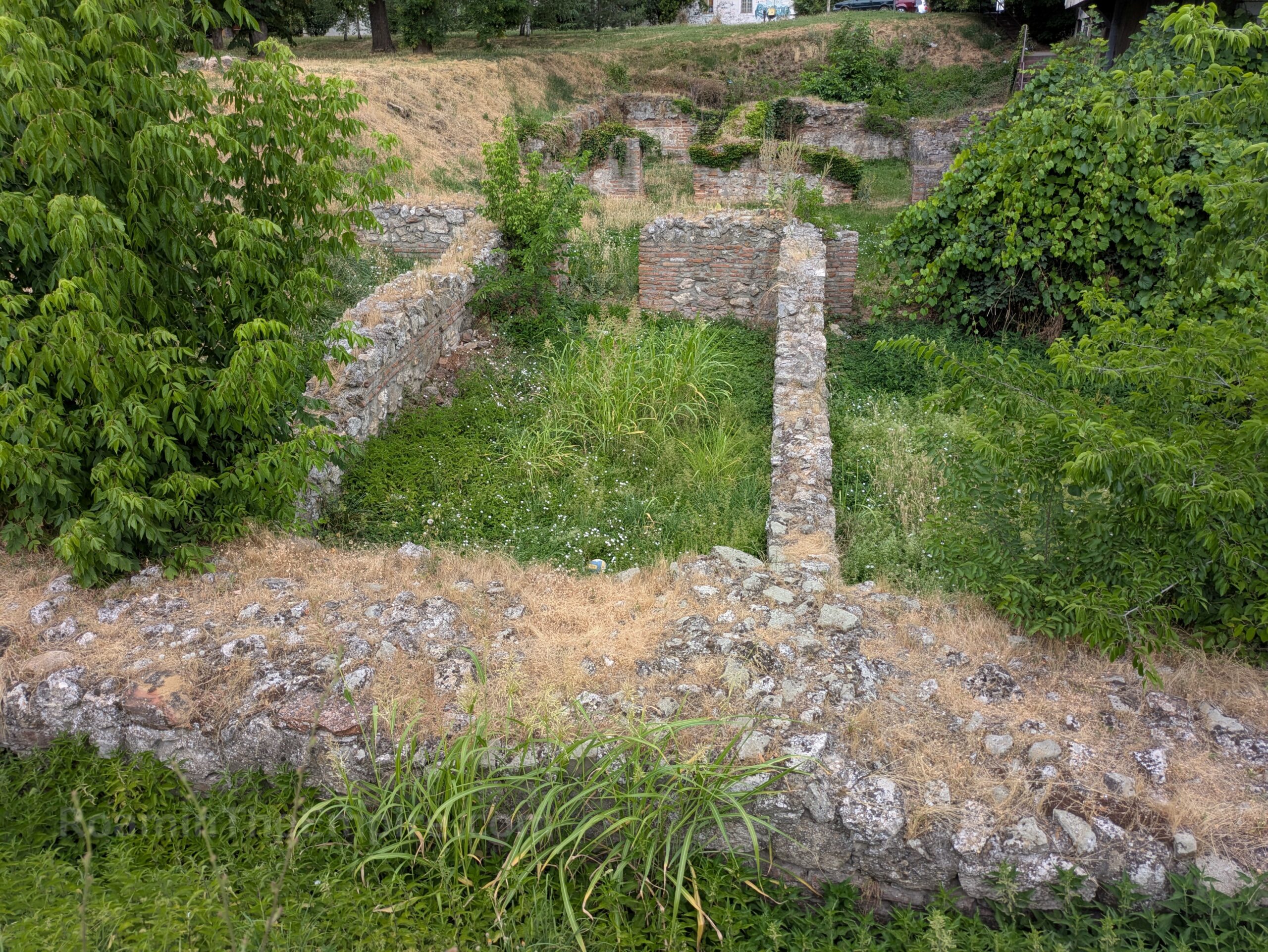
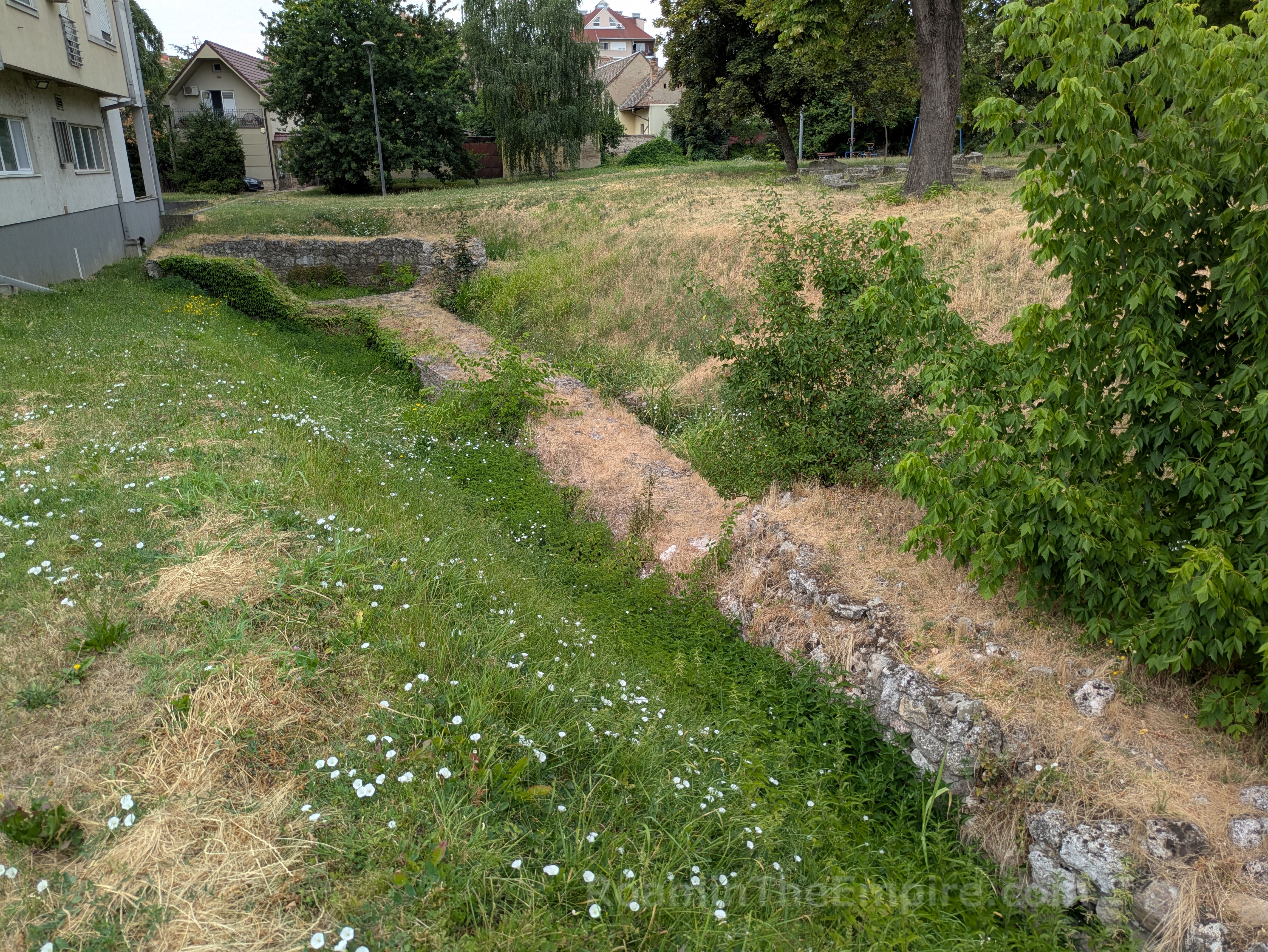
In front of the imperial palace is a 5 way intersection; the road that leads southwest is Svetozara Miletića. About 150 meters down this road is an open access excavated area in a park/greenspace. Running perpendicular from Svetozara Miletića was about a 40 meter stretch of the city walls, with a circular defensive tower at the west end. Abutting the east end of this stretch of wall are a couple of rectangular rooms. Across from those are a few more rooms more or less mirroring those attached to the wall. These are the remainders of a series of horrea that were located adjacent to the walls here.
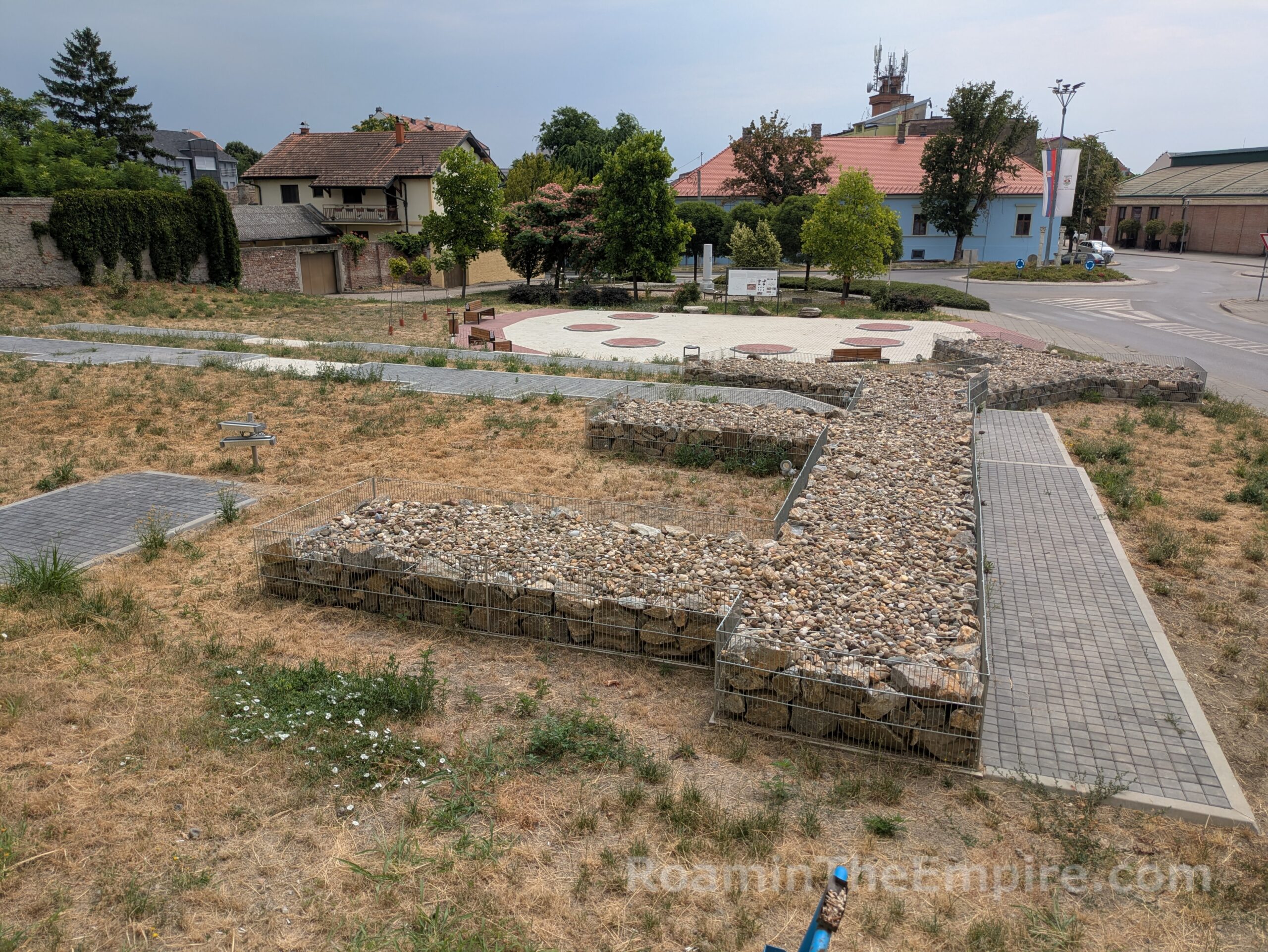
Back towards the imperial palace of Sirmium, across the intersection to the northwest, located at Vuka Karadžića 3 is the Muzej Srema, the city museum. The museum is open Monday through Friday from 8:00 to 15:00 and Saturday and Sunday from 9;00 to 17:00. Admission is 300 RSD, which includes the separate lapidarium. In front of the museum (to the east) are the reconstructions of some excavations found here. None of it seems to be original, just modern materials outlining the footprint of the walls. This area was also part of the imperial palace. The most distinctive of what was found here is a 16 sided building with 8 internal columns in the eastern part of the plot. The finding of lead seals and porphyry statue fragments has lead to the supposition that it may have been a building used for official document storage.
The museum itself is an overall local history museum. There are a fair amount of archaeological finds, the vast majority of which are from late antique and early medieval graves. A fair amount of jewelry and coins along with some other small finds. A couple of inscriptions. Pretty much all of the information inside the museum is in Serbian only. All told, it took me about half an hour to get through the museum.
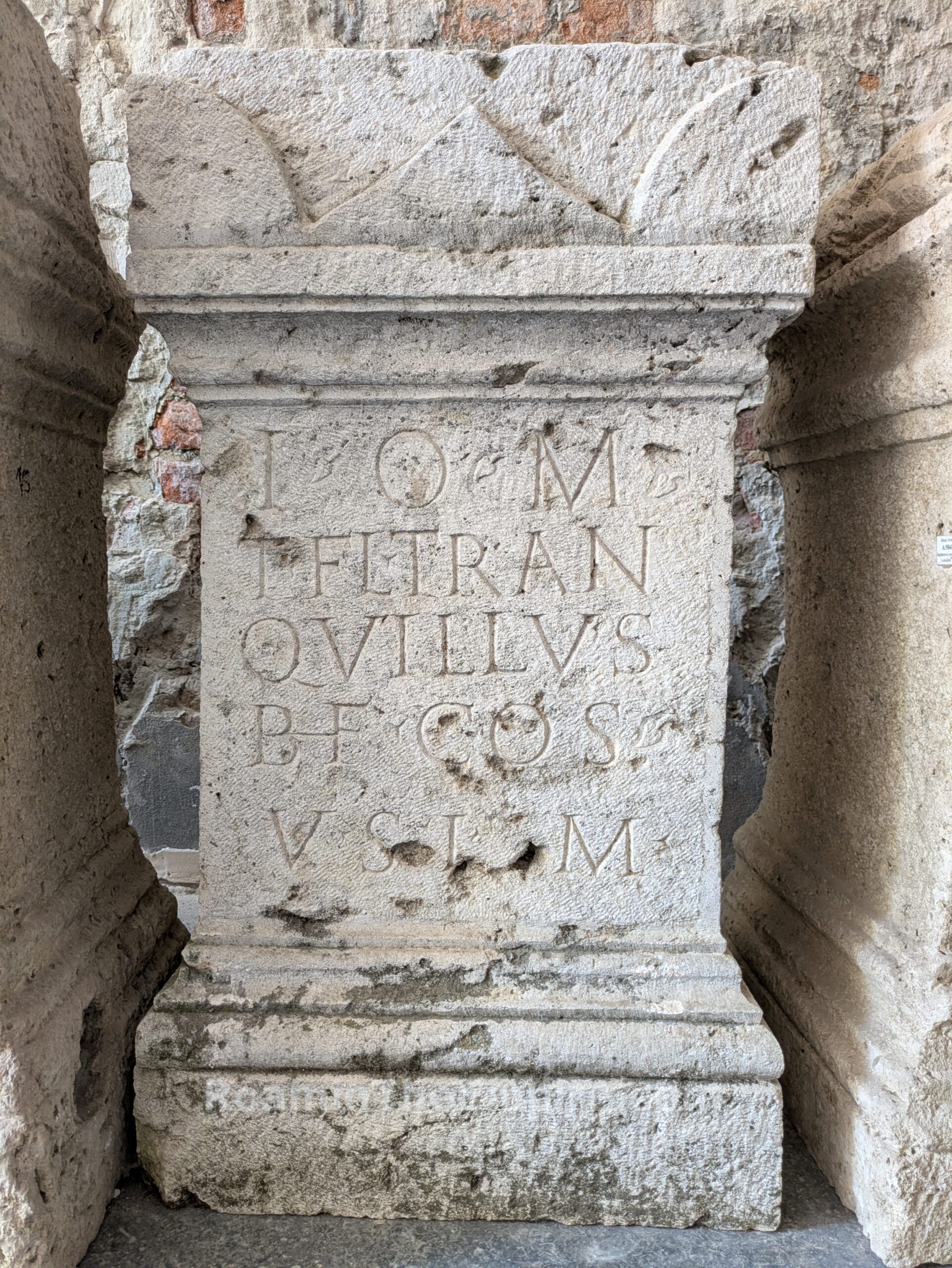
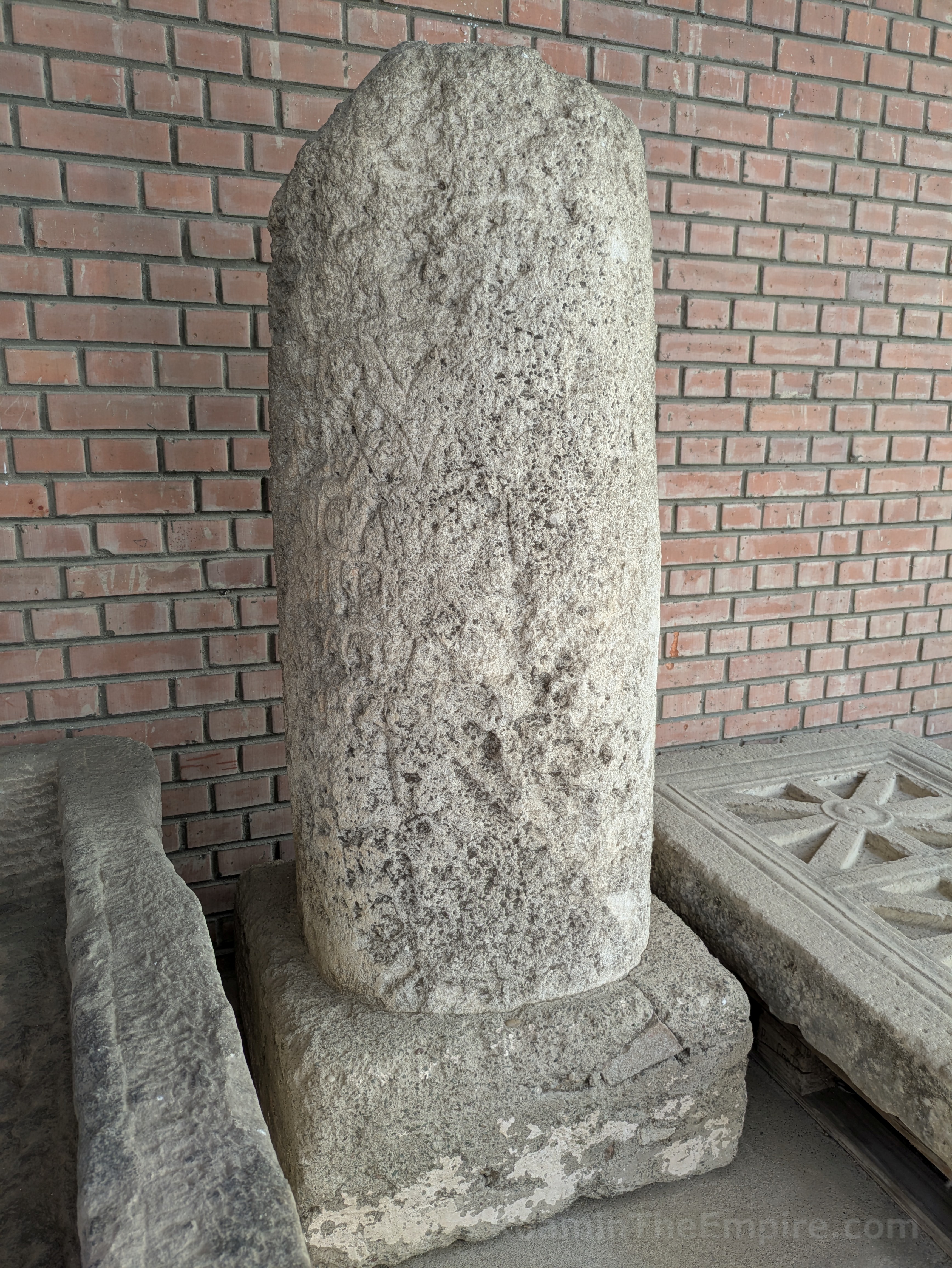
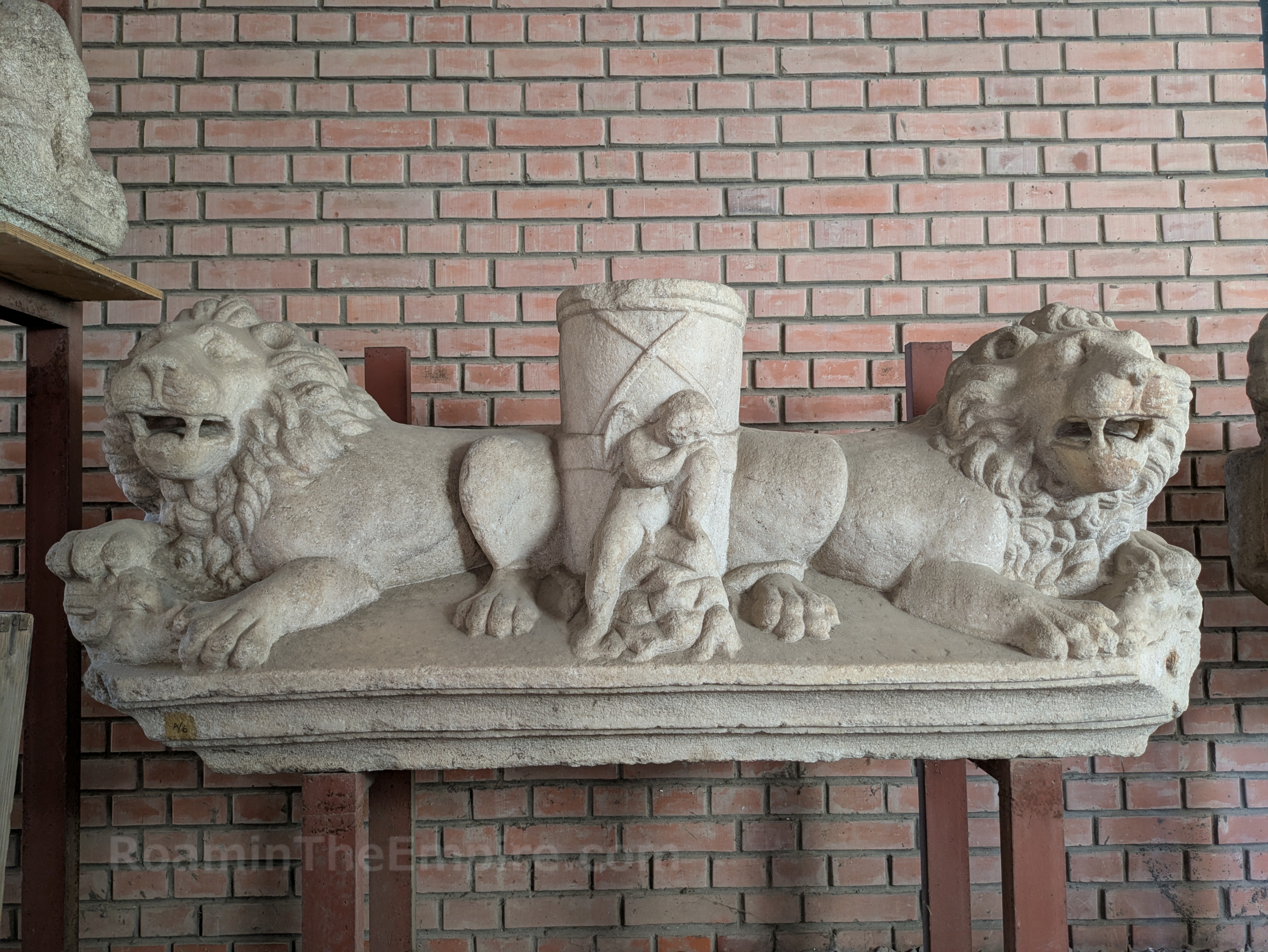
A much better selection from the ancient city of Sirmium is located just down the street at the lapidarium at Trg Svetog Stefana 15. It has the same hours as the museum; Monday through Friday from 8:00 to 15:00 and Saturday and Sunday from 9;00 to 17:00. Admission is included with the main museum ticket. The lower level of the museum consists of a hallway and a courtyard area where most of the larger objects are located. In the hallway are more than half of a series of 85 total altars dedicated mostly to Jupiter and found in a single location. Others are located in the main courtyard area, and at least one in the main museum. The courtyard contains a number of other inscriptions, both dedicatory and funerary, architectural fragments, sarcophagi, and even some mosaics and frescos.
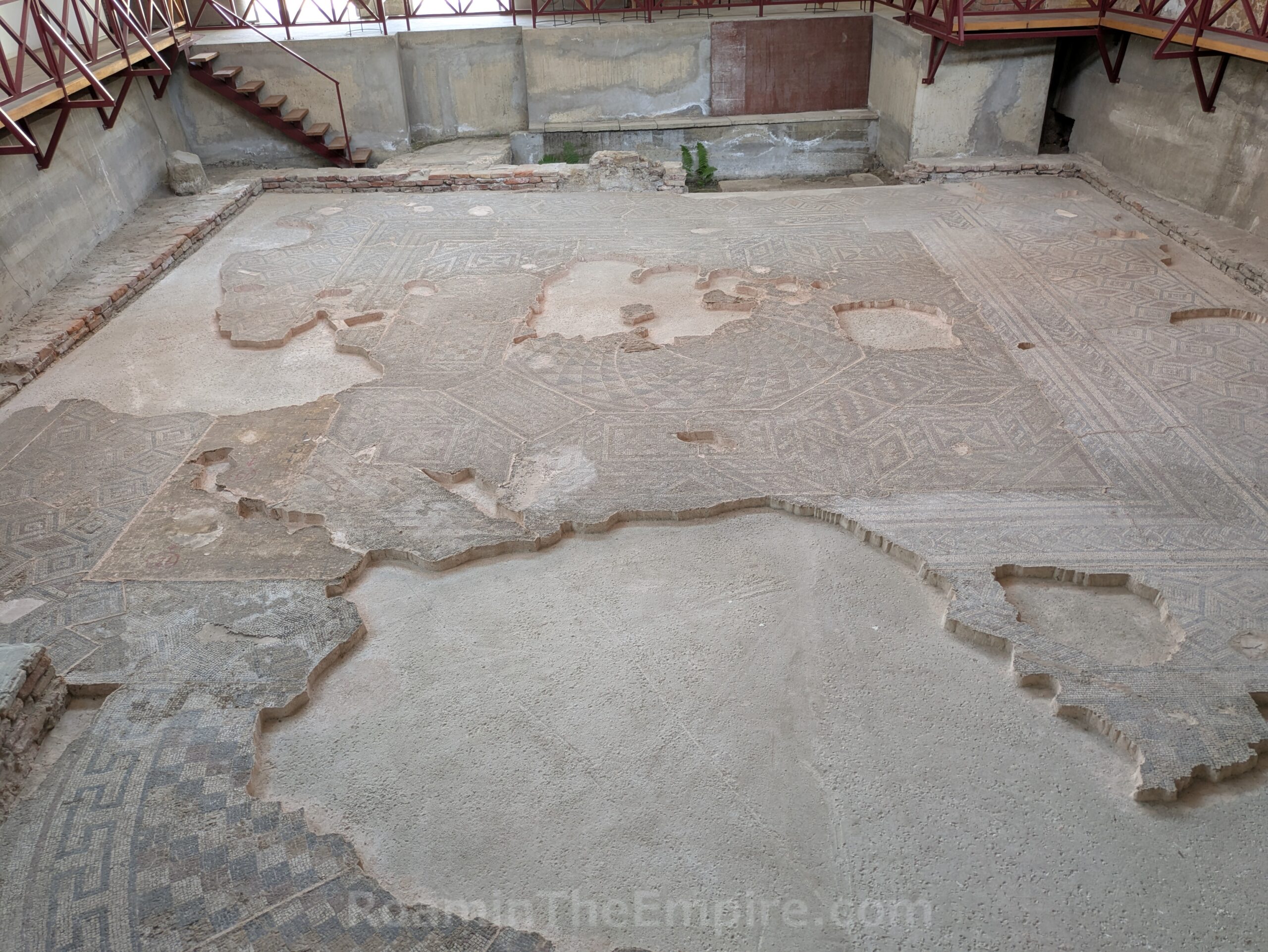
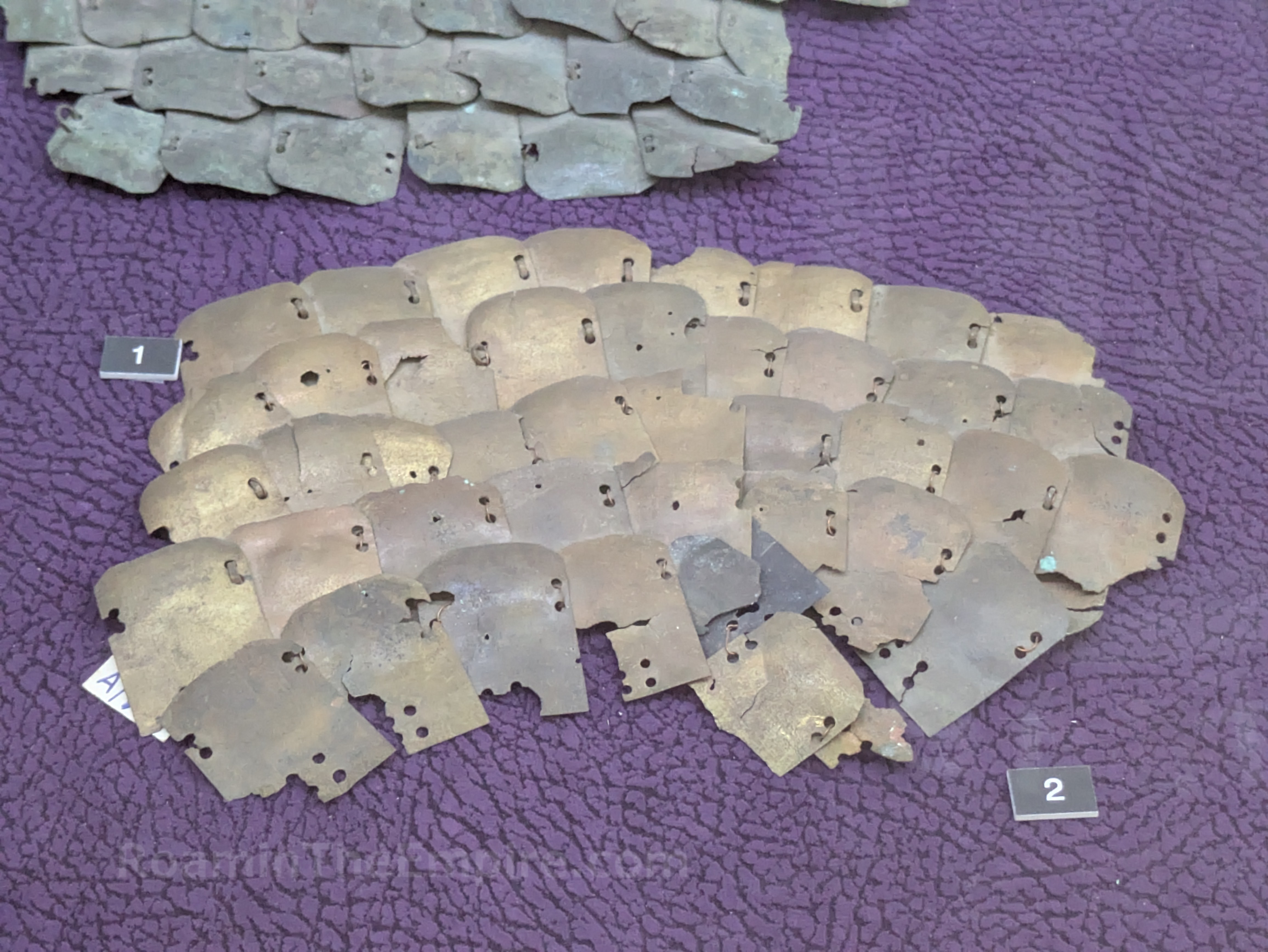
At the far end of the courtyard is the excavated triclinium of a house that was found there on the grounds of the museum. The apsidal room is mosaicked and some of the fresco decoration of the walls have been placed and reconstructed around the wall of the building that protects the recessed mosaic and walls below ground level. Other parts of the ancient dwelling remain seemingly undisturbed below the museum and surrounding structures. There is an upstairs exhibition in the main building of the lapidarium containing some of the smaller finds including statuary fragments, some inscriptions, coins, jewelry, and even some segments of lorica squamata. In total, the lapidarium took about 1.5 hours to go through. Unfortunately, like the main museum, much of the object information is only available in Serbian, though a few of the larger information panels had English translations.
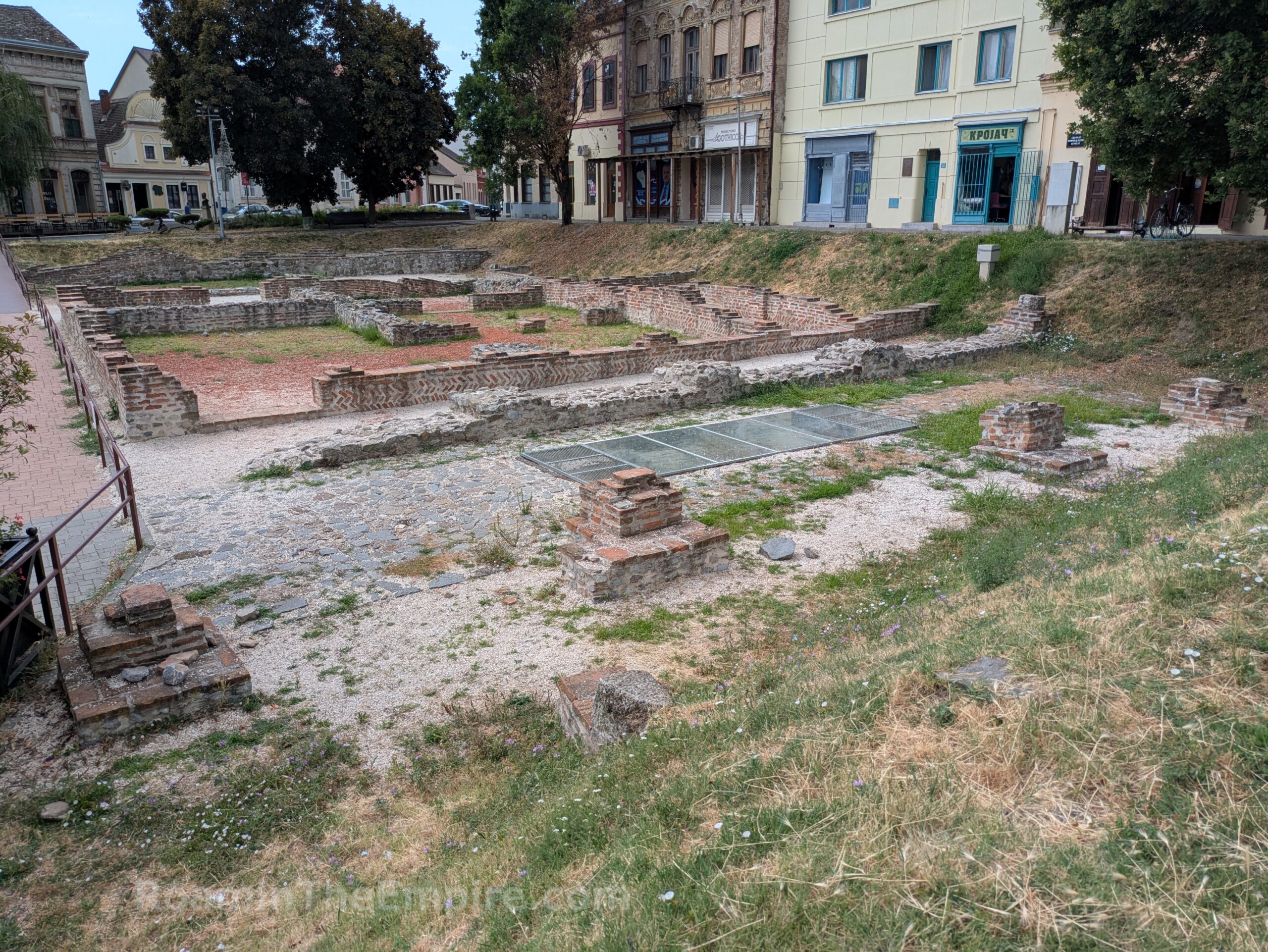
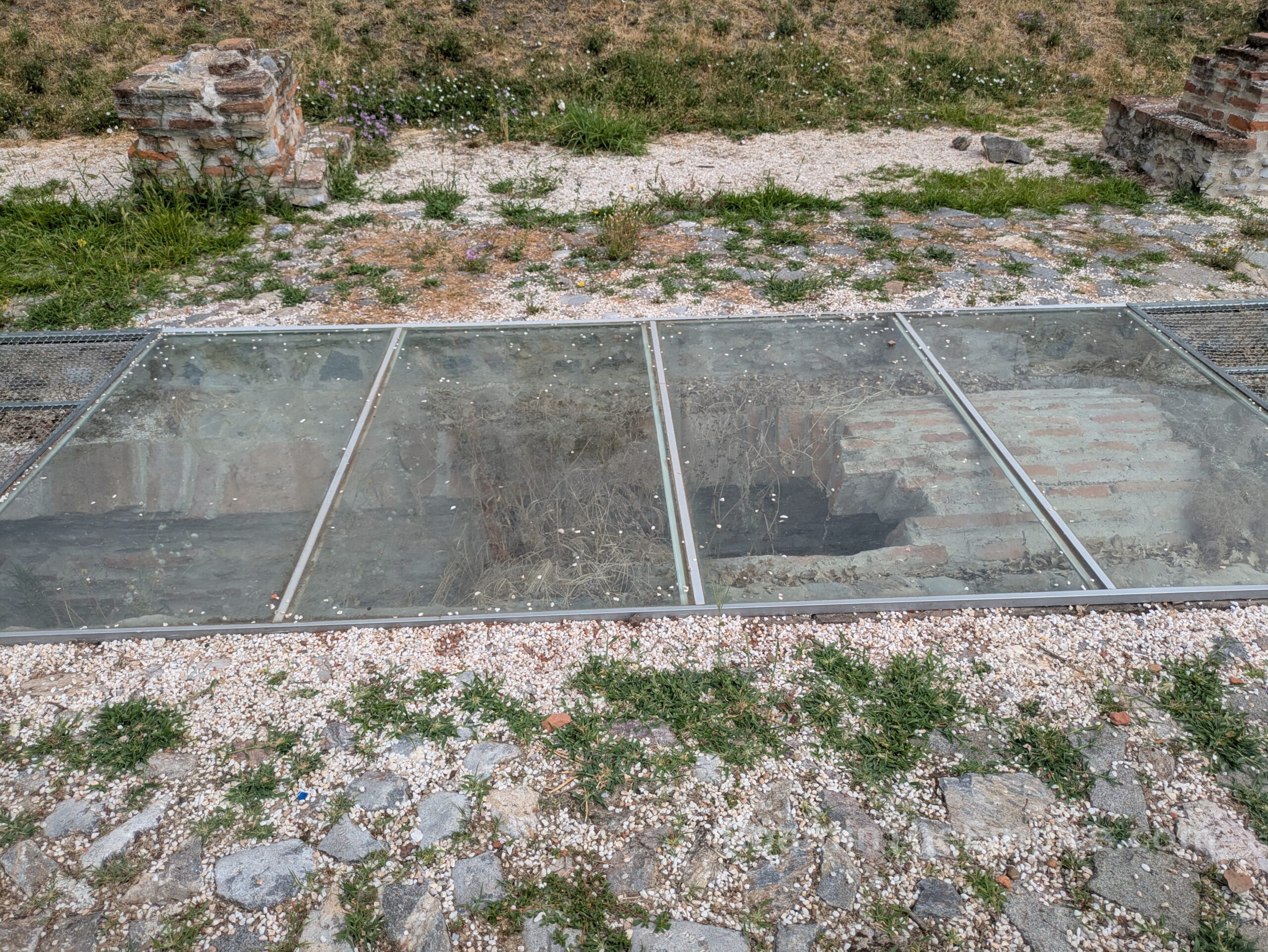
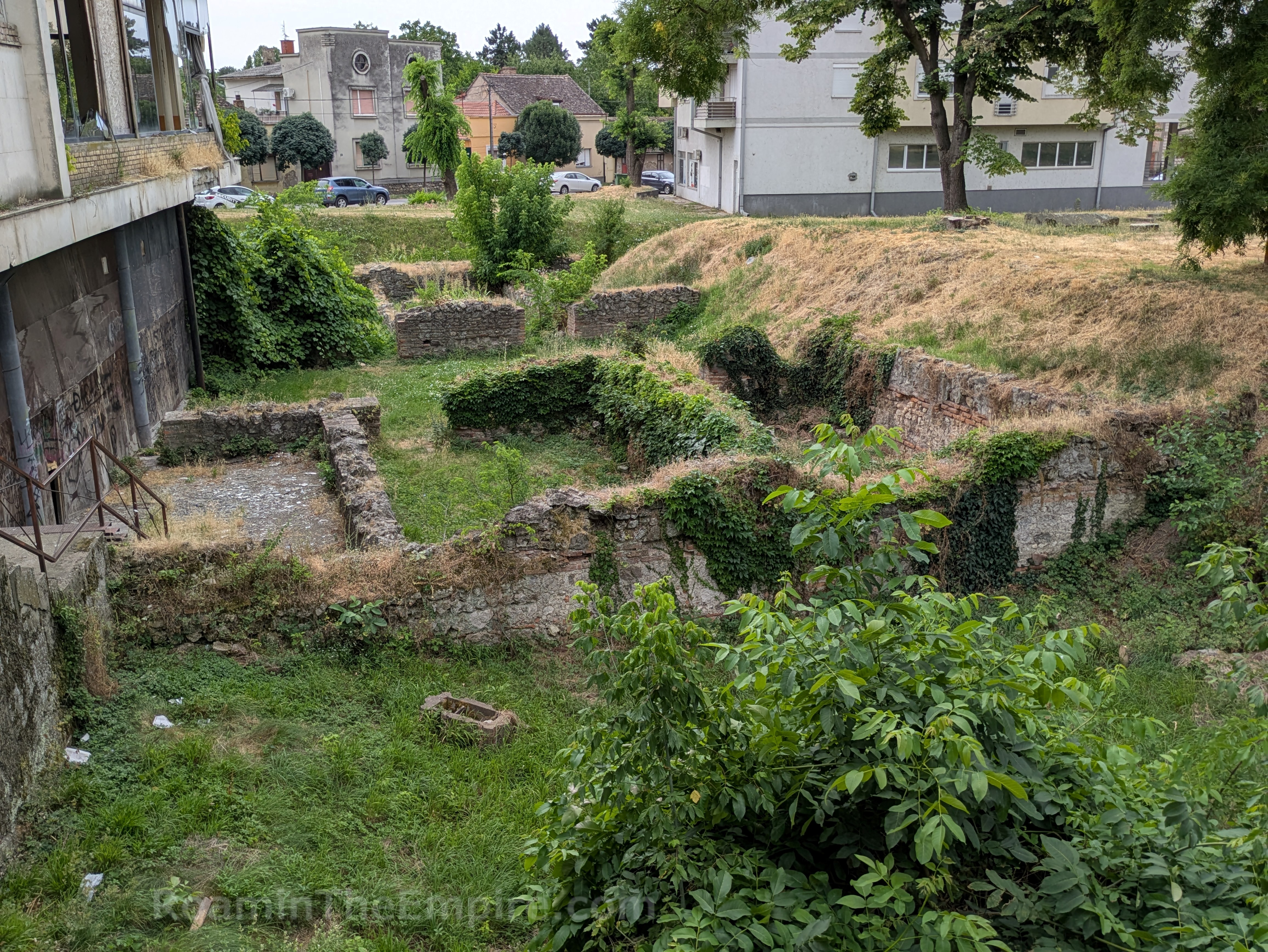
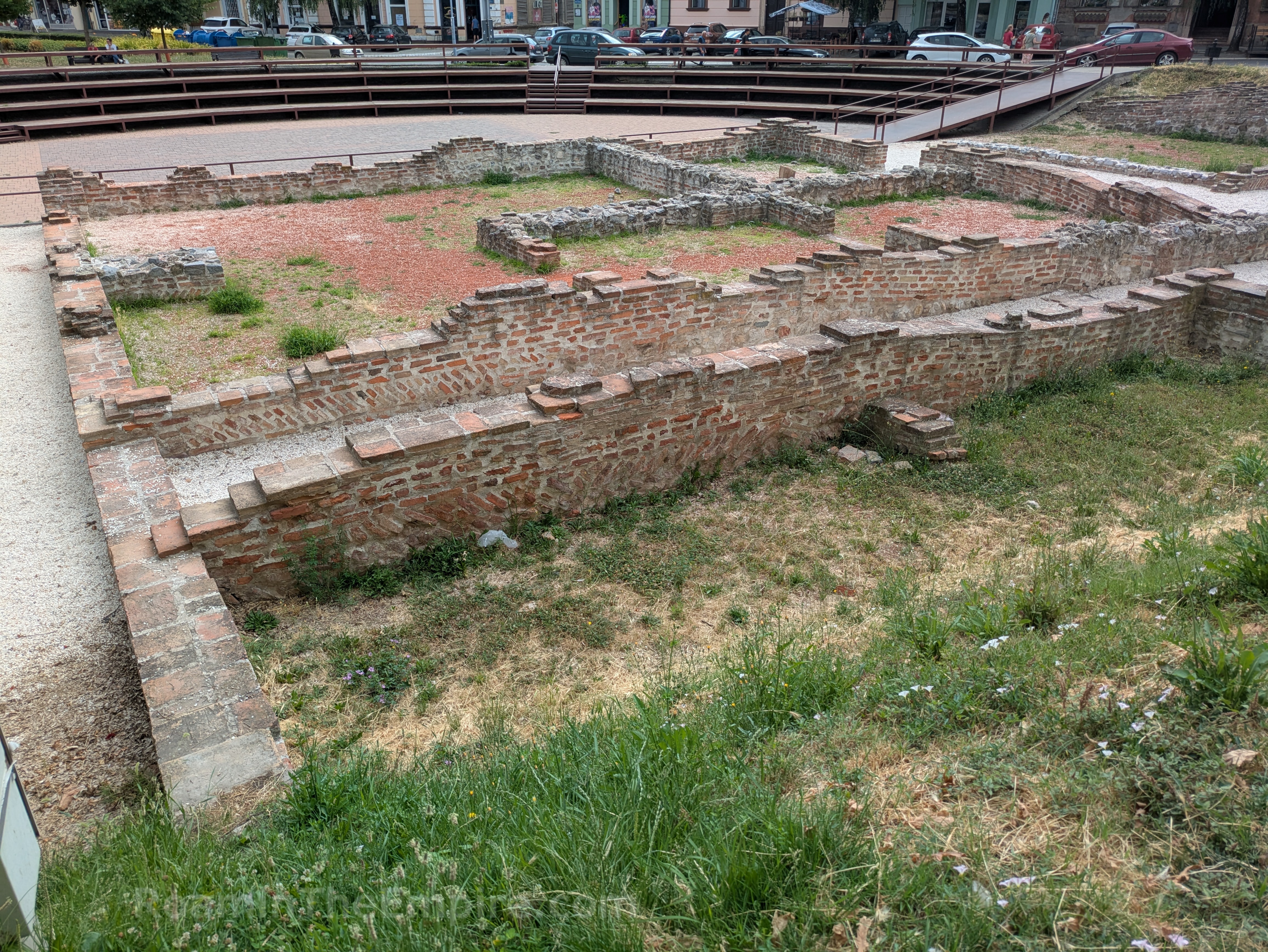
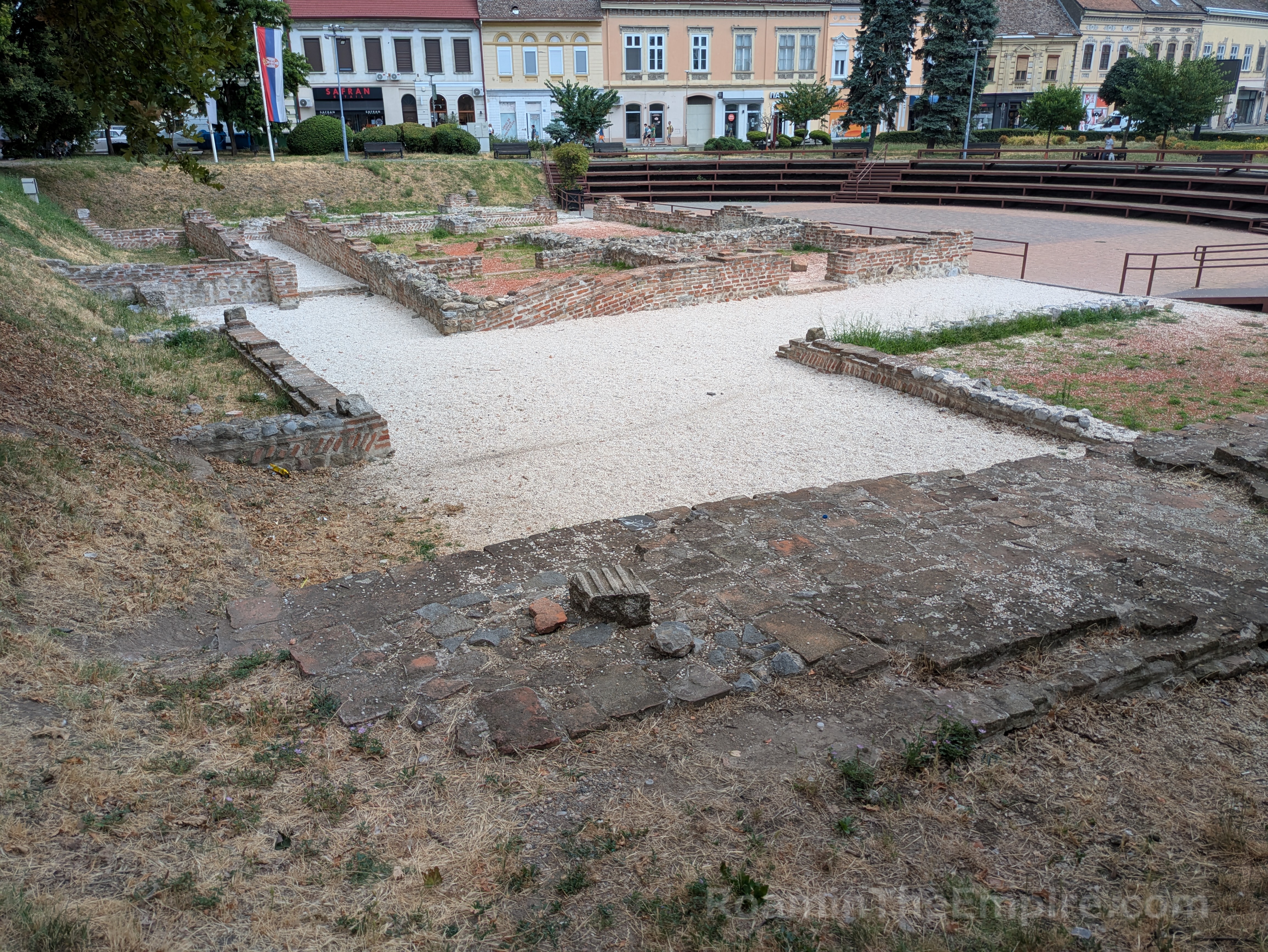
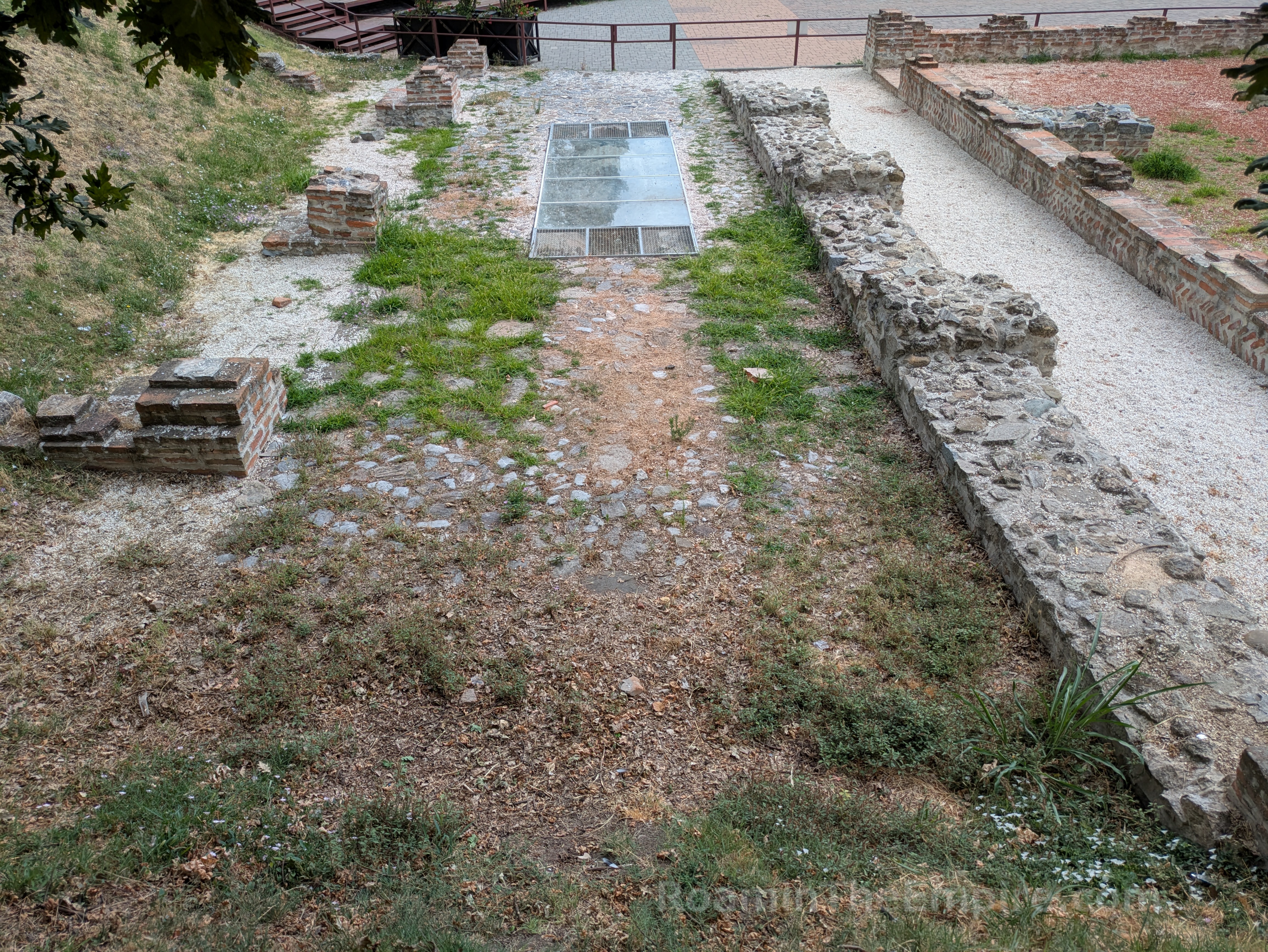
The last spot for ancient Sirmium is about 180 meters west down the road in front of the lapidarium in Trg Žitni. A roughly 40 meter by 25 meter section of a trade quarter abutting the western walls of the city have been excavated here. Originally constructed in the 2nd century CE, the trade quarter remained in use until the 5th century CE. The more robust city wall is visible along the southern side of the excavations, while several non-descript rooms make up most of the rest of the remnants here. Along the northern side of the excavations was a street that served as a connection between the river port and the forum of Sirmium. Part of the sewer channel that ran beneath the street is exposed under a glass protector. The area is part of a public park and is open access with no restrictions.
It really only takes about 3 hours to see the museums and all the visible remains of ancient Sirmium, though information at the museum and imperial palace show that much more of the ancient city has been located through the years but is not accessible. Given that and the travel time, it makes for a good day trip from Belgrade, and can easily be done between the scheduled departures to and from Sremska Mitrovica with some time left over to wander around the small center. Given the limited remnants of the ancient predecessor to Belgrade, Singidunum, Sirmium is probably the most easily accessible ancient city from the capital of Serbia.
Sources:
Ammianus Marcellinus. Res Gestae, 1.5.16, 16.10.20, 17.12-13, 18.4.1, 19.11.1, 21.9-11, 25..8.9, 26.5-6, 31.11.6.
Aurelius Victor. Epitome de Caesaribus, 37, 40.10, 47-48.
Cassius Dio. Historia Romana, 55.29.3.
Eutropius. Breviarium Historiae Romanae, 9.17.
Flavius Vopiscus Syracusanus. Scriptores Historiae Augustae – Aurelian, 3.
Flavius Vopiscus Syracusanus. Scriptores Historiae Augustae – Probus, 3, 18, 21.
Grant, Michael. A Guide to the Ancient World: A Dictionary of Classical Place Names. New York: Barnes & Noble Books, 1997.
Herodian. Ab Excessu Divi Marci, 7.2.1.
John Malalas. Chronographia, 12.299, 12.302, 18.450.
Jordanes. Getica, 300.
Philostratus. Vitae Sophistarum, 2.1.7.
Pliny the Elder. Historiae Naturalis, 3.148.
Pop-Lazić, Stefan and Bojan Popović. “New Results of Excavations of the Imperial Palace in Sirmium.” Pannonia Underground: Proceedings of the international conference held at Szombathely, 25-26 November 2021, Szilvia Biro (ed.), Szombathely: Savaria Museum, 2022.
Procopius. Anecdota, 18.16.
Procopius. De Bellis, 5.3.10, 5.11.5, 5.15, 7.34.
Smith, William. Dictionary of Greek and Roman Geography. Walton & Murray, 1870.
Sozomenus. Historia Ecclesiastica, 4.1-22.
Stillwell, Richard, William L. MacDonald, and Marian Holland. McAllister. The Princeton Encyclopedia of Classical Sites. Princeton, NJ: Princeton U Press, 1976.
Zosimus. Historia Nova, 2.18-19, 3.10-11, 4.18.