

Lucus Augusti, Hispania Tarraconensis – Part II

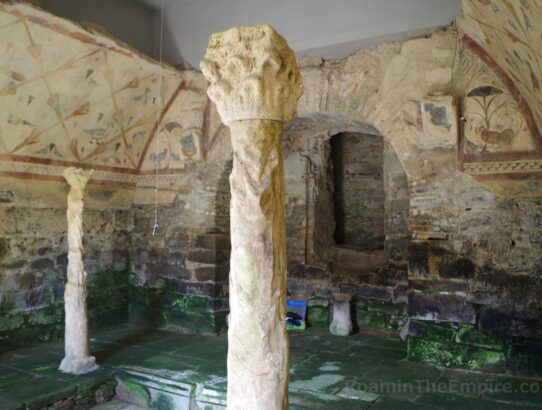
Continued From Lucus Augusti Part I Just on the other (west) side of the cathedral from the Piscina Romana, inside the Porta Santiago and the west side of Praza Pío XII, is the Museo Universitario a Domus do Mitreo. Located at Praza Pío XII 3, the museum and archaeological area is open Tuesday through Saturday…

Read More

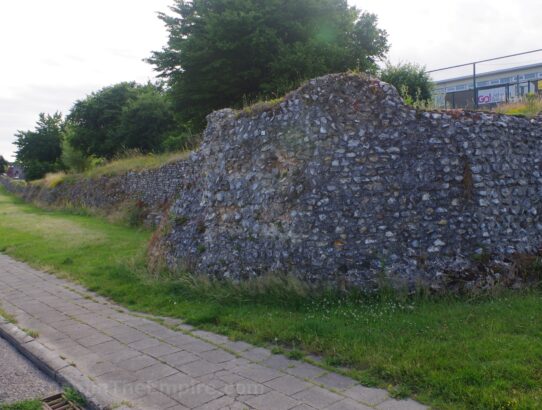
Lucus Augusti, Hispania Tarraconensis – Part I

Most Recent Visit: July 2022 The Roman settlement of Lucus Augusti (also sometimes called Lucus Asturum) seems to have been founded sometime after the conclusion of the Cantabrian Wars in 19 BCE. One of the primary belligerents in the war were the Gallaeci, a broad tribal group that occupied the far northwestern corner of the…

Read More

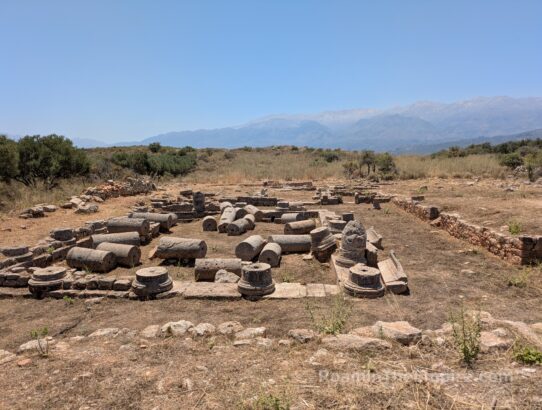
Aptera, Creta – Part I

Most Recent Visit: June 2025 The ancient city of Aptera (or Aptara) was located on a strategic plateau above the south side of the mouth of the Souda Bay in northwestern Crete. One derivation given for the name is from the mythological singing contest between the Sirens and the Muses that was said to have…

Read More

Carsulae, Umbria – Part I

Most Recent Visit: August 2024 The Roman city of Carsulae seems to have been founded around 220 BCE, when a branch of the Via Flaminia was built through the region between Rome and Ariminum. The exact date of foundation is not known, though. Prior to 3rd century BCE, the city was in the territory of…

Read More

Salona, Dalmatia – Part III

Continued From Salona, Dalmatia – Part II. Along the exterior (east side) of the wall from the Porta Caesarea for about 70 meters north are the remains of portions of some residential insulae dating to the 3rd century CE. The pavement of a cardo running relatively parallel to the walls can be seen and the…

Read More

Salona, Dalmatia – Part II

Continued From Salona, Dalmatia – Part I A stairway descends from the top of the fortifications down into the area of the Episcopal Center of Salona, just to the west of the excavated towers. A few meters on and to the west of the bottom is a structure designated as Oratorium A. This space originally…

Read More

Kos, Asiana – Part V (Asclepieion)

Continued From Kos Part IV A few kilometers outside both the modern and ancient city of Kos, is the Asclepieion complex. It is located just southwest of the village of Platani, off Agiou Dimitriou. The site doesn’t have an address, really, but it is well signposted from Kos and the main east-west road on the…

Read More

Kos, Asiana – Part III

Continued From Kos Part II Roughly 350 meters east of the odeon, down Leoforos Grigouriou V, on the south side of the street is the Casa Romana. In the summer the site is open from 8:00 to 20:00 and is closed on Tuesdays. In the winter (November through March) it is open from 8:30 to…

Read More

Kos, Asiana – Part II

Continued From Kos Part I Just to the south of the stadium, on the south side of Panagi Tsaldari, is the Western Archaeological Zone (Δυτικός Αρχαιολογικός Χώρος) of Kos. There is an entrance to this area right at the corner where Panagi Tsaldari goes from a north-south street to an east-west street. The Western Archaeological…

Read More

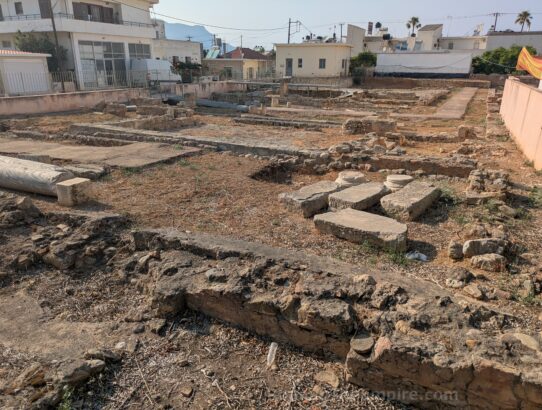
Kos, Asiana – Part I

Most Recent Visit: July 2021 Located just 5 kilometers off the coast of mainland Asia Minor (modern Türkiye) and about 18 kilometers from the famous city of Halicarnassus (modern Bodrum), at the entry of the Sinus Doridis/Sinus Ceramicus (modern Gulf of Kerme) is the island of Kos. According to myth, the founder of the settlement…

Read More