


Most Recent Visit: June 2022
Vindonissa was, in antiquity, located near the confluence of the Araris, Silana, and Lindimacus rivers; today the Aare, Reuss, and Limmat rivers respectively. The name Vindonissa seems to be derived from a Celtic word relating to the color white or a god whose name was derived from the term. Whether the toponym was meant to refer to the god or the color is unclear. The modern settlement that grew up around Vindonissa, Windisch, was itself a derivation of the ancient name. Bronze age burials found in the vicinity of the Roman settlement suggest habitation in the area dating back to the 10th-8th century BCE. By the 1st century BCE, the Helvetii had established a fortified settlement on the peninsula created by the confluence of the Araris and Silana rivers, northeast of the Roman settlement and modern town. The area came under the hegemony of the Romans sometime between the defeat of the Helvetii by Julius Caesar in 58 BCE and the conclusion of Augustus’ Alpine campaigns circa 15 BCE.
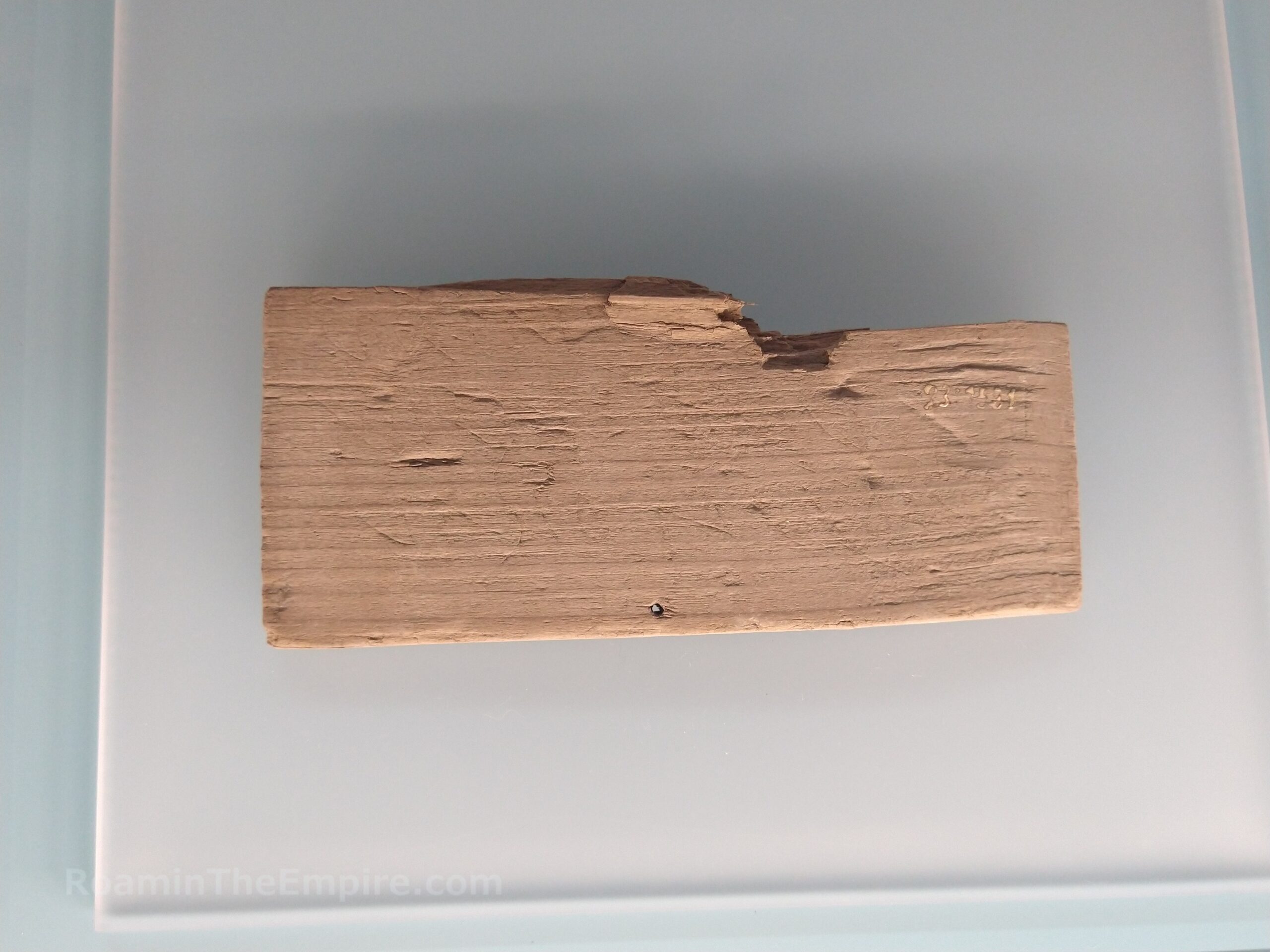
The location of Vindonissa was not only important because of the confluence of the three rivers, of which the Araris was a tributary of the Rhenus (modern Rhine), but also because a number of overland trade routes passed through the area. The location of VIndonissa also allowed for control of passes into the Alps. A small military outpost seems to have been established on the site of the Helvetii settlement around 15 BCE. A small civilian settlement also developed to the west at the same time. Around 17 CE, the outpost and perhaps the remnants of the Celtic settlement were abandoned and a wood and earth legionary fortress was constructed to the west by Legio XIII Gemina, which was shortly thereafter transferred to the fort. At this time, Vindonissa was included in the province of Gallia Belgica.
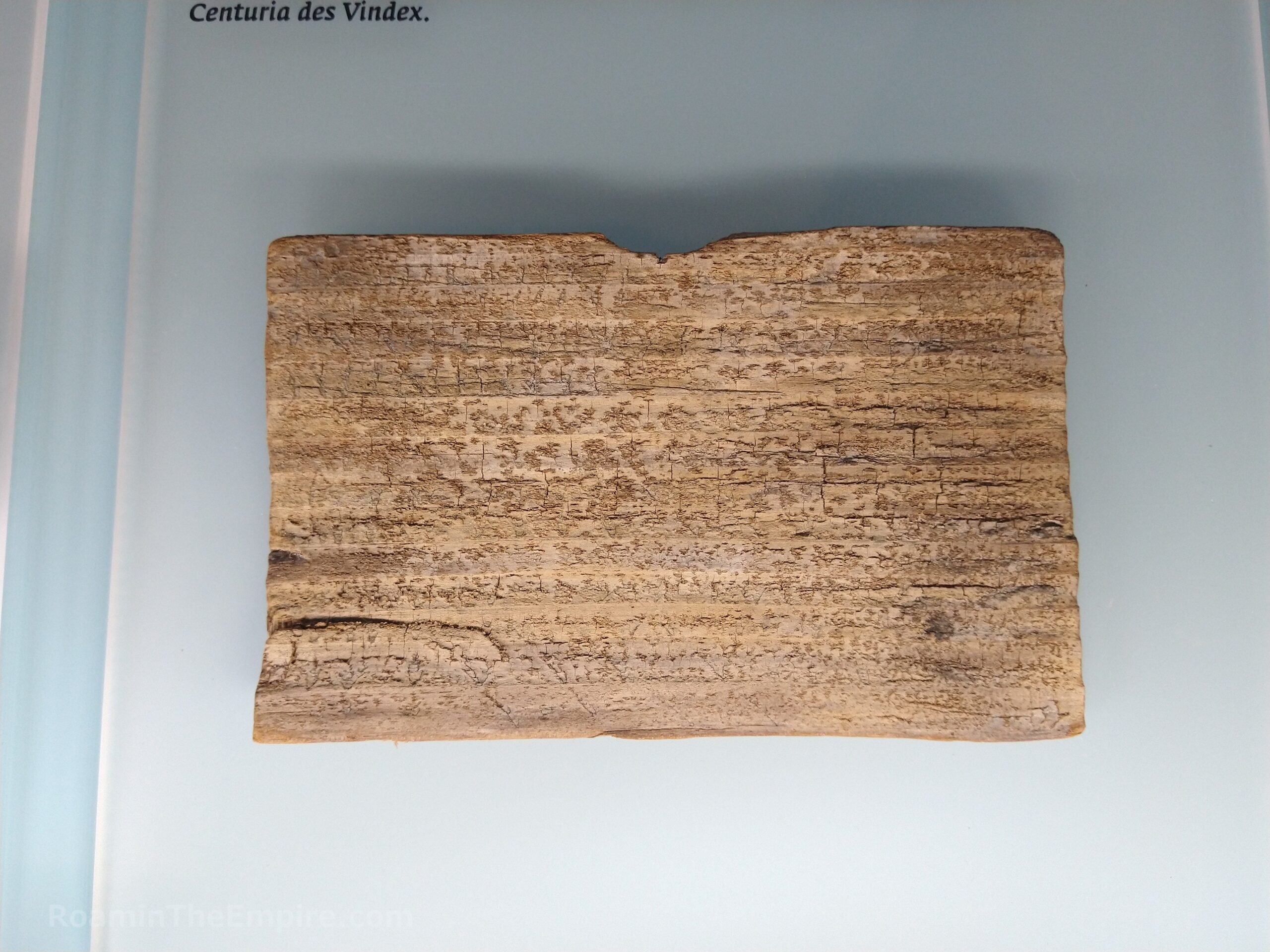
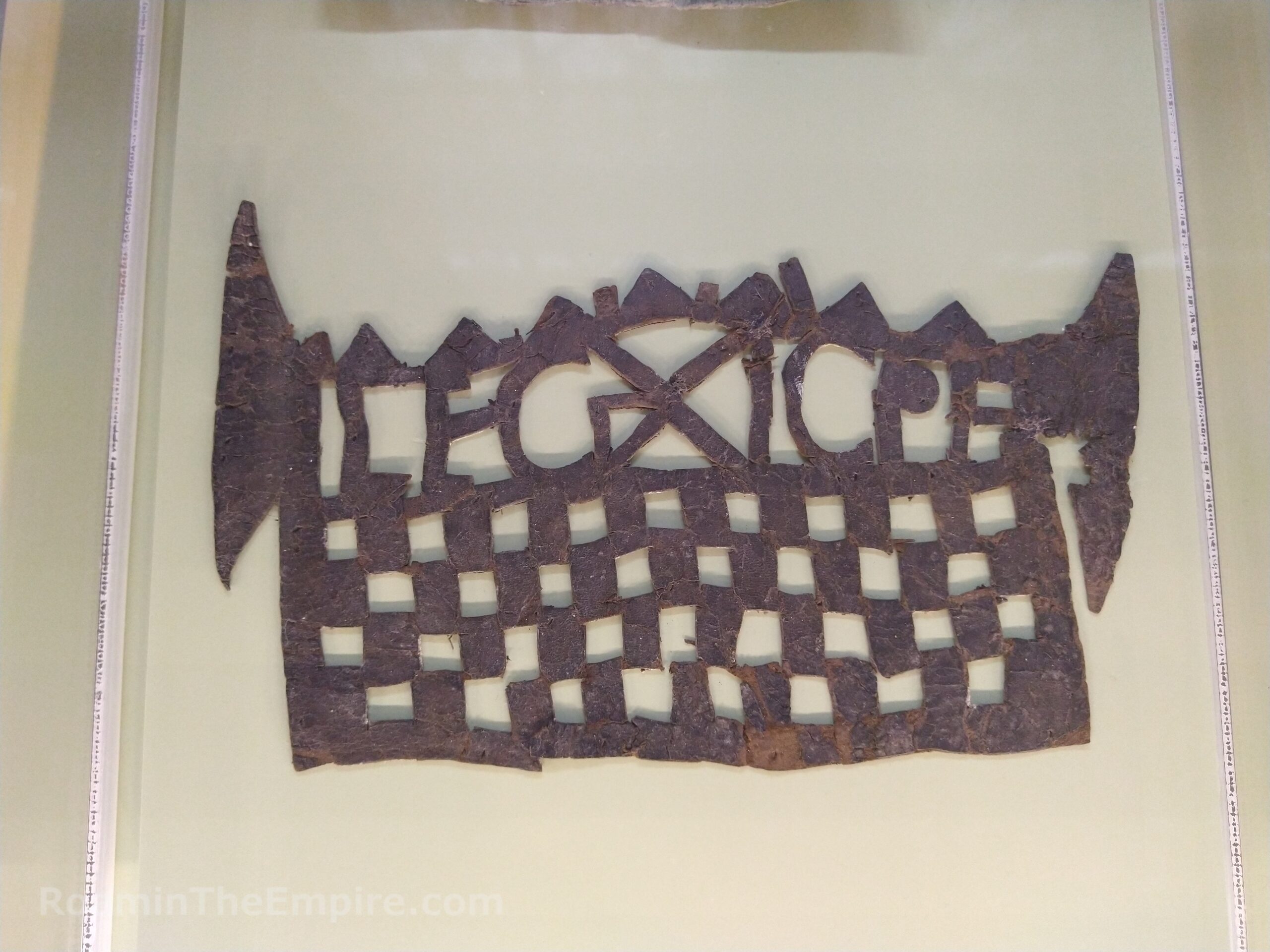
Legio XIII Gemina remained at Vindonissa until about 43-45 CE, when it was replaced with Legio XXI Rapax. It is possible that the wood and earth fortifications were replaced with stone fortifications shortly after the arrival of Legio XXI Rapax, though it has also been suggested that the stone fortifications were not constructed until after the arrival of Legio XI Claudia Pia Fidelis around 70 CE. Legio XXI Rapax supported Vitellius in the Year of Four Emperors in 69 CE and after Vespasian’s victory against him, the legion was transferred from Vindonissa to Illyricum. Vindonissa was apparently one of two legionary camps (the other being Mongontiacum, modern Mainz) not destroyed in a Gallic uprising the same year. Under Domitian, Vindonissa fell under the territory of the newly created province of Germania Superior. It is likely that when Trajan made visits to the legions stationed along the frontiers in 98 CE, that he made a stop at Vindonissa. Legio XI Claudia Pia Fidelis remained here until 101 CE, when the shift of the frontier farther north and relative pacificity of the area no longer required a strong legionary presence and the legion was transferred to the Danubian Limes. A detachment of Legio VIII Augusta, based in Argentoratum (modern Strasbourg), may have occupied the fort following the exit of Legio XI.
By the time Legio XI Claudia Pia Fidelis departed Vindonissa, the civilian settlement that had grown up around the camp already had a population estimated to have been as high as 10,000. After the departure of the legions, the civilian population likely declined, though the position along trade routes helped the settlement to retain some significance. By the middle of the 2nd century CE, the legionary fortress seems to have been essentially absorbed into the civilian settlement. Another shift of the frontiers in the 3rd century and threats from the Alamanni necessitated the construction of fortifications around by about 260 CE. A military presence was re-established and a smaller fortress constructed and manned to the west of the former legionary fortress, in what is now the Altenburg area. The main fortress also seems to have been refortified. A battle was fought in 302 CE in the vicinity of Vindonissa, a victory against the Alamanni and Burgundiones. The miliary presence remained until about 401 CE. Around this time, Germania Superior was dissolved and Vindonissa was made part of the Provincia Maxima Sequanorum. The civilian settlement seemed to have suffered attacks at the hands of various Germanic groups before being destroyed by the Franks around 600 CE.
Getting There: Windisch and Brugg, the adjacent town where the archaeological museum is located, are roughly midway between Zurich and Basel on the train line that runs between the two cities that both have airports and rail connections to other cities in Europe. Trains depart frequently between the two. From Basel, trains take between 45 minutes and 1 hour and 15 minutes to get to Brugg and cost between 10 and 25 CHF depending on the departure. From Zurich (including directly from the airport), the time is 25 to 45 minutes and the cost is pretty consistently around 20 CHF. Schedules and prices can be found here. (https://www.sbb.ch/en)
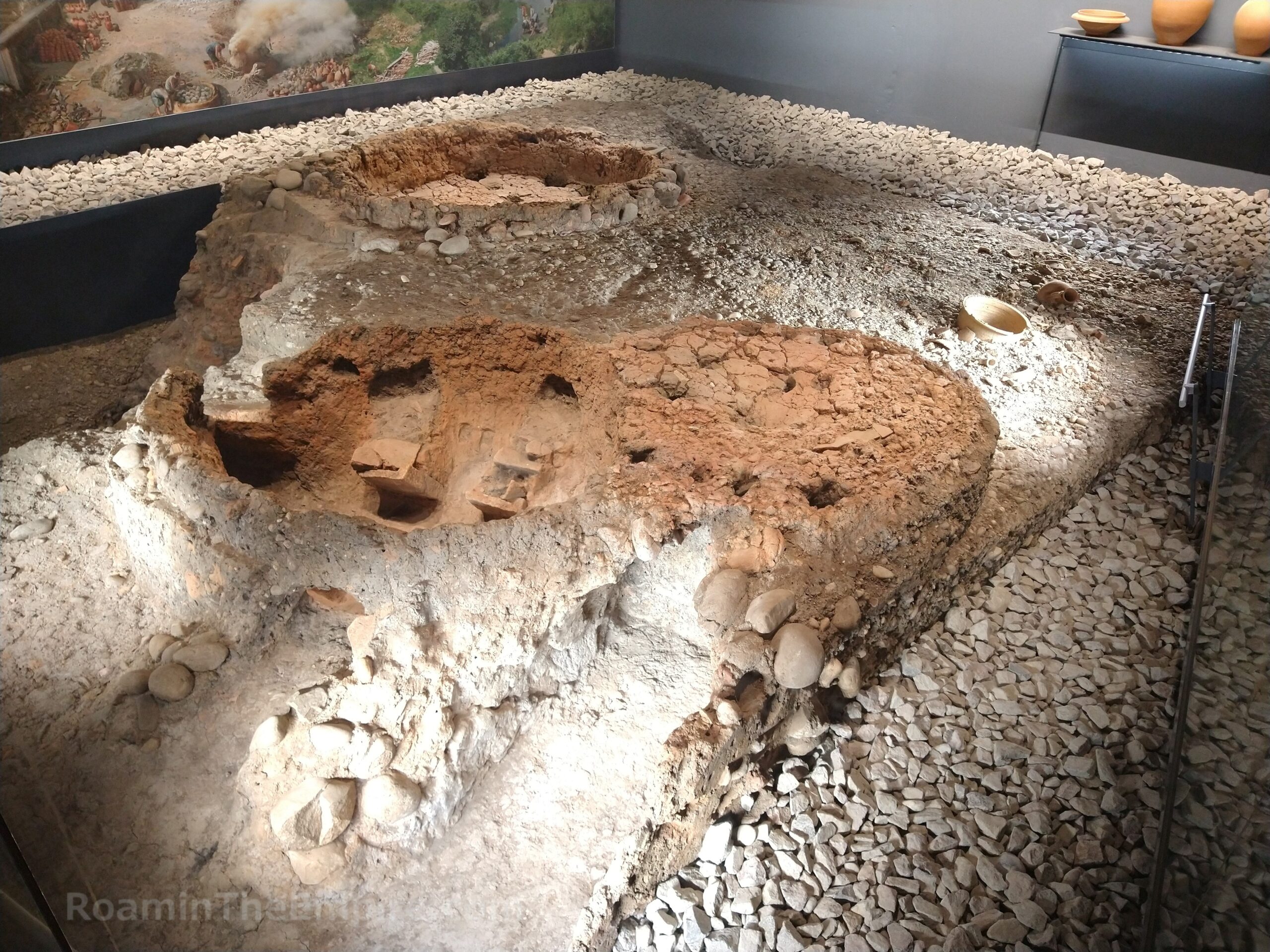
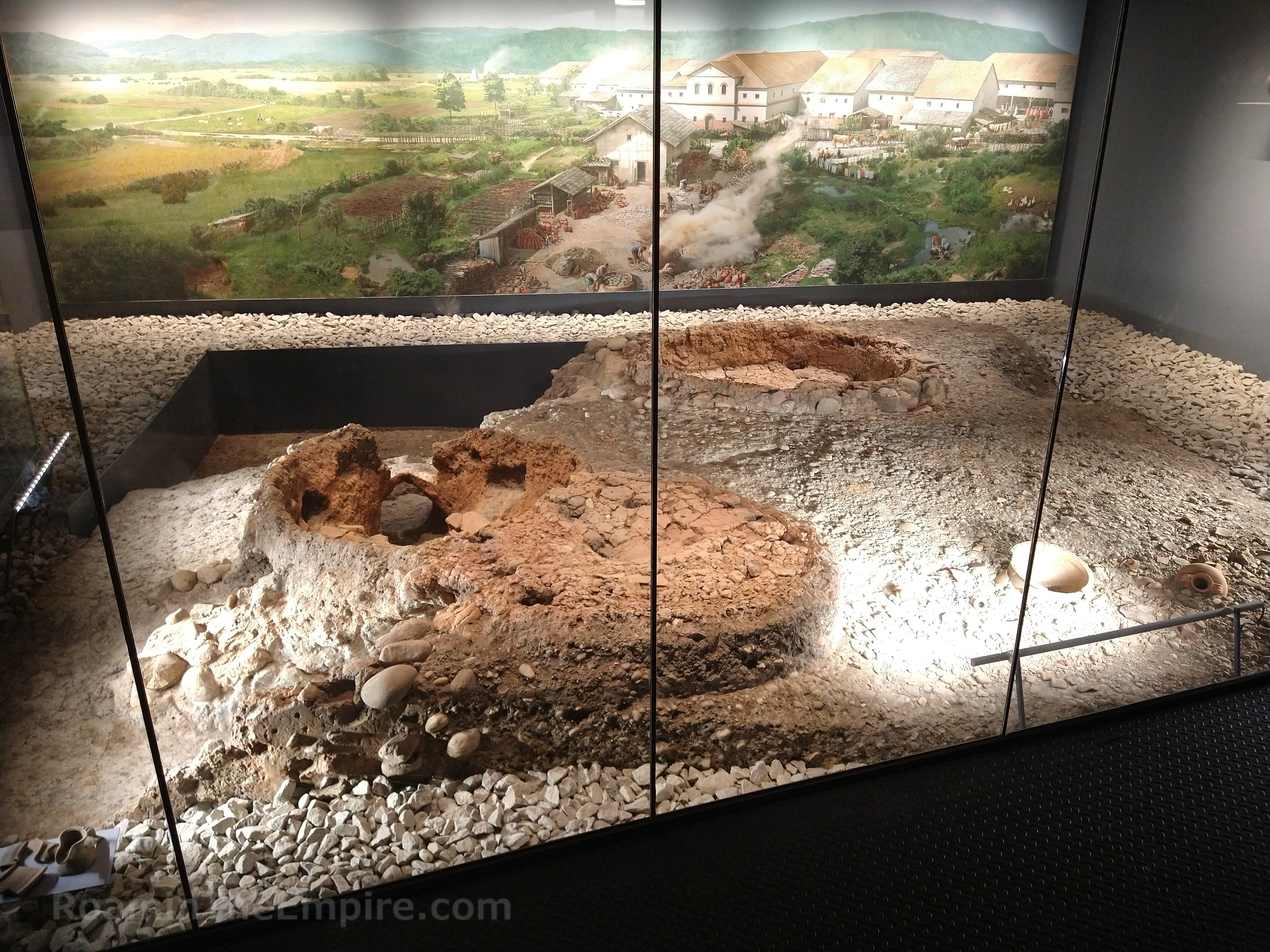
The train station is a logical place to start for a route around Vindonissa, though when I arrived by car, I parked near the museum. The museum hours, however, do not make it an ideal place to start; not to mention I typically save the museums for the afternoon when traveling in the summer (and daylight can become an issue in the winter). Just a few minutes away from the train station, some Roman pottery kilns were found during the construction of the Fachhochschule Nordwestschweiz Brugg-Windisch campus. On Steinackerstrasse, the street that runs along the west side of campus, not far from the intersection with Untere Klosterzelgstrasse, is an access point to the underground carpark where the kilns (Römische Töpferöfen) are preserved. On the north side of the structure are a pair of legionary soldiers painted onto the exterior wall.
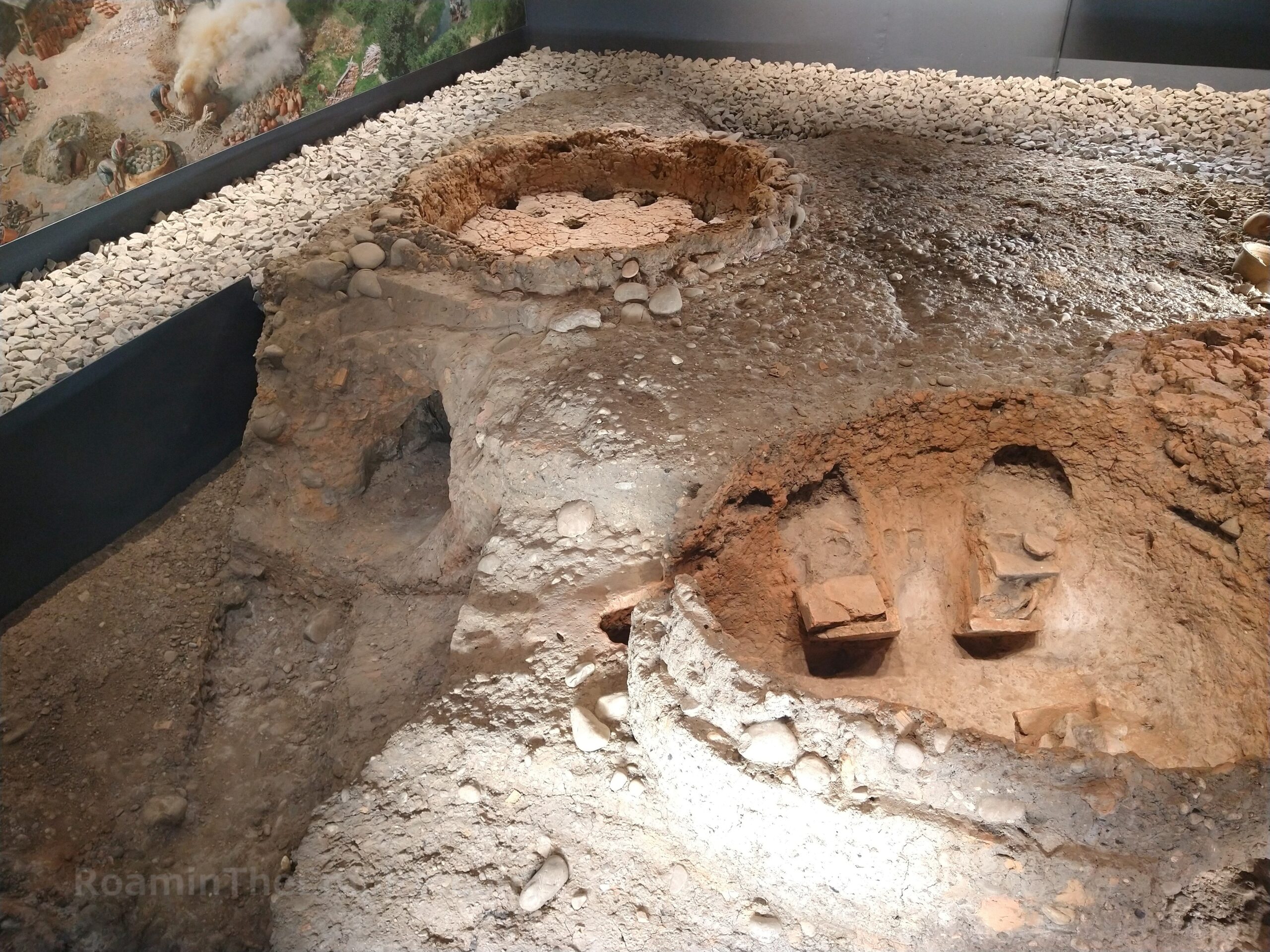
The remnants of three pottery kilns are preserved in a small archaeological area. The two with grated flooring are the earliest, while the third dates to about half a century later. Other elements of a residential neighborhood, which was located outside the Roman fort, have been found in the vicinity, including the remains of houses and a large building, which an inscription seems to indicate was a meeting hall of some sort. The neighborhood was located along a fork in the road leading from Vindonissa to Augusta Rauricorum (modern Kaiseraugst) and Aventicum (modern Avenches) and remained inhabited and in use until the 3rd century CE. The kilns are located behind a glass partition, and a sign in German explains the context of the kilns and the neighborhood in which they were found.
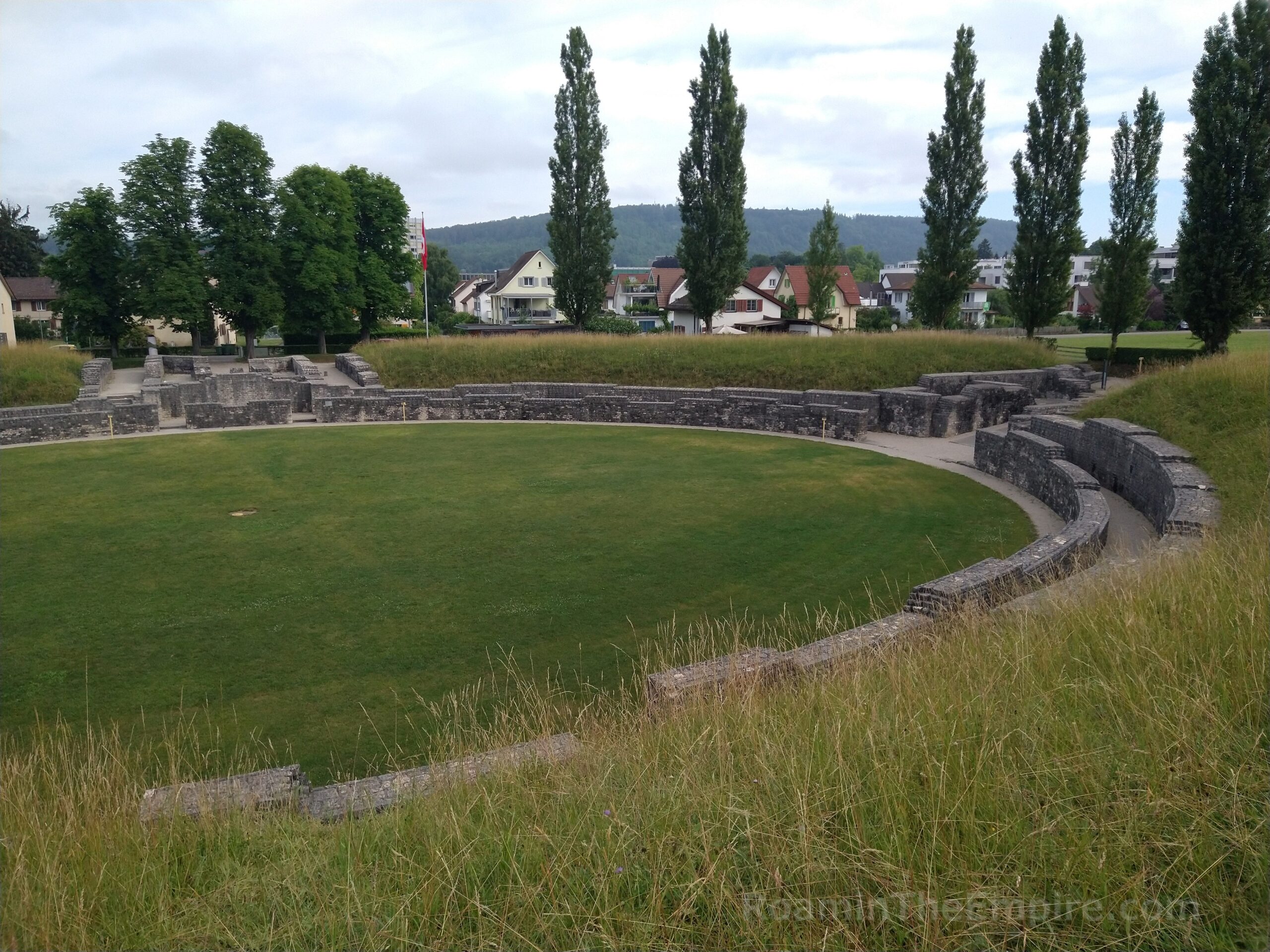
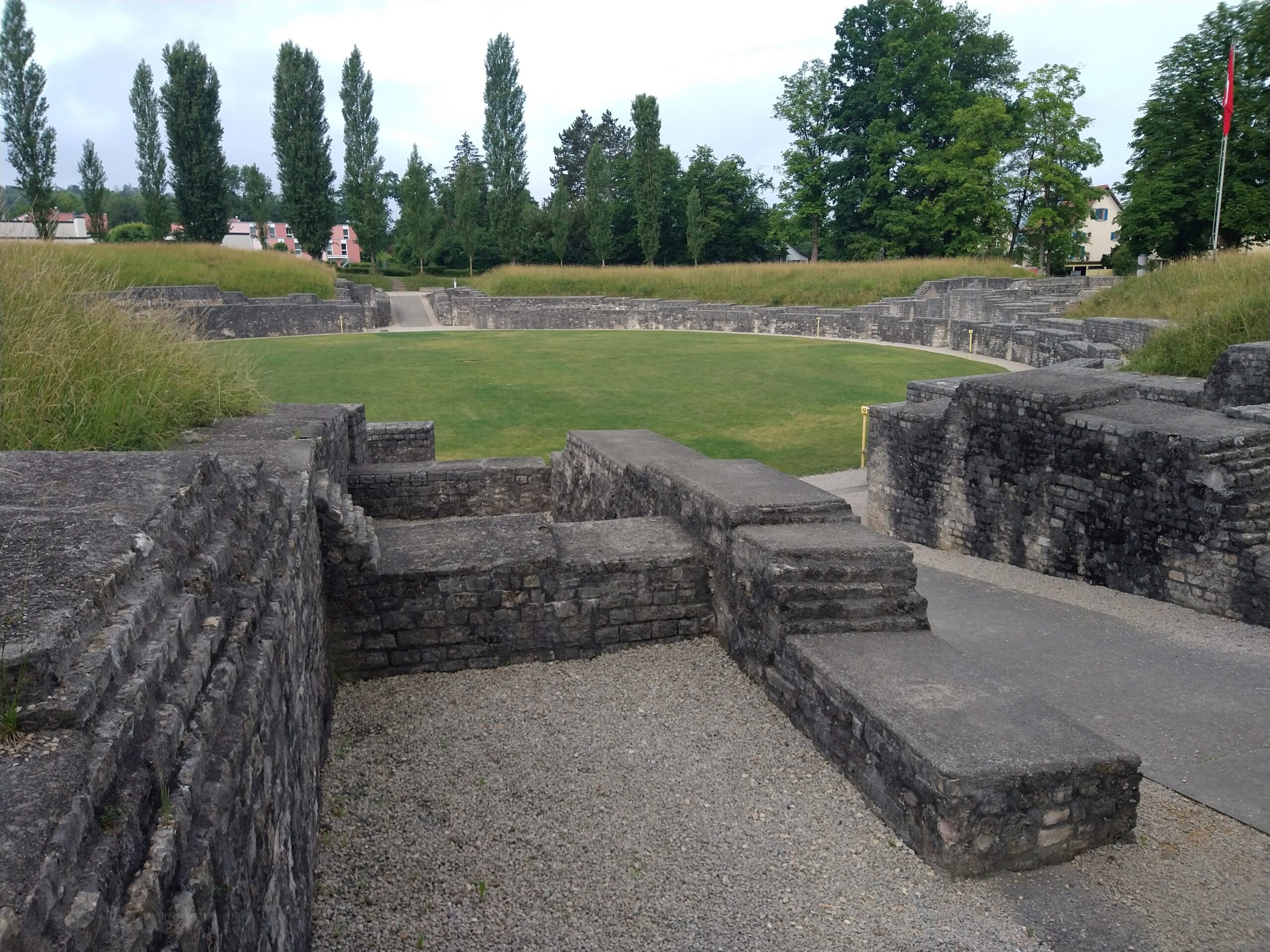
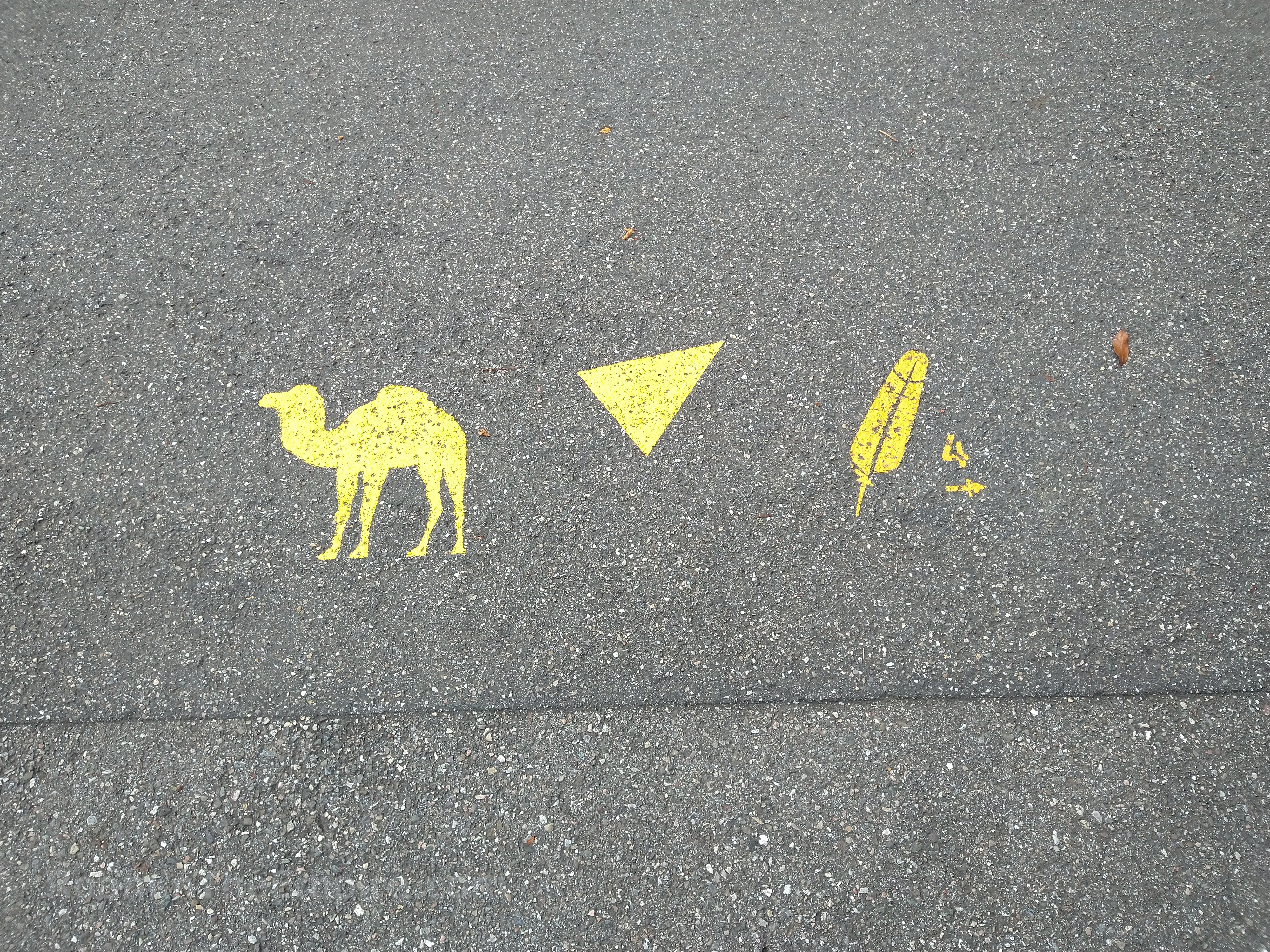
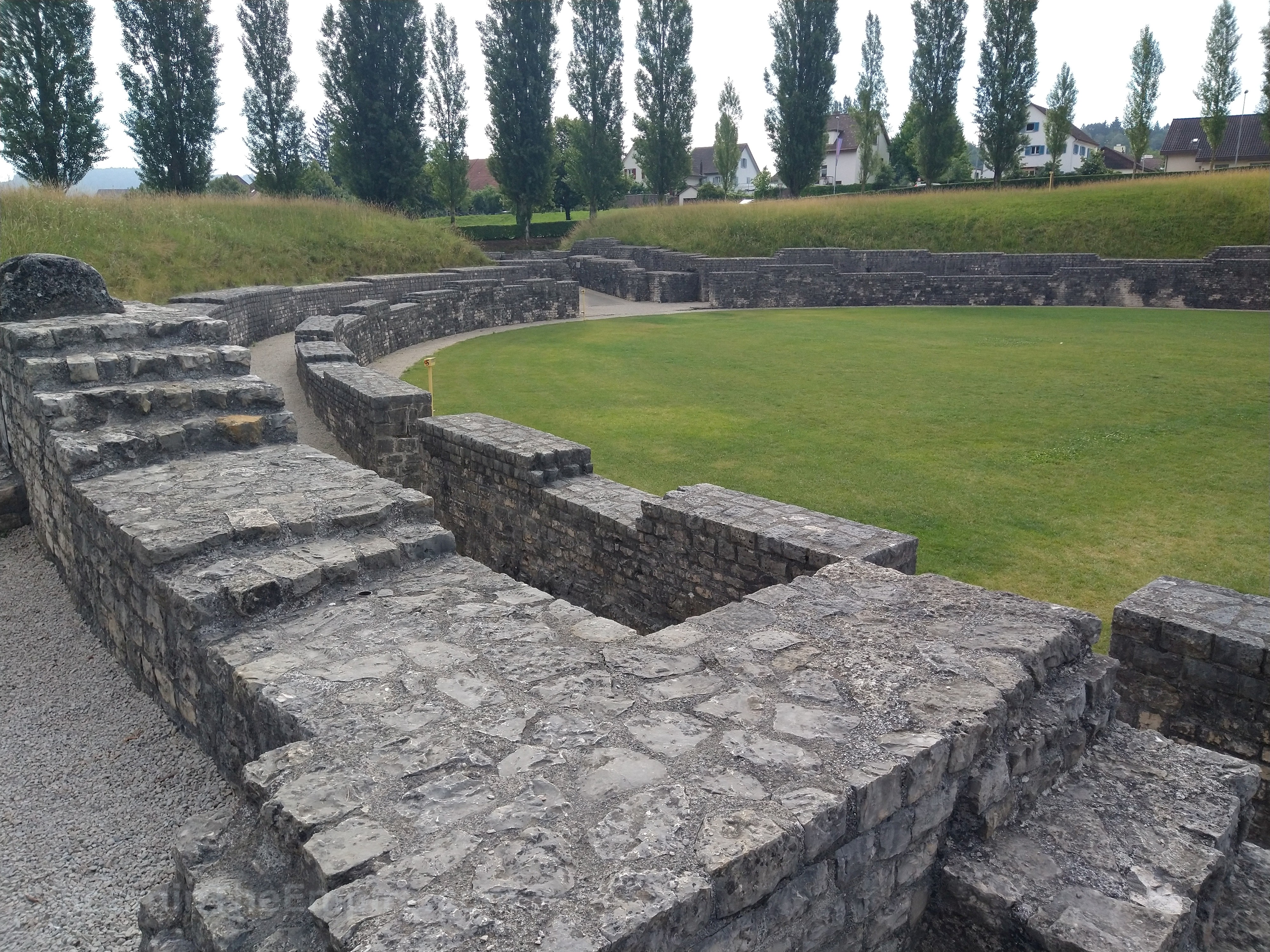
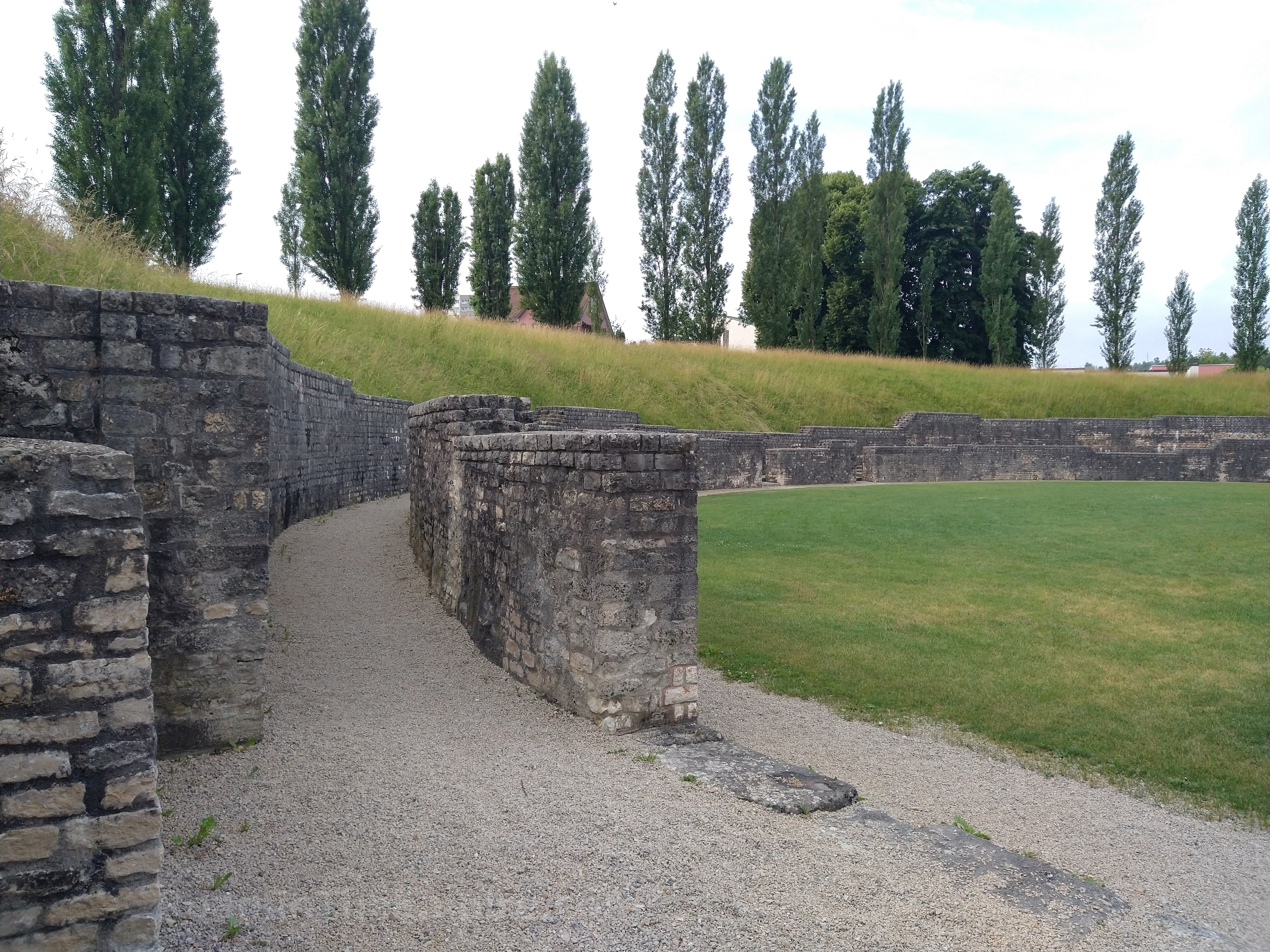
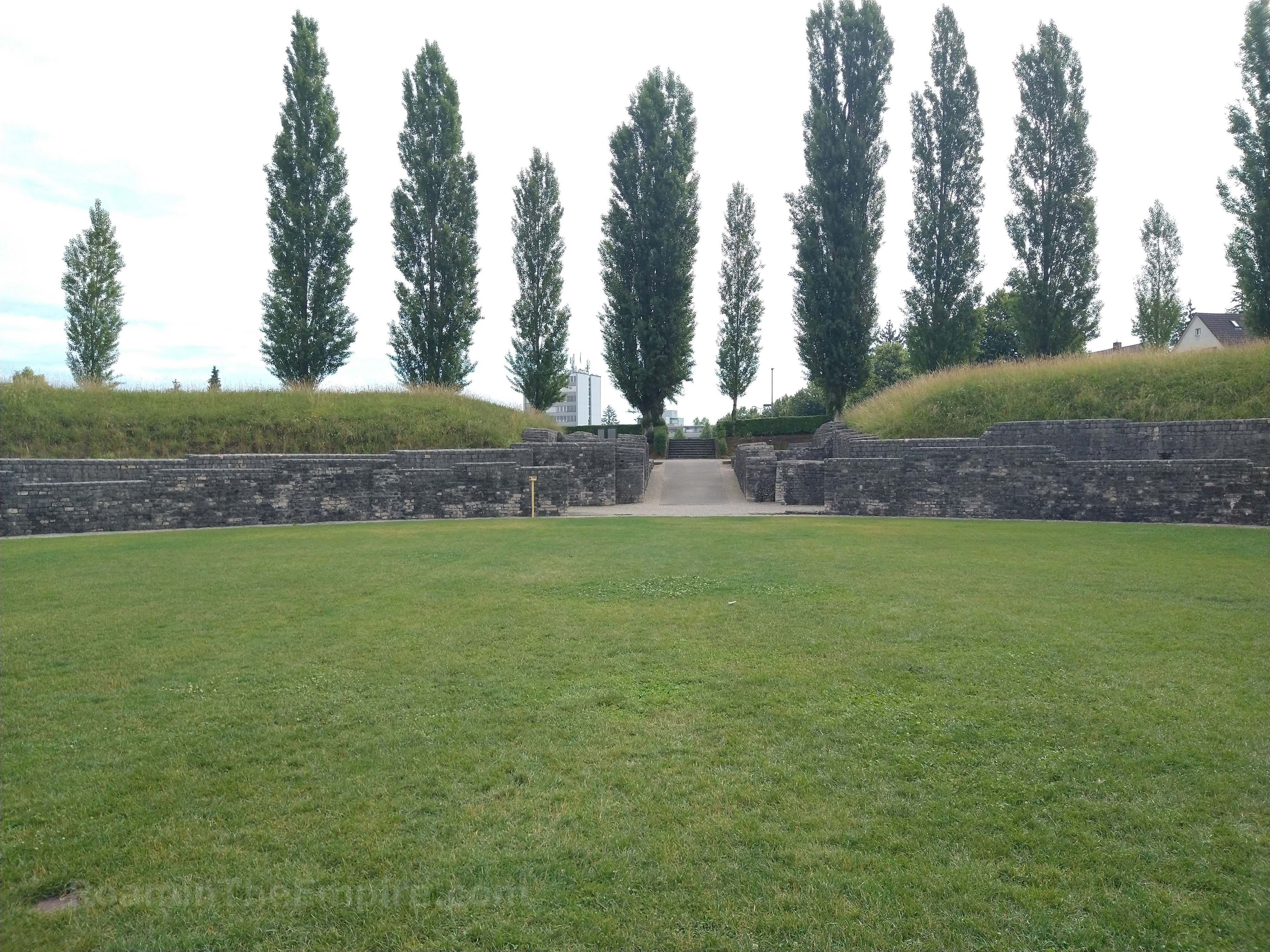
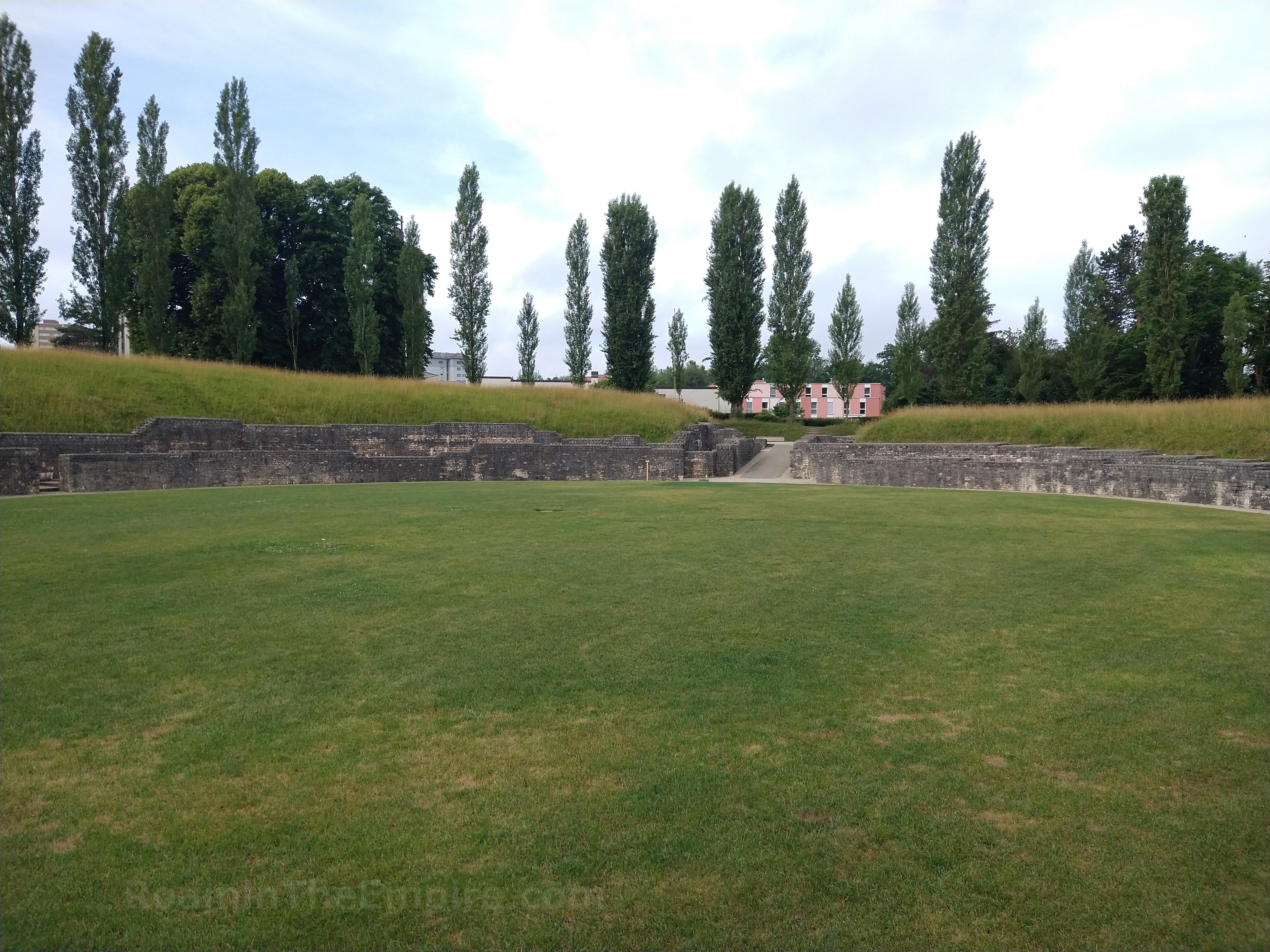
About a half a kilometer walking south/southeast of the kilns, mostly along the Arenafussweg/Birkenstrasse which is accessed by a bike path running up the hill less than 50 meters south of the kilns, is the amphitheater of Vindonissa. Along some routes between monuments, there are images painted on the asphalt or sidewalk to guide visitors in the form of legionary standards, soldiers, or in the case of the amphitheater, a camel and feather. Regular signposts also direct at certain points. The amphitheater is located at Römerstrasse 13. The monument is essentially an open air park with no entrance regulation or hours. It can be accessed freely at any time.
A wooden amphitheater was originally constructed in this spot by Legio XIII Gemina during the reign of Claudius. A fire later destroyed the wooden amphitheater and a permanent stone amphitheater was then constructed during Legio XXI Rapax’s occupation of the fort (45-70 CE). The capacity of the venue is estimated to have been about 11,000 spectators. Of seven positively identified amphitheaters found within the bounds of modern day Switzerland, this is both the oldest and largest of them. The use of a camel as a symbol to direct visitors to the amphitheater, as well as a metallic camel figure above the amphitheater, references the find of a camel bone in the excavations of the monument.
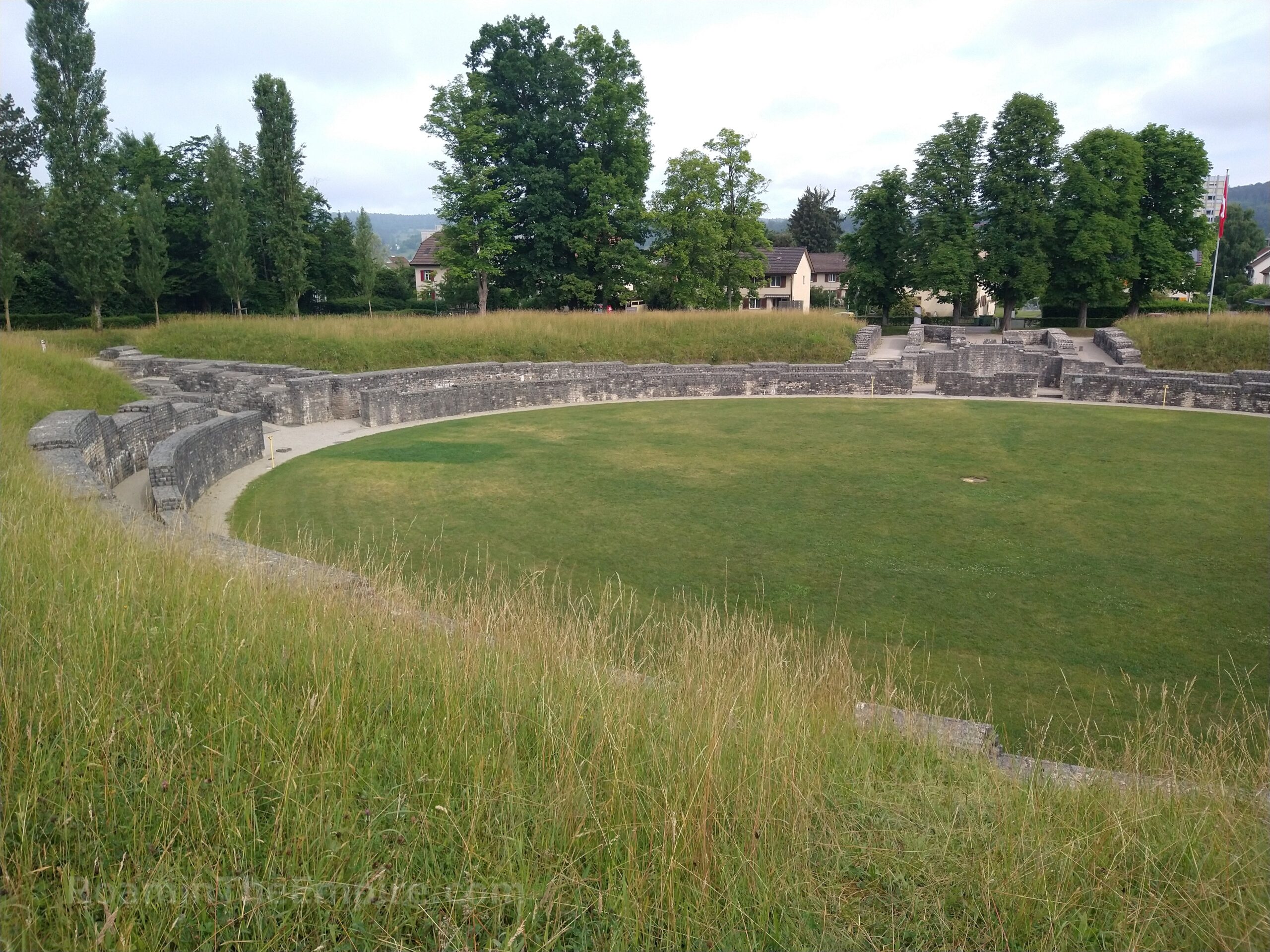
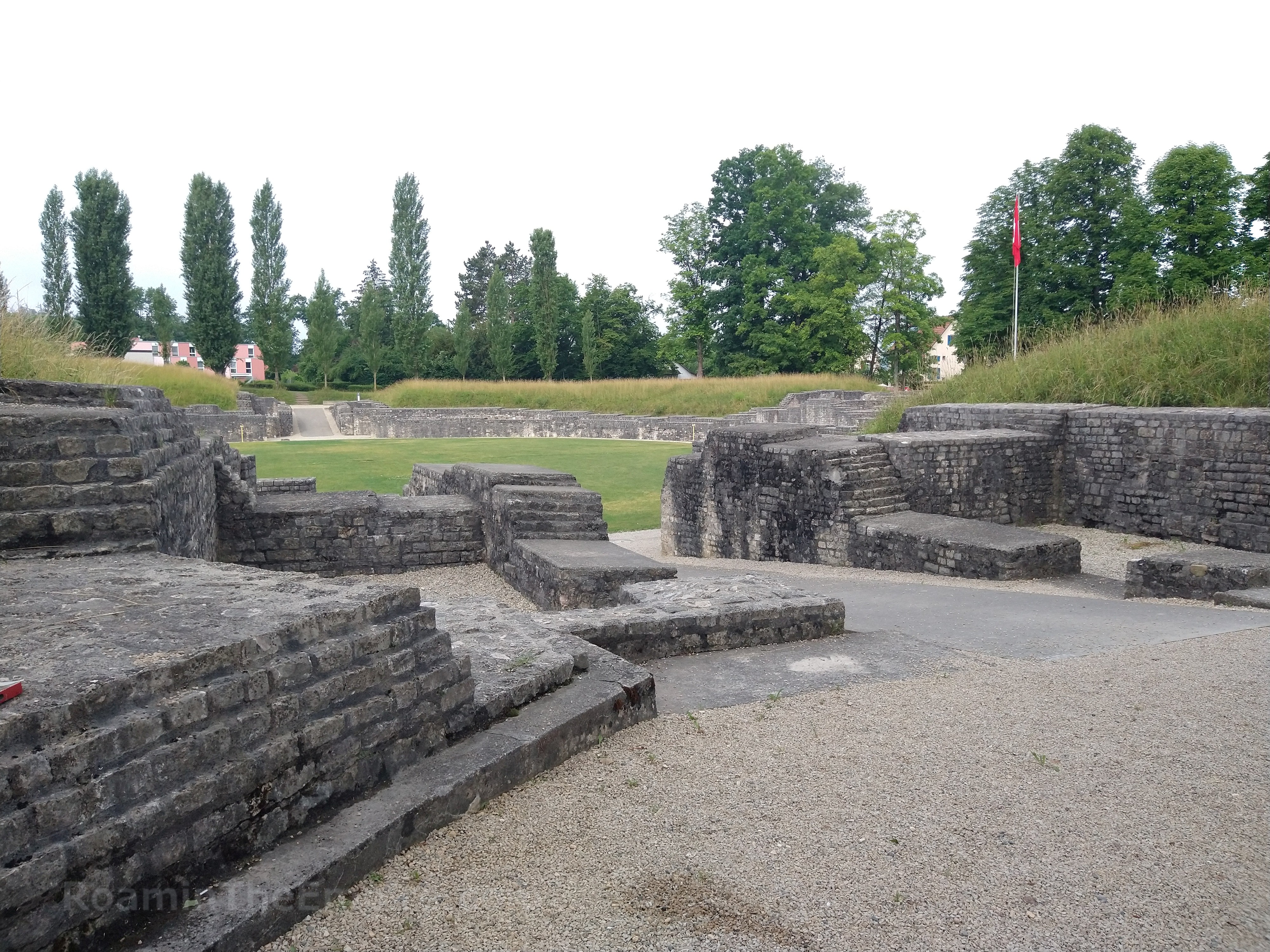
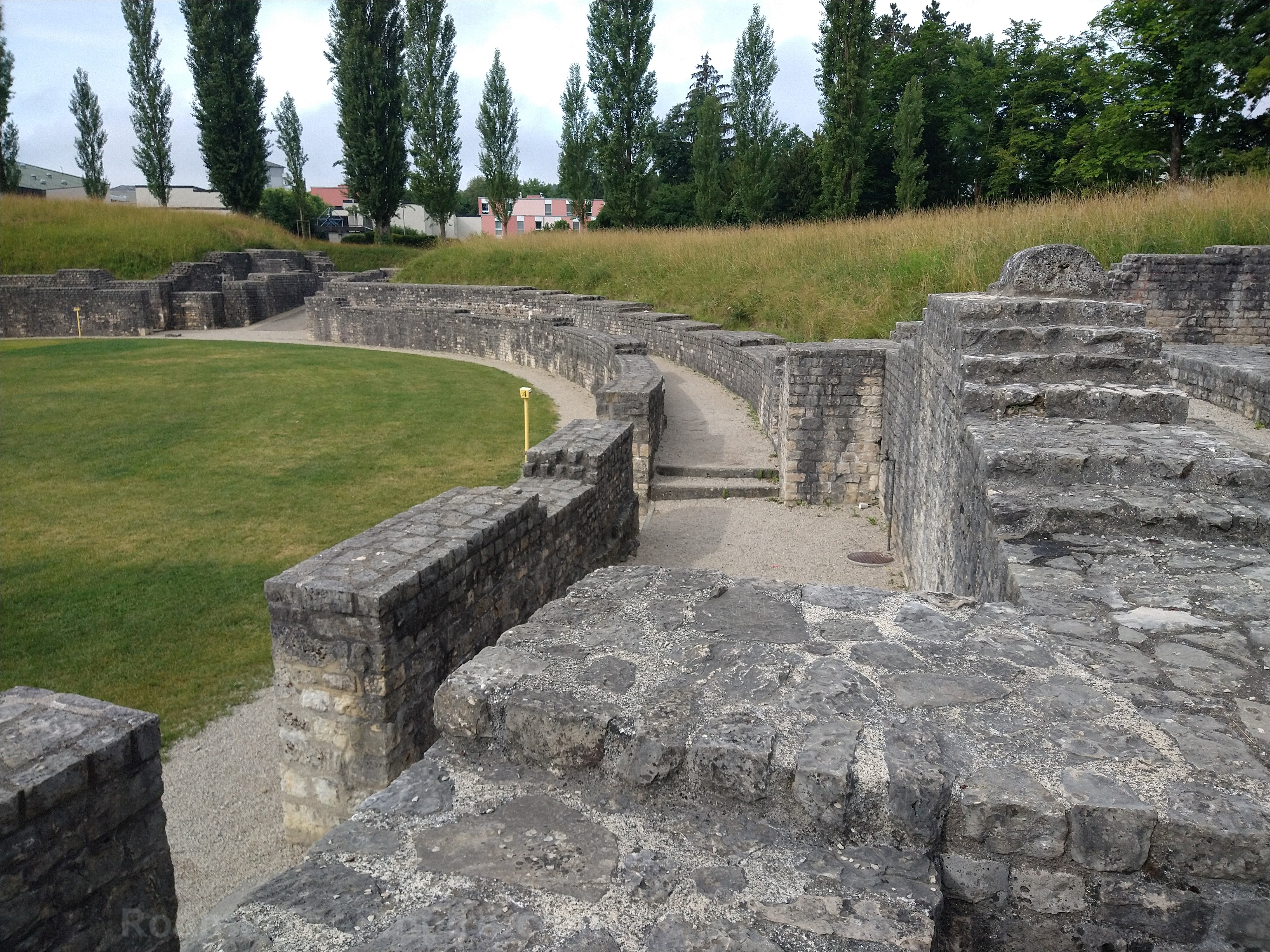
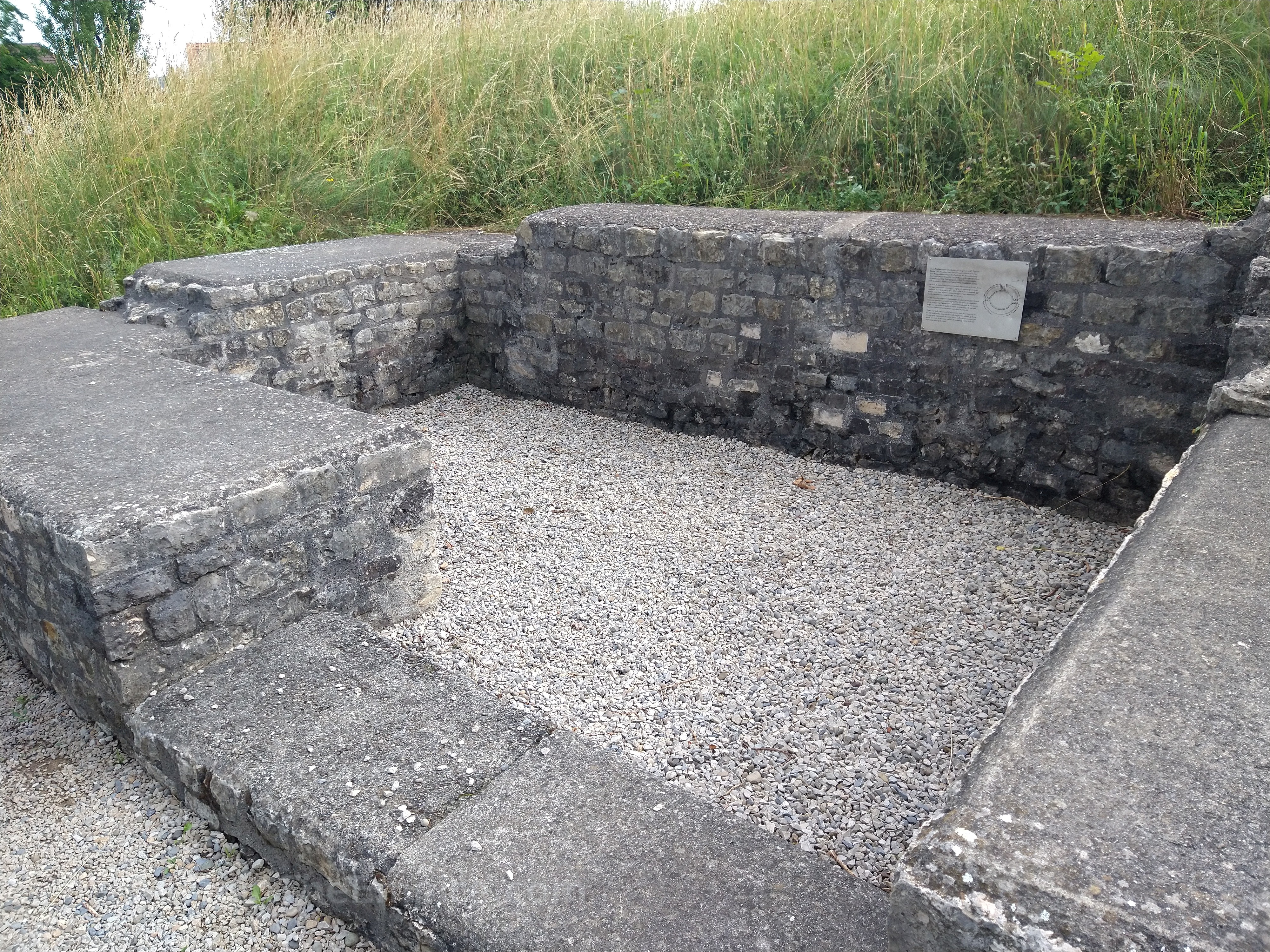
What primarily remains of the amphitheater is the enclosure wall surrounding the exterior of the seating and the wall around the arena. Some of the structures of entrance gates on the north, east, and west sides of the amphitheater are also present including stairways into the seating area flanking the entry gates. The cavea and its support structures are gone, or at least are not visible above ground. Located around the enclosure wall are 12 niches (three in each quarter of the amphitheater) which held external staircases to access the upper levels of the cavea. There are a couple of signs around with some limited information in French, German, Italian, and English.
Continued In Vindonissa Part II
Sources:
Grant, Michael. A Guide to the Ancient World: A Dictionary of Classical Place Names. New York: Barnes & Noble Books, 1997.
Schwartz, Peter-Andrew, Nikolas Hächler, and Beat Näf. Mauren Gegen Migration?, Regensburg: Verlag Schnell & Steiner GmbH, 2020.
Smith, William. Dictionary of Greek and Roman Geography. Walton & Murray, 1870.
Southern, Patricia. The Roman Empire from Severus to Constantine, Routledge, 2001.
Stillwell, Richard, William L. MacDonald, and Marian Holland. McAllister. The Princeton Encyclopedia of Classical Sites. Princeton, NJ: Princeton U Press, 1976.
Tacitus. Historiae, 4.61.
Trumm, Jürgen. “The Fortress of Vindonissa”, Strategy and Structures Along the Roman Frontier, Leiden: Sidestone Press, 2024.
Trumm, Jürgen. “Vindonissa”, Historiches Lexikon der Schweiz, Basel: Schwabe, 2014.