

Caldarium
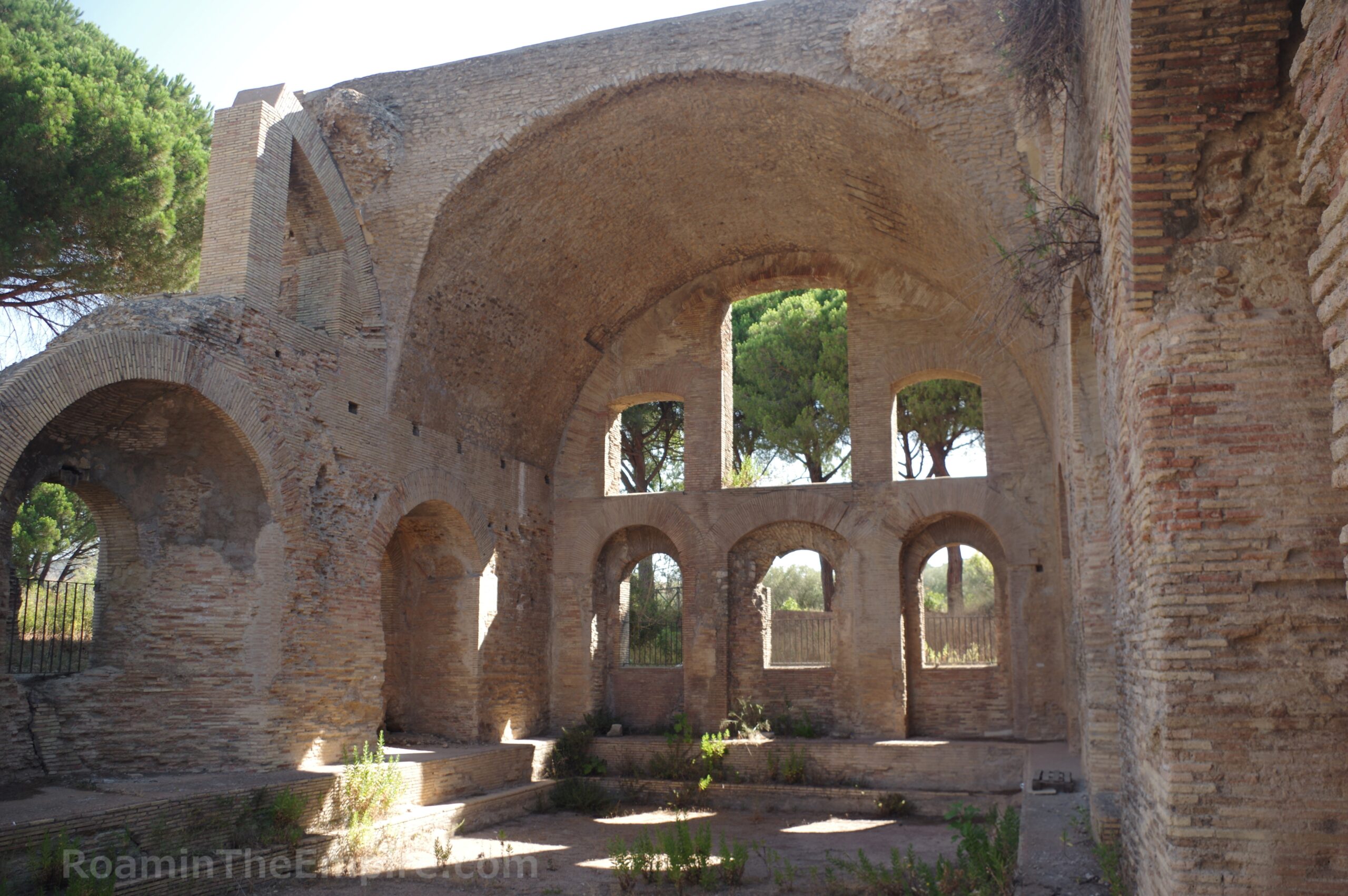
The caldarium (plural: caldaria) was the hottest of the three main bathing rooms in a Roman bathing complex; the caldarium, tepidarium, and frigidarium. The name derives from the Latin calidus, to be warm or hot. To maintain the hottest temperature, it was typically adjacent to the praefurnium, the furnace that provided heat to the hot and warm rooms of the baths. The heating in the caldarium was achieved through a supply of hot air from the praefurnia that was injected into a cavity space beneath the floor of the caldarium.
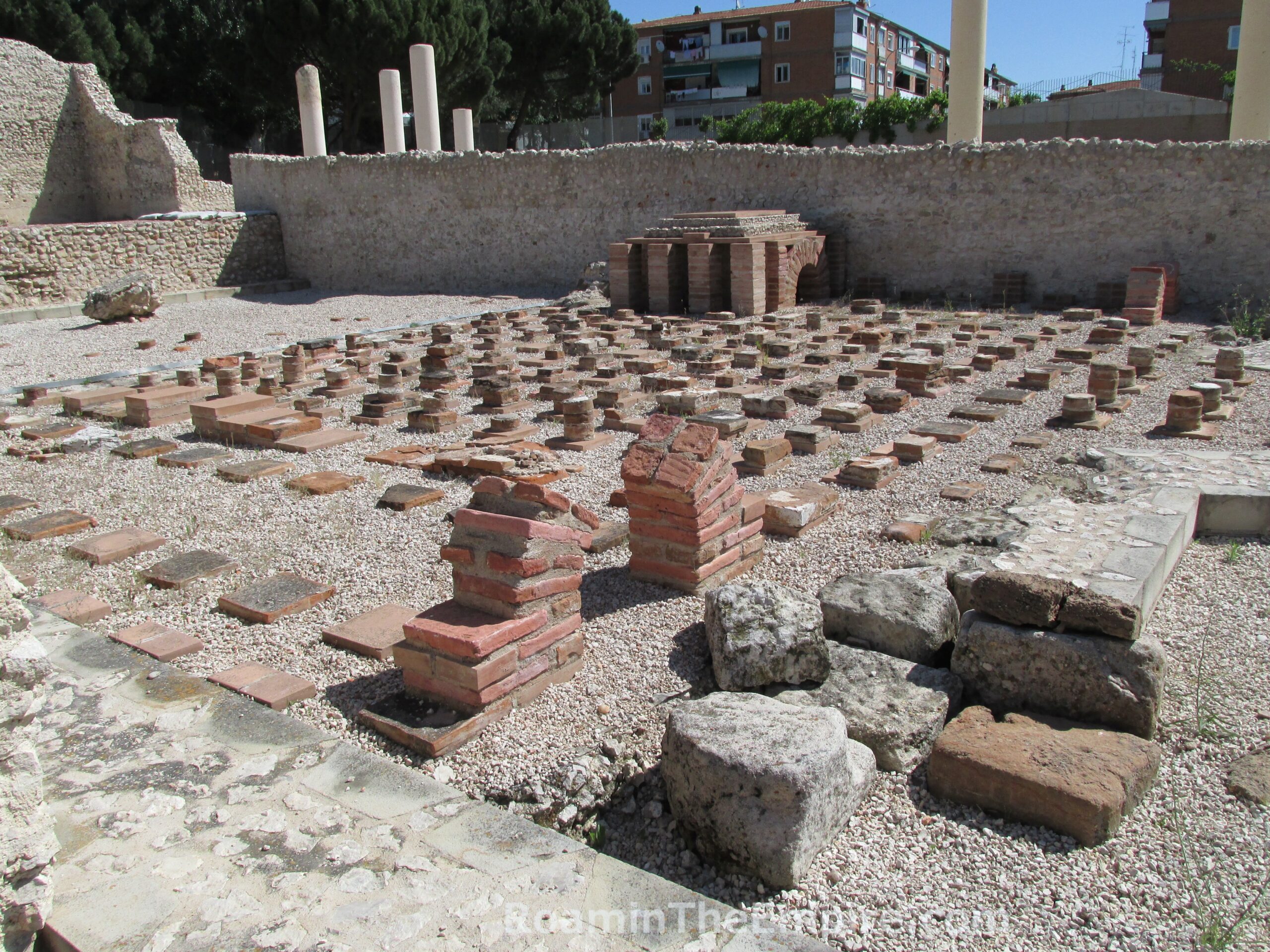
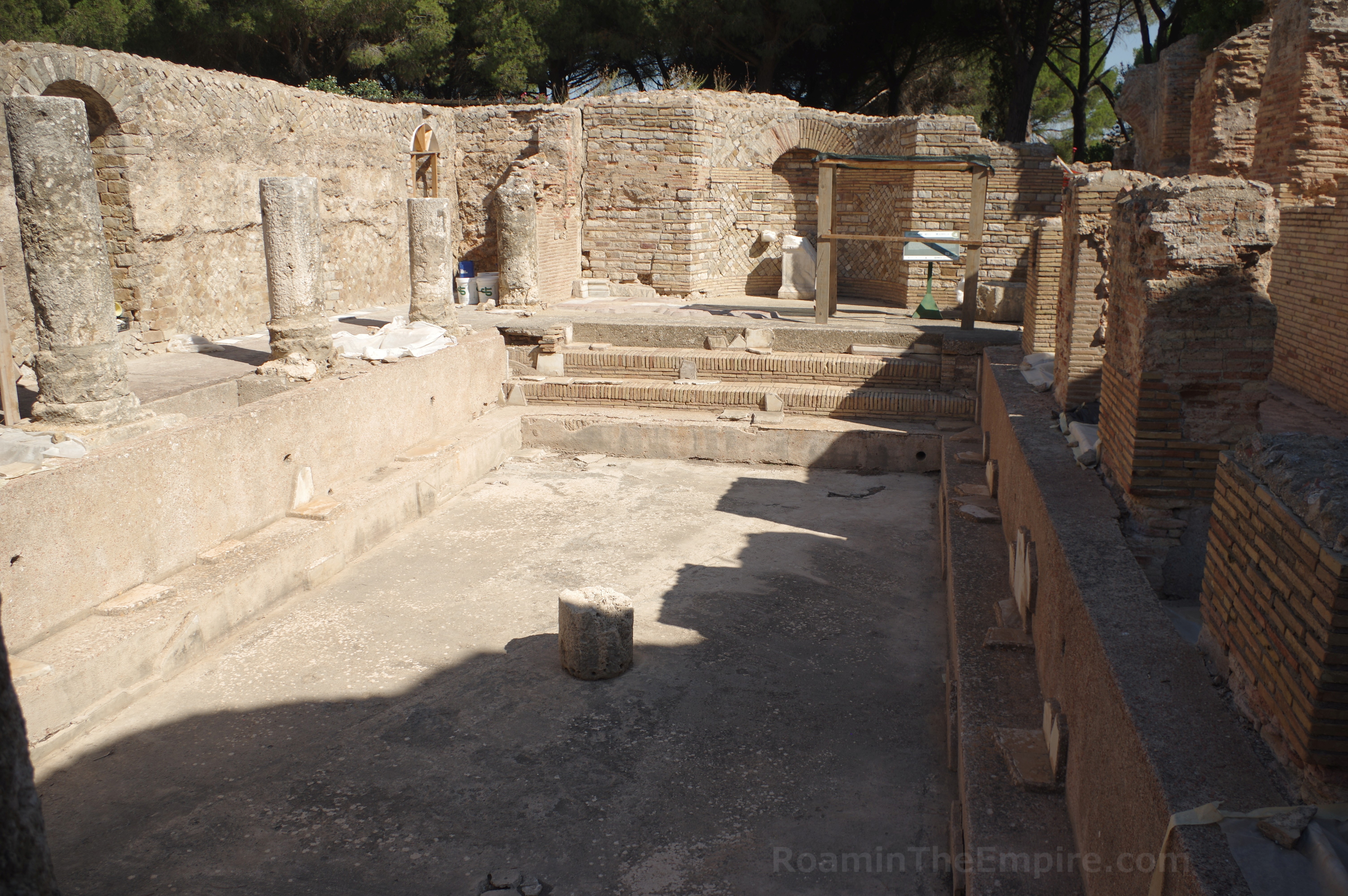
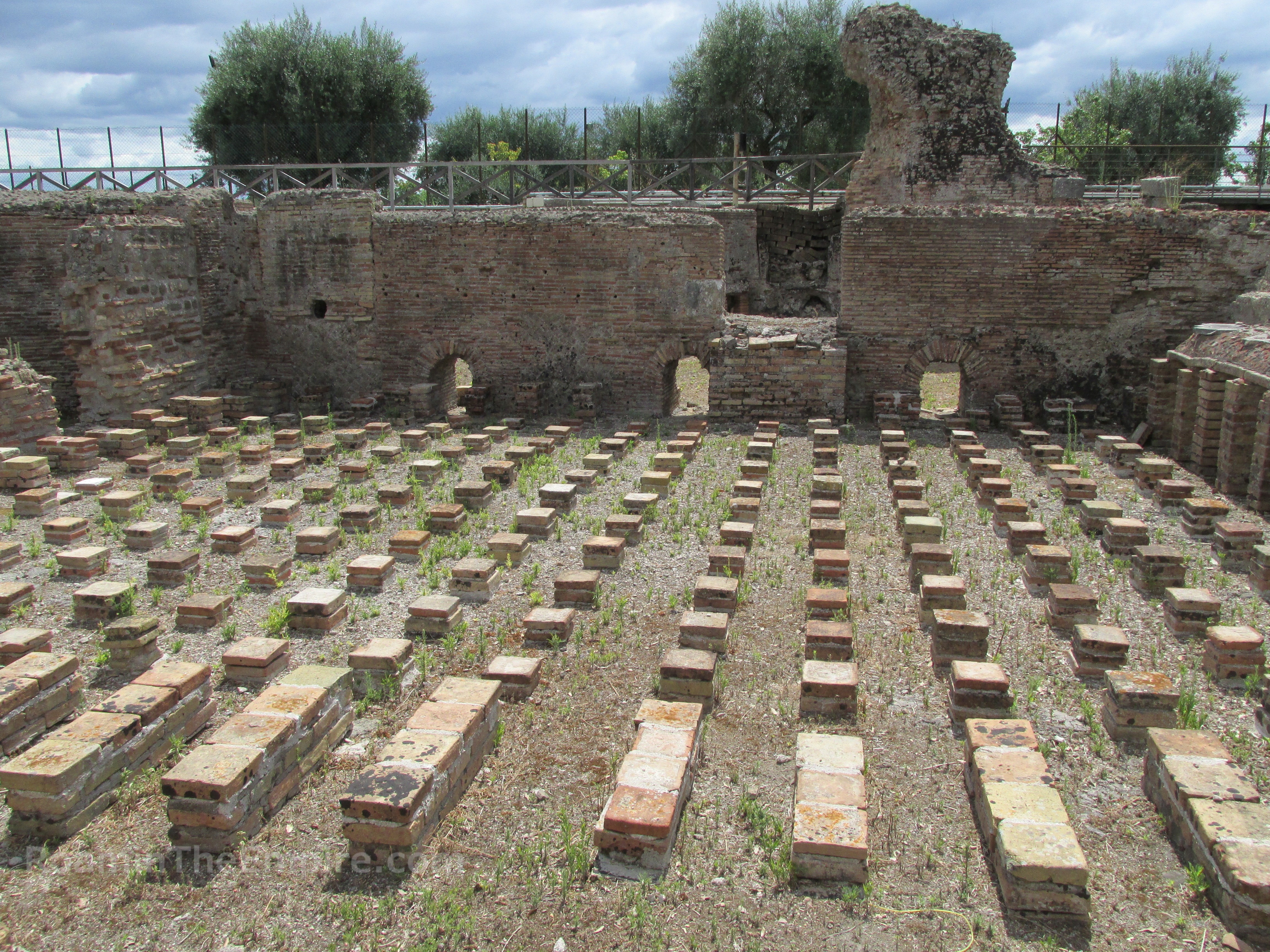
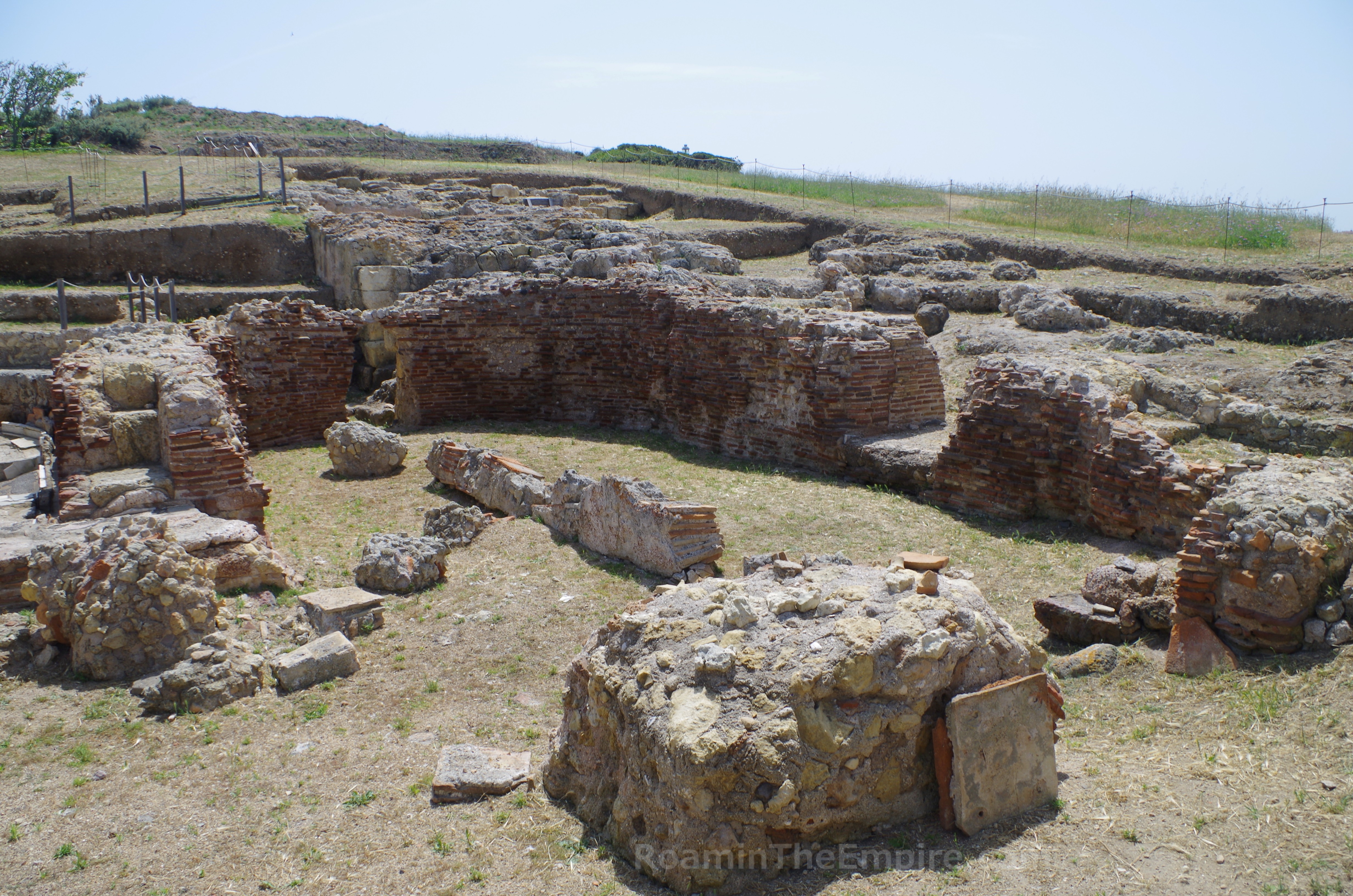
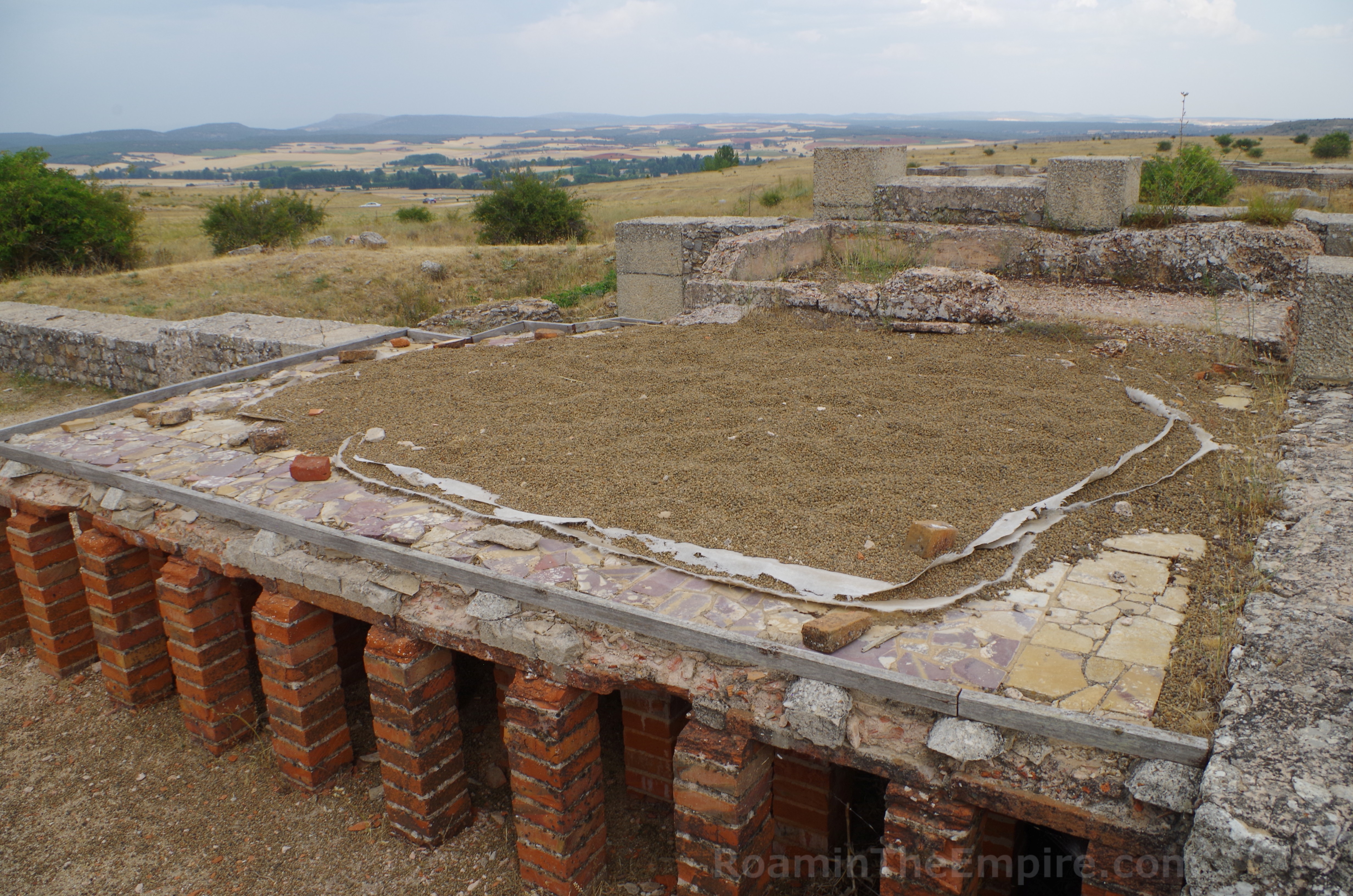
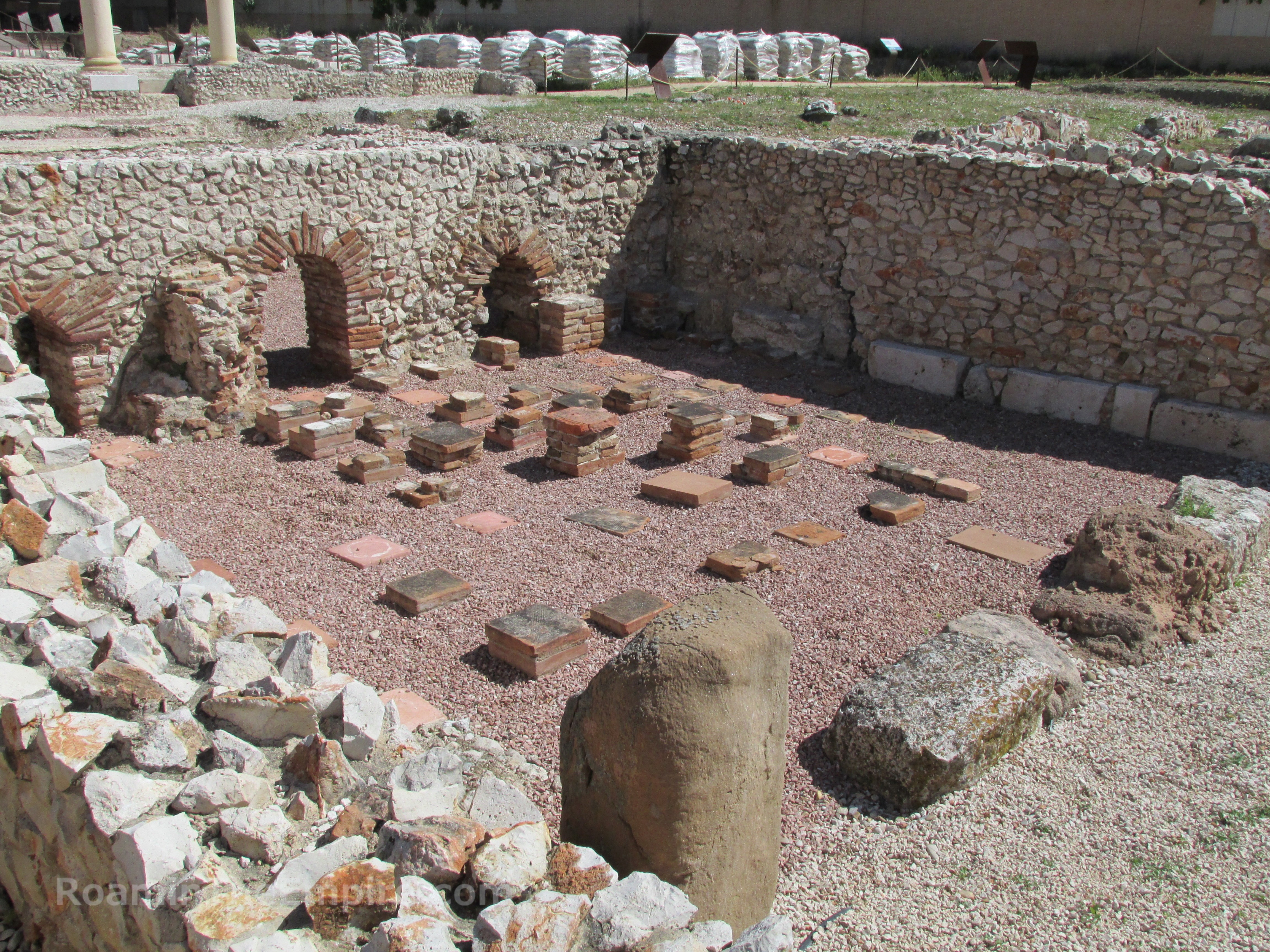
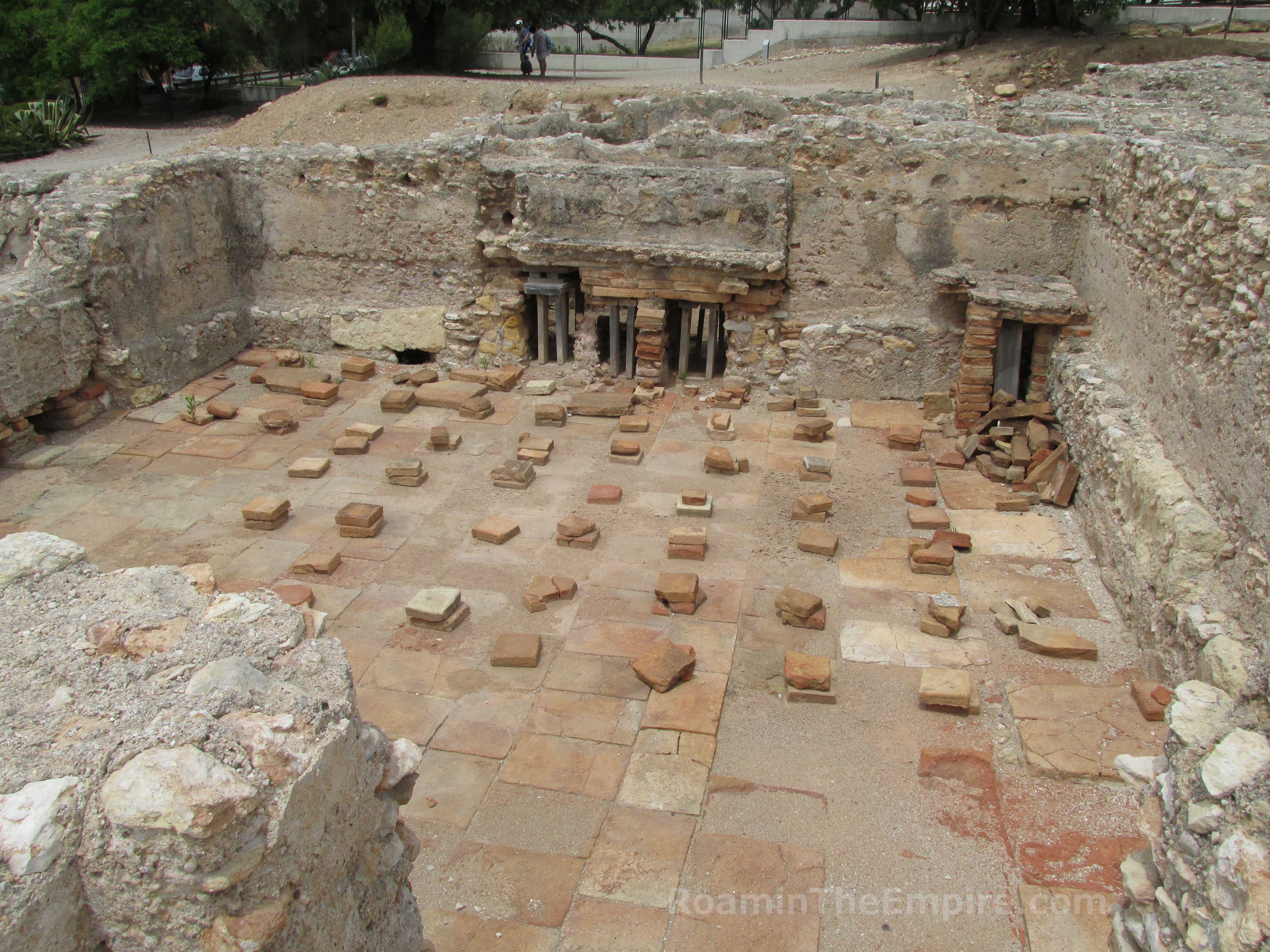
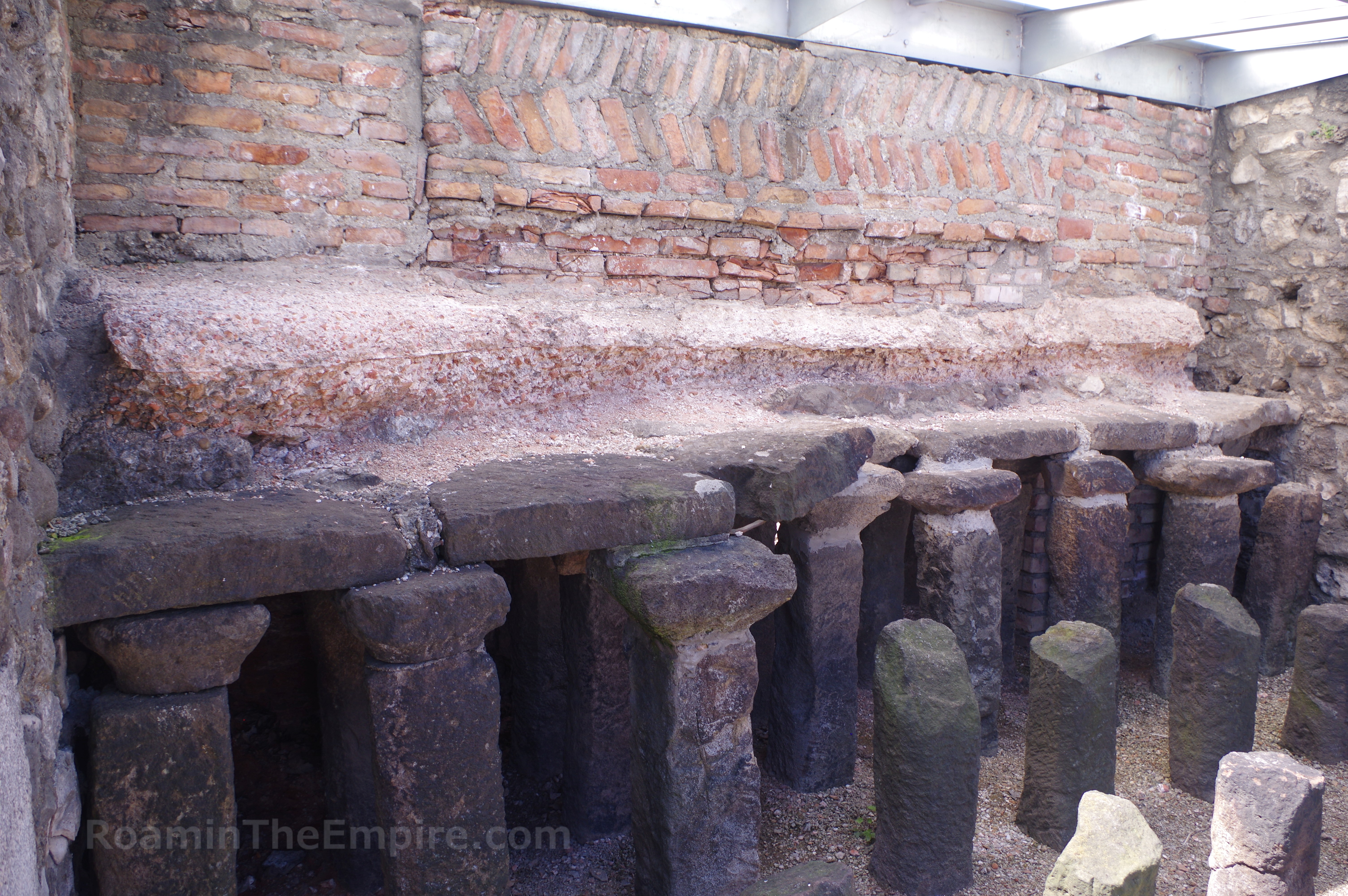
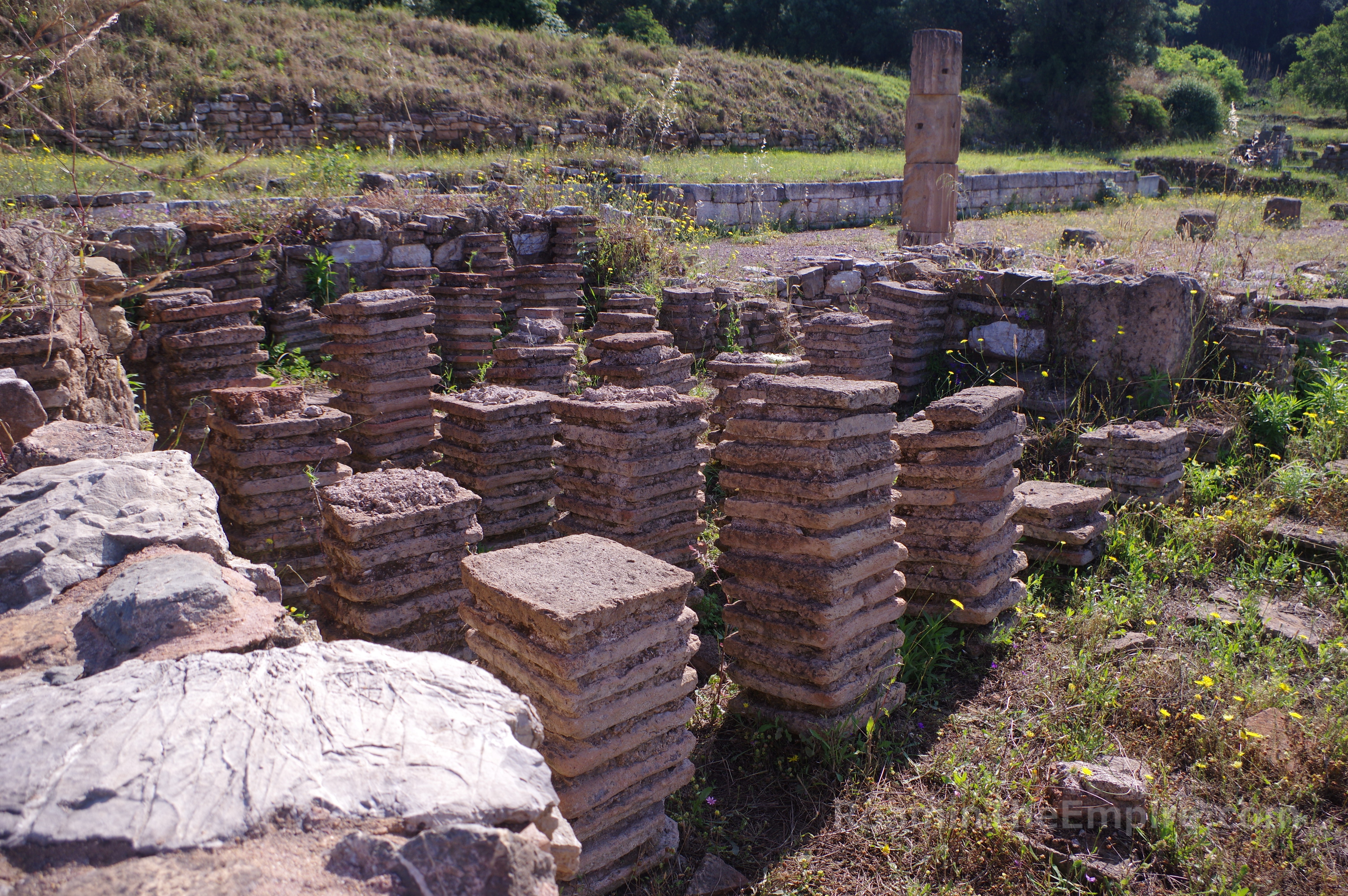
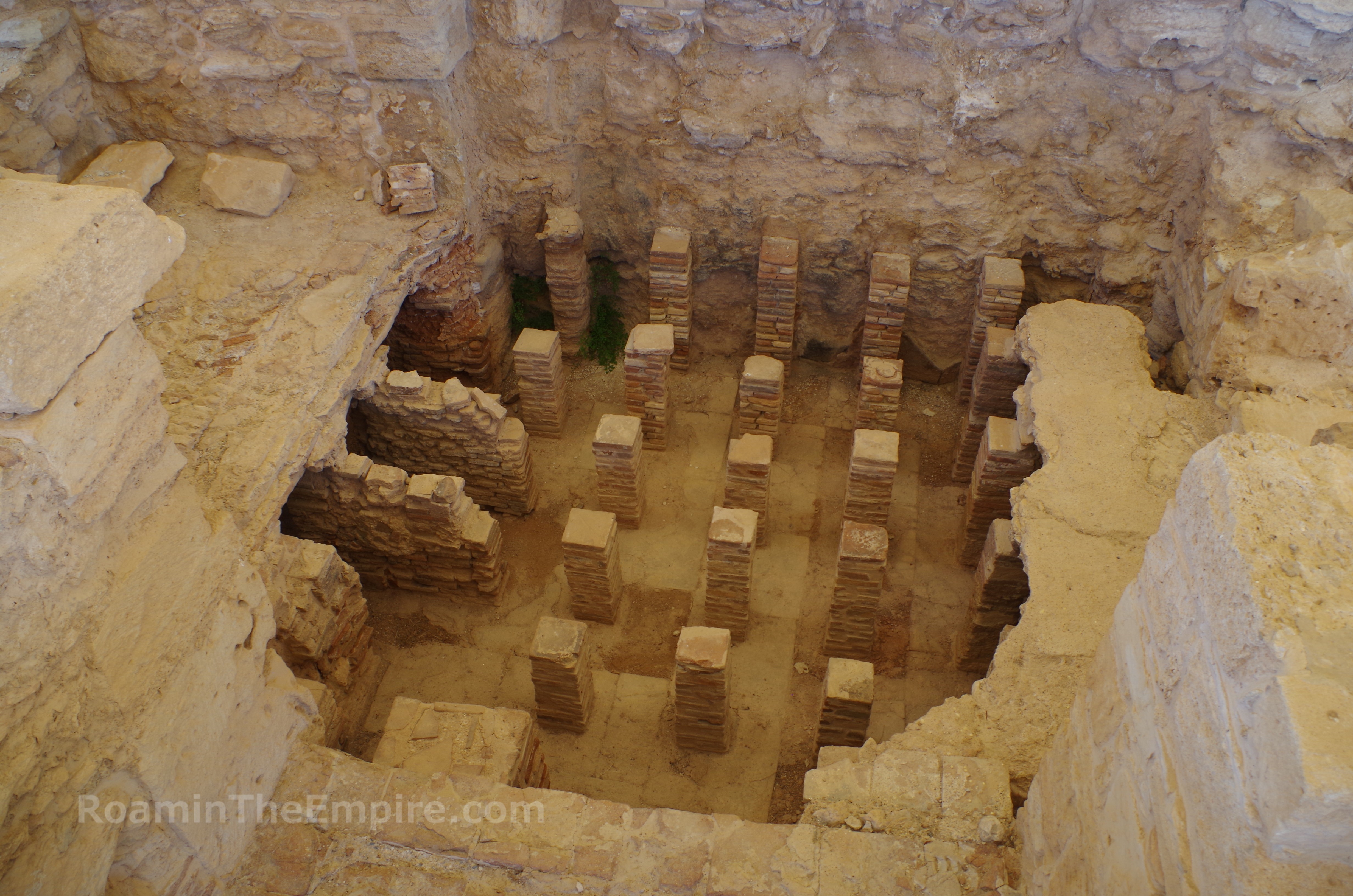
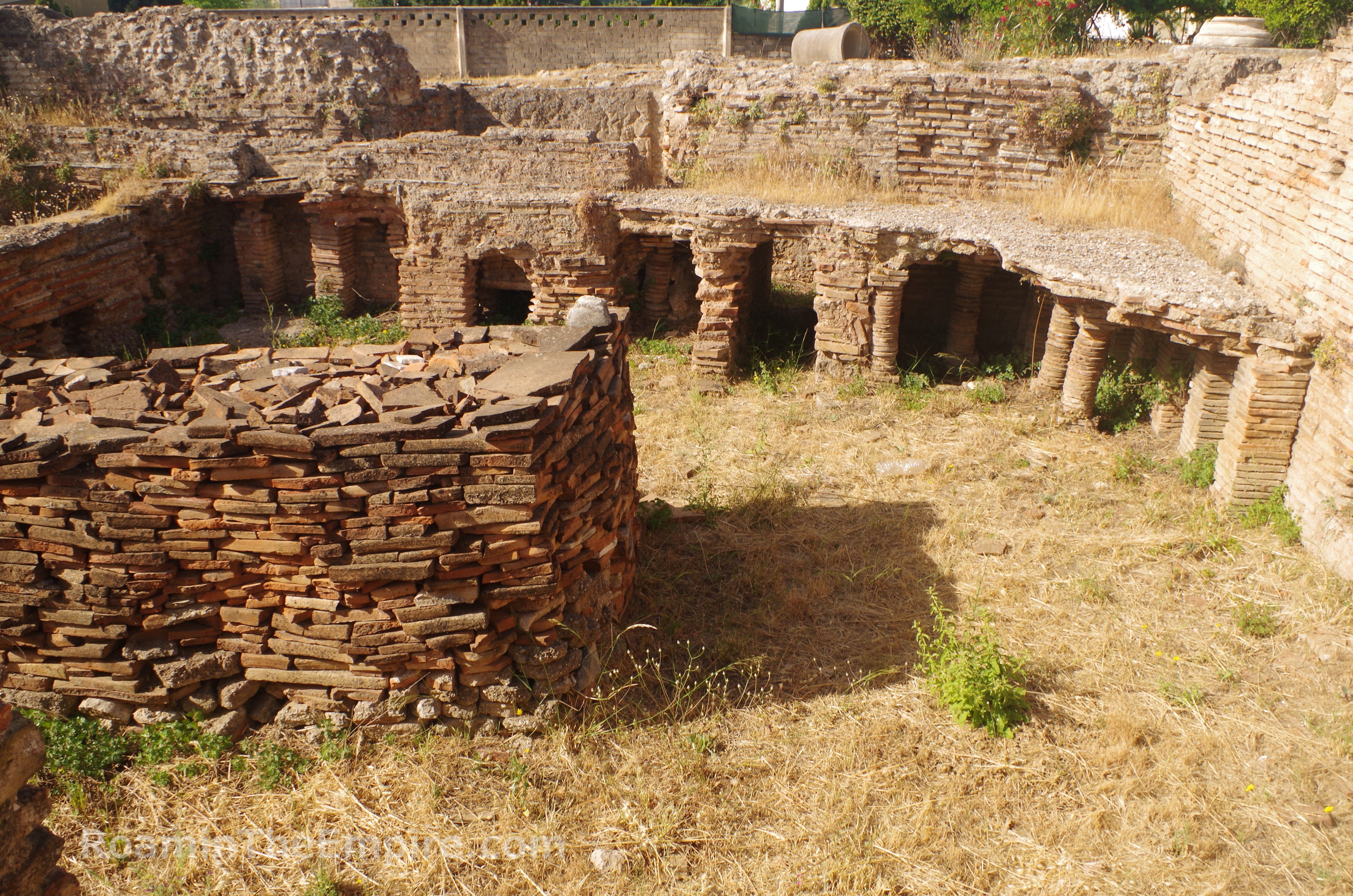
The floor of the caldarium was supported by a hypocaust system, a series of typically brick (though in some places and instances, stone was used) supports called pilae or suspensura. These raised the floor of the caldarium above the foundations of the complex created a space which allowed the air to circulate freely beneath caldarium to heat the floor of the room. Vitruvius recommends this space be two feet in height. The vestiges of the hypocaust system can be one of the most recognizable features of a heated room in archaeological remains. Because of the relative fragility of the raised floor and negative space below it, the floor of heated rooms has typically mostly collapsed or otherwise not survived. Floors will sometimes be reconstructed at archaeological sites in order to illustrate the function of the hypocaust system. The supports of the hypocaust system can often be seen scattered around the room, or in many occasions reconstructed to some degree with the original materials. This is not always the case, however, and caldaria sometimes have no surviving elements of the hypocaust system displayed (though remnants may have been found during excavation).
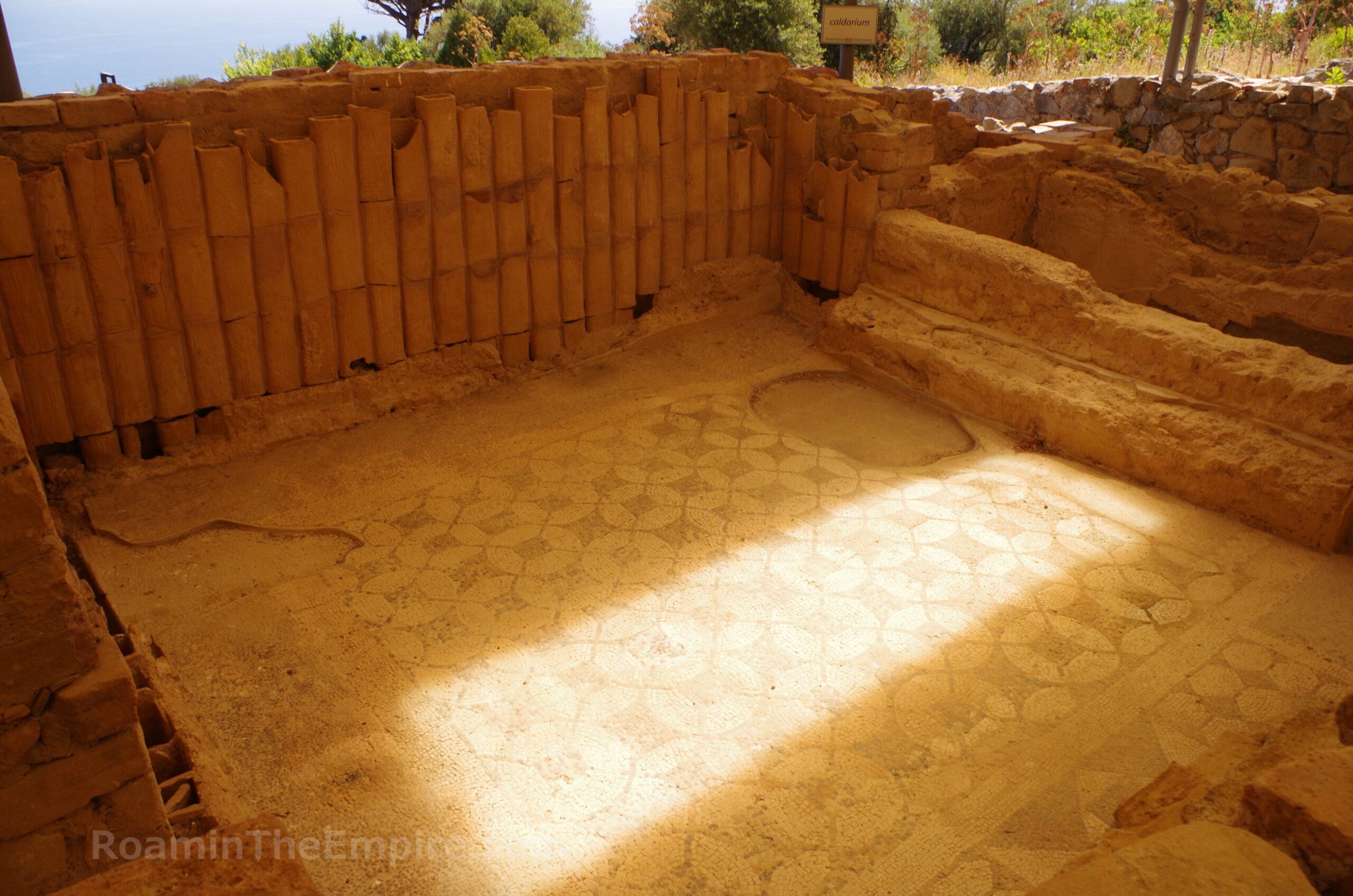
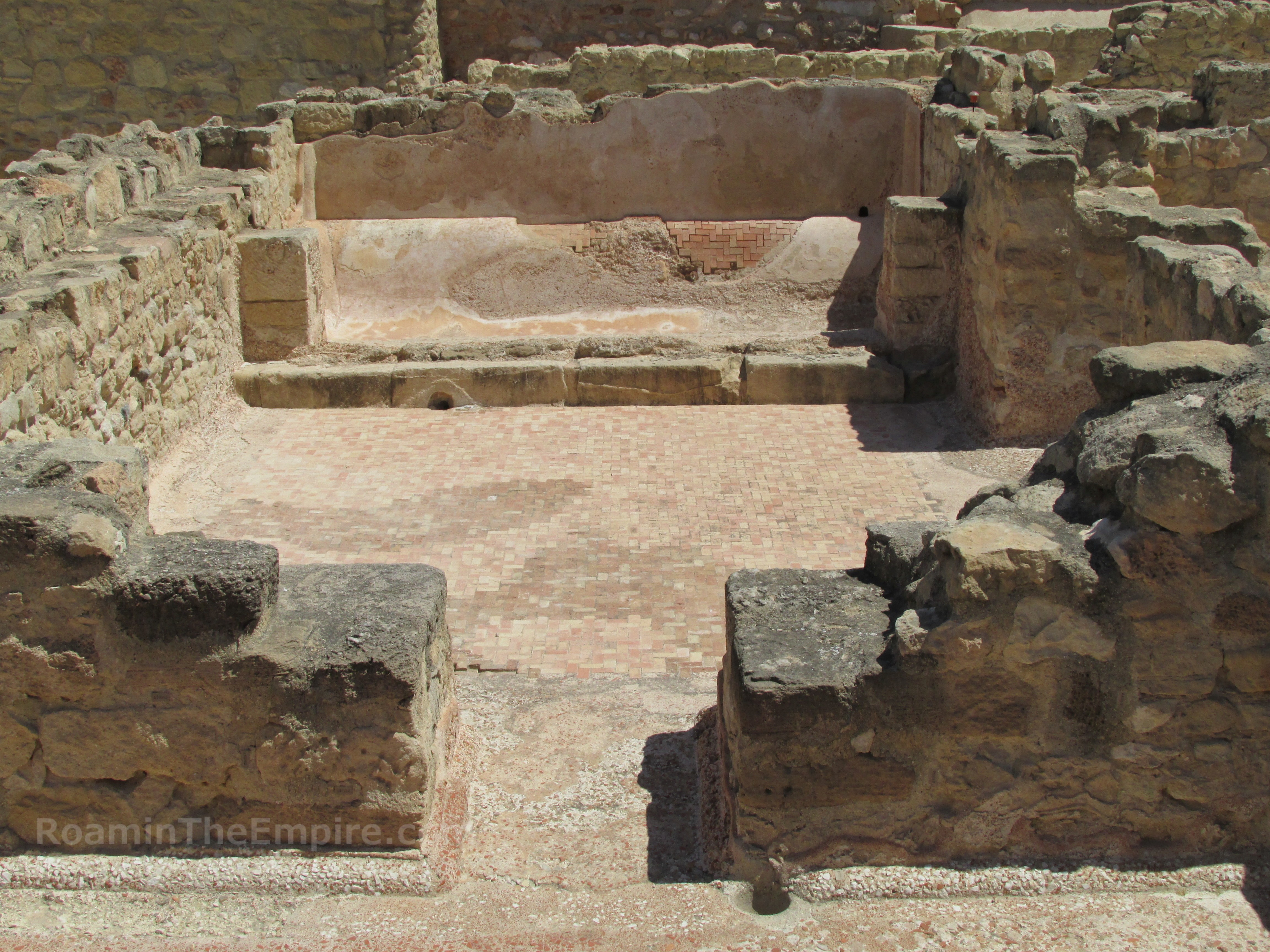
In some, but not all caldaria, hollow bricks called tubuli were used in the walls. These transported heated air from the space beneath the floor up into the walls of the room, heating the walls as well as the floor. Vitruvius notes that baths could be equipped with a bronze fixture in the roof that allowed for the venting of the heated air in the caldarium in order to regulate the temperature. Caldaria will sometimes have water basins set into the floor of the room, both partially and fully, making use of the heating mechanisms of the room to warm the water. Separate, smaller portable type basins (though they could be affixed in a more permanent manner) would also be used and contained cold/room temperature water.