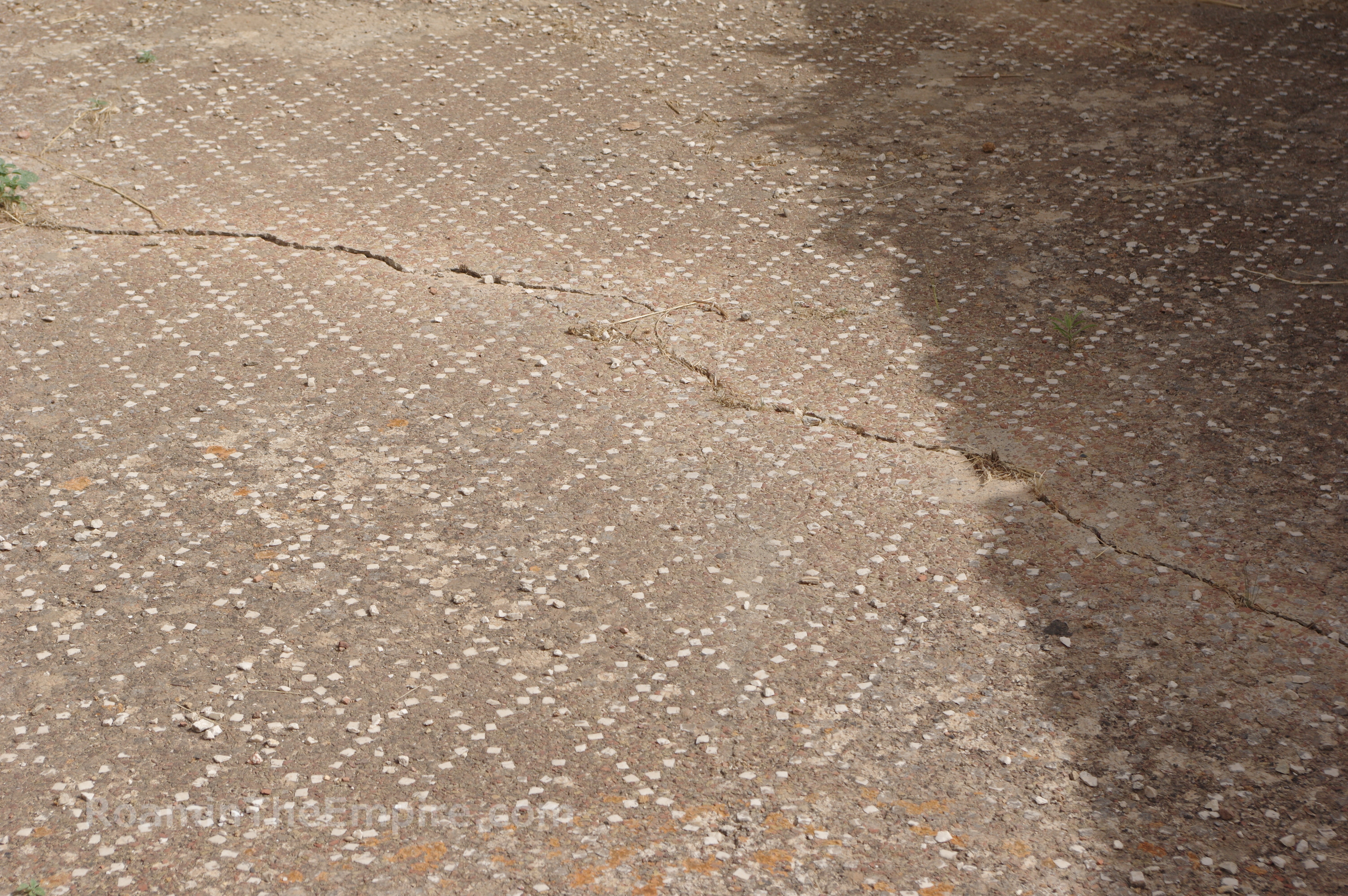


Opus Signinum

Opus signinum is a pavement technique used in antiquity in which fragments of ceramics are mixed in with lime mortar, producing a water proof material. It could be used as a finished flooring, in which stone pieces might be inserted and be arranged in a decorative pattern or sometimes even inscriptions. Typically only white stone tesserae would be used for the decorative pattern, though there are less common examples of black stone. An undecorated form, commonly referred to by the Italian term, cocciopesto (crushed ceramic pieces), would often be used as a base layer or as a waterproof lining for floors or walls. The technique has been observed in use with the Phoenicians since at least the 7th century BCE, but was primarily in style as a decorative element in the Roman world between the 1st century BCE and 2nd century CE. The name may have originated with the town of Signia (modern Segni) which was known for ceramic production.