

North Sardinia (South)

I intended for the miscellaneous sites in the Sassari region to be a single post, but, it ended up running a bit long and made more sense to divide it up into two separate routes. This first of two Sassari routes essentially covers sites in the southern part of the region. A personal vehicle is…

Read More

Turris Libysonis, Sardinia

History Today, Porto Torres is one of the most important ports on the island of Sardinia. In antiquity, the city’s Roman predecessor, Turris Libysonis (alternatively Turris Libyssonis or Turris Libisonis), held a similar status on the island. Despite the name seeming to suggest some connection with North Africa, Turris Libysonis appears to be a settlement…

Read More

Tharros Area, Sardinia

There are a number of sites in the immediate vicinity of Tharros that are worth seeing. Two of these are in the tiny village of San Salvatore di Sinis, about 10 minutes north of Tharros. The village sits at the junction of the SP7 and SP6, the two roads one would take to get to…

Read More

South Sardinia Part II

About 45 minutes to the south of Pani Loriga, at Capo Malfatano, is the Piscinnì quarry, a Punic-era quarry along the coast. This one requires a bit of hiking. There is a small parking area above the Cala Segreta beach park. There is a trail that leads down to the beach, and then up to…

Read More

South Sardinia Part I

Aside from the remains in the major urban centers of Sulcis, Nora, and Caralis in the southern part of Sardinia, there are a number of smaller sites or more isolated sets of remains, as there is throughout the island. I’ve cobbled together some of these sites in a few posts focusing on different geographic areas…

Read More

Sulcis, Sardinia

History Referred to as Plumbaria during Roman times, due to the lead deposits mined on the island, the present-day Isola di Sant’Antioco seems to have been inhabited by the Nuragic culture as early as the middle of the 2nd millennium BCE, and the pre-Nuragic Ozieri even earlier. Sometime around 750-740 BCE, the settlement of Sulcis…

Read More

Caralis, Sardinia – Part I

History Scattered among the bustling modern capital of Sardinia are the remains of the Punic and Roman city of Caralis. The favorable geography around Caralis attracted habitation in the area dating back to the Neolithic age. Sometime in the late 8th or early 7th century BCE, the Phoenicians established a colony here called Karaly, one…

Read More

Forum Julii, Gallia Narbonensis

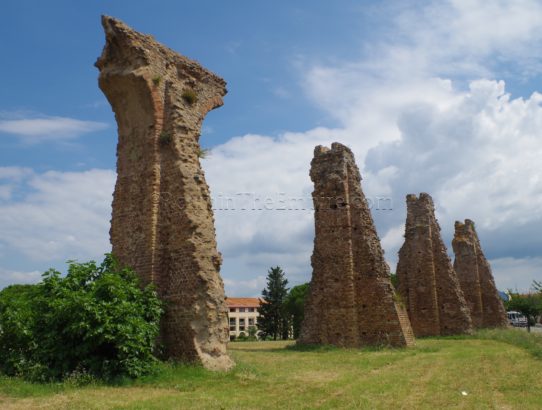
History The exact date of the founding of Forum Julii, the ancient predecessor to modern Fréjus, is a bit unclear. The name suggests that it was founded by Julius Caesar, and as such, it is likely that it was founded somewhere around 49 BCE, perhaps as some sort of camp or supply station during Caesar’s…

Read More

Cemenelum, Alpes Maritimae

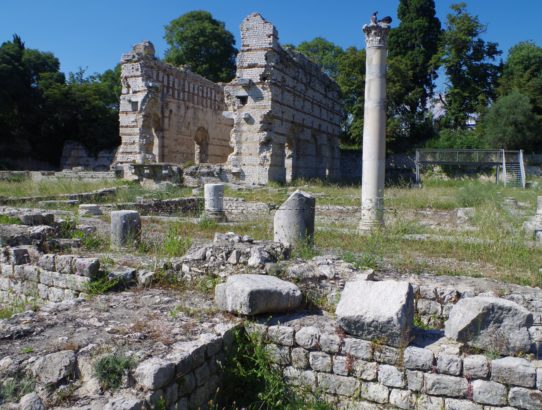
History Perched on a hill above the bustling city of Nice, in a neighborhood derived from the ancient city’s name (Cimiez), are the remains of the Roman town of Cemenelum. Preceding Cemenelum were both a Gallic and Greek settlement in the immediate area. The Greek settlement, Nikaia, was founded by colonists from Massalia in the…

Read More

Ambrussum, Gallia Narbonensis

History Located near the present day town of Gallargues-le-Montueux is the Gallo-Roman settlement of Ambrussum. The site was occupied as far back as the second millennium BCE, but the Gallic oppidium seems to have been constructed about 300 BCE. Like nearby Nemausus, the oppidum at Ambrussum was in the territory of the Volcae Arecomici. Shortly…

Read More