


Continued From Carsulae, Umbria Part I
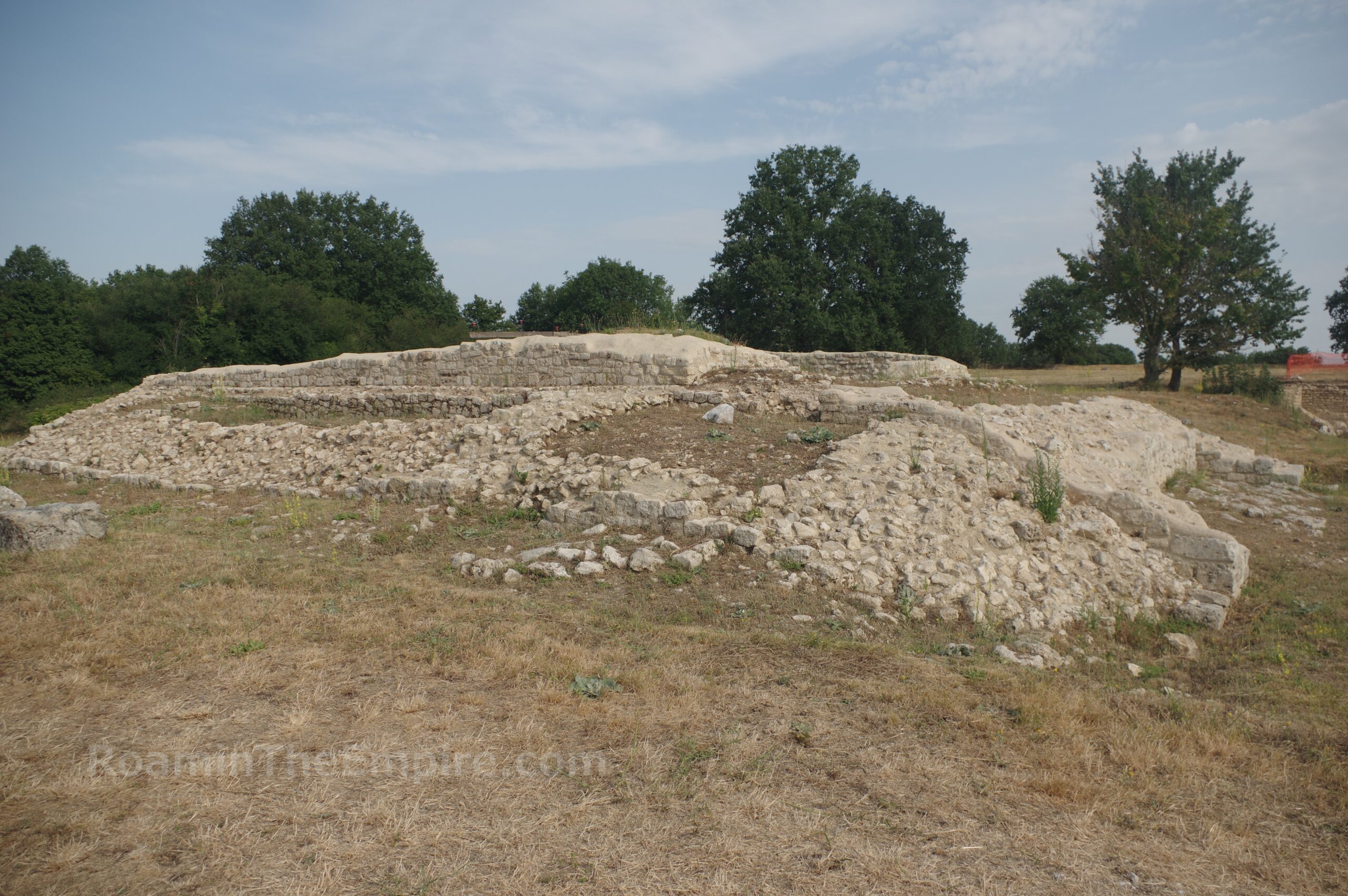
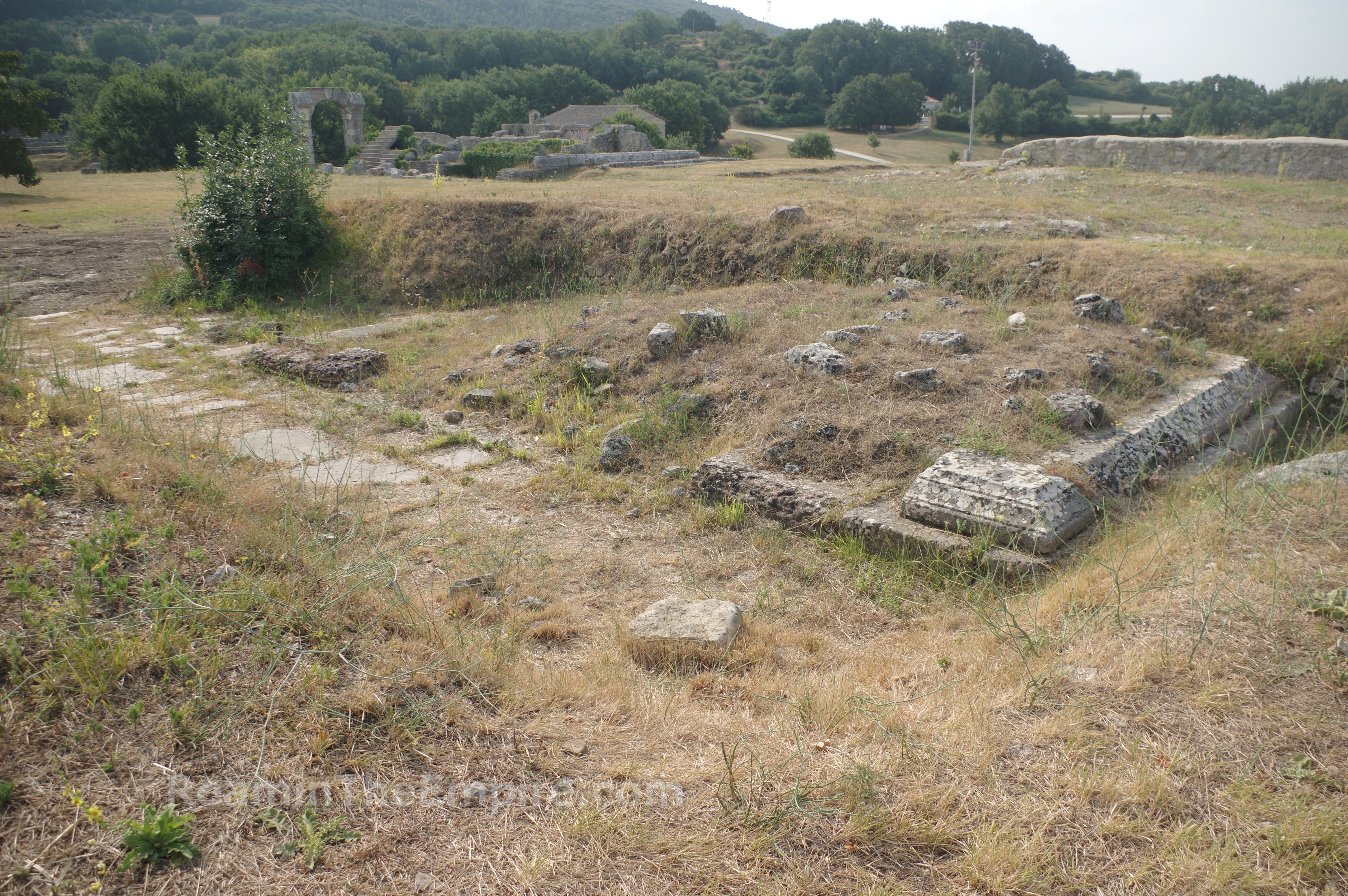
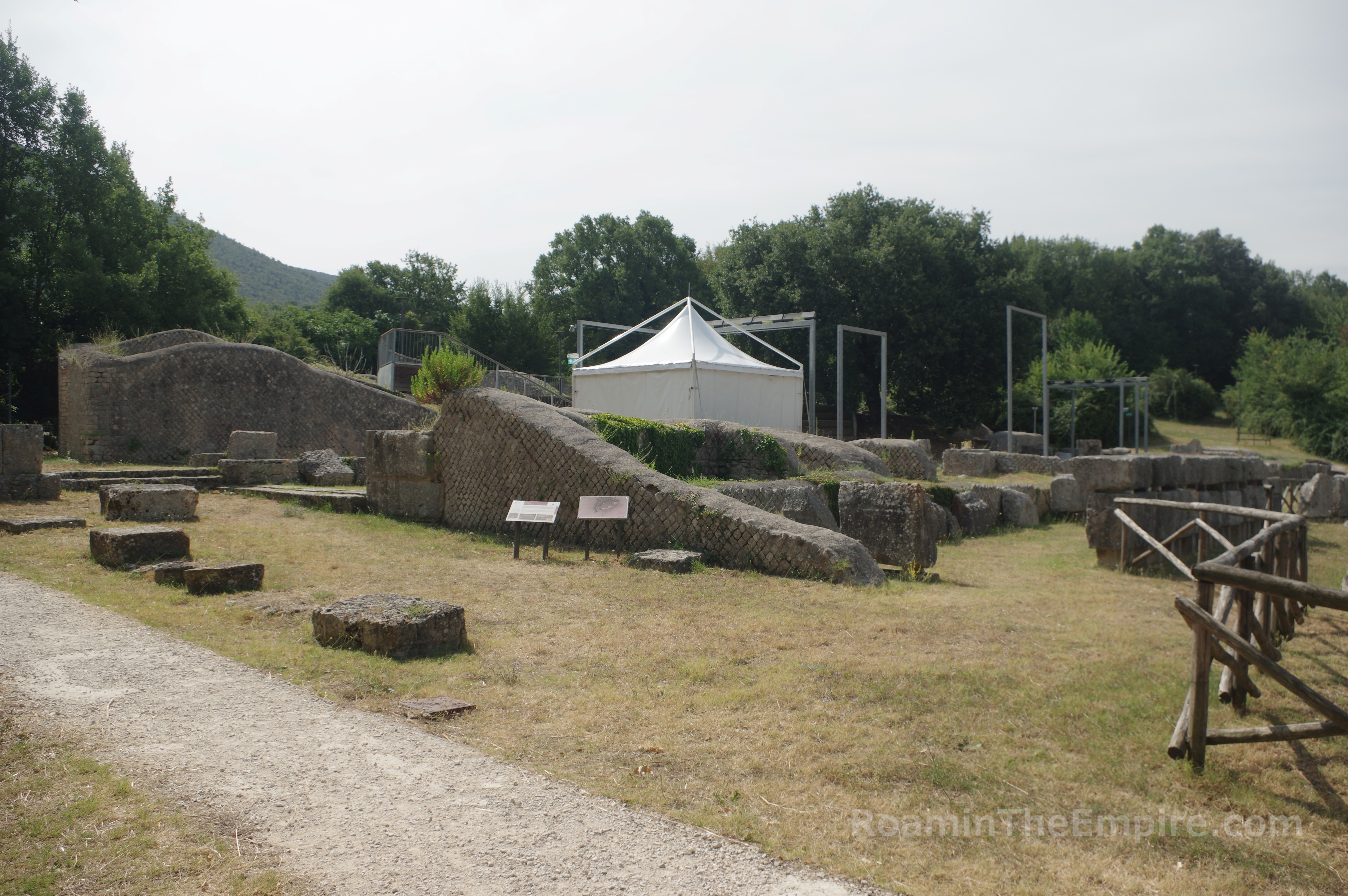
Standing at the west end of the forum is seemingly a single building; the so-called Republican Temple. This has commonly been identified as the Capitolium. Though it appears to be a single edifice, there are actually two buildings constructed on a single podium. While the temple at the south side has been excavated, the north side has not and just appears as part of a raised area. It is likely that this too was a temple of some sort. The podium and a little bit of the foundations of the cella for the Capitolium are preserved, though it is probably one of the more poorly preserved/conserved buildings at Carsulae overall. To the north of the unexcavated part of the mound, at the northwest corner of the forum, are the foundations of a small temple, apparently constructed in the same pink stone as the twin temples, though none of it remains.
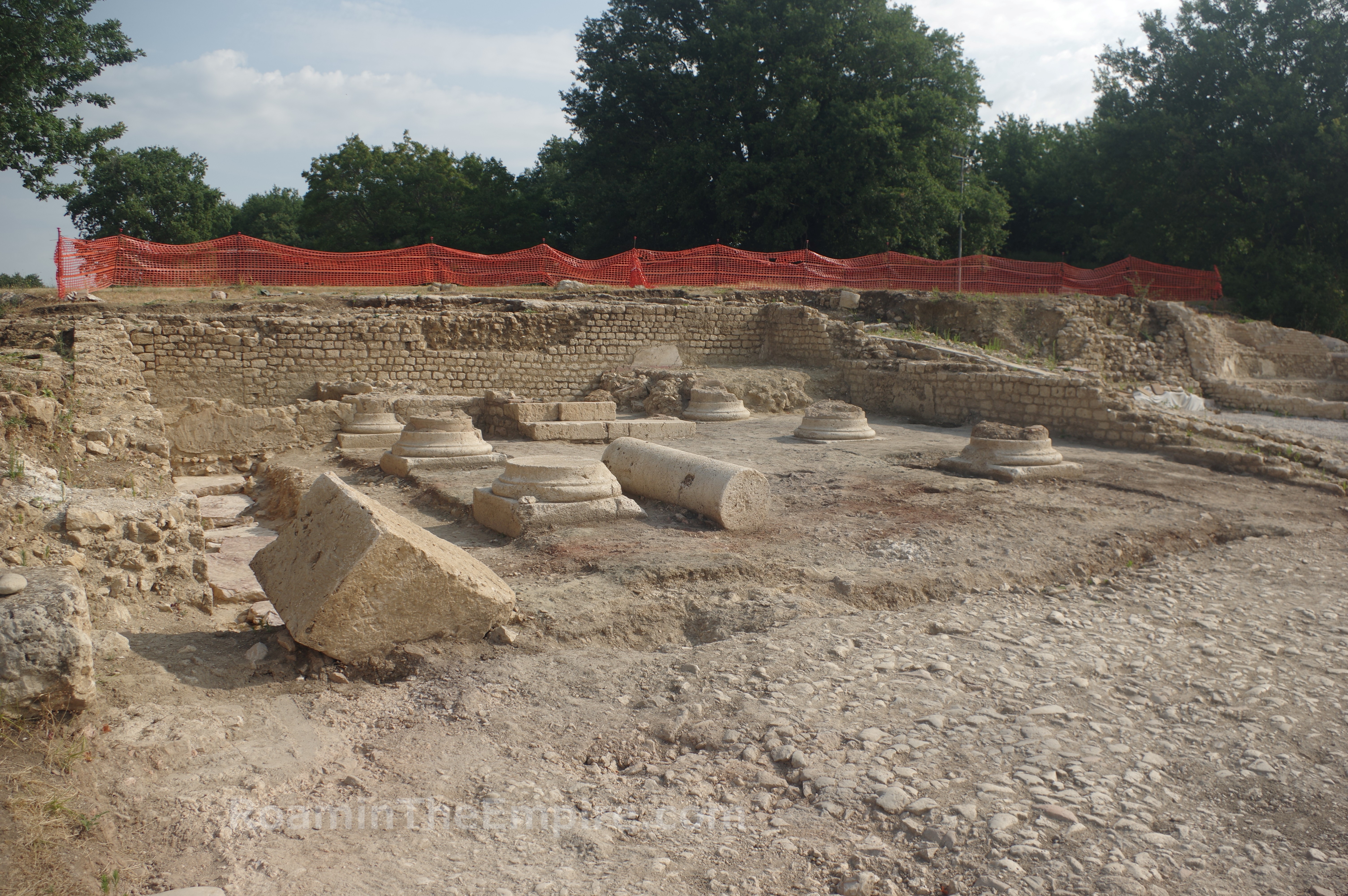
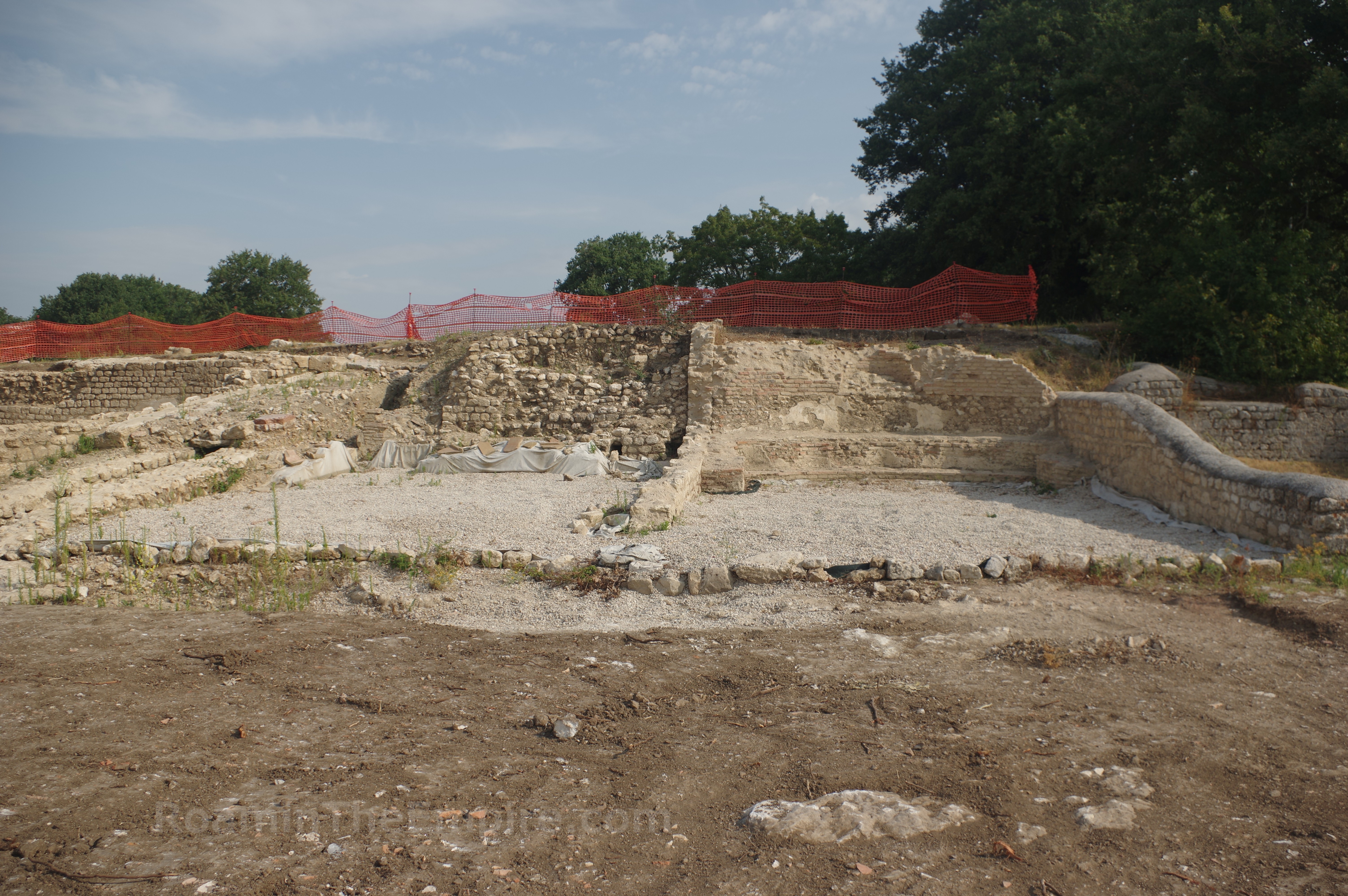
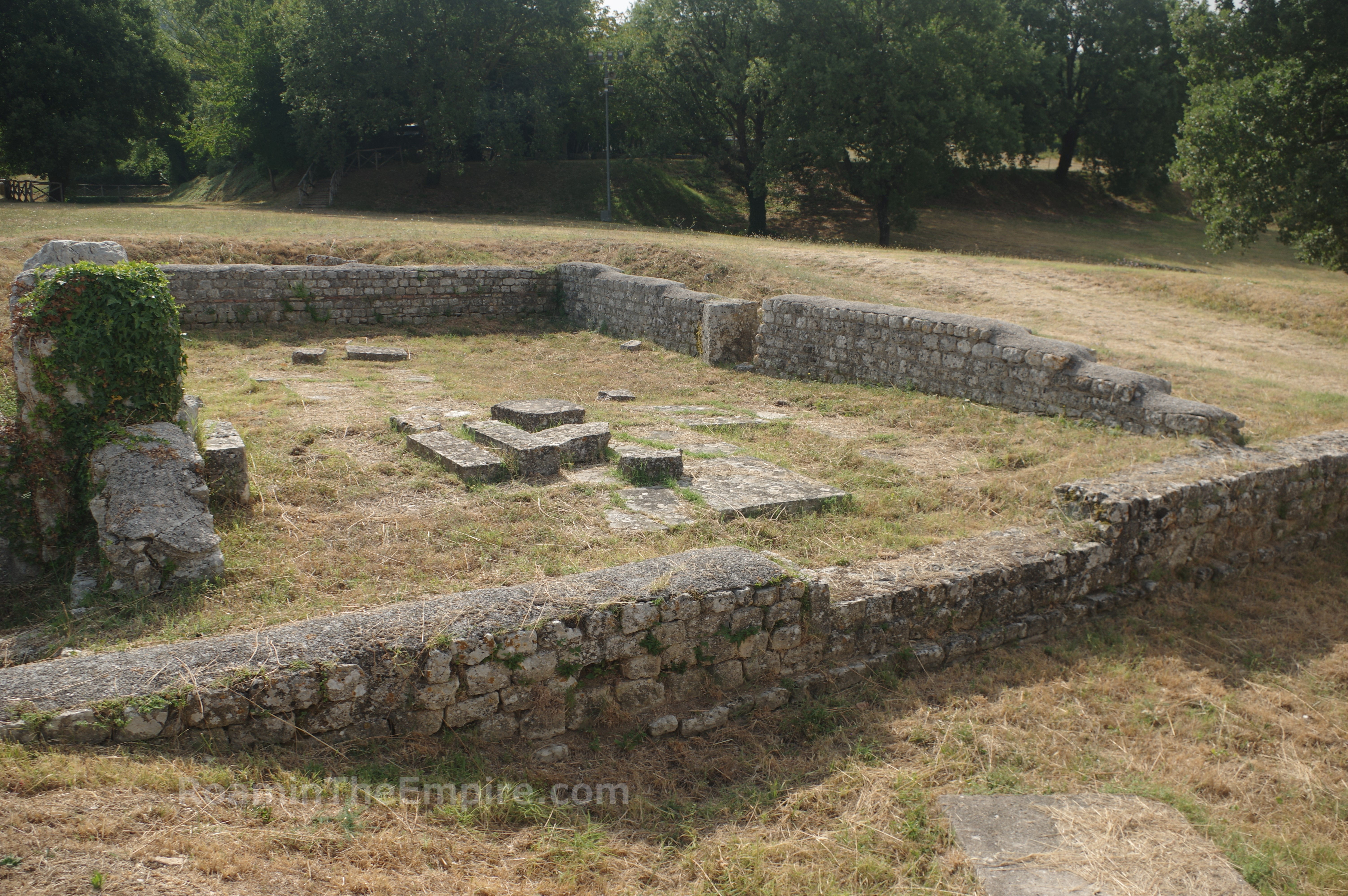
Across from the small temple, starting along the north side of the forum are a few fairly recently excavated buildings that seemed to be in active excavation when I visited. The westernmost of these buildings has a distinctive form, with the column bases forming two parallel rows through the center of the structure, dividing it into a tripartite space. As yet, there does not seem to be any conclusive identification for the building, though it could perhaps be a public hall of some sort or seat of a collegium. To the east are two more recently excavated rooms, more or less uniform in size. The eastern of these two has a small apse and a raised platform on the north side with what appears to be a niche. A third attached room on the east side comes from previous excavations and is again, mostly uniform compared to the other two and also has a raised platform with a niche on the north side. Together, these three seem to form a sort of unified building. Likely, this space served some kind of administrative function in Carsulae.
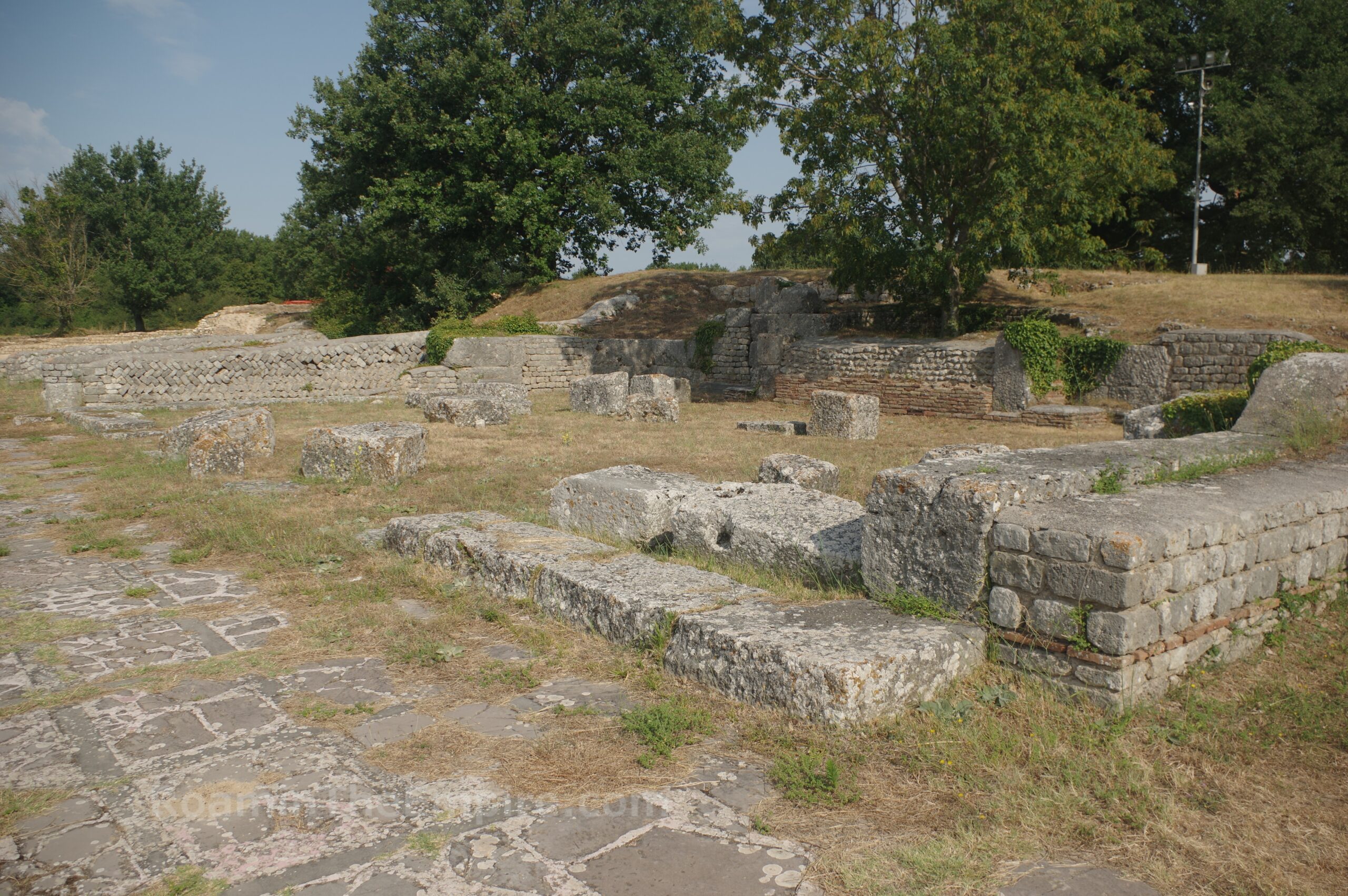
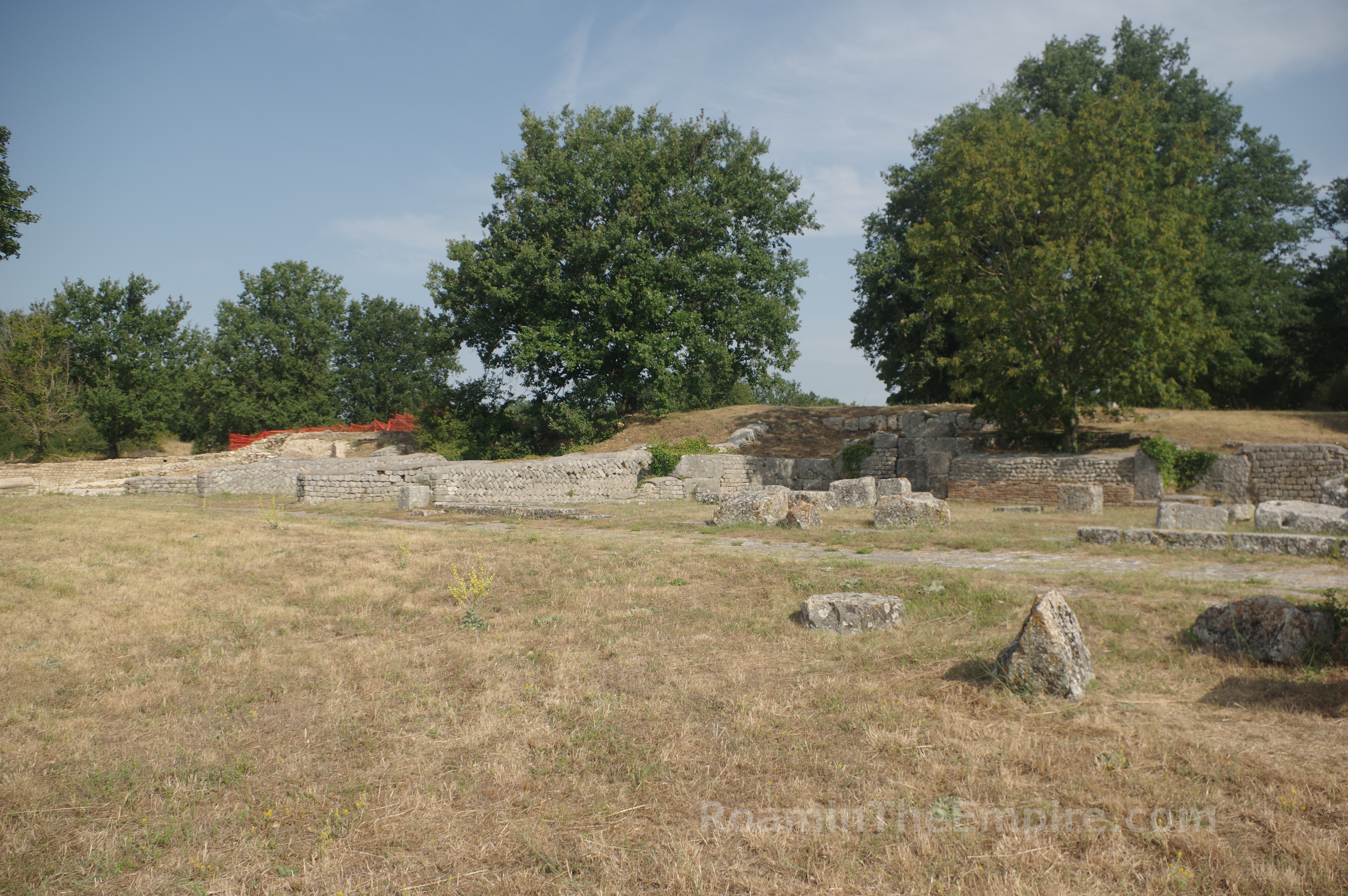
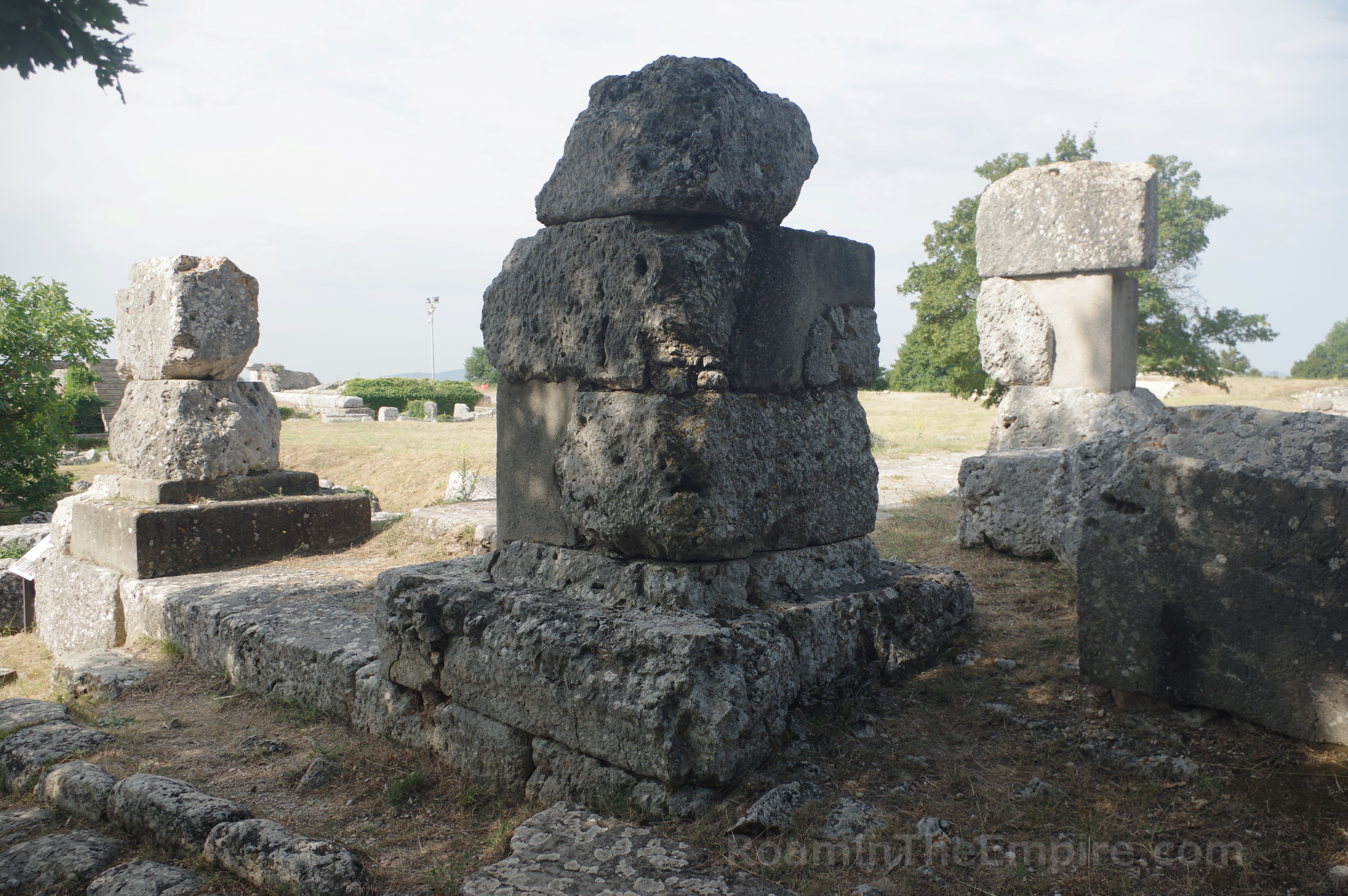
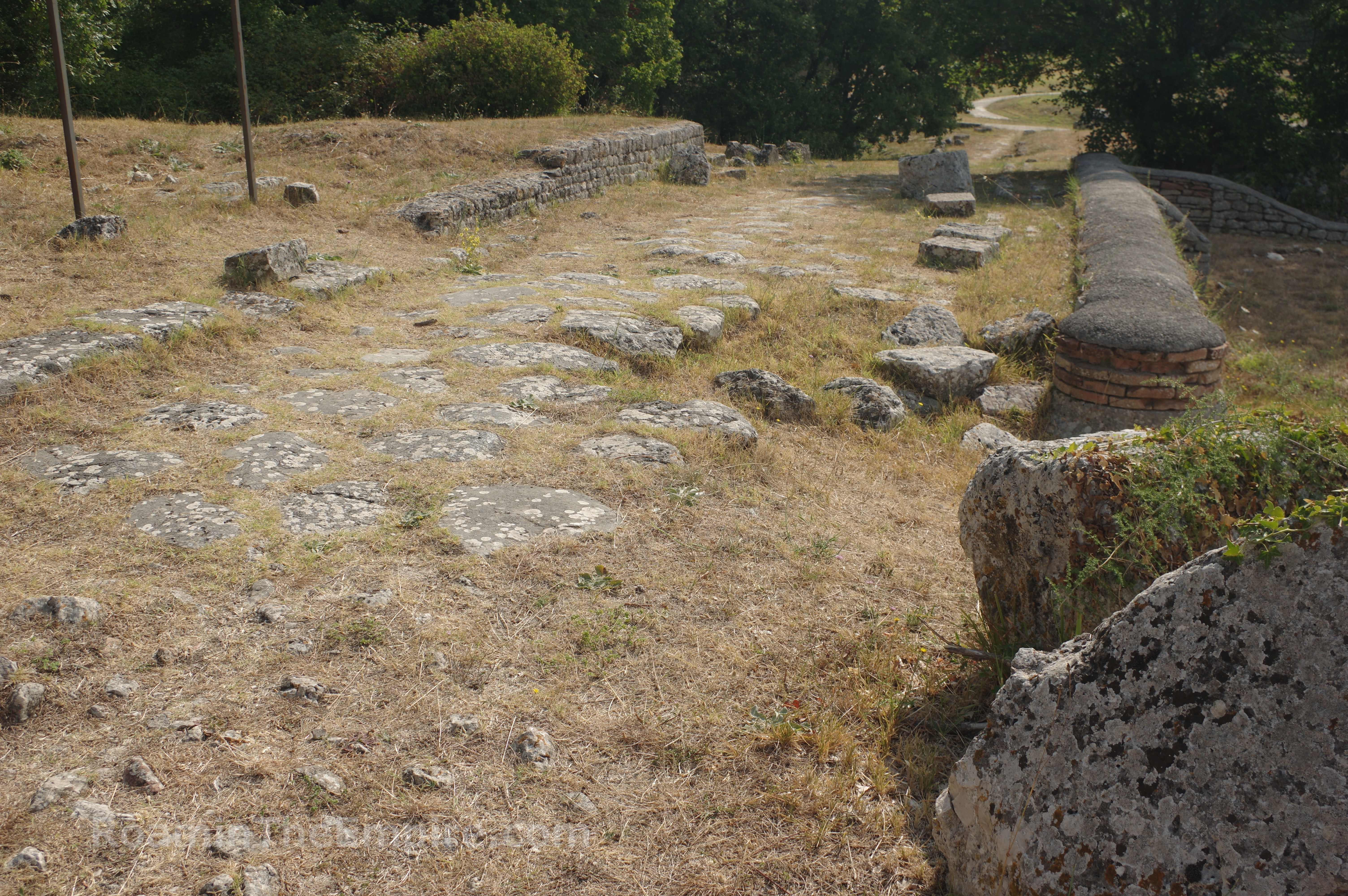
Rounding out the north side of the forum are a series of two more buildings. The westernmost of these two is a small building, slightly larger than one of the rooms of the building complex to its west. It has similar form to the eastern wing of that building as well, with a raised platform and niche on the north side. Either this or the room to the west was paved in the marble slabs that are now displayed in the Chiesa di Santi Cosma e Damiano. To the east of this small building is a much larger building constructed in places with more robust stone blocks. The presence of some imperial statuary fragments found in this building have led to its identification as the Augusteum, the seat of the imperial cult in Carsulae. The decumanus maximus of the settlement ran in front of these buildings along the north side of the forum, some remnants of which are visible here. The second quadrifrons arch is located at this corner of the forum and marked a second monumental entry. Unlike the arch on the southeast side of the forum, only the pedestal and bases of the arches remain.
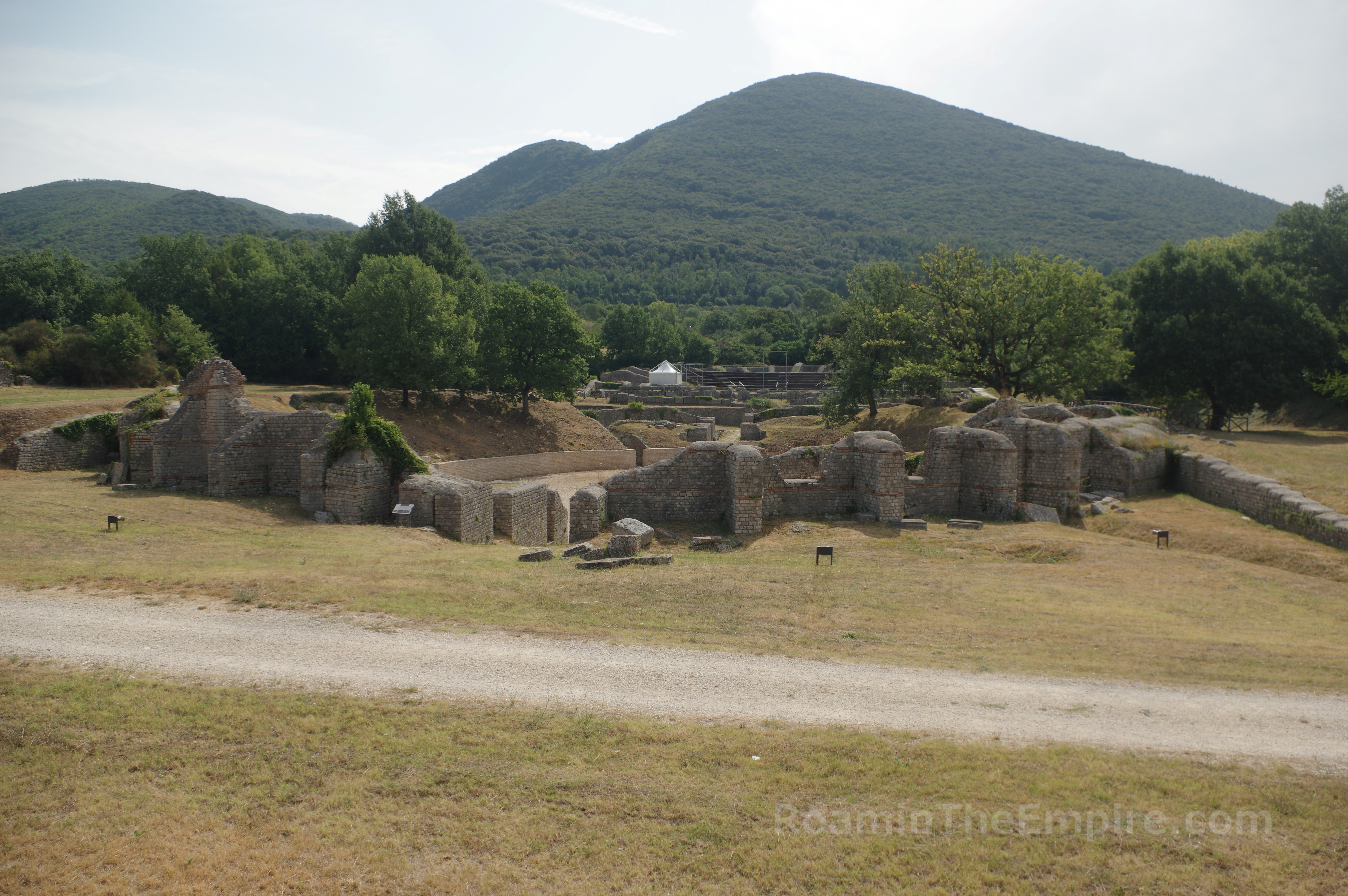
Roughly opposite the arch, to the east across the Via Flaminia, a road heads off to the east and toward the amphitheater, a continuation of the decumanus maximus. The ancient road intersects with a modern road/path, which allows good views of the east side of the basilica. There are a couple of sets of buildings flanking the north and south side of the approach to the amphitheater, along the modern dirt road. On the north side there is a staircase and a retaining wall. On the south side is a rectangular building, though it does not seem to have a defined use or identification assigned to it.
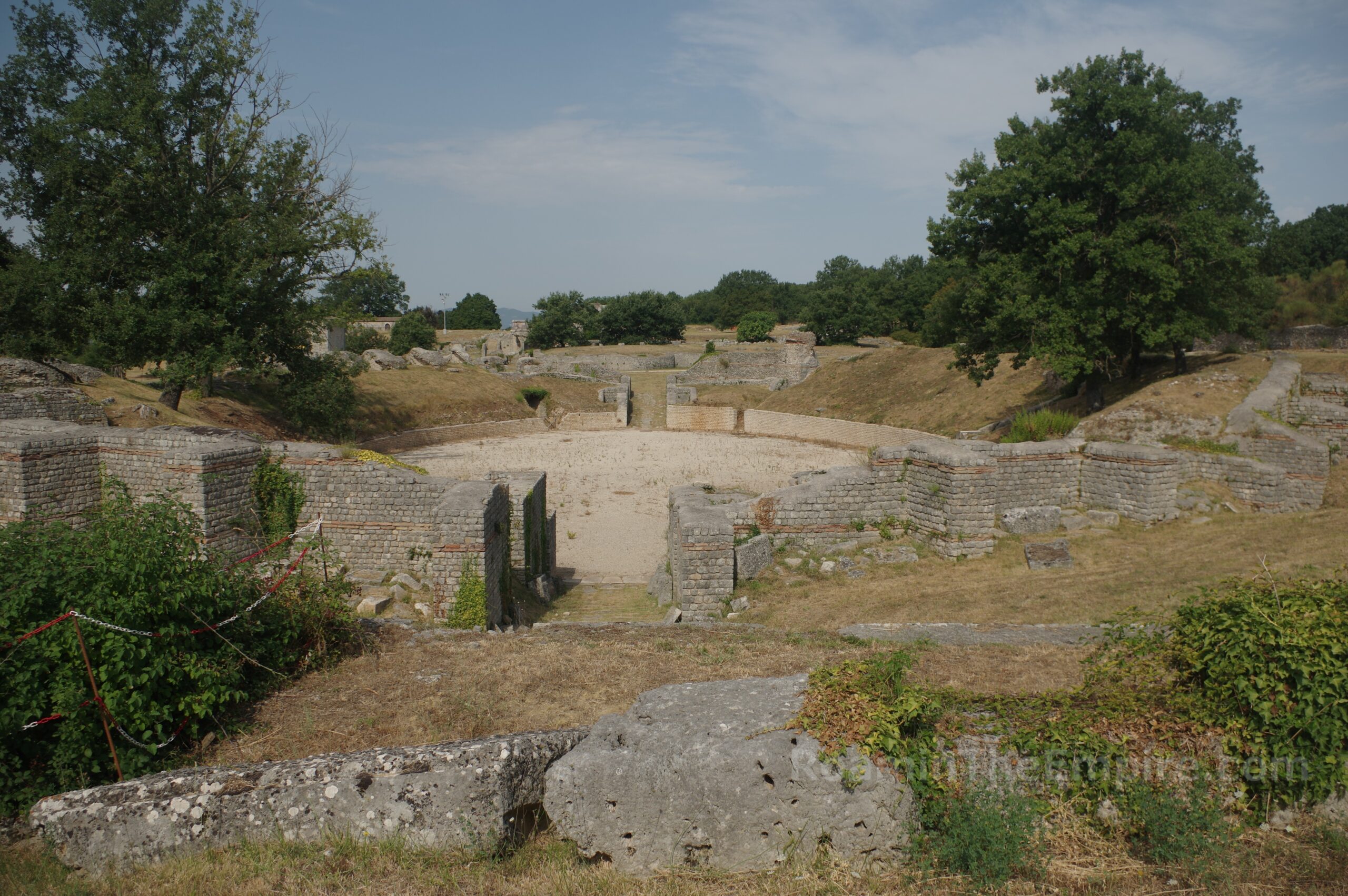
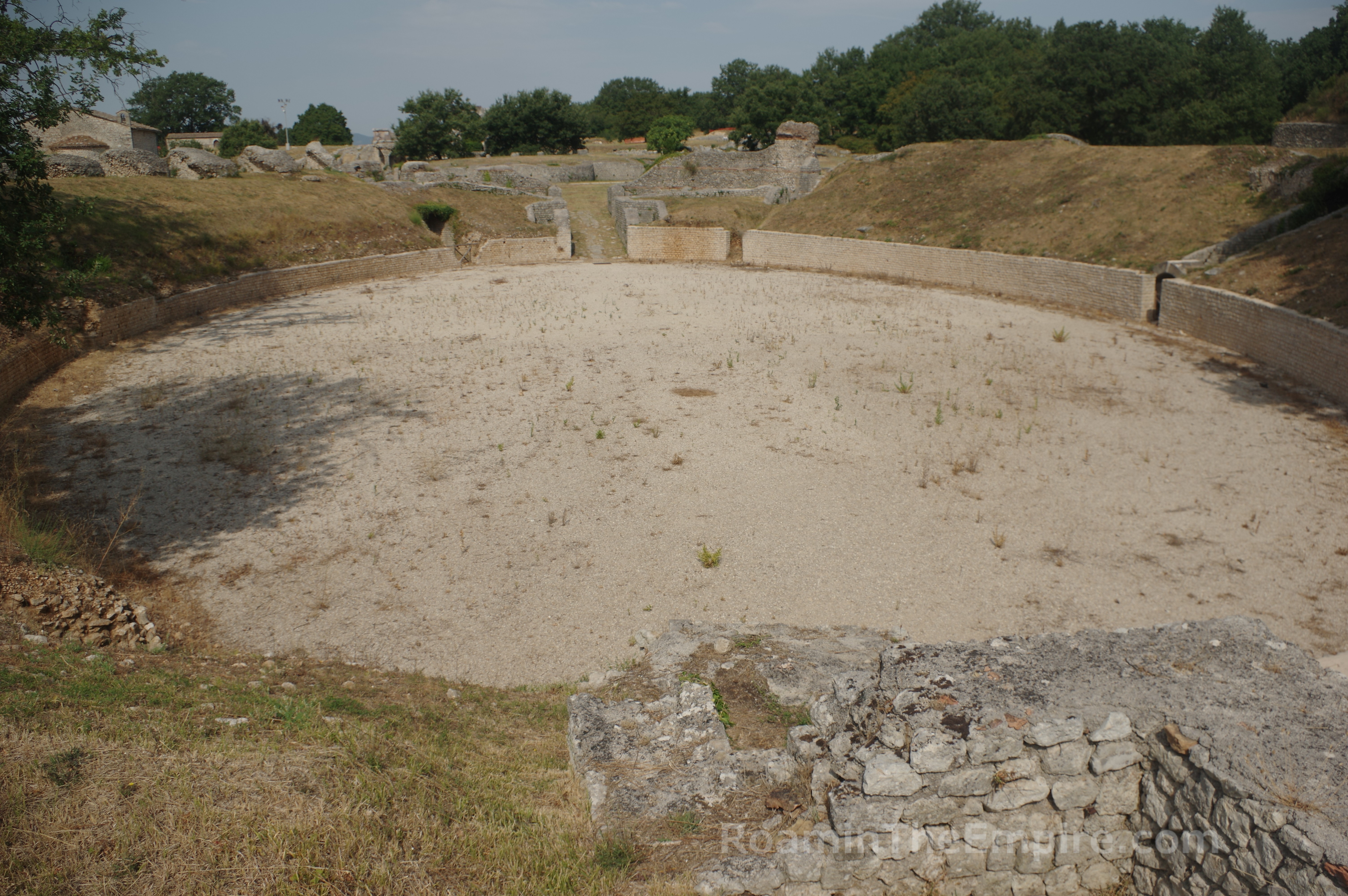
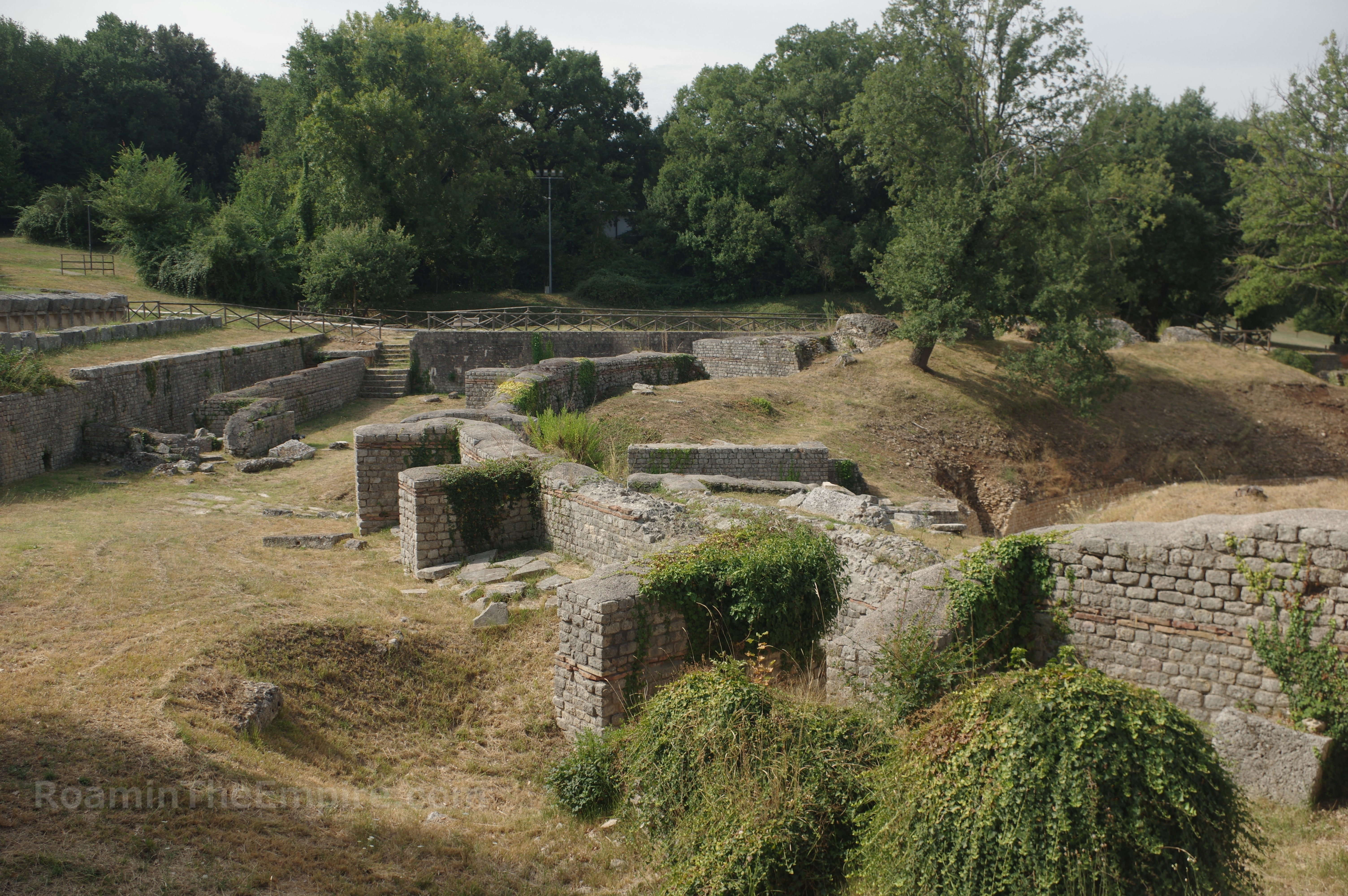
Between these two structures is the amphitheater. The amphitheater seems to have been originally constructed in the middle of the 1st century CE, just after the adjacent theater to the east. The amphitheater and theater share an aligned plan, with the east end of the amphitheater mirroring the construction, dimensions, and placement of the preexisting theater. The amphitheater was built in a natural depression, making use of the sloping topography to support the cavea of the building. Monumental entrances were located at the eastern and western sides of the amphitheater. The external walls of the amphitheater are fairly intact up to a certain point. The podium between the seating area and the arena is well preserved as well. Nothing of the seating really remains, though. Most of the amphitheater is accessible aside from the side portals, which are closed off.
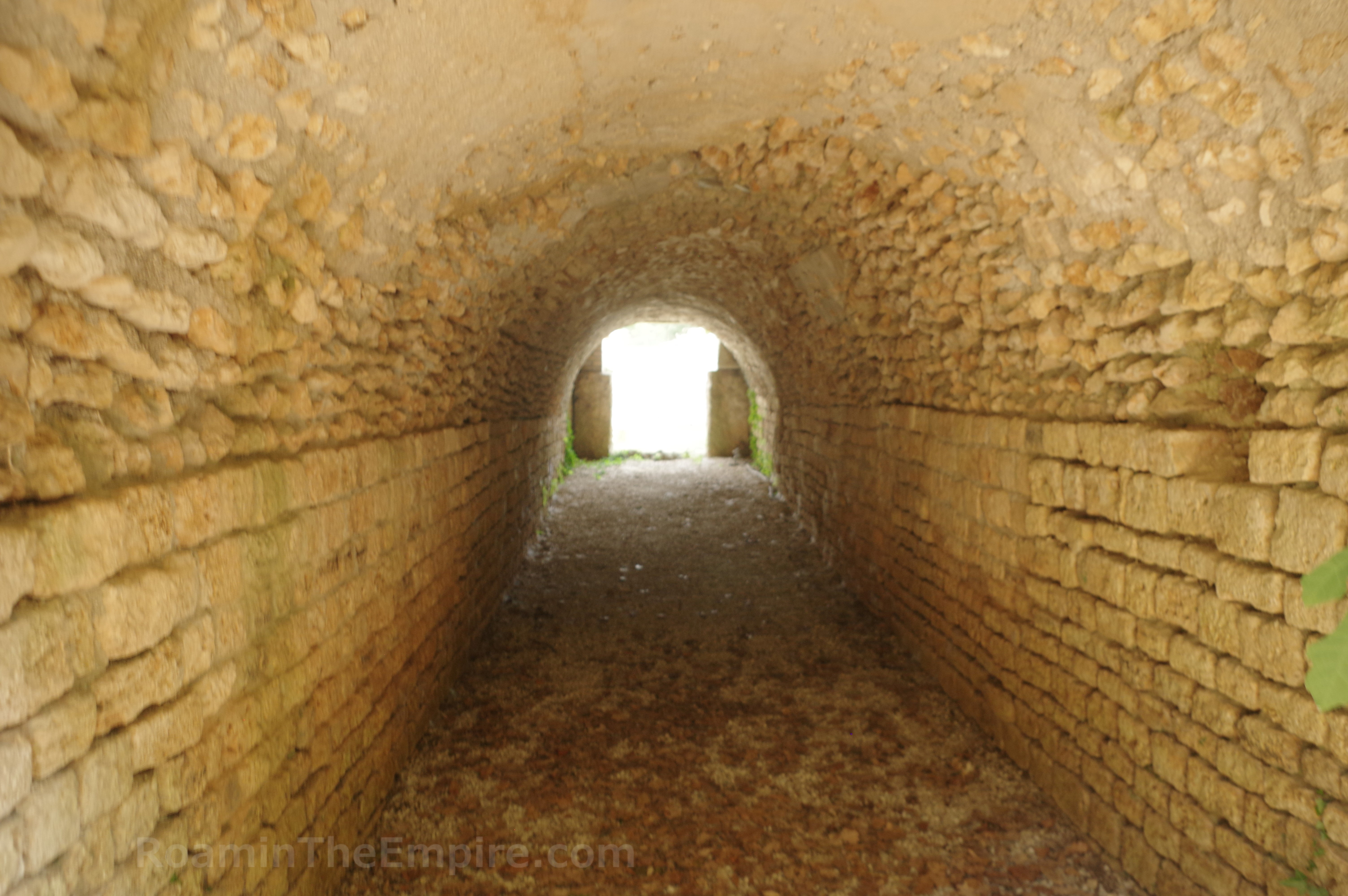
The eastern entrance of the amphitheater opens out several meters in front of the large terrace wall of the theater, which unlike the amphitheater, was not built into the contours of the topography, but rather is completely freestanding. It is located several meters above the ground level around the amphitheater. That terrace wraps around the south side of the space between the amphitheater and theater, preventing access to the terrace from the south. Along the terrace wall of the theater at the amphitheater level, there is a long chamber against the wall. This connects to a tunnel that connects this chamber to another space on the south side of the terrace. This area south of the terrace is identified as a cistern, and the channel and chamber on the north side of the terrace would then seemingly be some kind of water feature.
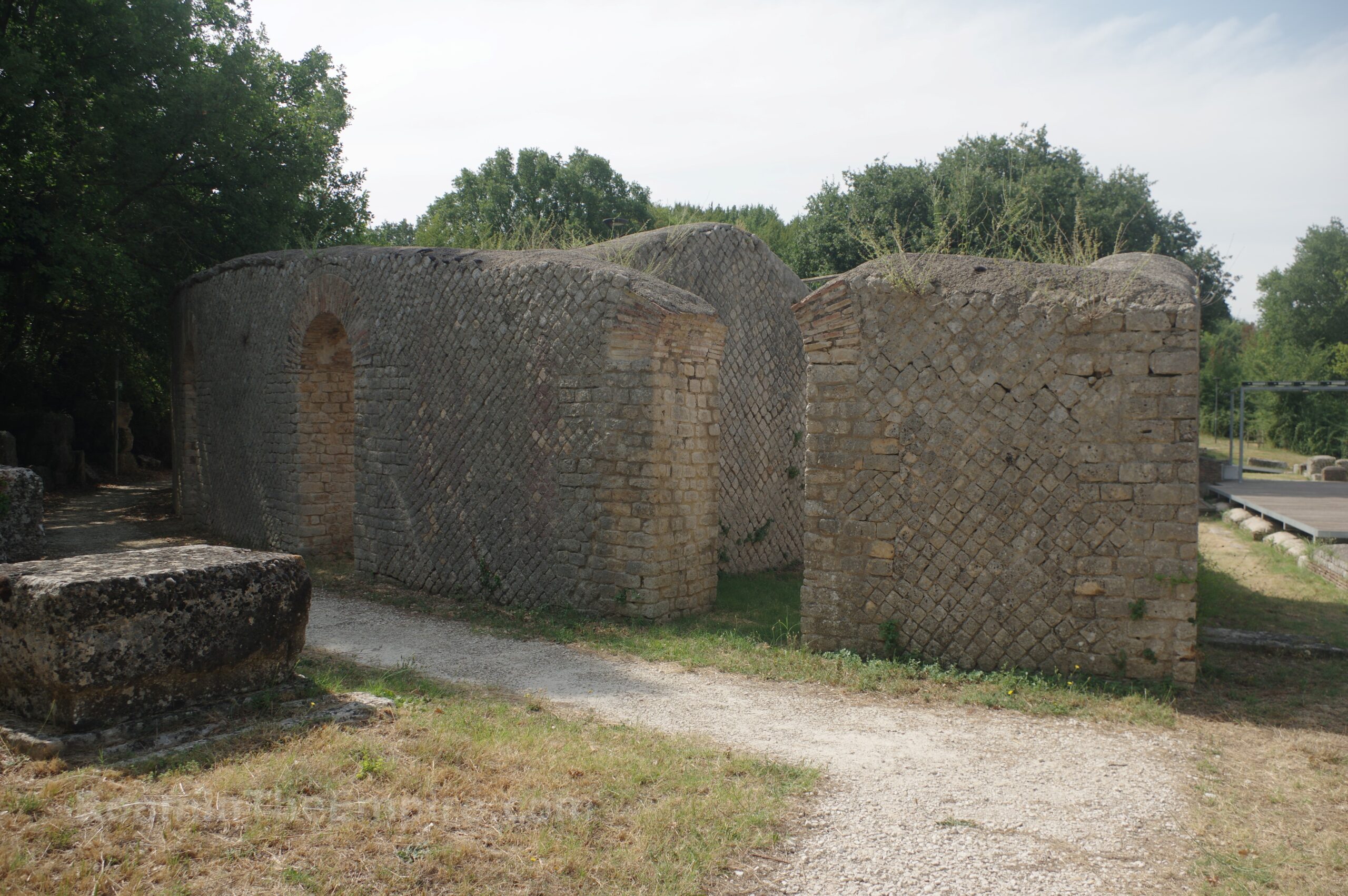
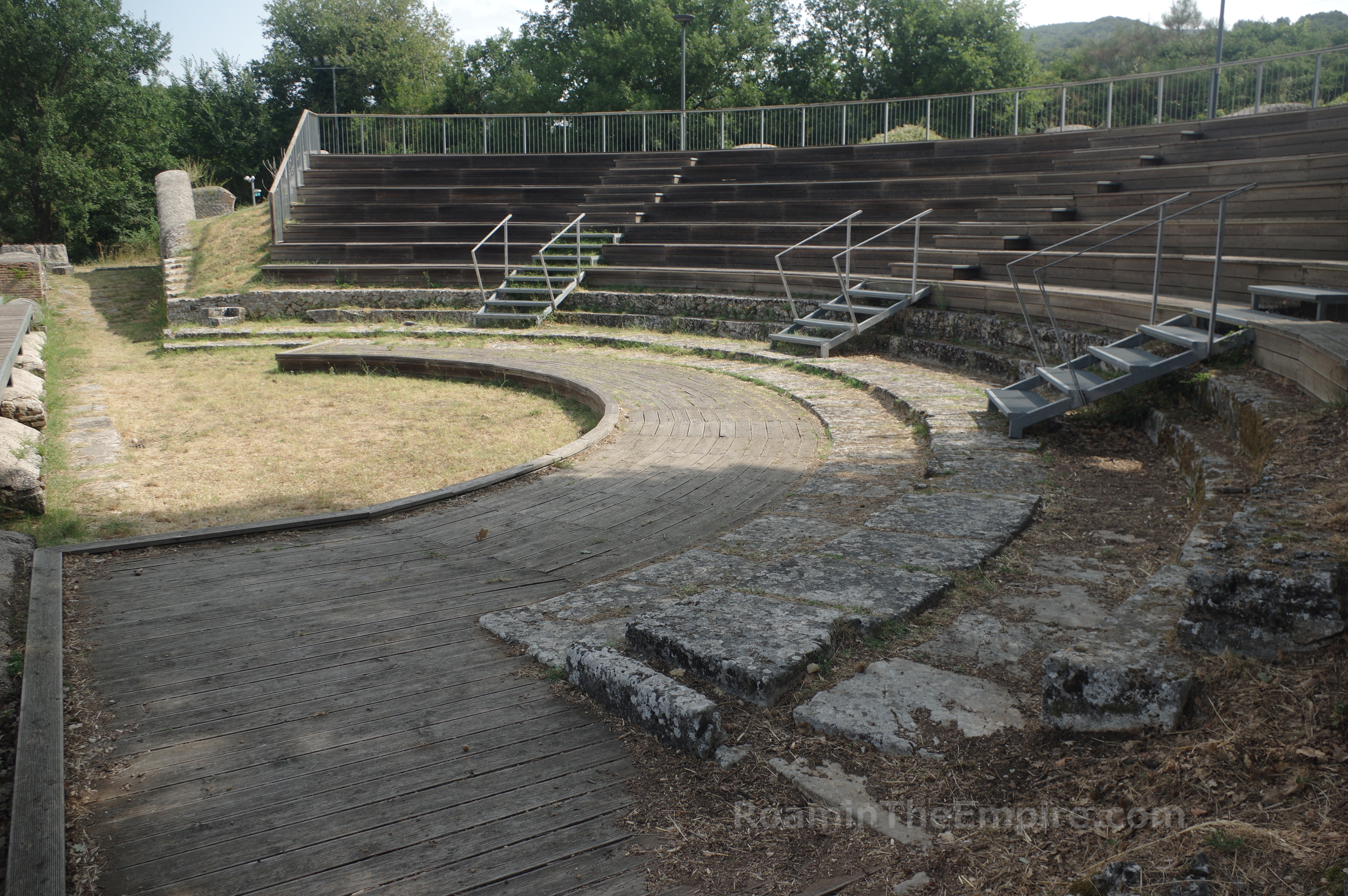
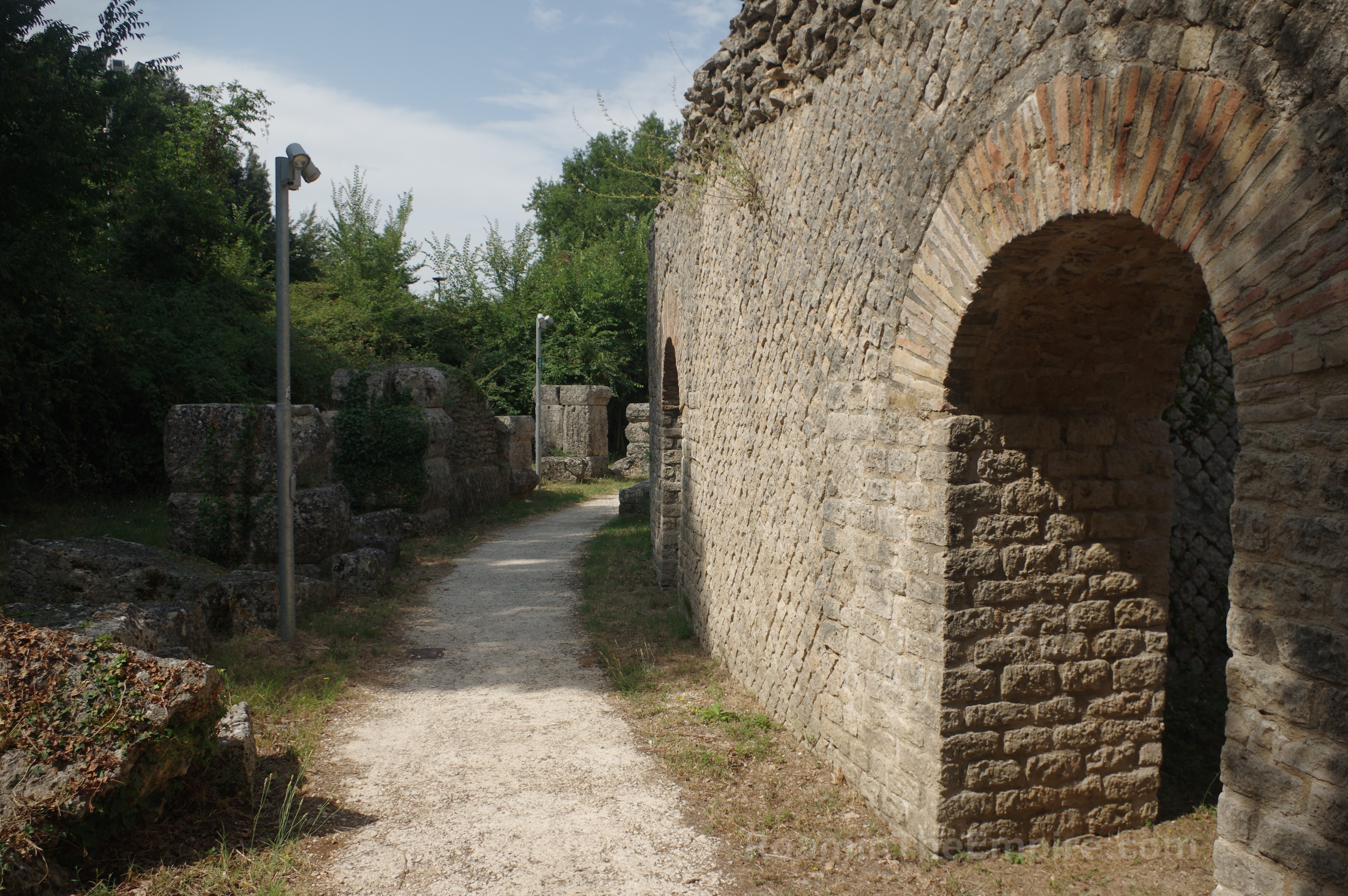
The terrace on which the theater itself is built is accessed from the north side of the space between the monuments. The theater was constructed sometime in the 1st half of the 1st century CE. Some elements of the foundations of the buildings of the scenae remain, though they are mostly overlaid by a modern wooden stage. In the same way, the seating is completely reconstructed and overlaid by modern seating for contemporary performances. Architectural elements from the scenae are displayed along the western side of the terrace. Along the rear of the theater, the bases for the arched portals that lined the exterior can be seen running parallel to the intact interior support walls upon which the seating was constructed. Staircases lead to a platform overlooking the theater (which would have been built to a higher level than it is now in antiquity). This platform existed in antiquity and was perhaps an ingress to the theater area from another, elevated terrace.
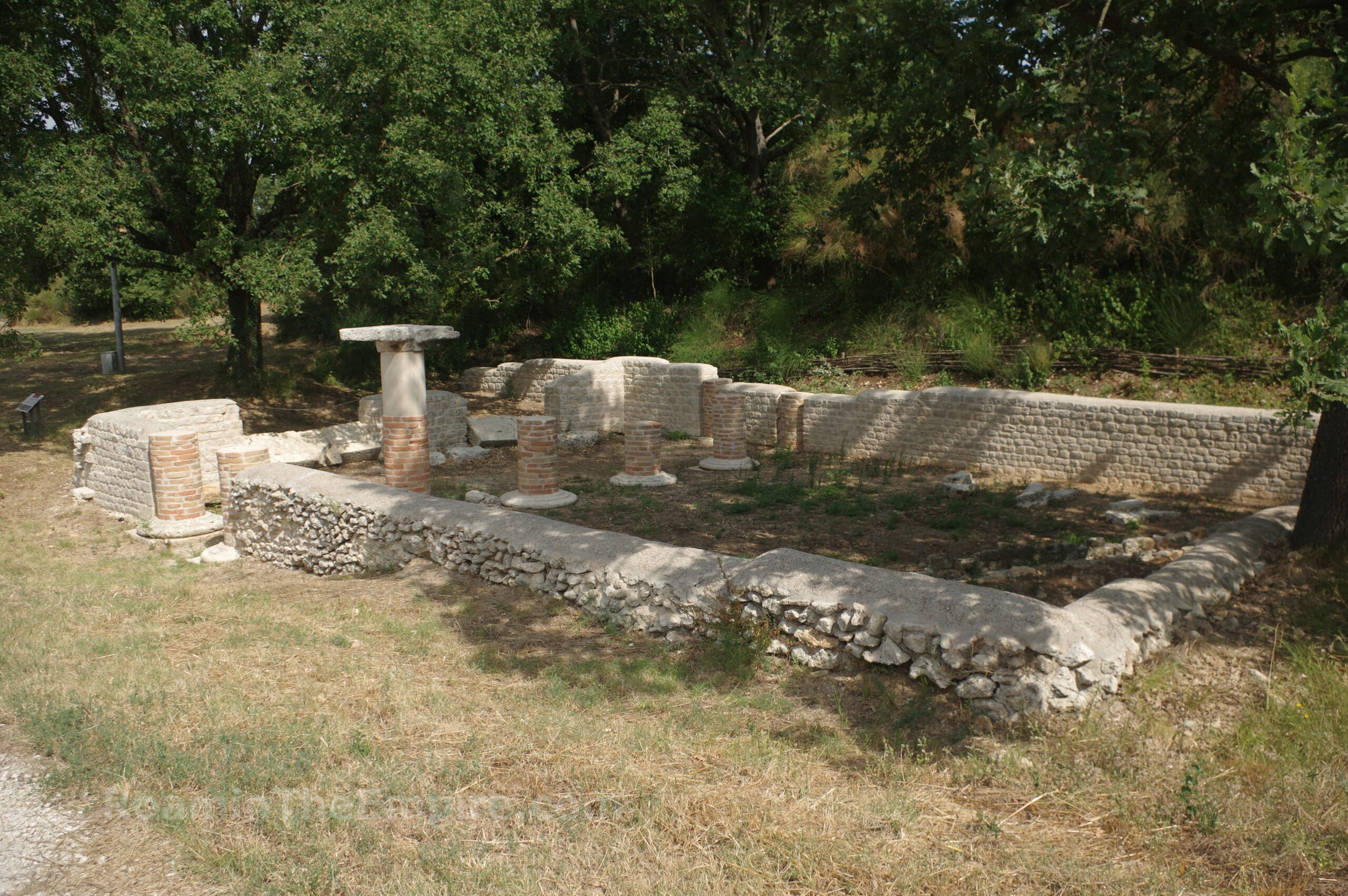
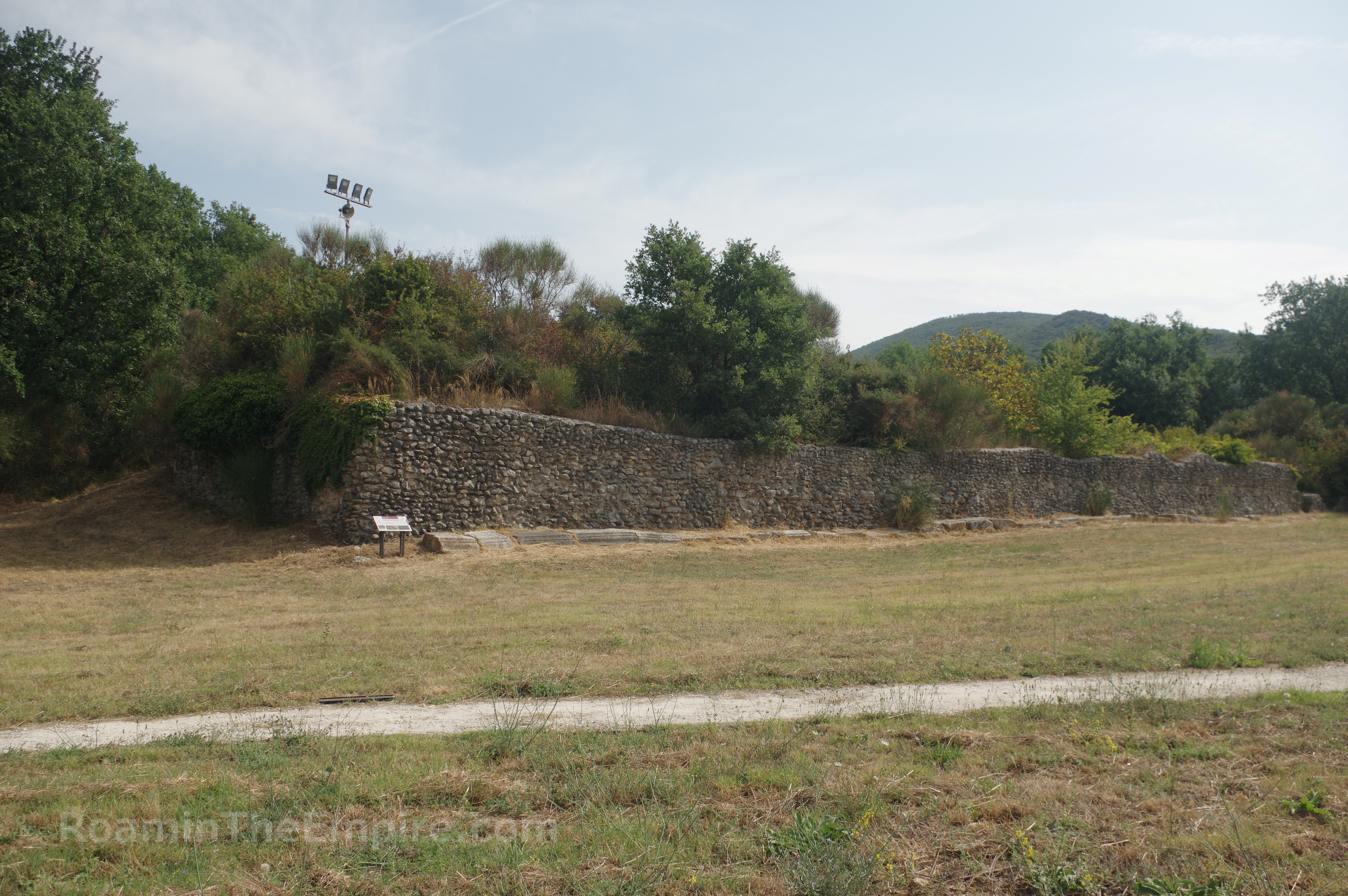
Just to the north of the scenae of the theater is a rectangular building with an internal colonnade of (reconstructed) brick columns at the entrance; the so-called Colonnaded Building. The construction style is similar to that of the amphitheater, so it has been assigned a construction date contemporaneous with the amphitheater; about the middle of the 1st century CE. Though the nature of the building has not been conclusively identified, it is traditionally identified as the headquarters of the collegium juvenum. The interior of the building is not accessible, but it is rather small and everything can be seen from outside. About 50 meters northwest of the Colonnaded Building is a large cistern of about 50 meters in length. It is built into a slope, so the top is accessible, but the interior is not excavated and is mostly overgrown. The south and west walls are visible from the exterior, though.
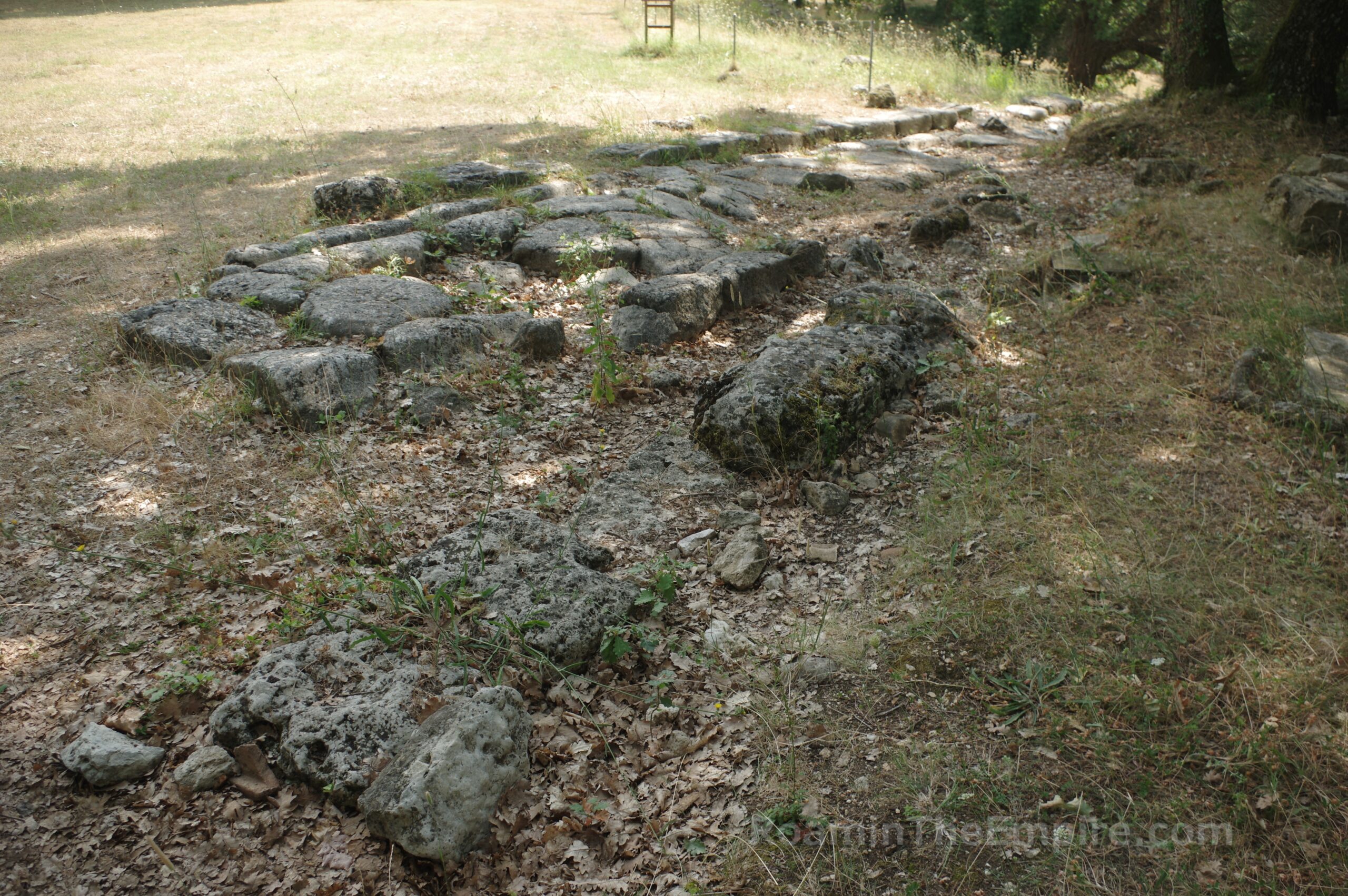
Back to the intersection of the decumanus maximus and Via Flaminia (cardo maximus) at the northeast corner of the forum of Carsulae, the Via Flaminia continues heading northward. About 80 meters north along the Via Flaminia, a path heads off toward the east. Here is an area referred to as Saggio D, a relatively recently excavated area. Though the intersection with the Via Flaminia is not preserved, a decumanus picks up a little bit to the east and leads to three excavated rooms of a domestic structure. This building and road were originally constructed in the 2nd century BCE and then underwent significant renovations in the Augustan period. By the 4th century CE, the structure had been abandoned.
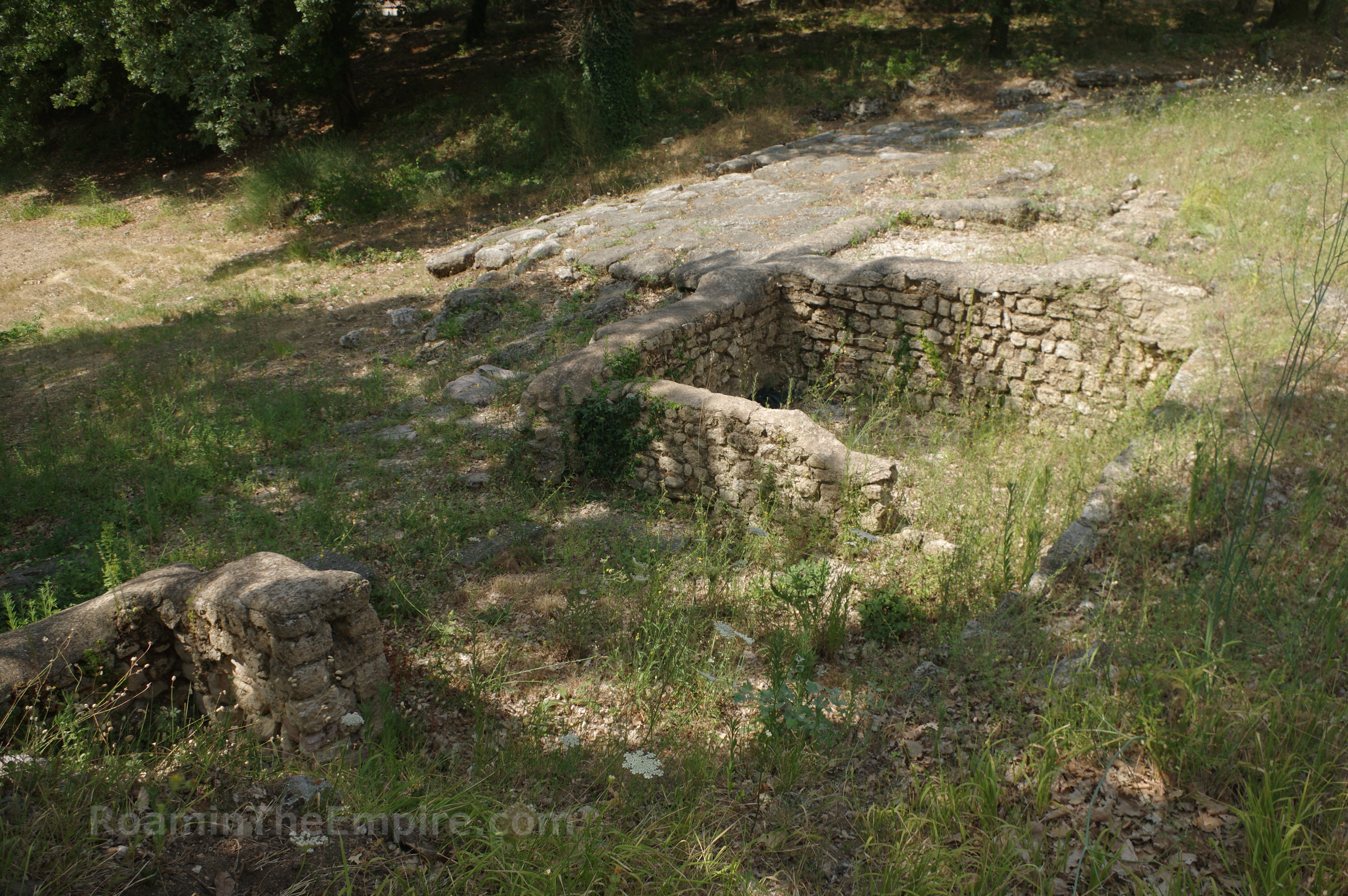
Another 60 meters north along the Via Flaminia, about 20 meters east of the road, is another recent excavation, Saggio C. This area isn’t as impressive as its counterpart to the south and seems to have been mostly left to the elements since the original excavation. A couple of walls with a slight angle in the center are visible. A few structures were found in this area, but the most prominent was a hypogeum cistern. No identification of the usage of the other structures is given.
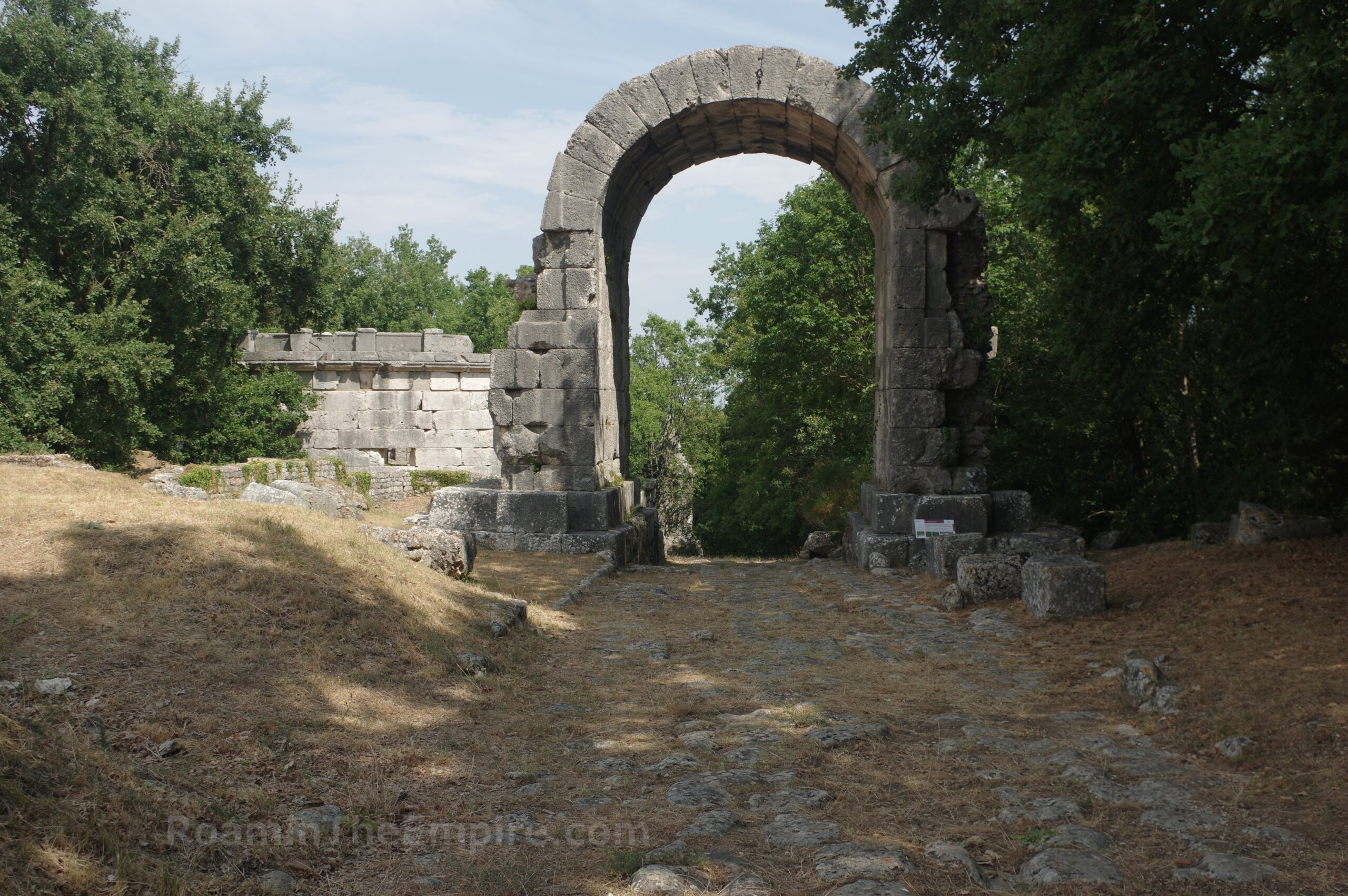
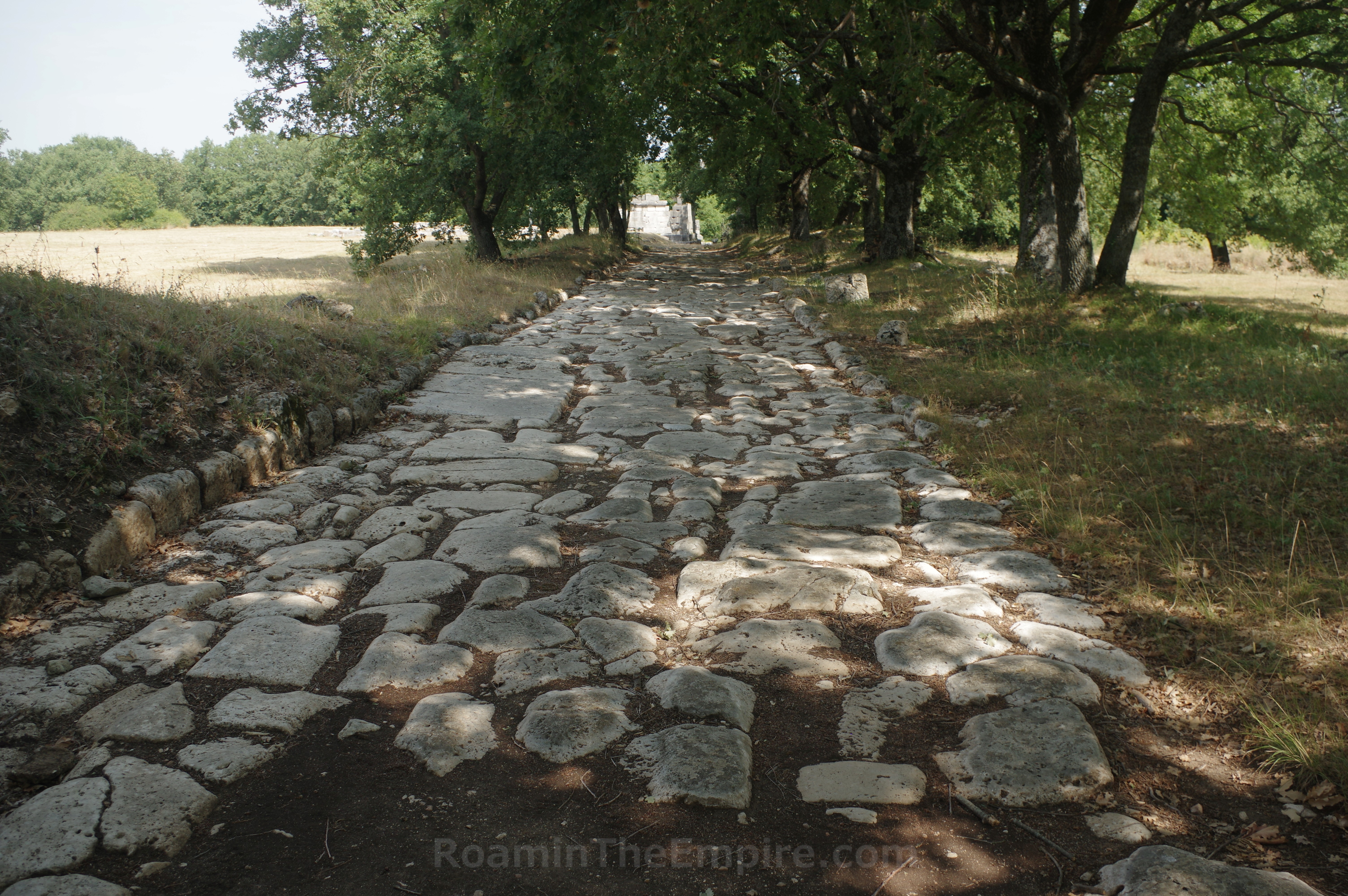
Returning again to the Via Flaminia, it’s another 75 meters north or so along some fairly well-preserved sections of road before arriving at the so-called Arco di San Damiano. It has also, in the past, been referred to as the Arco di Traiano. Though a single arch over the Via Flaminia is all that remains, it was originally a triple arched monument similar to a triumphal arch. Despite the previous attribution to Trajan, the arch was constructed during the reign of Augustus. Since Carsulae did not have any fortification walls, the arch marked the northern entrance into the city. The intact arch today stands at over 9 meters. As the limits of the urban area, beyond the arch to the north was a necropolis alongside the Via Flaminia as it led from Carsulae to Vicus ad Martis (modern Massa Martana).
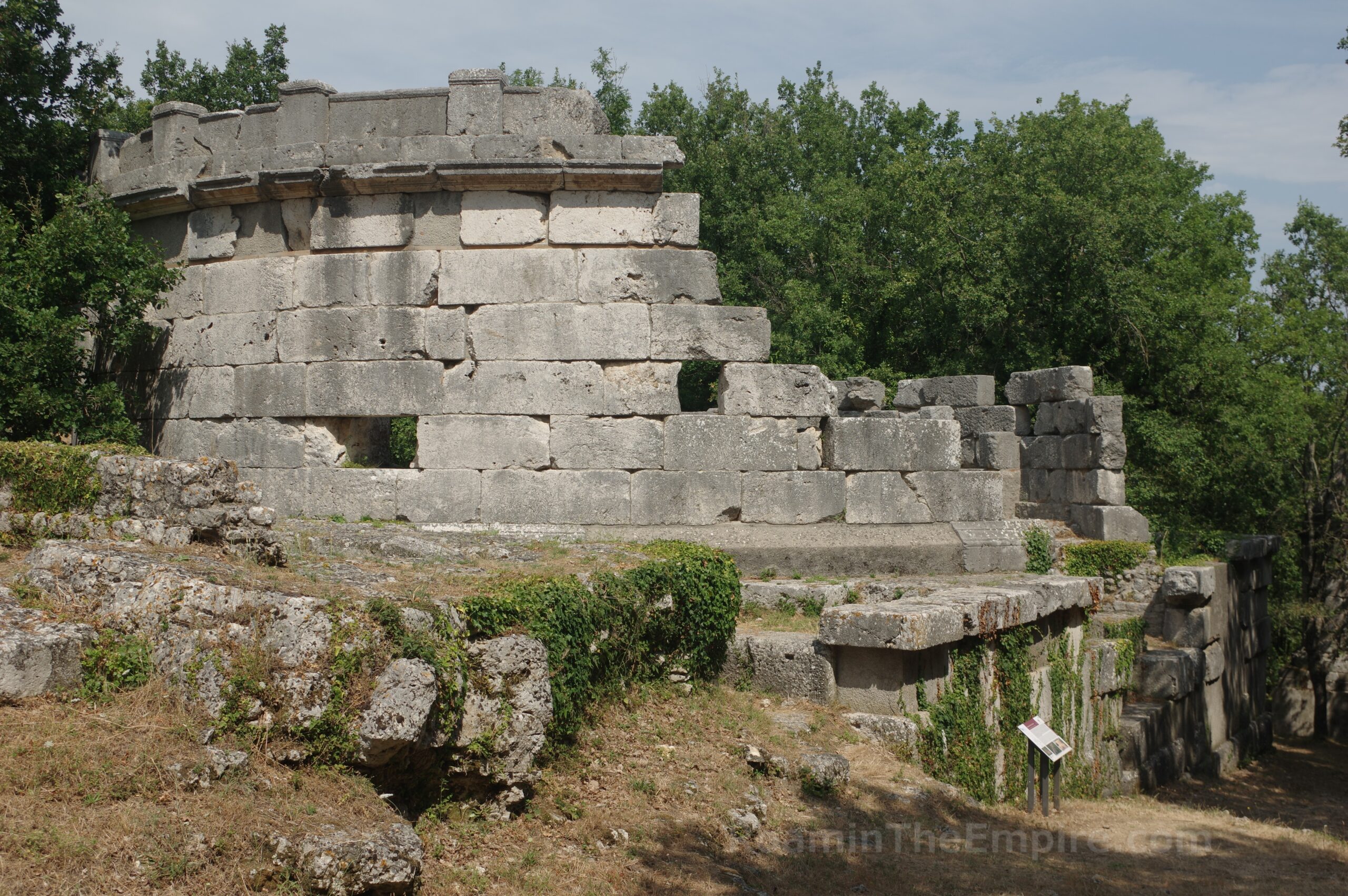
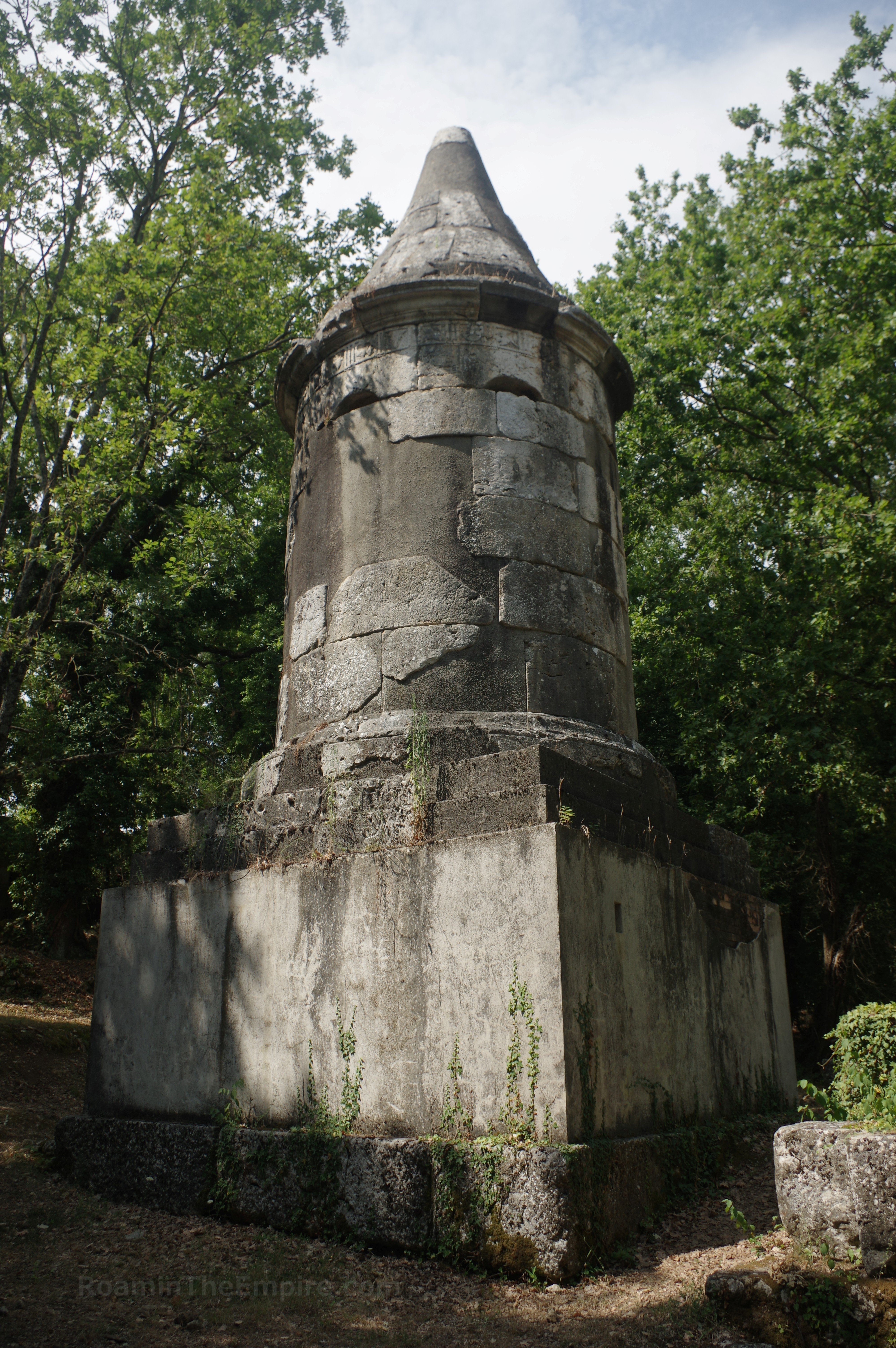
Just past the arch, off to the west side of the Via Flaminia that slopes downward as it continues north, is a large rotunda mausoleum set on a square base. The mausoleum looks to be reconstructed in places, but is generally well preserved. It originally towered over the Via Flaminia at a height of about 11 meters. The base is partially constructed into the slope of the landscape, so while the front of the base of mausoleum (east side) is mostly freestanding, the rear of the base is almost completely built into the hill. The rotunda part is above ground level at the rear. An inscription found here indicates that members of the gens Furia were buried in the funerary monument. The mausoleum is freely accessible.
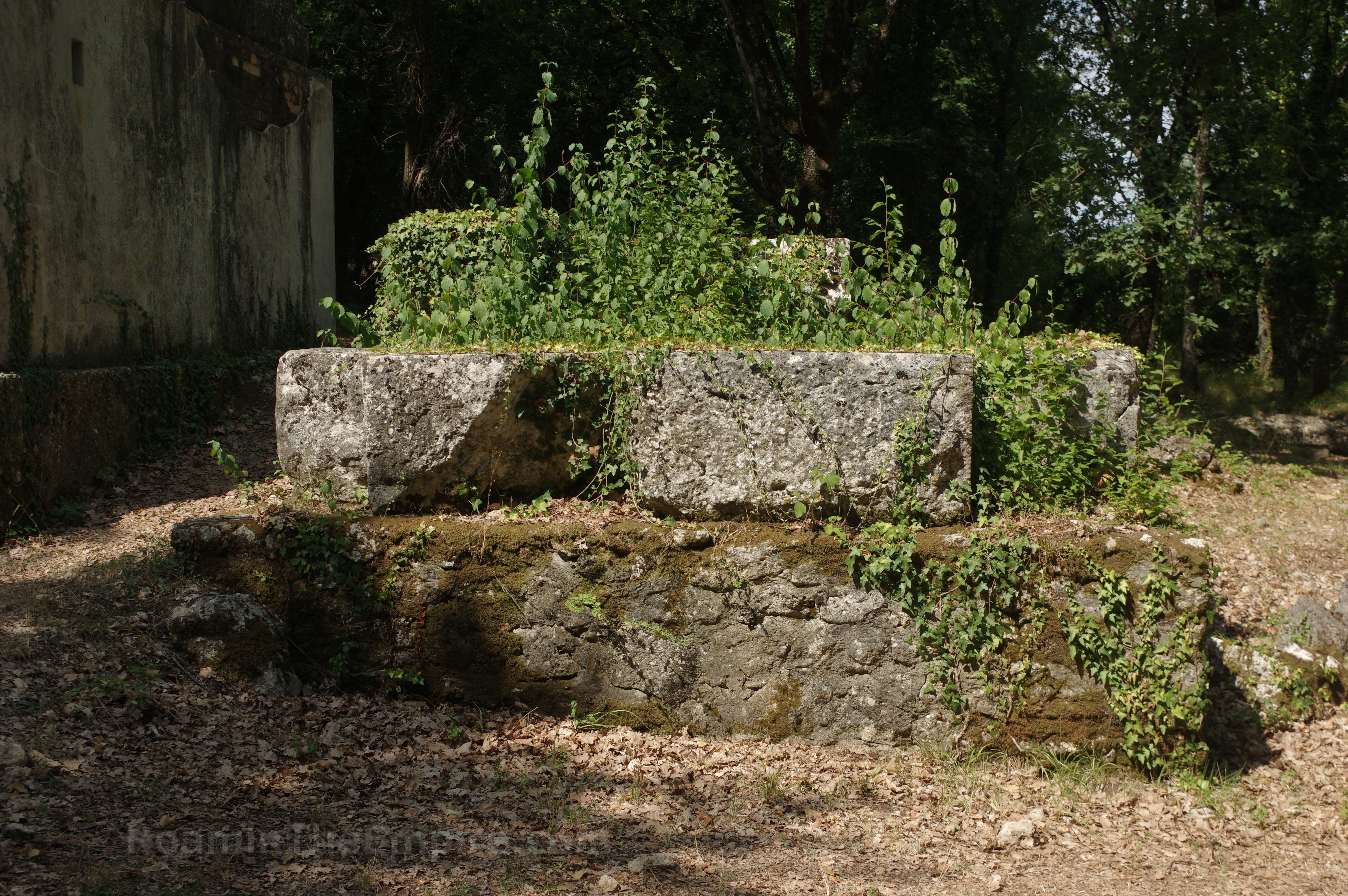
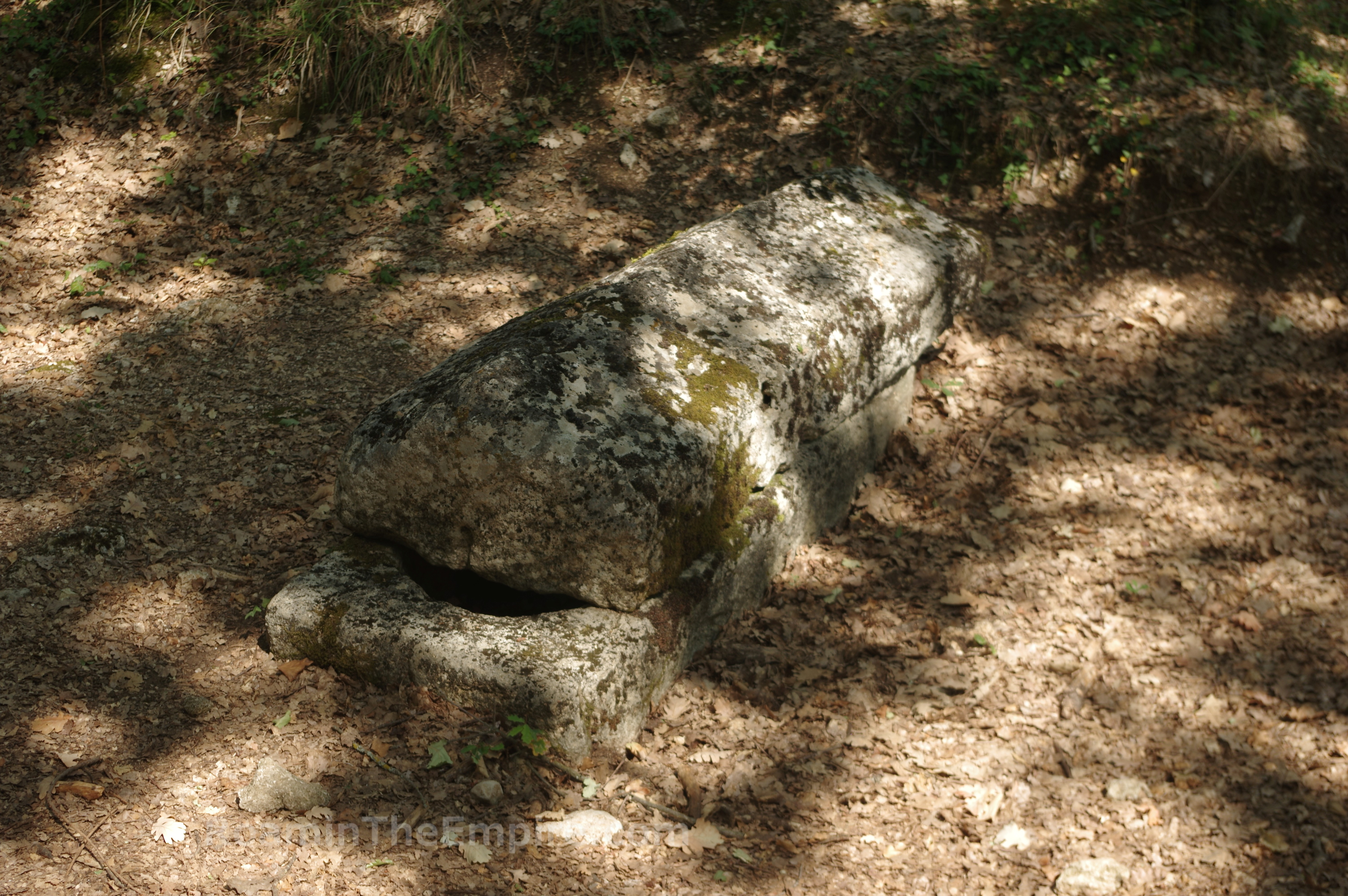
A few meters farther down the Via Flaminia are a few more tombs and monuments. Right next to the road were two large cylindrical monuments with square bases and conical finals. The southern of the two has been reconstructed to a height of nearly 11 meters. Only the stone base of the southern of these monuments remains, as there was not enough material found to reconstructed it like the other. Directly to the west of these two was another tomb, the Tomba della Fanciulla, which included the burial of a young girl. Most of what was found here is no longer visible except for a small stone sarcophagus. This sarcophagus contained a smaller lead sarcophagus (now in the site museum) in which the girl was buried.
Between the small museum and the archaeological area, I spent about 3 hours total at Carsulae. Even in early August, there weren’t many other visitors, and for some periods I had the whole place to myself. The site is managed well and most points of interest had informational signs in Italian and English with reconstructions and/or diagrams of the buildings.
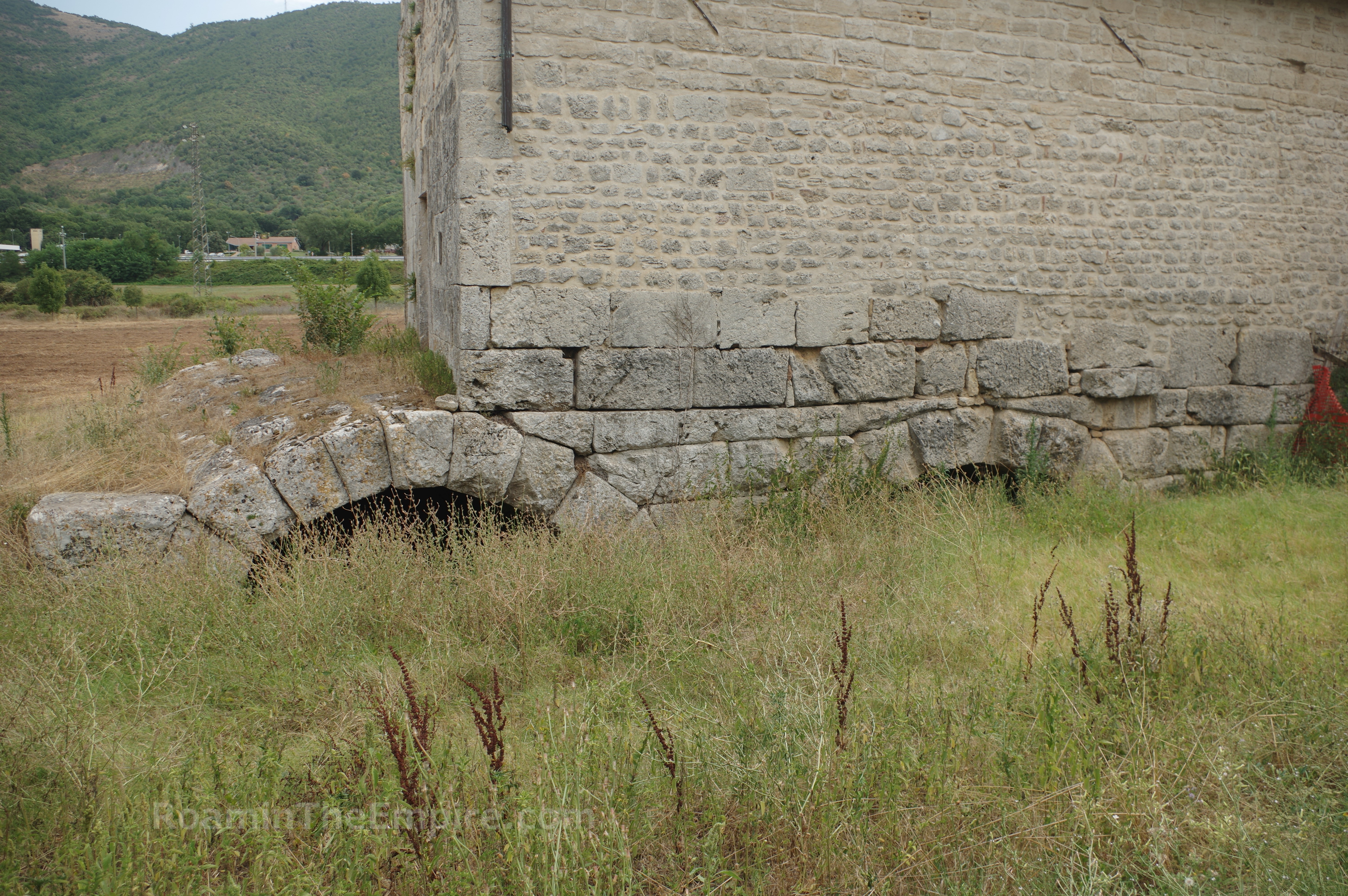
There are a couple of bridges along the Via Flaminia within a few minutes of Carsulae that are worth visiting. Both are to the north of the city. The first is just to the south of Acquasparta along the Strada Provinciale 113, about 5 kilometers driving from Carsulae. Just along the highway is the Chiesa di San Giovanni de Butris. A bridge was built here around 220 BCE to carry the Via Flaminia over a small stream, the Naia. In the post-antique period, the stream changed course and the bridge was no longer necessary and eventually fell out of use. In the 15th century CE, the church was constructed on top of the bridge, incorporating the bridge into the foundations of the building. Now, two arches from the bridge can be seen in the northern foundations of the church.
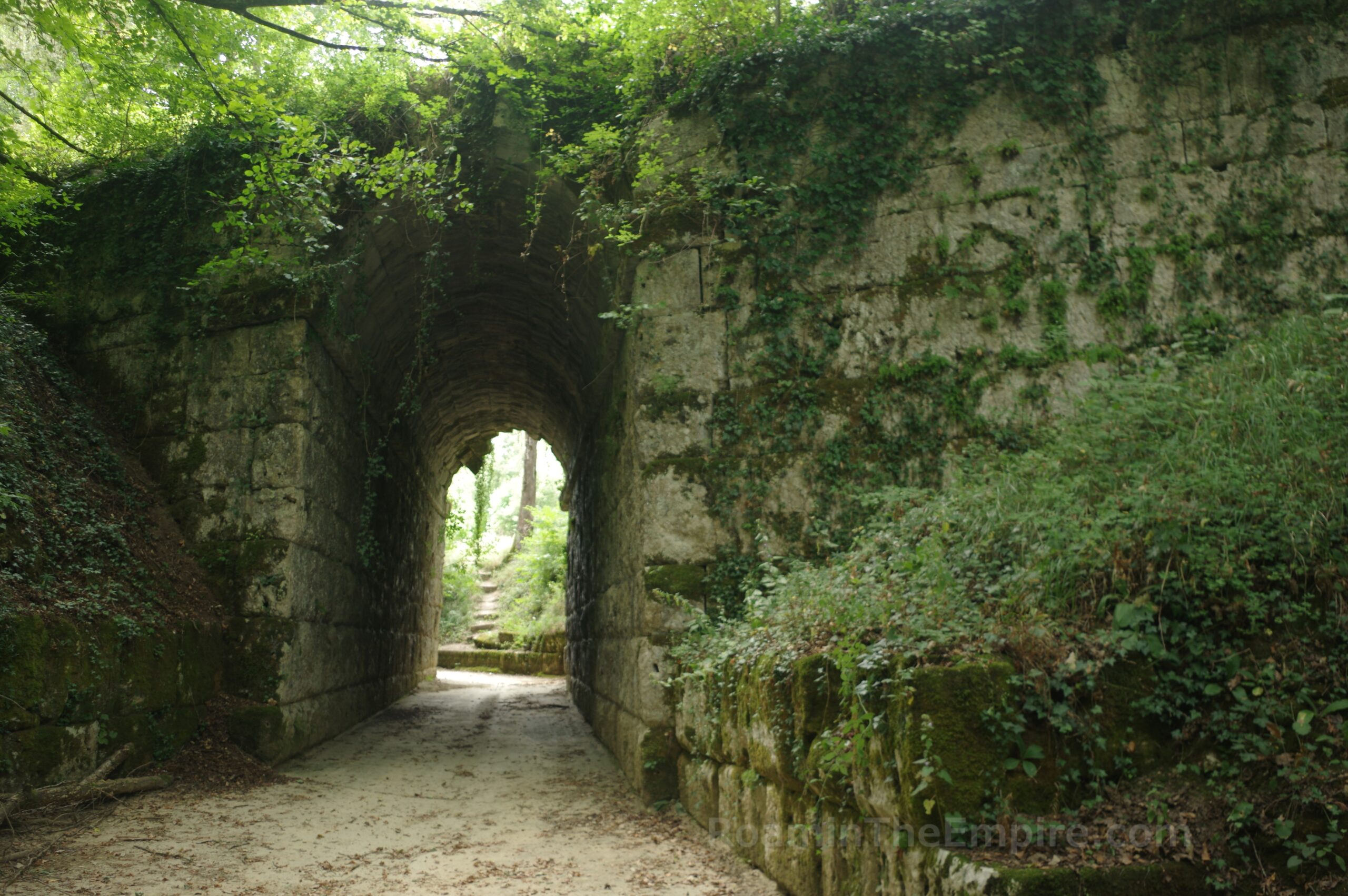
Six kilometers farther north, but in a slightly more remote location that requires a little bit of dirt road driving, is the Ponte Fonnaia. Originally constructed around 220 BCE, it was then restored during the reign of Augustus. An impressive amount of the single arched bridge built in large travertine blocks is still standing. The bridge can still be traversed, and there is a stairway leading down to the bottom and through the arch of the bridge. Worth noting is that back near the intersection leading to the bridge are the Catacombs of San Faustino. Burials here date to the 4th and 5th centuries CE. Unfortunately, these can only be visited by appointment, and I received no response when I emailed about visiting. The two bridges add on another 30-45 minutes onto a visit to Carsulae.
Sources:
Smith, William. Dictionary of Greek and Roman Geography. Walton & Murray, 1870.
Stillwell, Richard, William L. MacDonald, and Marian Holland. McAllister. The Princeton Encyclopedia of Classical Sites. Princeton, NJ: Princeton U Press, 1976.
Tacitus. Historiae, 3.60.