


Continued From Salona, Dalmatia – Part II.
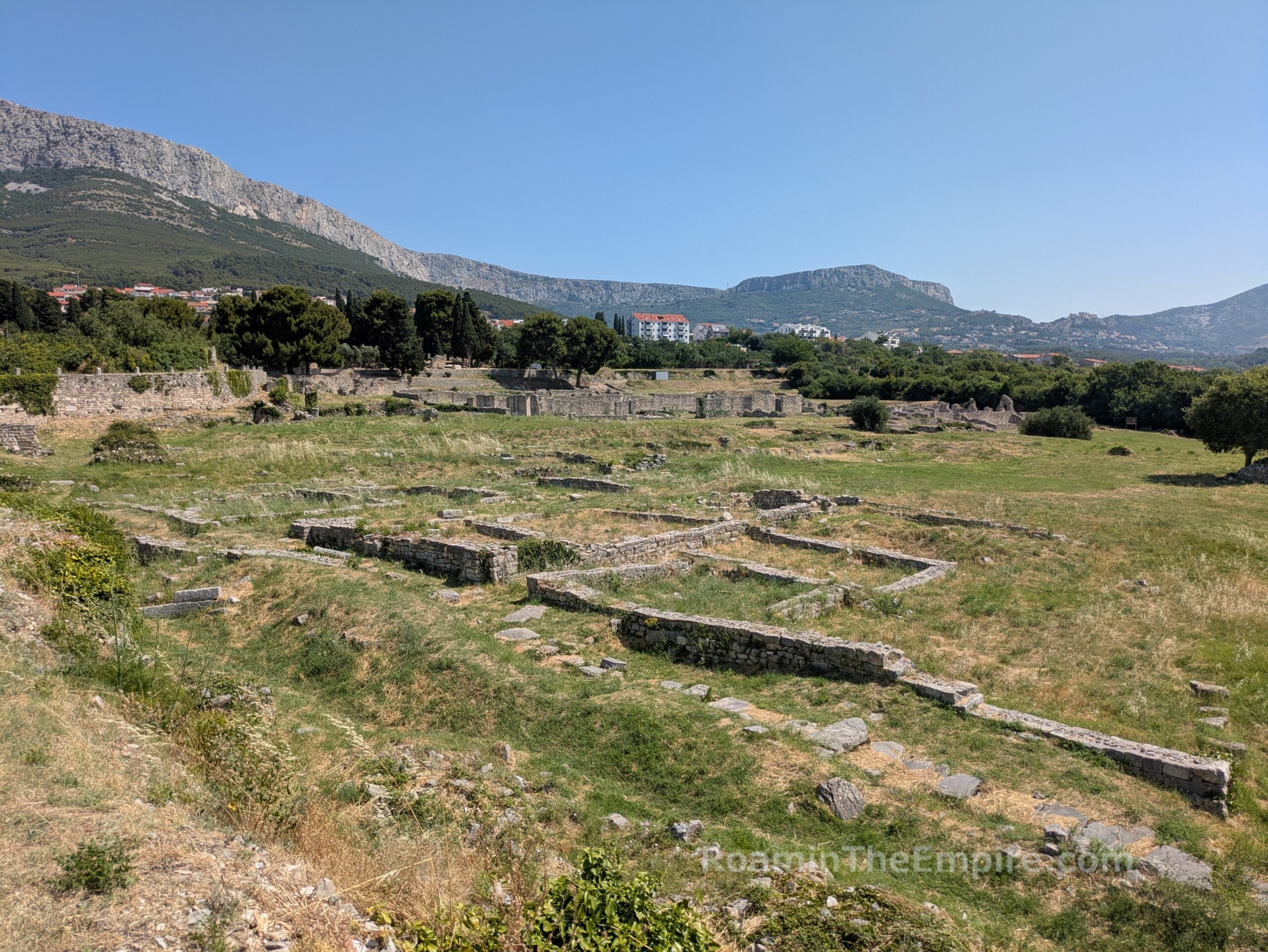
Along the exterior (east side) of the wall from the Porta Caesarea for about 70 meters north are the remains of portions of some residential insulae dating to the 3rd century CE. The pavement of a cardo running relatively parallel to the walls can be seen and the sewer line has been exposed in some spots. Overall the area was fairly overgrown on my most recent visit, less so during my first visit, which was a bit later in the summer. There isn’t much of note among the residential remains, but near the north side of the excavated area, adjacent to the remains of a tower, is a cut in the fortification walls, creating an underpass leading to the west side of the walls. In the cross section of the cut in the walls, the channel from the aqueduct that was incorporated into them.
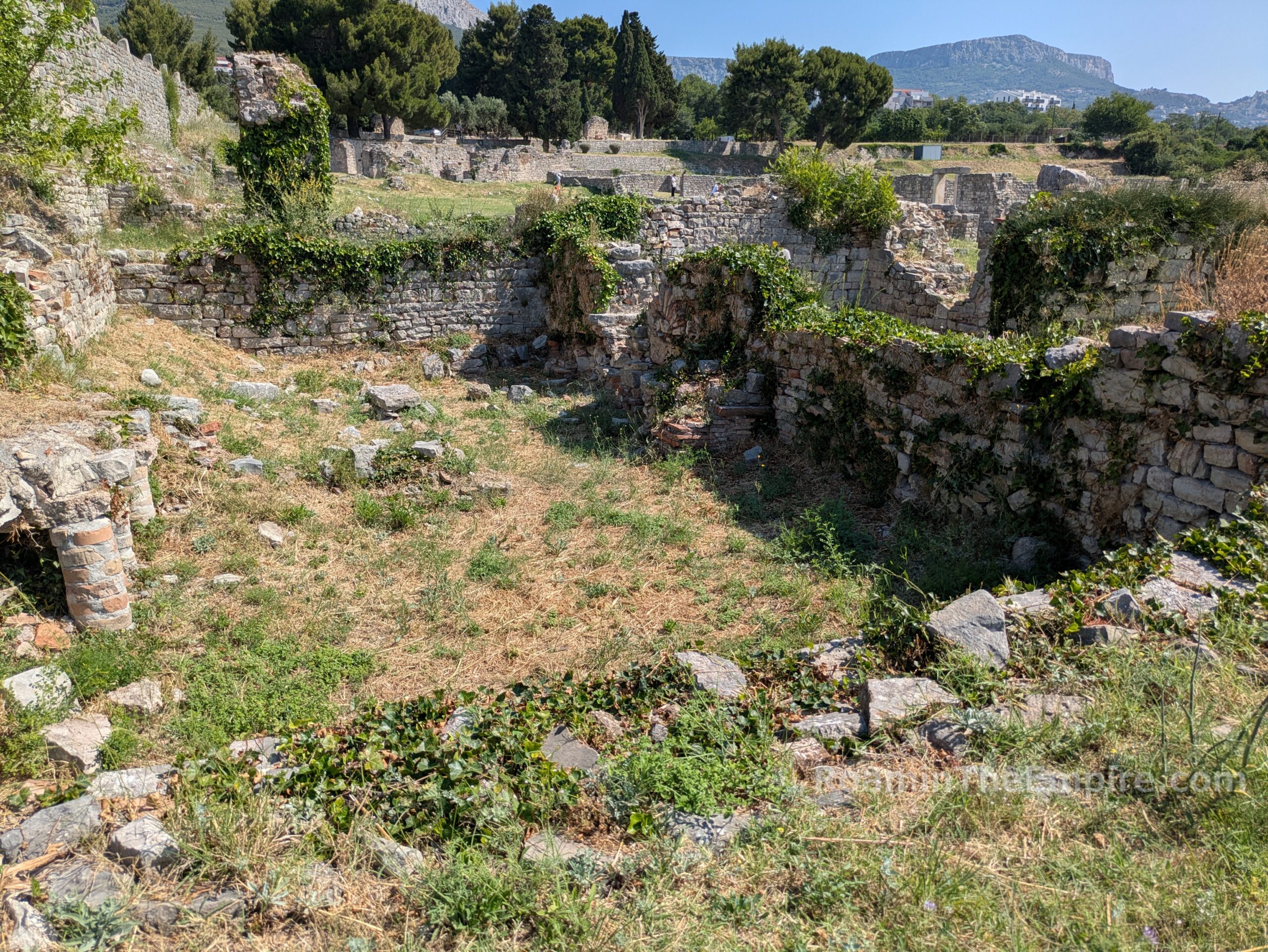
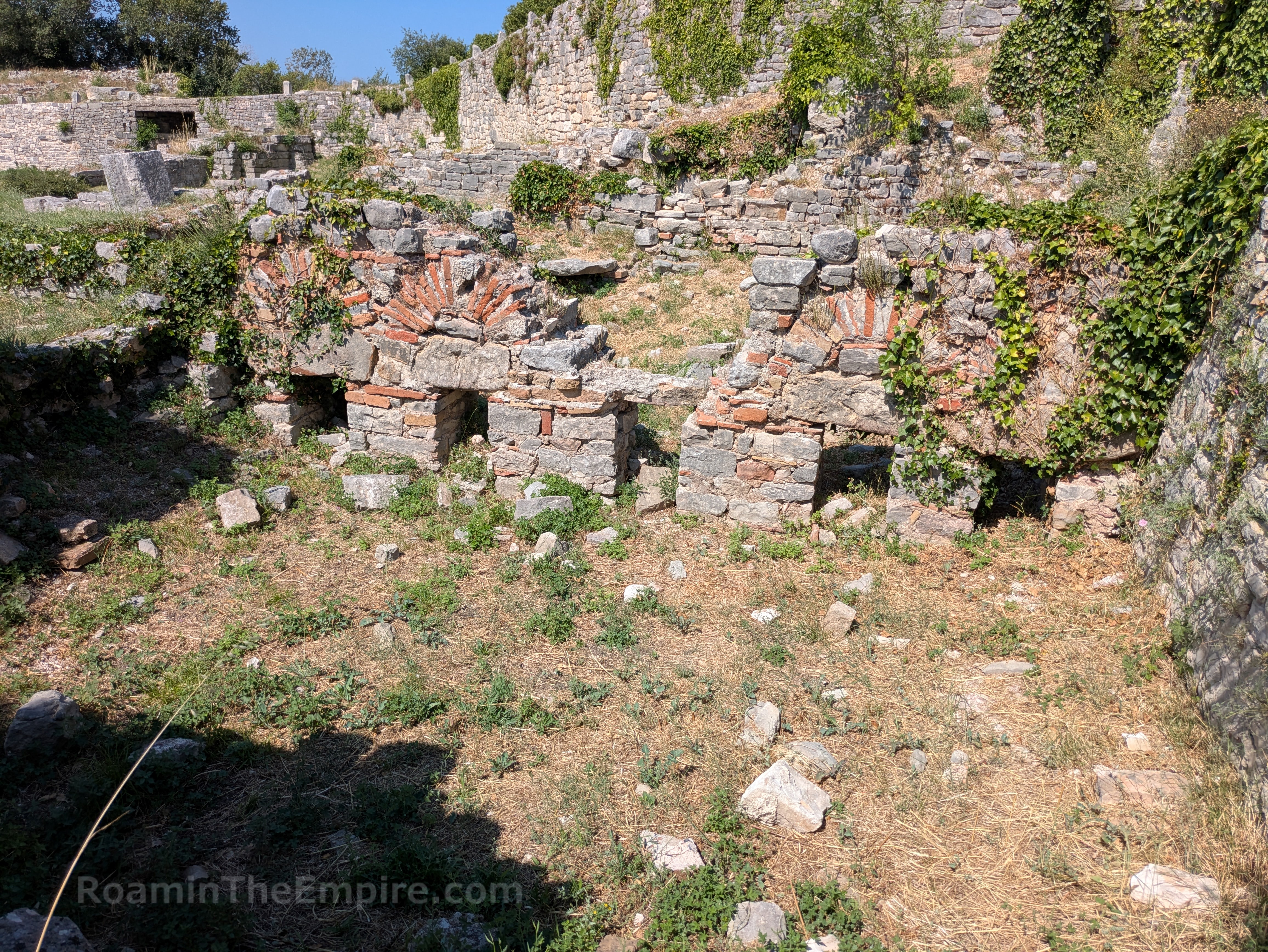
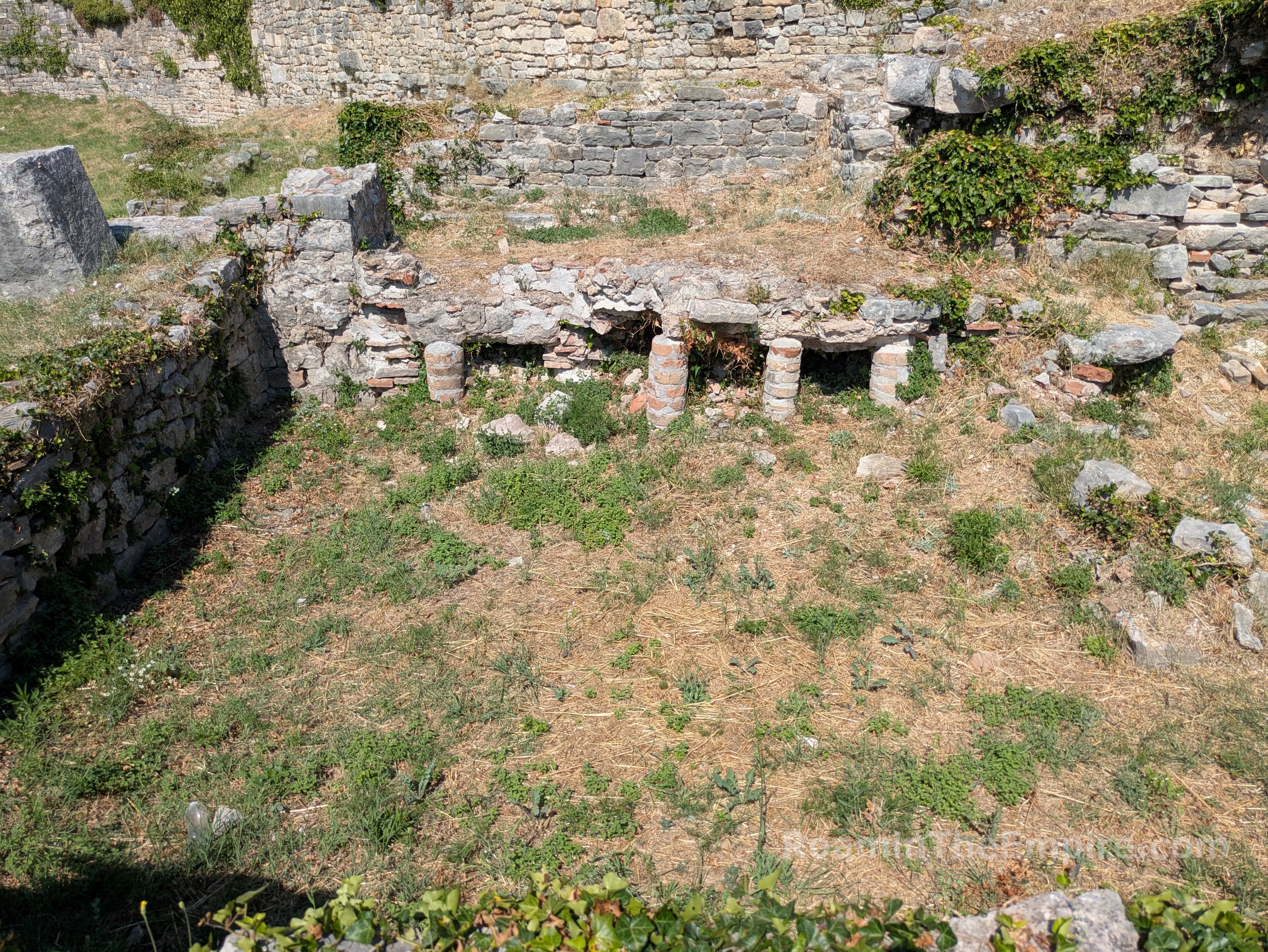
Continuing about 25 meters north along the walls is another excavated area, just south of the basilica that was constructed in the 6th century CE along the walls, adjacent to Oratorium B. Though there isn’t any on-site identification of what is here, these are very clearly the remains of a bathing complex, probably the so-called small baths. One of the heated rooms has intact/reconstructed pilae from the hypocaust system exposed while another room has the remnants of the vents in the walls connecting two of the heated rooms. Other than those features, there’s not much else of note with this building. Information is also sparse, but seems like it would probably be 2nd-3rd century CE. These baths may have also been part of a bathing complex within a private residence.
There are a few stairways and paths that lead up onto the walls, either north near Oratorium B or adjacent to the Porta Caesara. About 40 meters north of the Porta Caesarea the original eastern walls of Salona intersect with the later fortification additions that enclosed the eastern part of the city. At that point begins the original northern circuit of the walls which continue to the west. A path leads westward along the top of these walls. About 75 meters west of the intersection of the walls is a small path that leads to the south. Though there is no sign indicating it, the area of the forum and the theater of Salona are located about 200 meters south down this path.
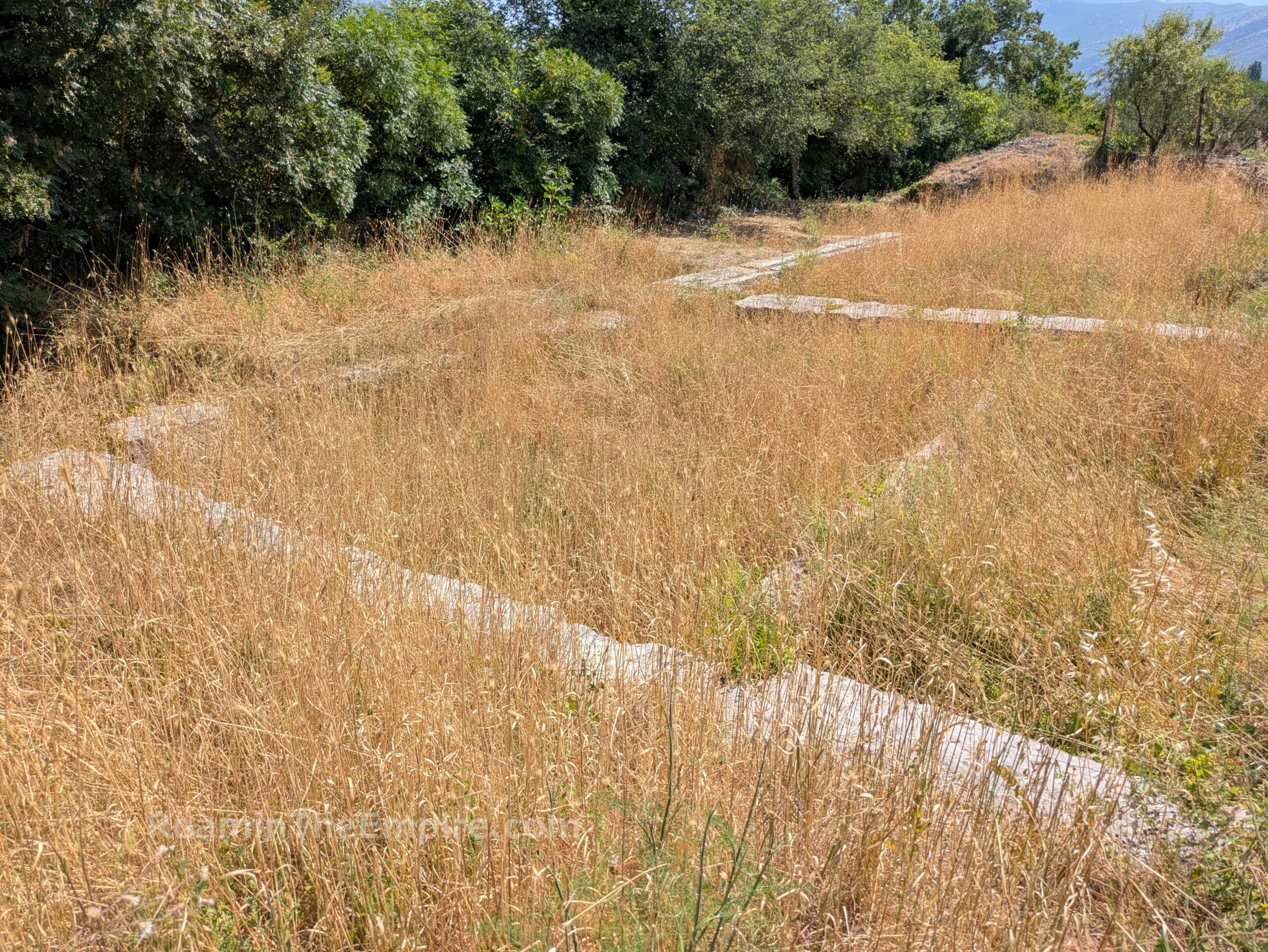
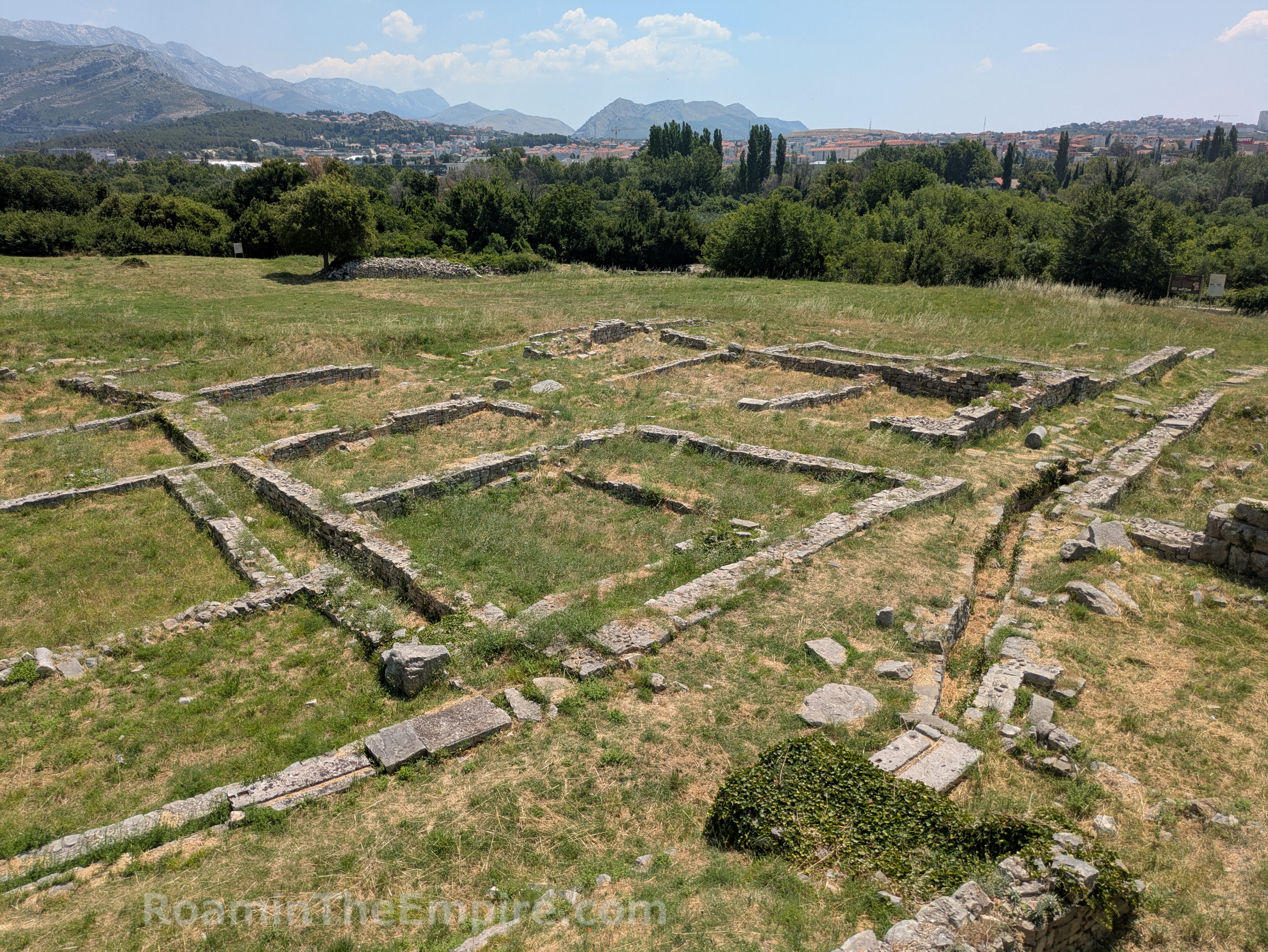
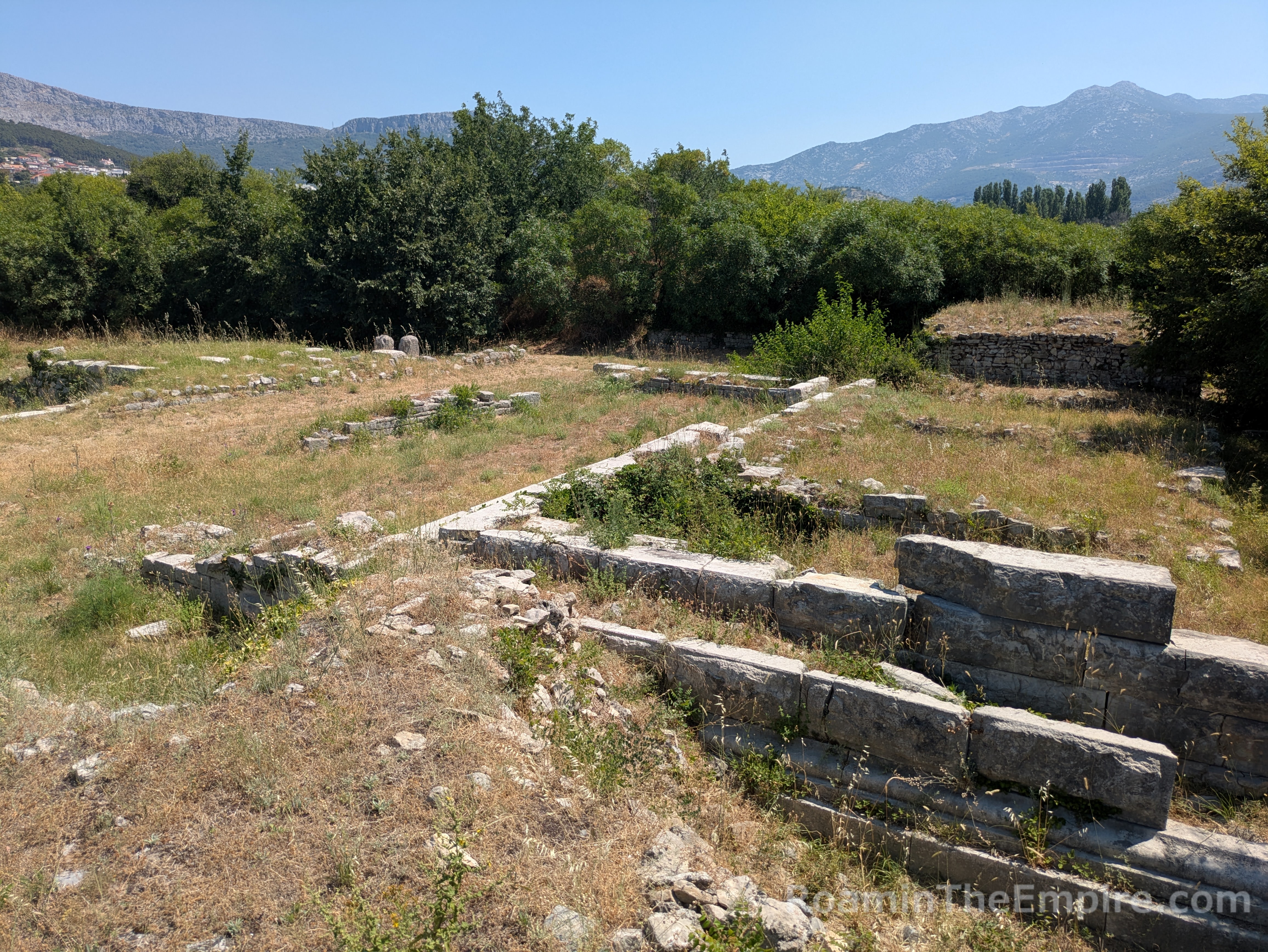
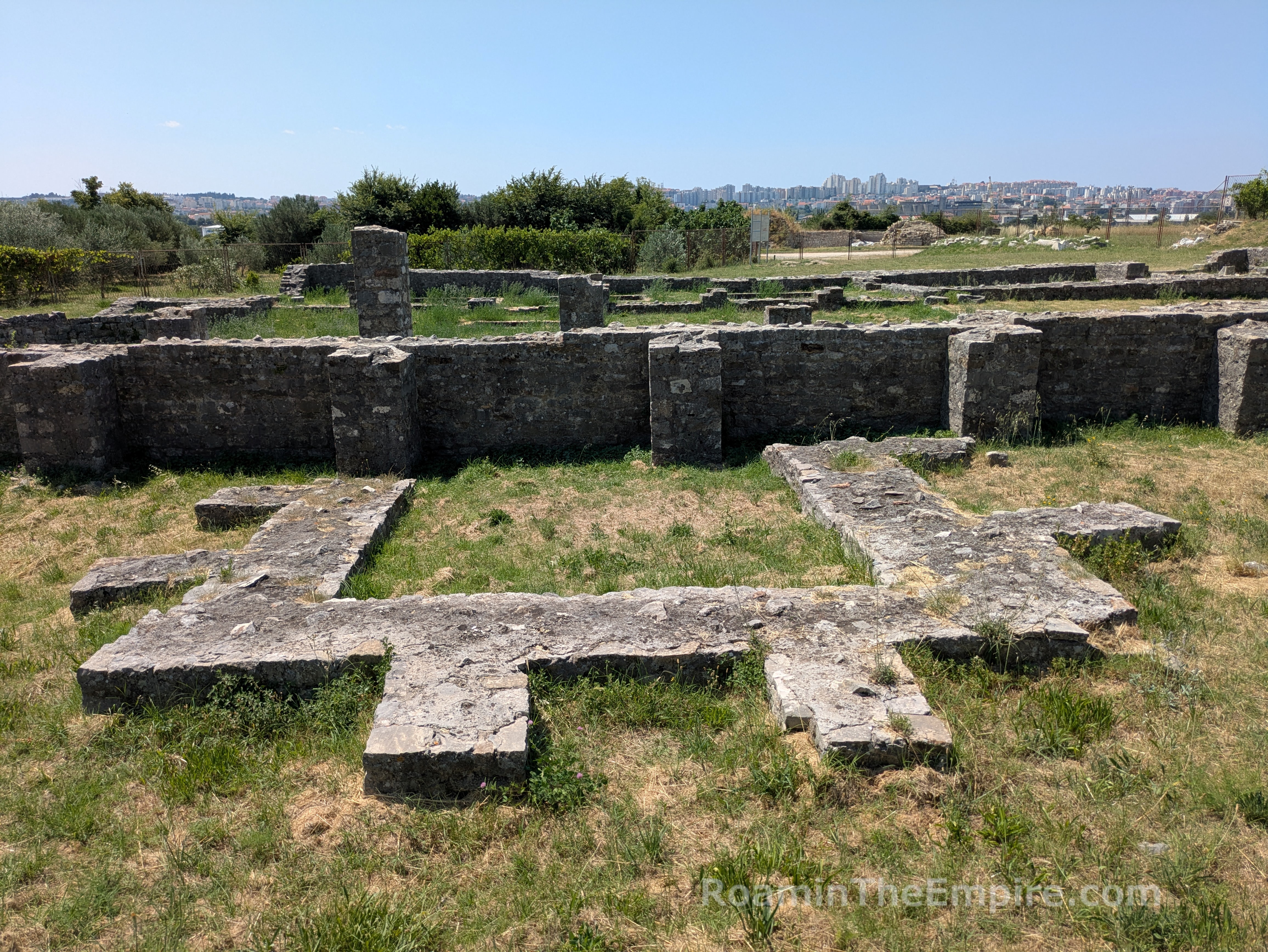
Trees, bushes, and walls line most of the path for about 200 meters before opening up on the eastern side of the path. Though mostly overgrown both times I visited, rectangular constructions were still visible among the long grass. These are the remains of a portico that ran along the north side of the forum, constructed in the 2nd or 3rd century CE. The visitor path continues more or less along the route of the cardo maximus, of which some elements appear to the west of the path about 25 meters south of the portico.
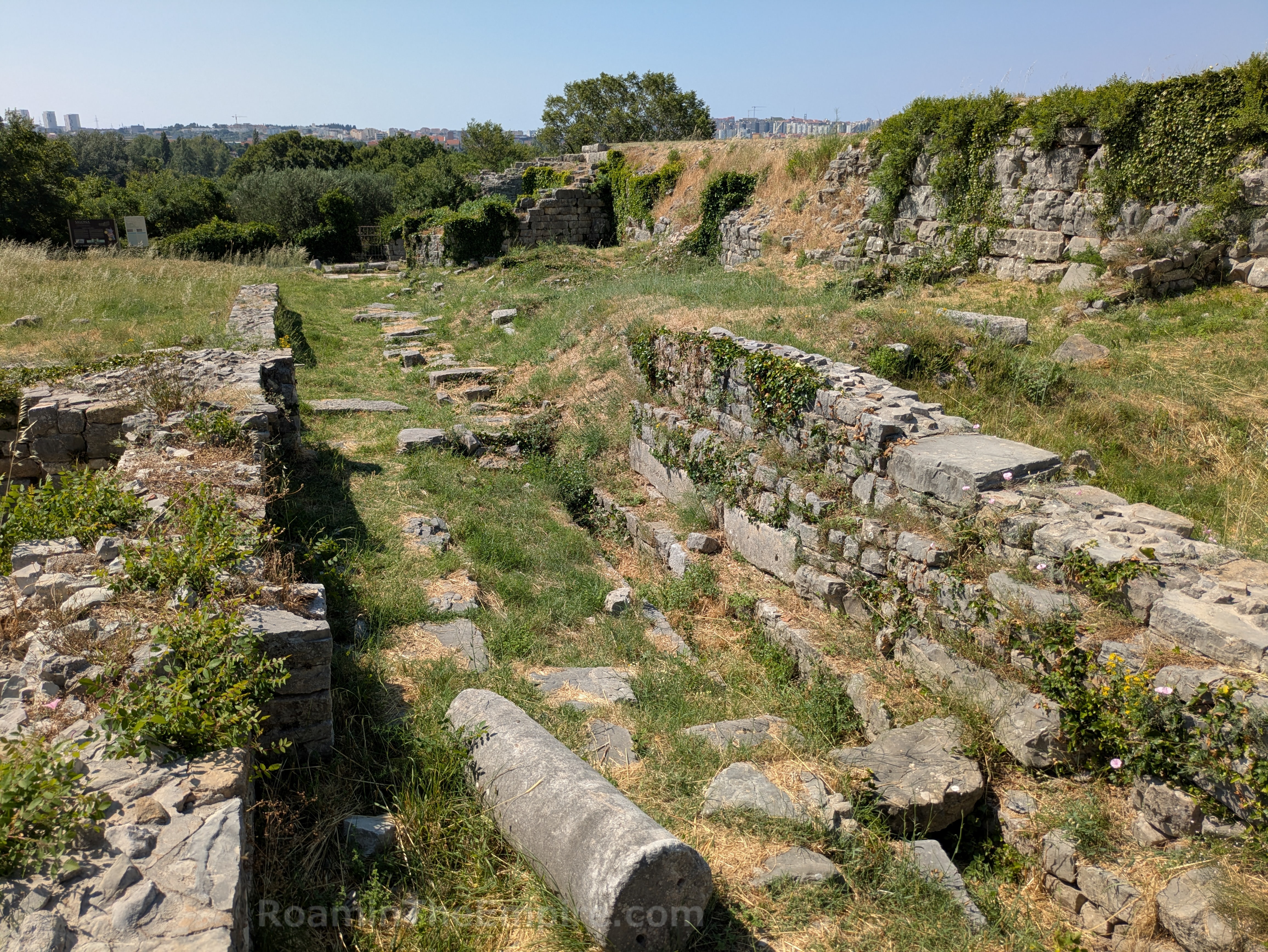
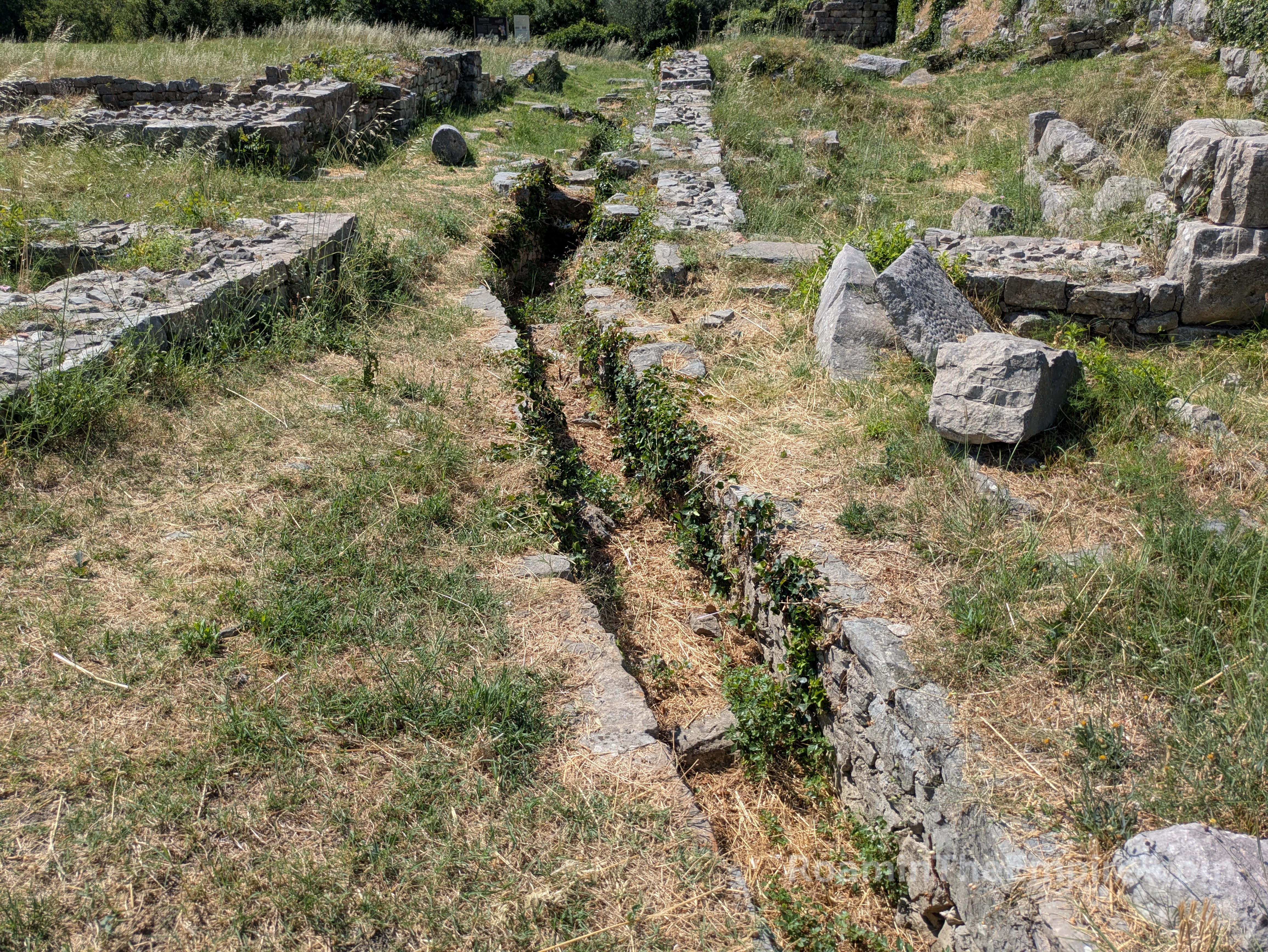
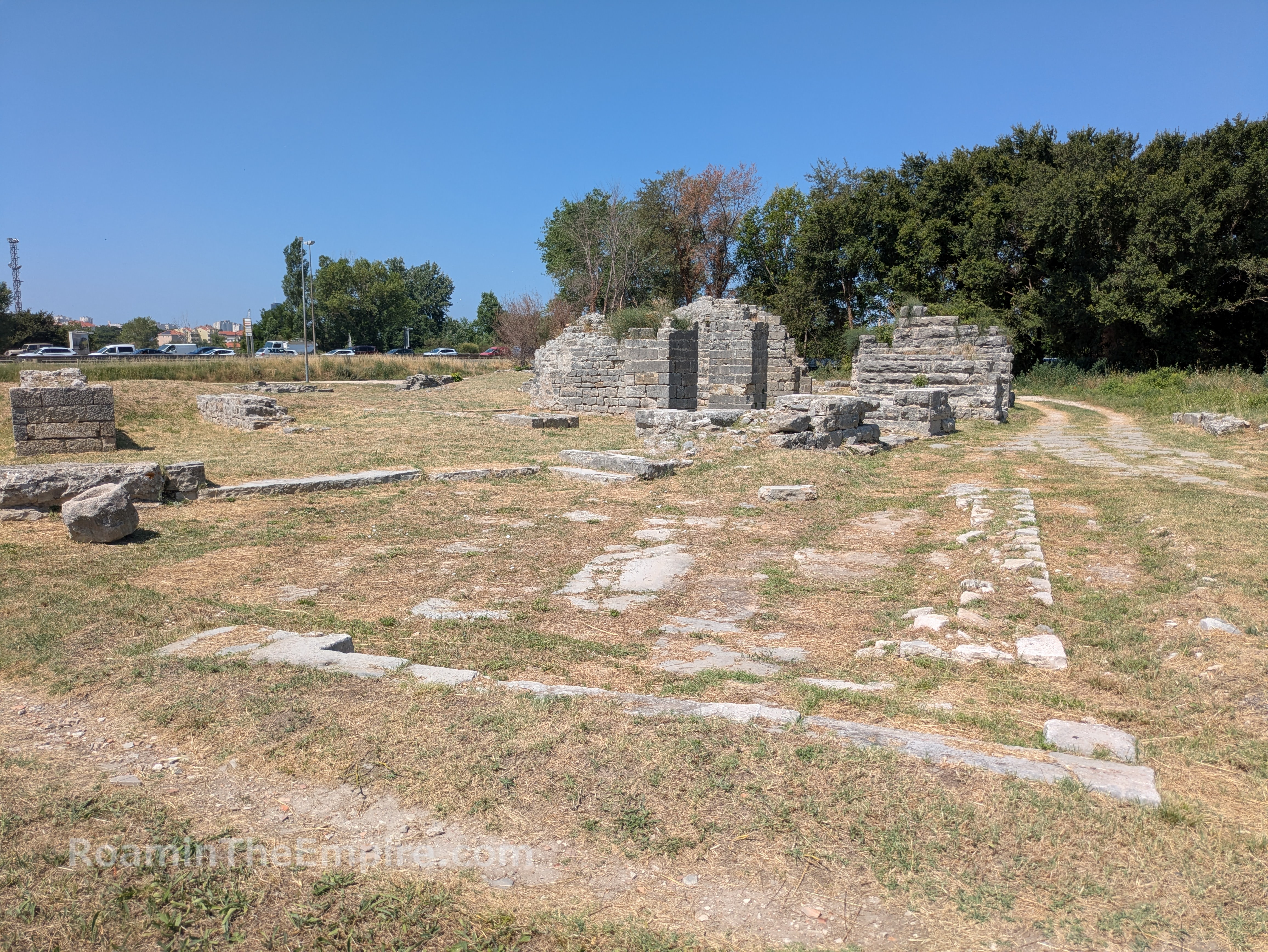
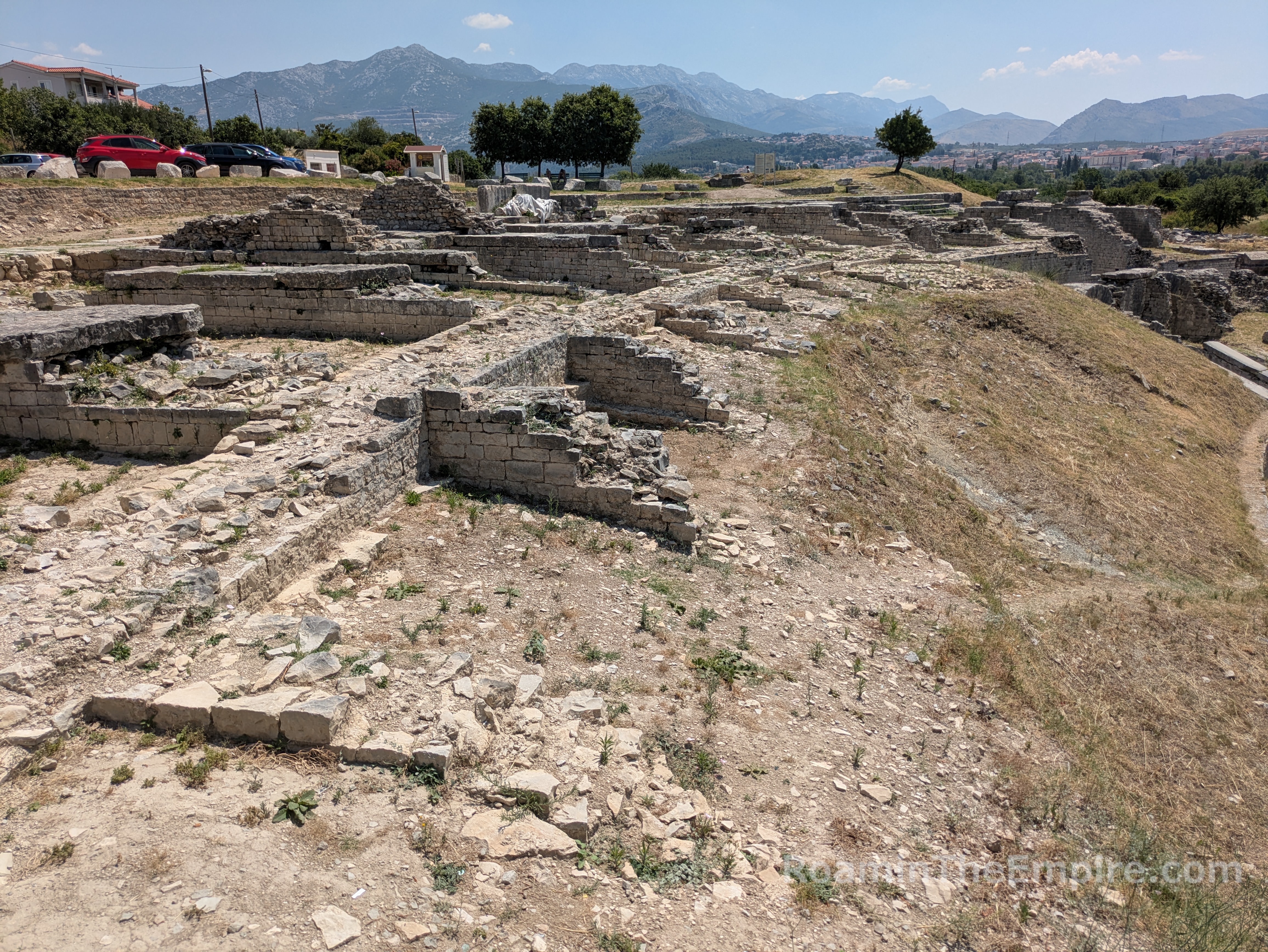
Another 30 meters beyond where the cardo maximus begins to appear, a fairly robustly preserved section of the cardo maximus is revealed on the west side of the path. A stretch of about 50 contiguous meters of the road has been excavated here with paving stones and elements of the crepido and umbones visible. It’s overgrown in some places, but more or less visible for the whole length. The cardo maximus ran along the west side of the forum, and this particular section runs from the north side of the forum south and to the area of the theater.
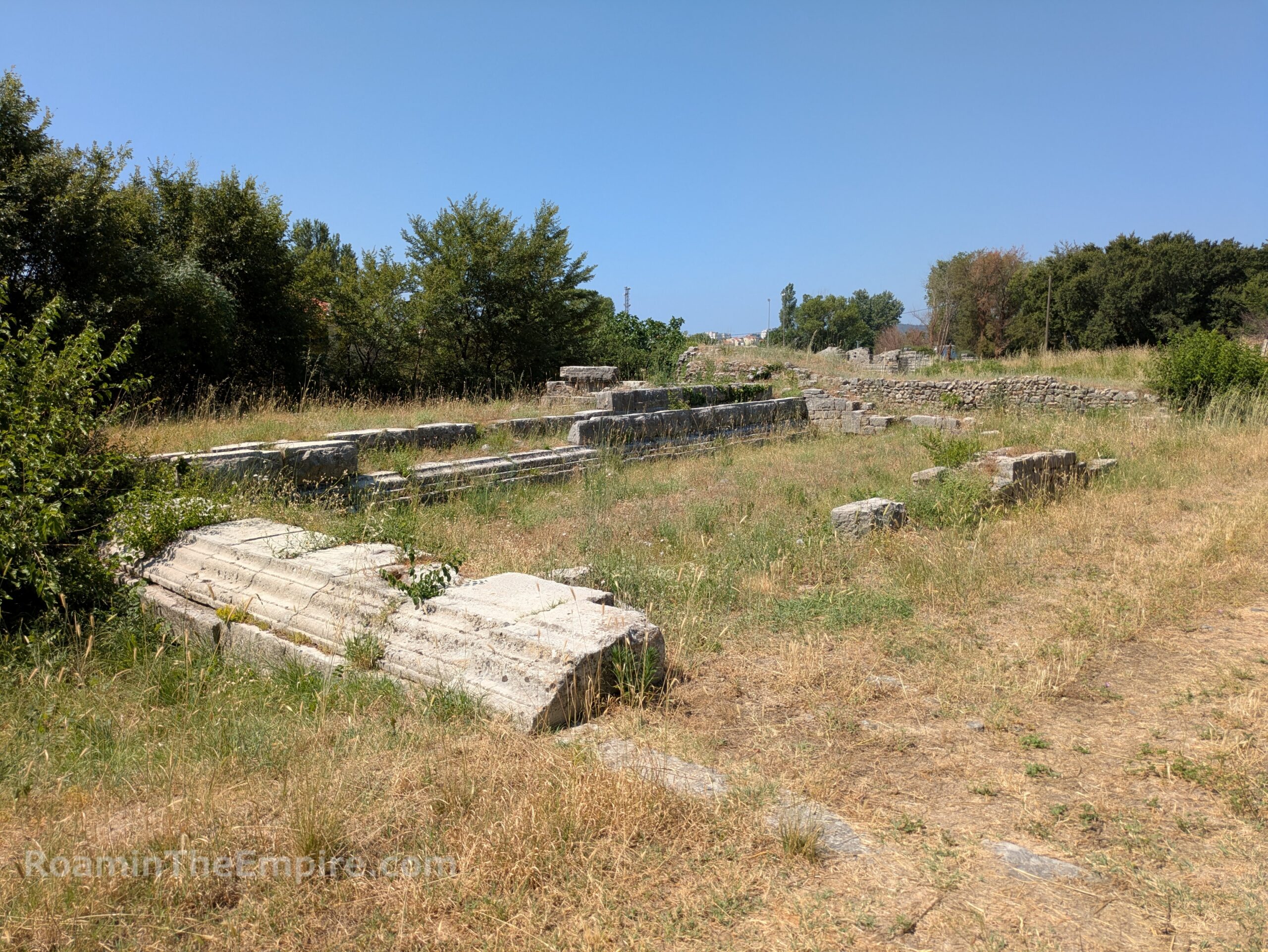
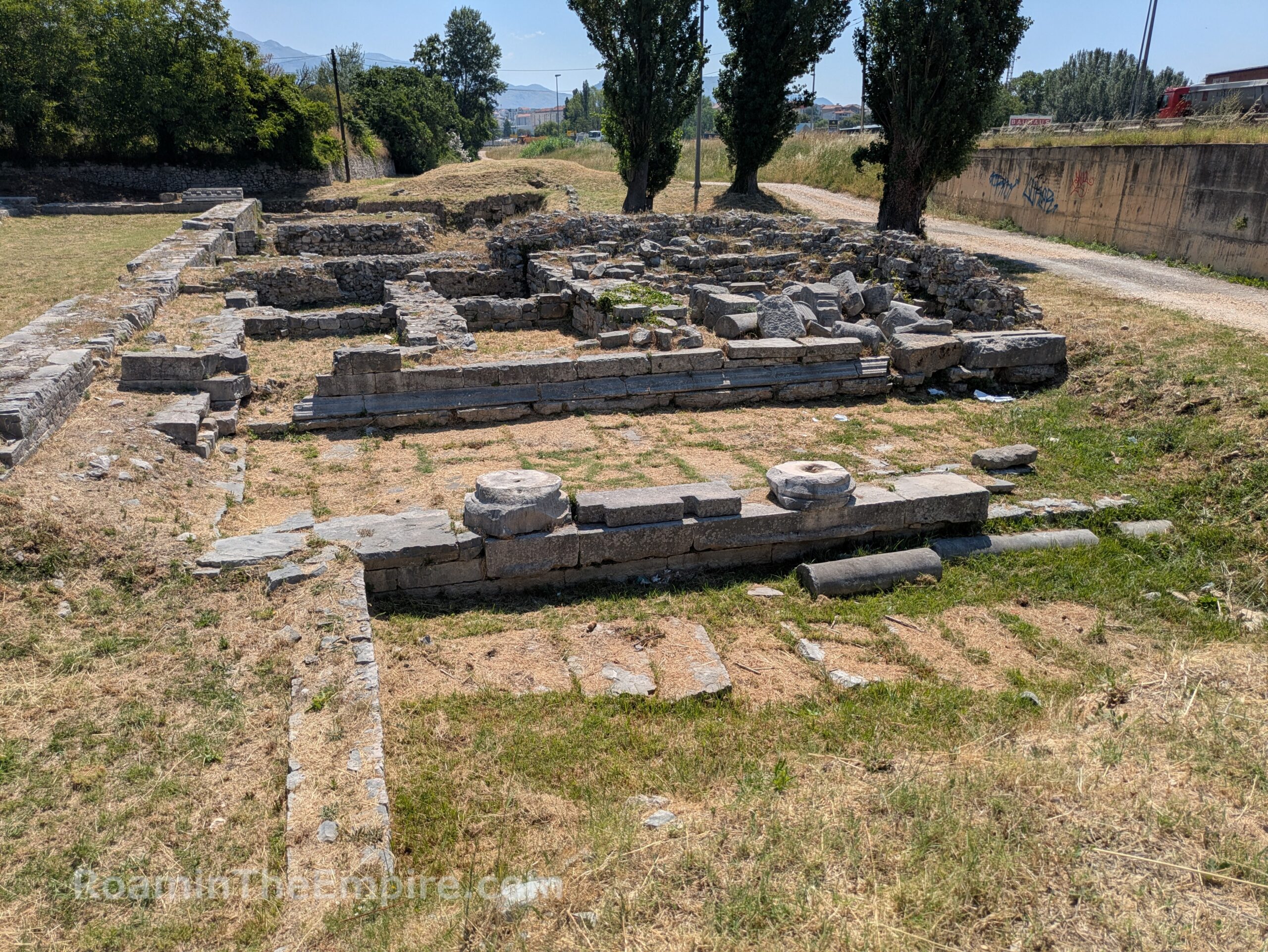
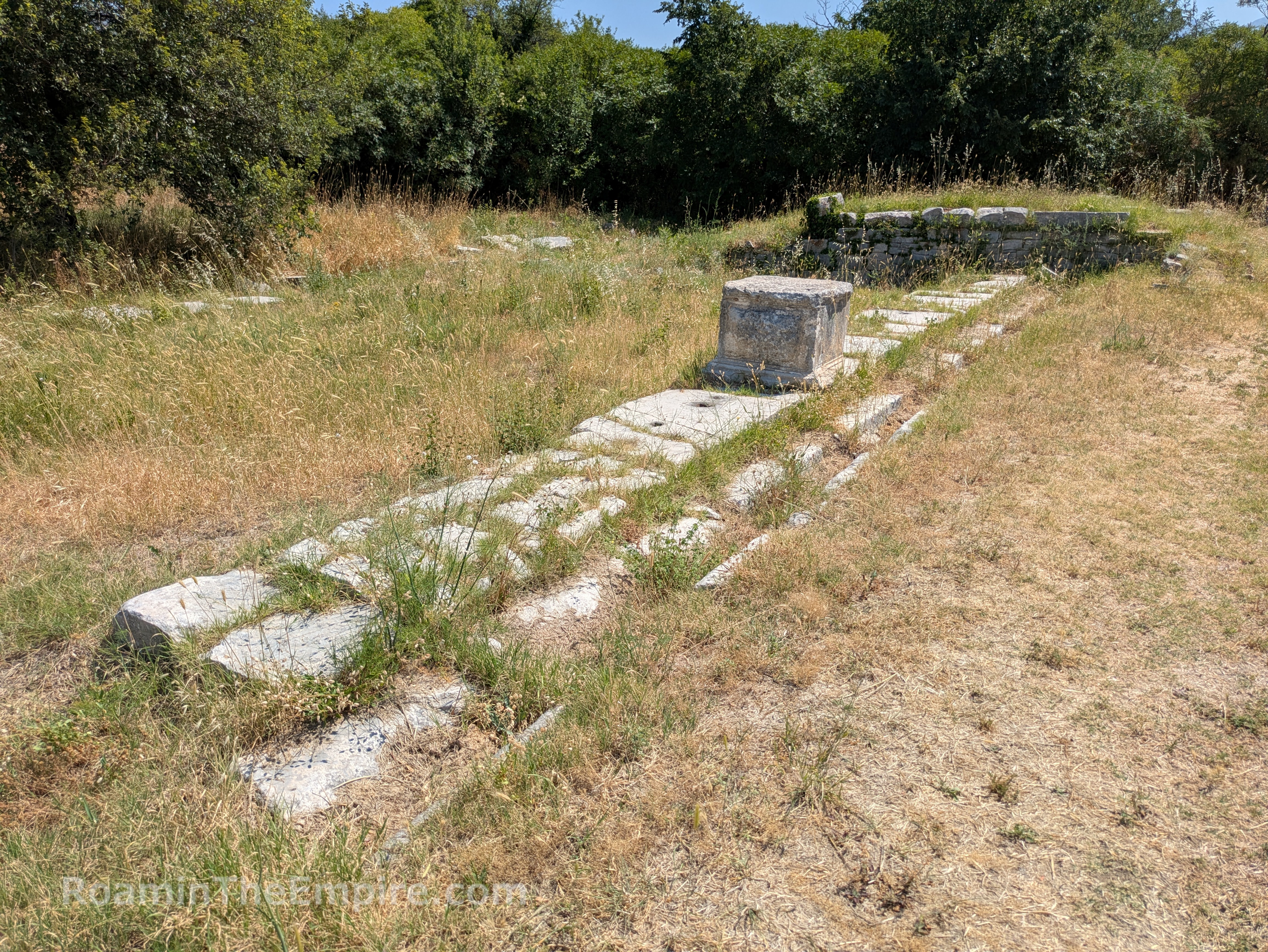
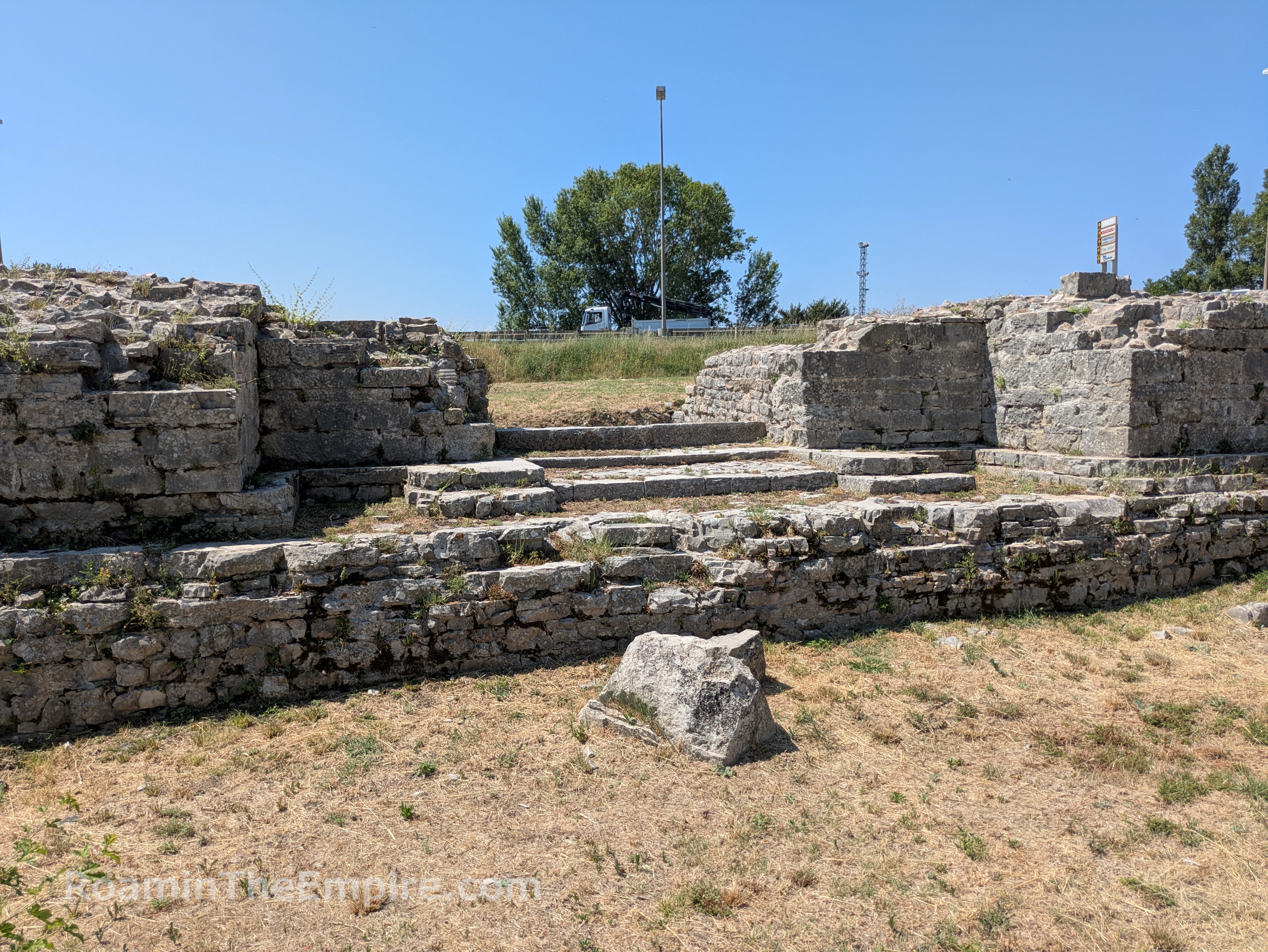
East of the exposed section of cardo maximus was the area of the forum of Salona. Just beyond where the best-preserved area of the road starts, about 17 meters east is the stylobate along the north side of the forum. The water channel that would have run along the edges of the paved area of the forum can be seen as well as the two steps up and out of the recessed forum. An unadorned block or alter sits near the midpoint of the 12 or so meters of stylobate that area remaining. Though the area to the north of the stylobate was overgrown, and the visible remnants of the building are very scarce anyway, a bathing complex was located on this north side of the forum. A later wall was erected at the east end of the stylobate.
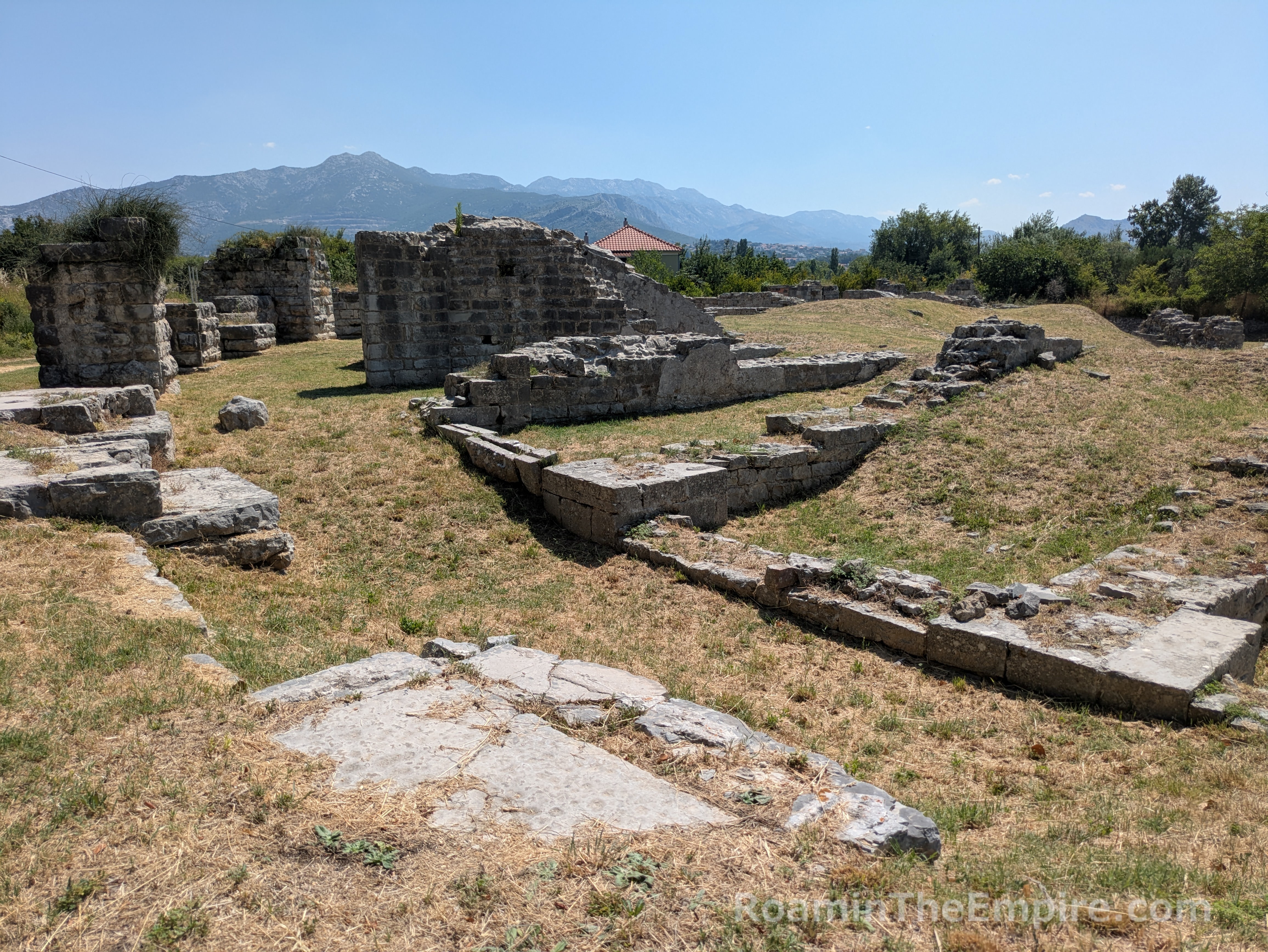
Opposite the stylobate and baths was a temple, typically identified as being dedicated to the Capitoline triad. The temple would have essentially partially bounded the southern side of the forum, and the northern edge of the temple has a form that mirrors the stylobate on the north. The temple originally dated to the 1st century CE with repairs in the 2nd-3rd century CE. In the 4th century CE, the administrative heart of Salona shifted from the forum to the Episcopal Center, and some of the buildings here lost their function. Evidence suggests that other activities occurred. North of the temple, remnants of a press dating to this period have been found. Other later constructions surround sides of the temple. A curia was found and excavated to the east of the temple, though the location is now overgrown with impenetrable brush.
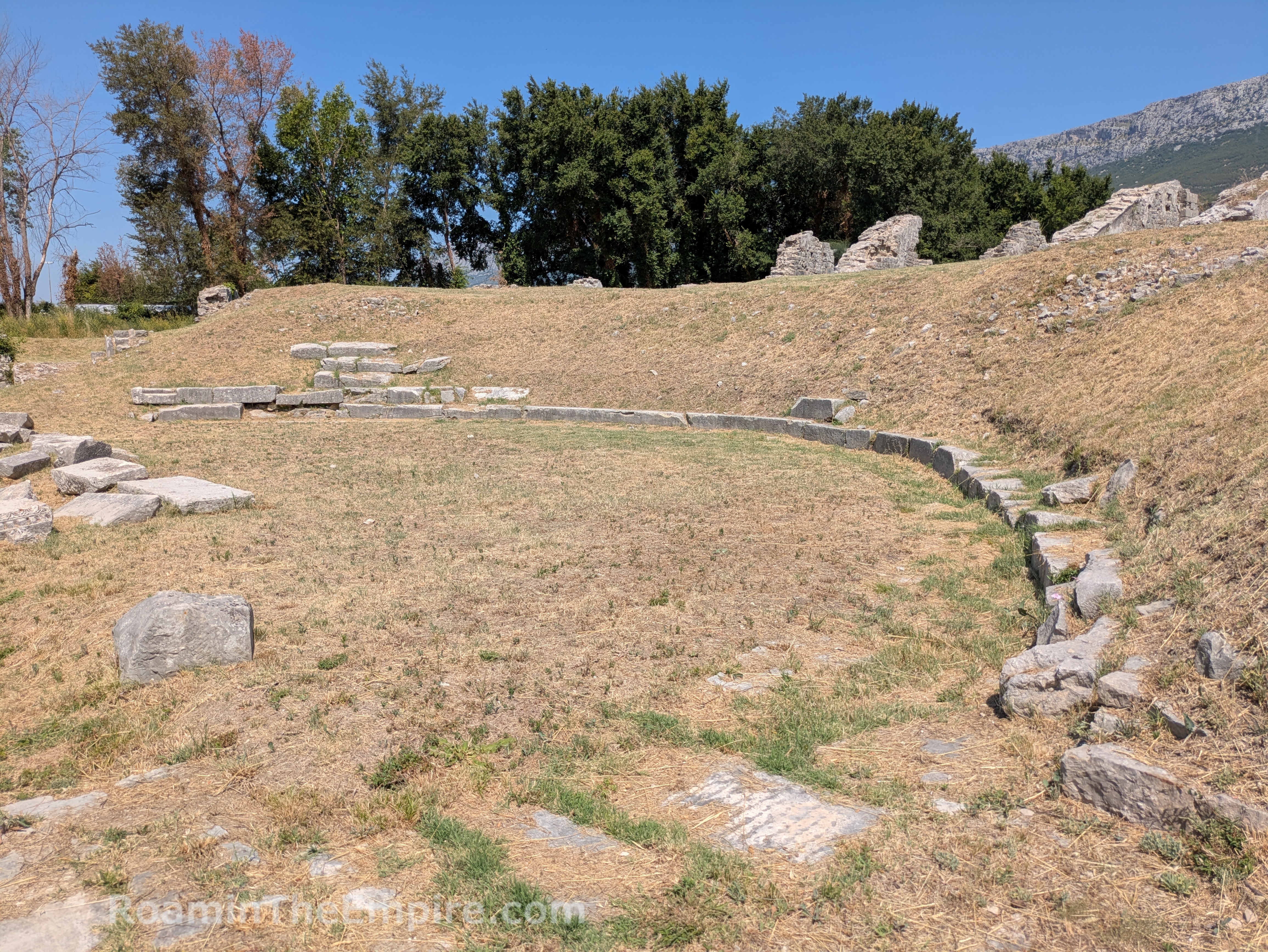
The cardo maximus leads south to a small paved plaza that is located on the northeast side of the theater. The theater was constructed in the middle of the 1st century CE. It was reconstructed during the reign of Diocletian, when many public buildings in Salona benefitted from the patronage of their hometown emperor. The theater was partially built into a gentle slope in the landscape, providing some support for the seating. The capacity of the theater was estimated to have been about 3,000 spectators.

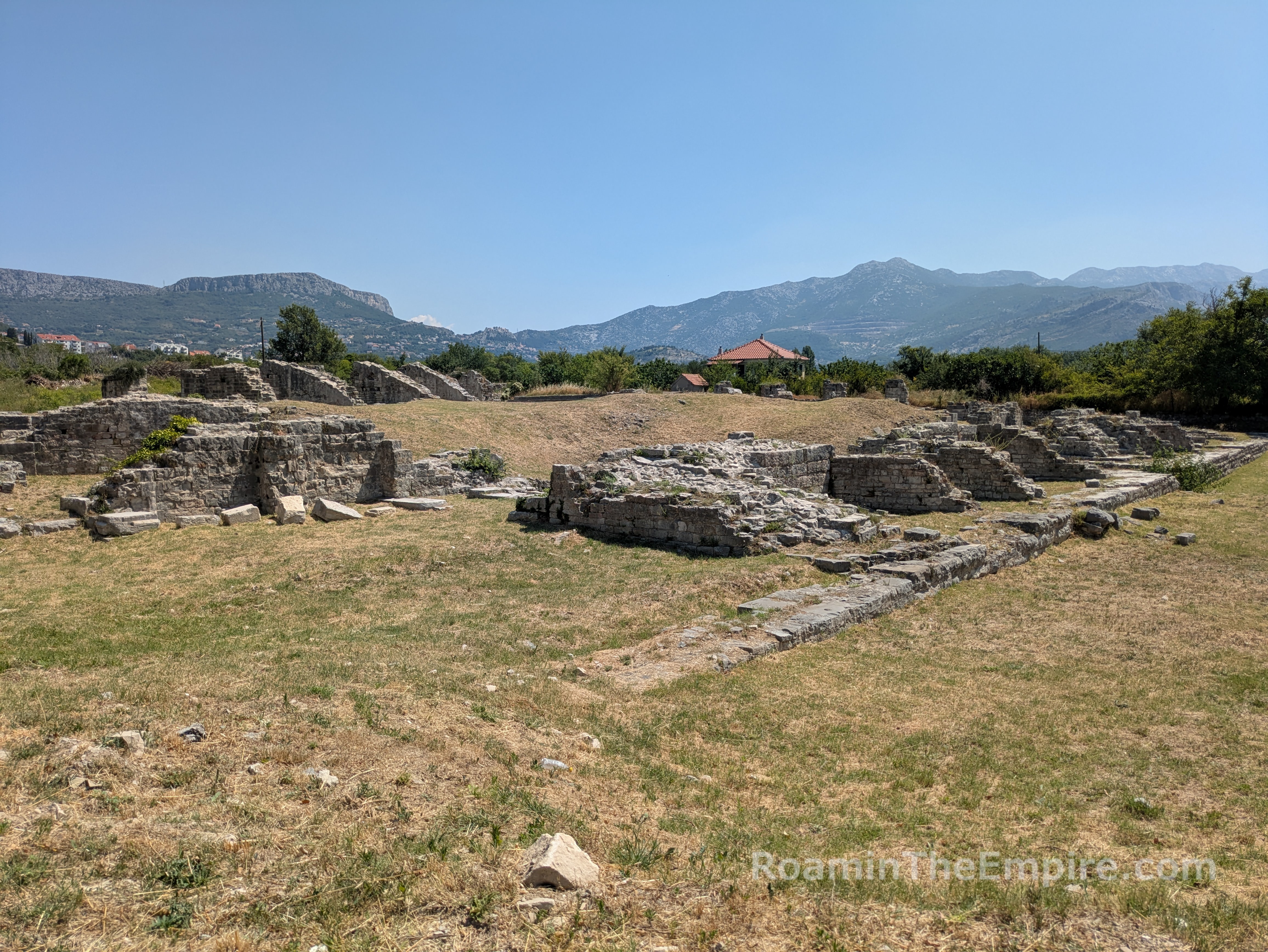
While the lower part of the cavea was supported by the landscaping, the upper areas of seating were supported by free standing masonry. Remnants of the radial supports fan out across the north side of the theater. Much of the seating in the lower part of the theater is missing, but a few blocks remain in place. The blocks bounding the orchestra and some of the paving of the orchestra is present. Significant parts of the scenae survive; the foundations and steps of the typical triple portals of the scenae frons of Roman theaters are present.
To the south of the scenae buildings is a small temple. Though no dedications or epigraphic evidence has been found, the proximity to the theater would suggest it was dedicated to Dionysus or possibly Liber. It was constructed with a small, square cella and deeper pronaos sometime before the construction of the theater. A staircase on the north side of the temple was later removed to accommodate the construction of the theater. Renovations during the time of Diocletian included the addition of porches to the east and west sides of the temple. The pavement and column bases of the western porch are still visible, while very little of the eastern porch remains.
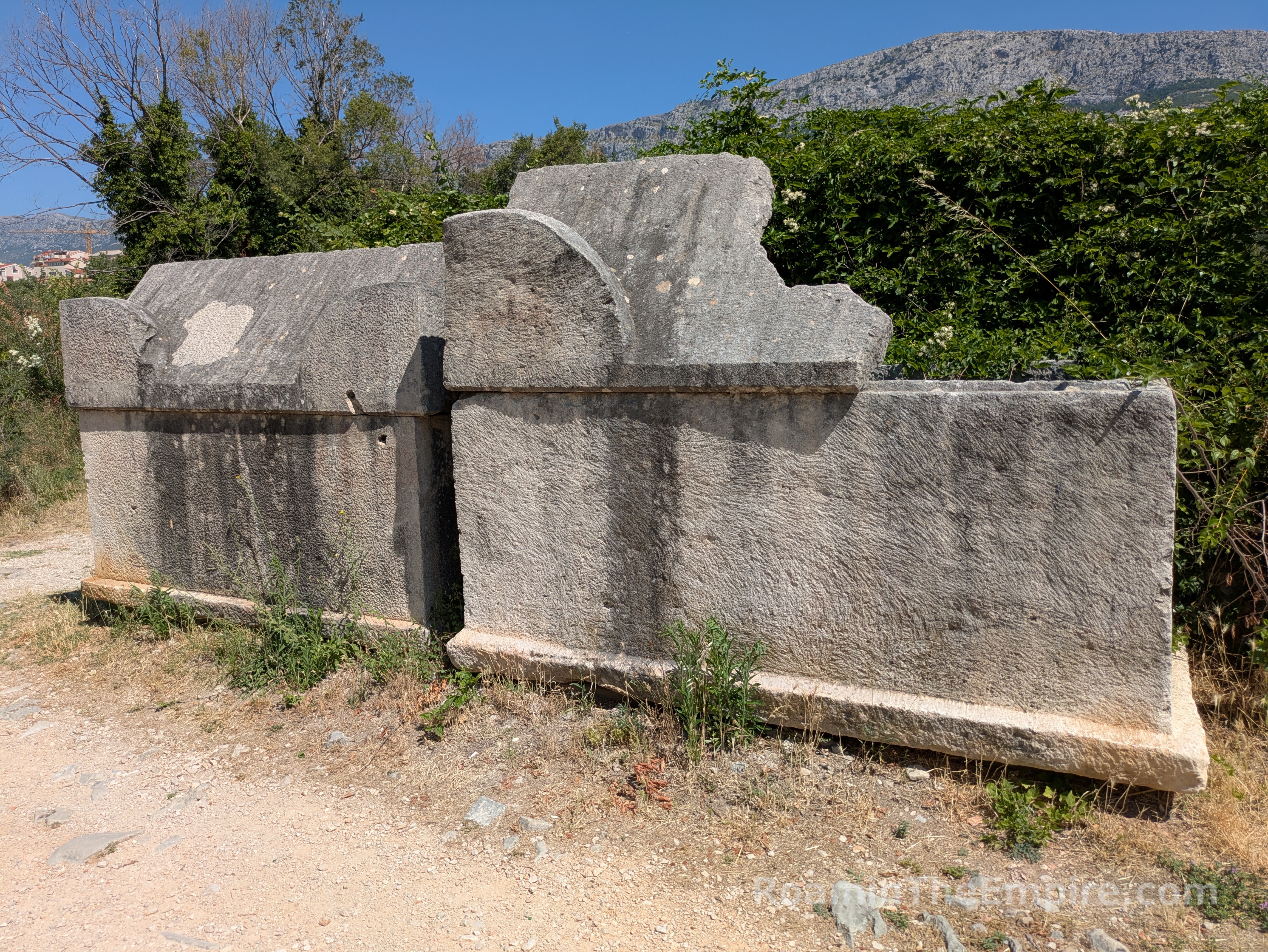
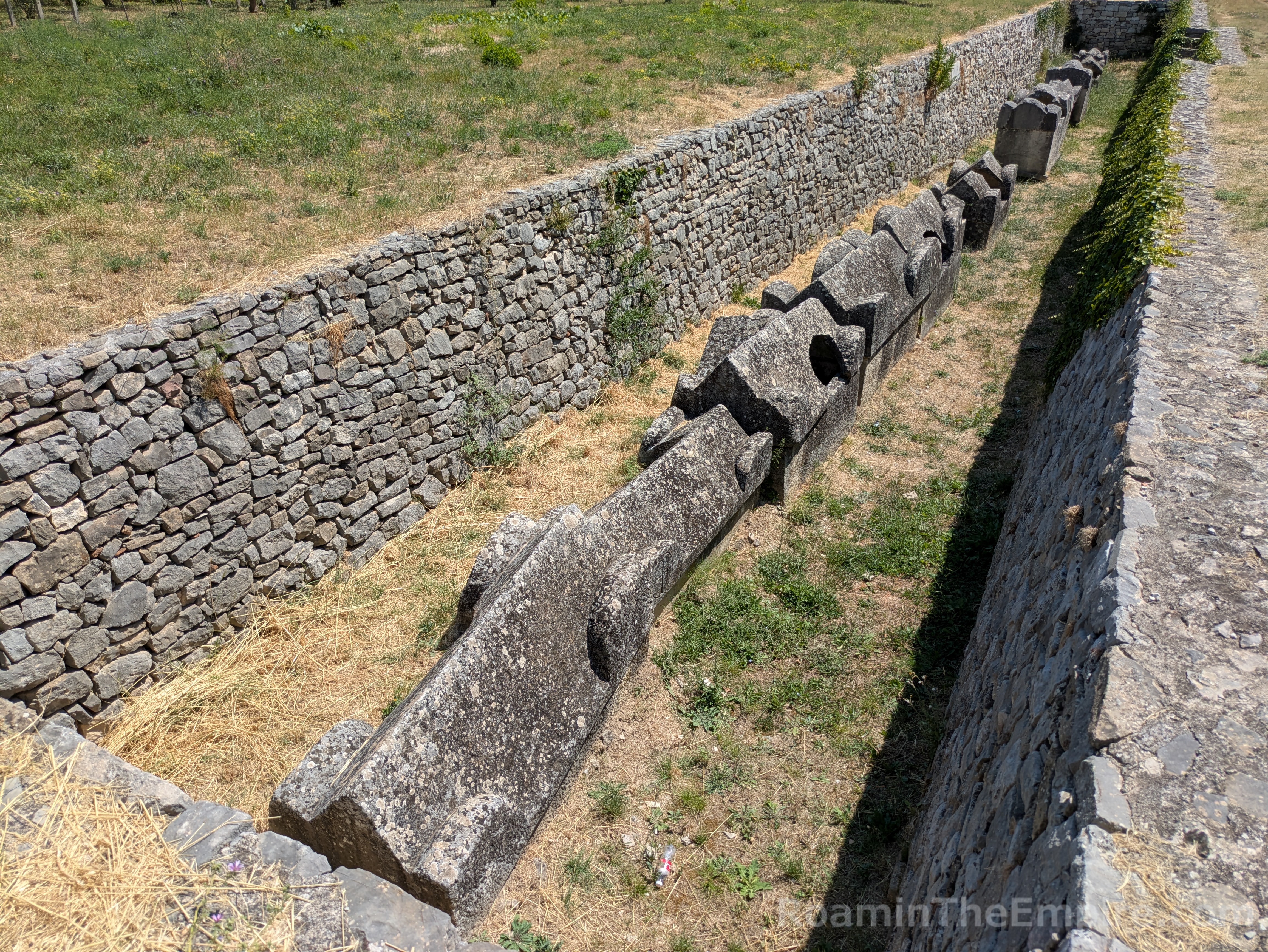
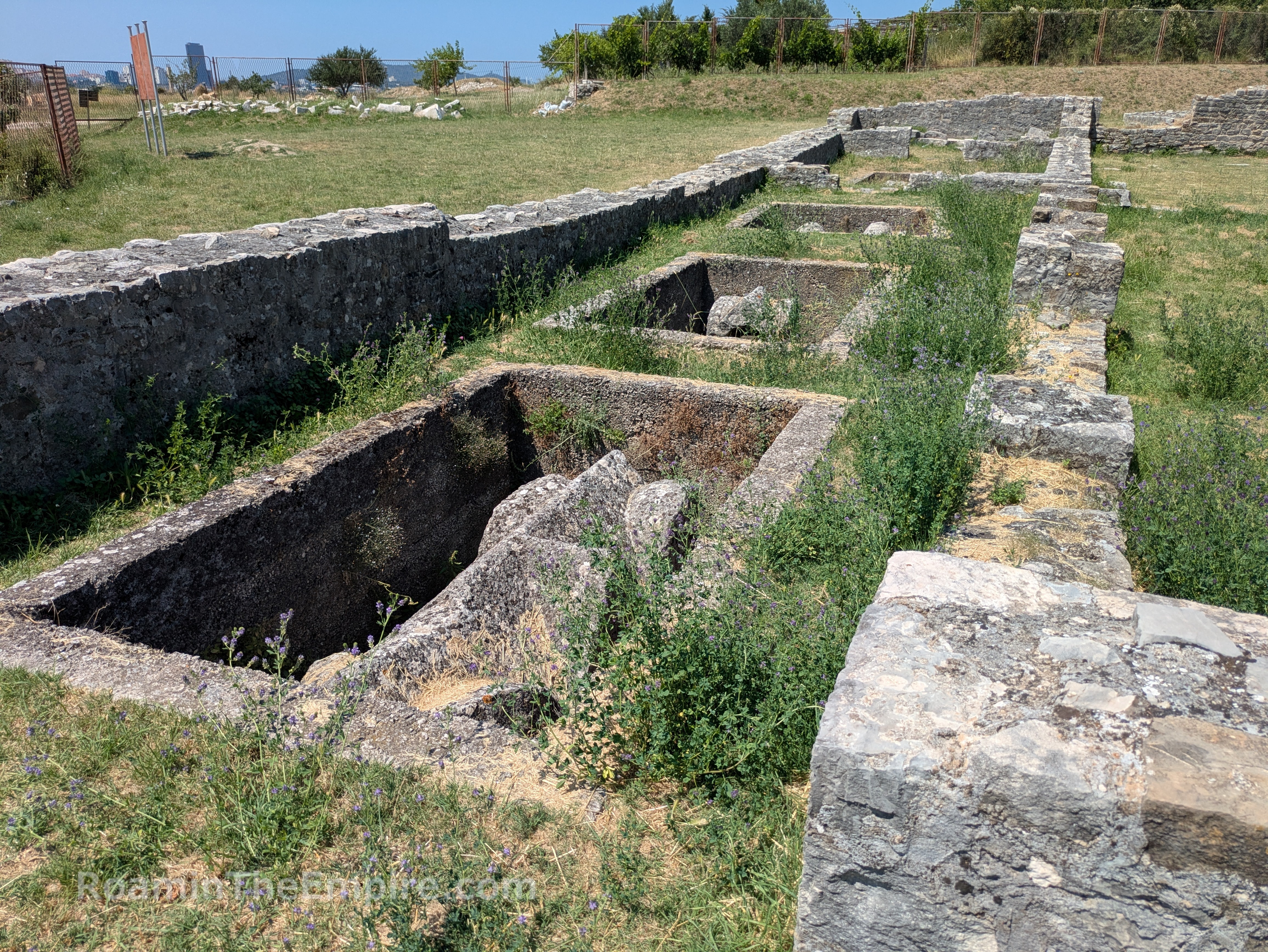
From the theater, one must double back to the path atop the northern walls of Salona. Continuing westward, after about 75 meters are two unadorned sarcophagi placed along the north side of the path, just before a small bridge. Another 75 meters west of this is an excavated area off the north side of the walls containing sixteen sarcophagi in a single line. These sarcophagi date primarily to the 4th century CE with Christian inscriptions aside from one sarcophagus that dates to the 3rd century CE. This, however, seems to have later been re-used as a 4th century CE Christian burial. They were located just outside the northern walls of Salona and along a road that circuited the exterior of the northern walls. The sarcophagi are apparently part of a cemetery associated with the nearby Basilica of the Five Martyrs. The sarcophagi are not directly accessible, as they are in an excavated area a few meters deep that is shored up by sheer stone walls.
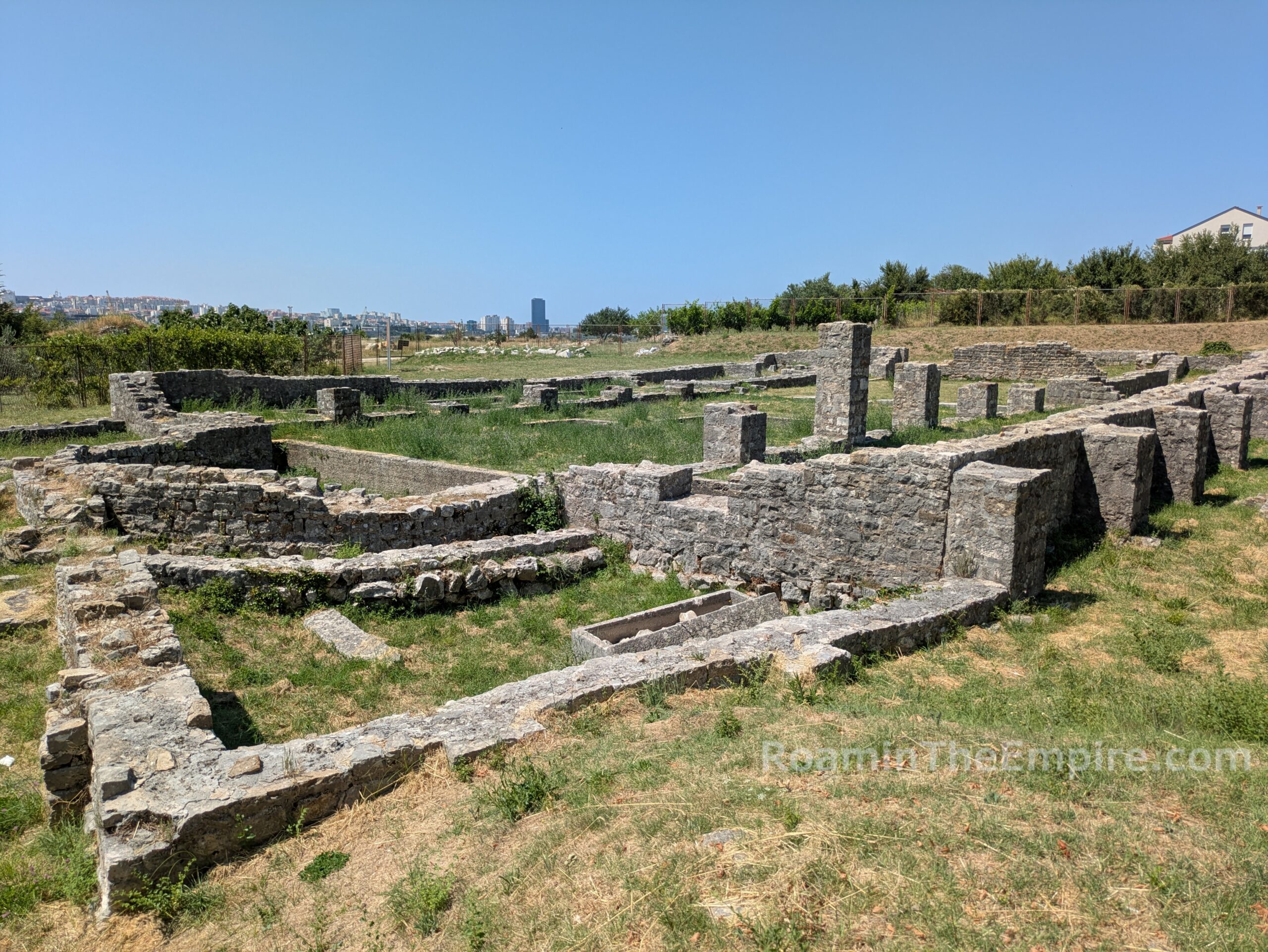
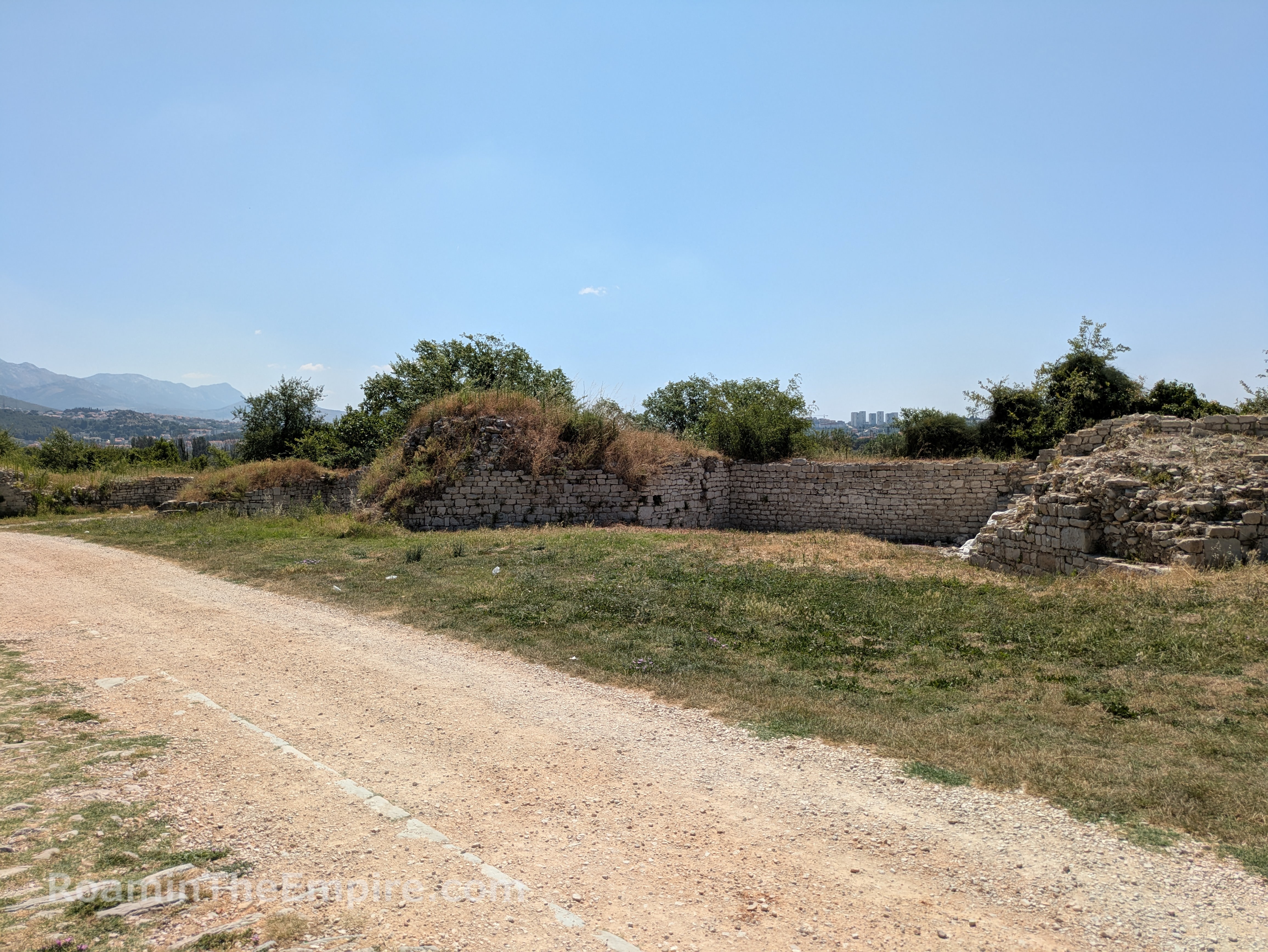
The path continues on and after about 60 meters the course of the walls and the path diverge, with the walls splitting off gradually to the south. This is more or less what would have been the original western extent of the walls prior to the expansion in the 2nd century CE. Several towers with the later triangular additions have been excavated off the south side of the path. On the north side of the path at this split, is the entrance to the Basilica of the Five Martyrs. In April 304 CE, the priest Asterius and four praetorian guards named Antiochianus, Gaianus, Palinianus, and Telius were executed in the nearby amphitheater. They were buried in a preexisting necropolis dating back to the 1st century CE. In the mid-4th century CE, the Basilica of the Five Martyrs was built on the site of their burial. The cemetery continued to be used after the construction of the basilica, but became a primarily Christian burial area. The basilica was reconstructed in the 6th century CE and included the addition of a small chapel and a room for oil and wine manufacture on the west side of the building.
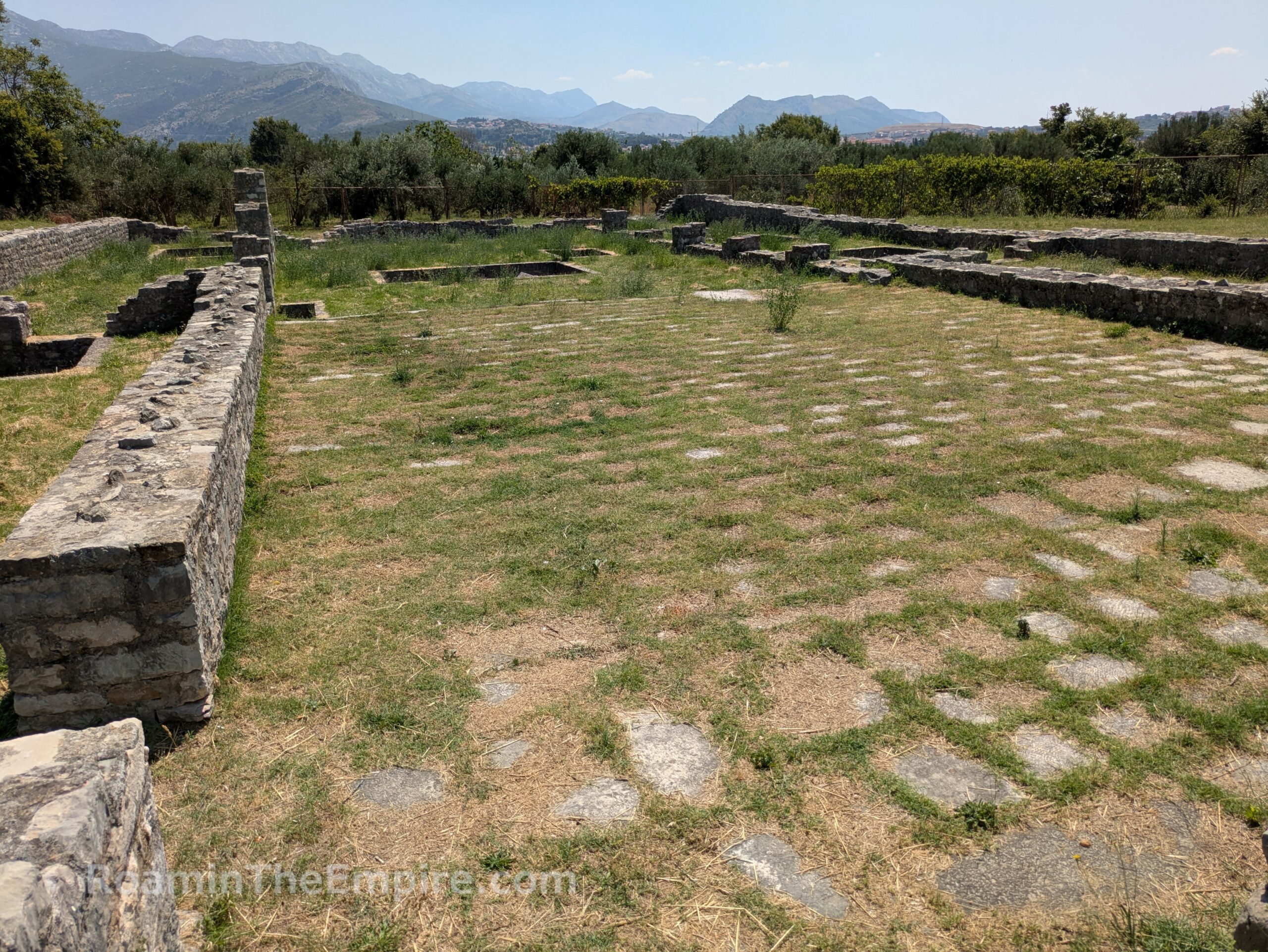
A few elements from the earlier cemetery, prior to the construction of the basilica, are also visible. Off the north side of the basilica is a rectangular dating to the early 4th century CE. A semicircular wall that seems to mirror the outside of the apse of the basilica dates to the same period of use in the necropolis. The basilica takes on the triple nave design. The western part of the central nave is mostly paved with stones. Around a dozen burials have also been exposed in nearly every area of the interior of the basilica, below the floor level.
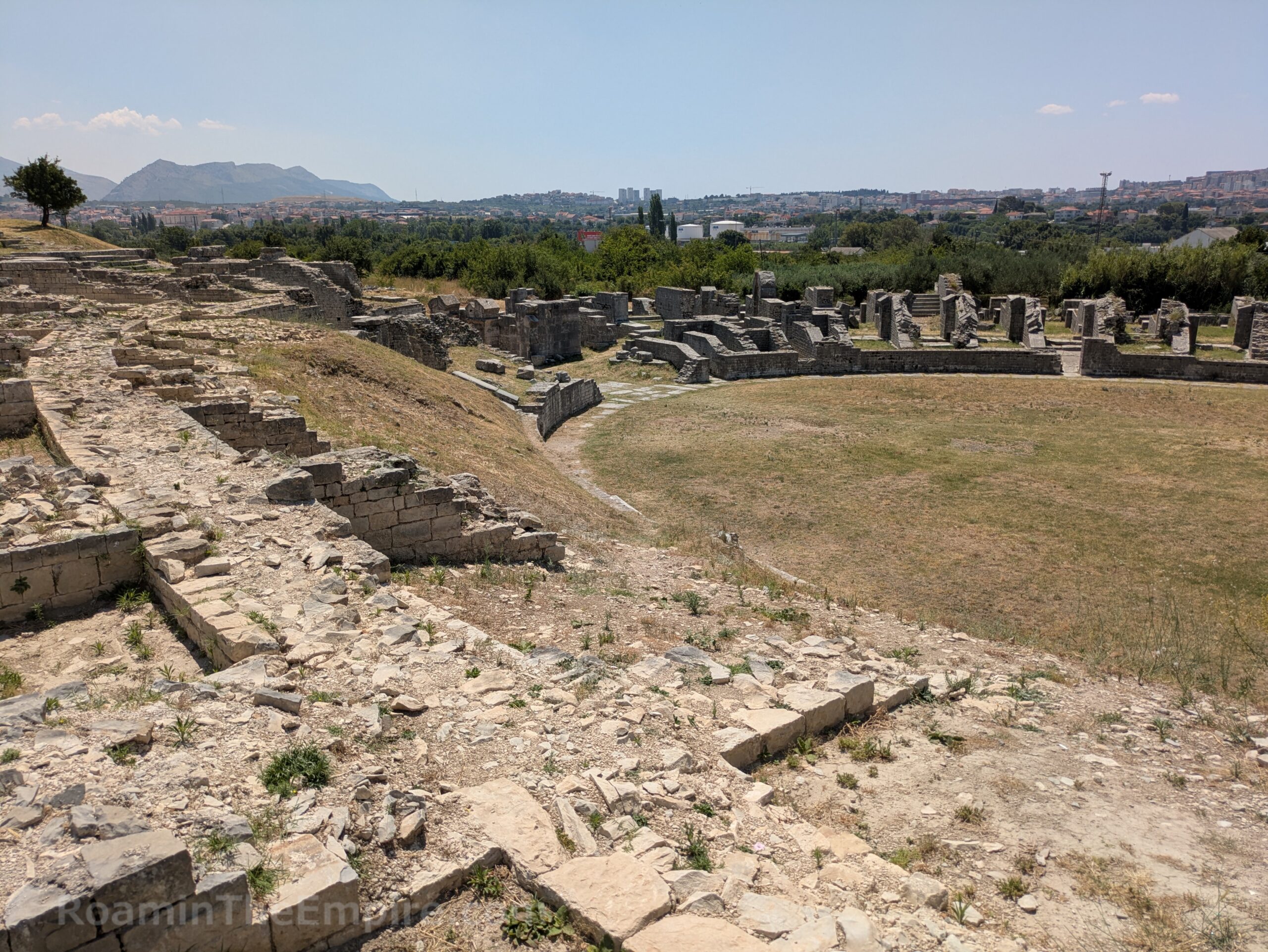
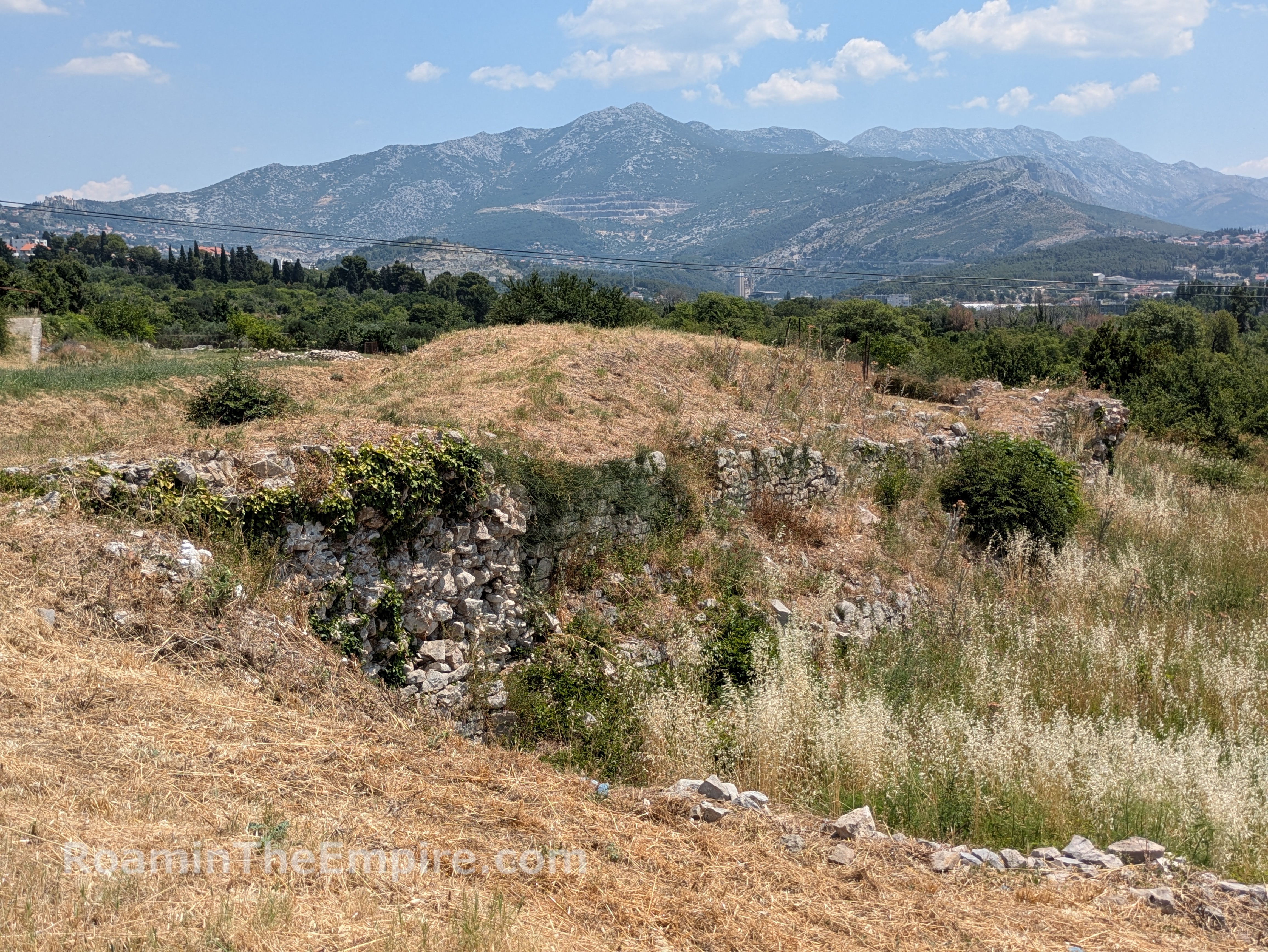
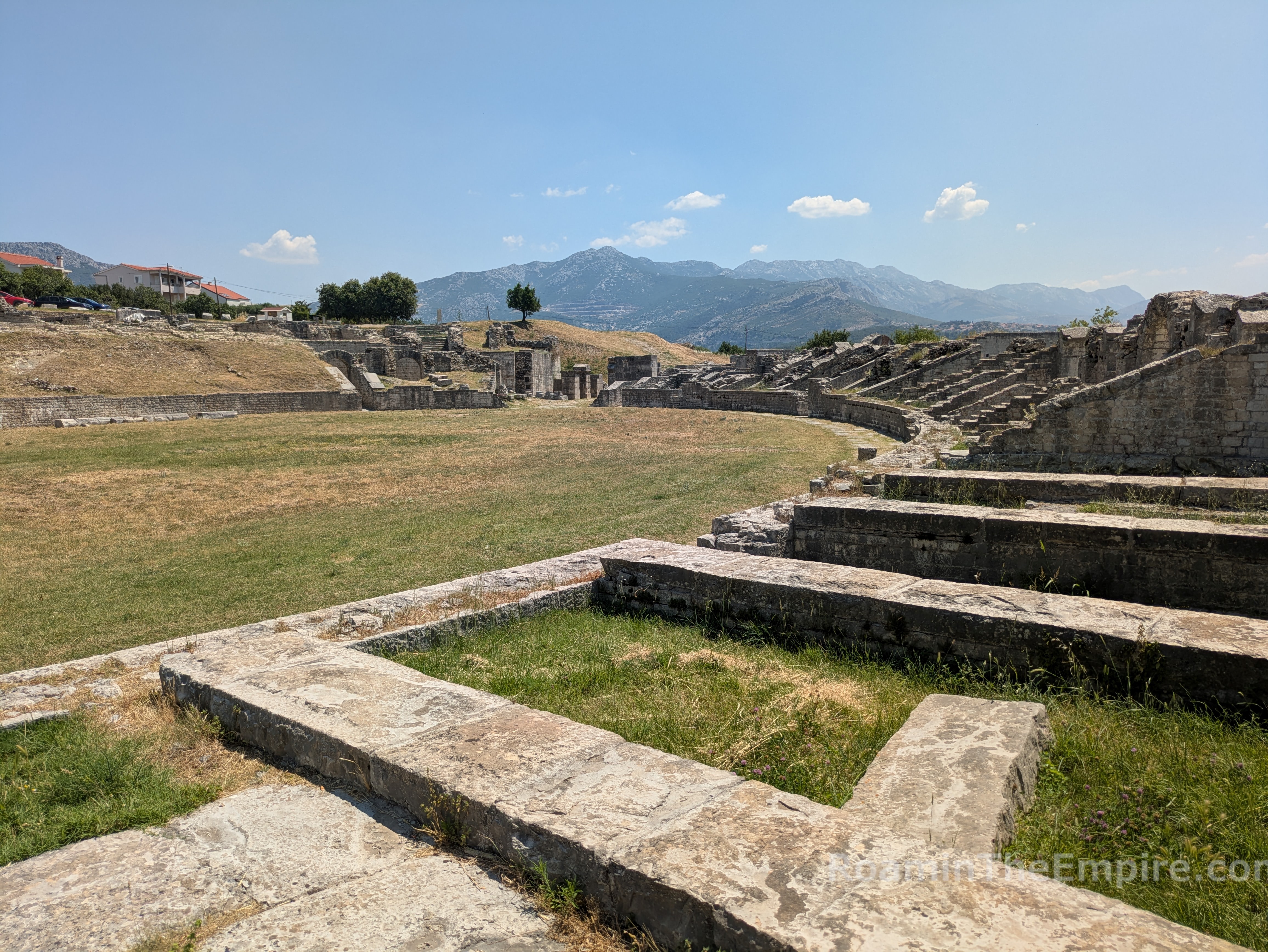
Back to the main path, the circuit of the walls, part of the western extension of Salona’s fortifications in the late 2nd century CE, continues until they intersect with the amphitheater, which was incorporated into the walls and marked the northwestern corner of the fortified part of the city. The amphitheater was constructed in the late 2nd century CE. It seems that the fortifications were constructed first and then the amphitheater was incorporated into these, rather than the other way around. The north side of the amphitheater was constructed into the natural slope of the landscape, allowing most of the seating on this side of the monument to be supported by the topography rather than freestanding masonry. Capacity is estimated to have been about 17,000 spectators. By the early 5th century CE, gladiator fights were banned in the amphitheater, but venationes continued for some time.

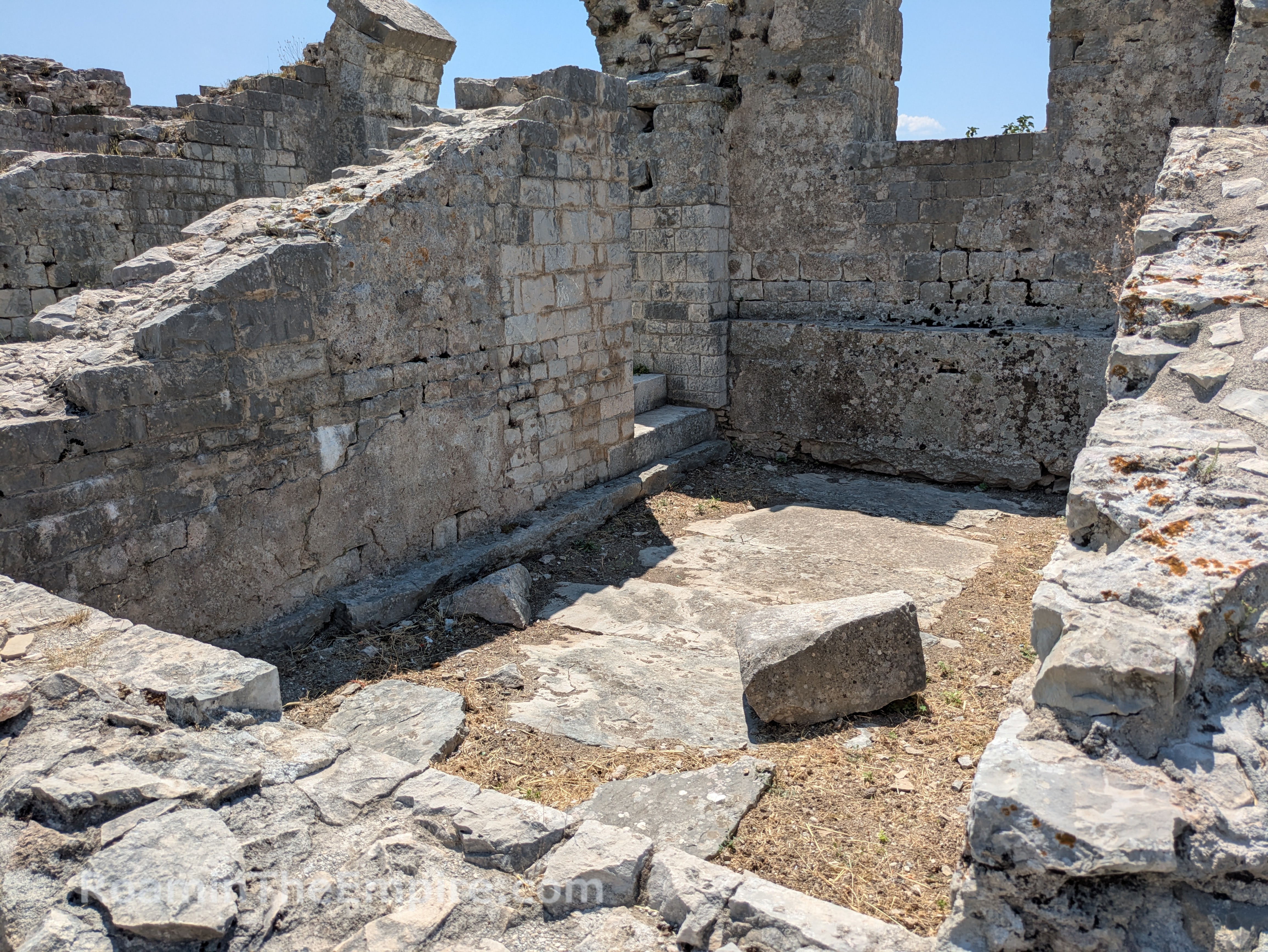
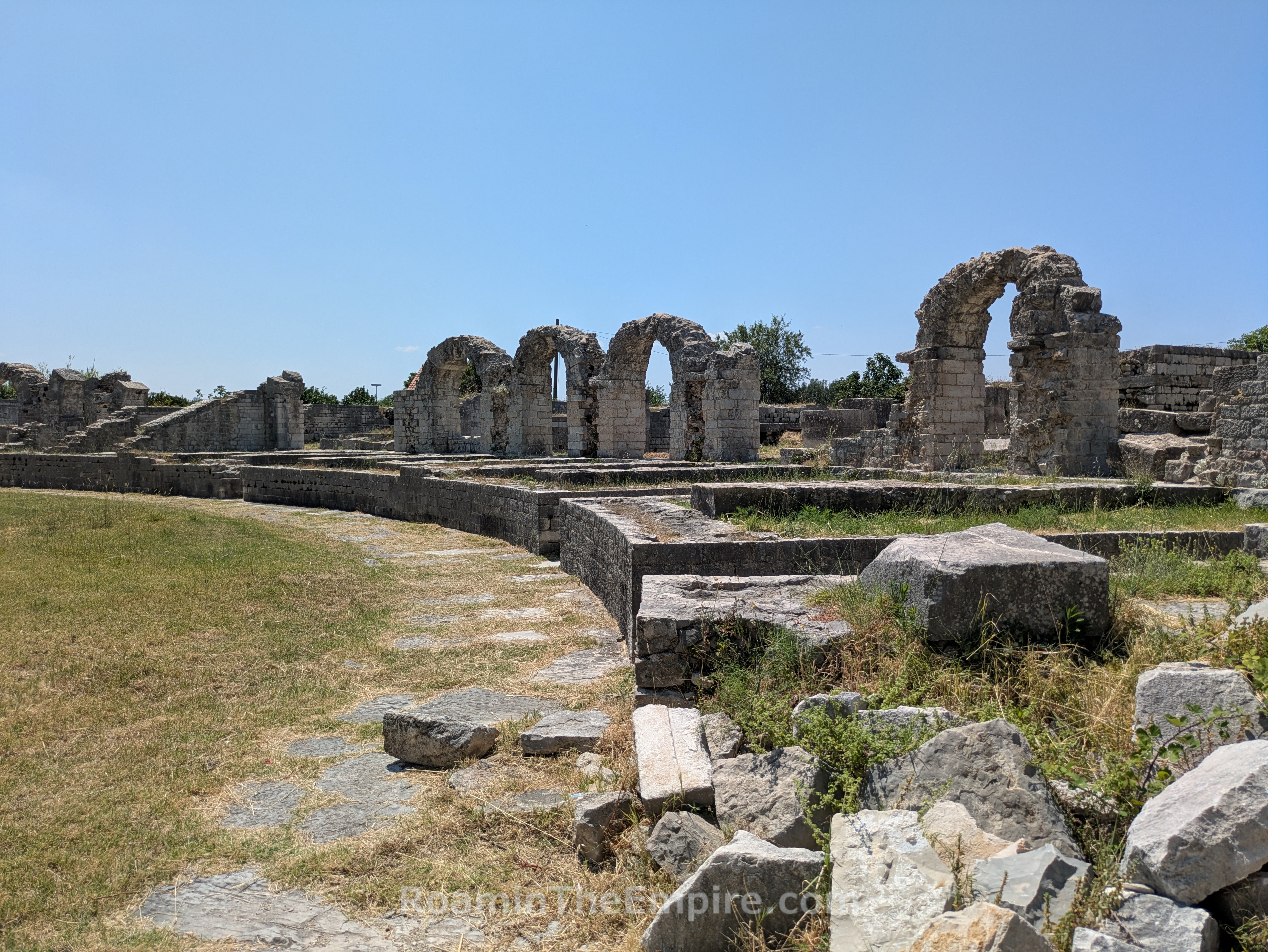
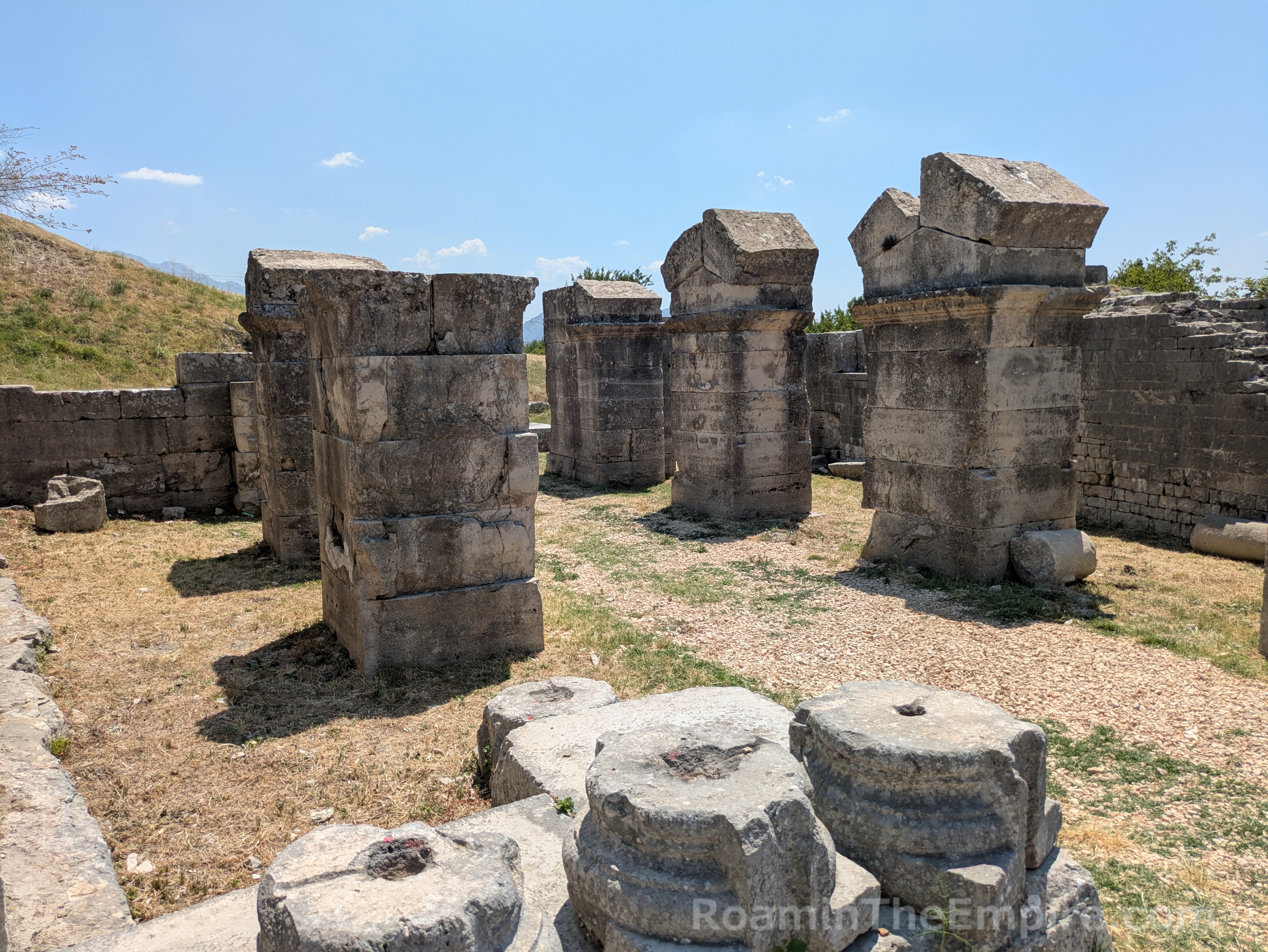
Pretty much none of the seating from the amphitheater remains, the stone was looted out over the years and the amphitheater was further damaged in wars of the 17th century CE between the Turks and Venetians. Some parts of the supports are visible in the north, while the lower parts of the supports for the cavea are present in the southern half of the amphitheater, which is completely freestanding. The northwest corner of the amphitheater has been overlaid by a modern street and a couple modern buildings, so nothing is visible here. The two monumental entrances at the east and west sides of the amphitheater survive to some degree with internal pylons still standing. At the east entrance, the wings to the north and south of the entrance are described as having housed animal cages. Two rooms with access to the arena, located respectively at mirrored locations on the south side of the amphitheater about halfway between the southern midpoint and each of the main gates, were originally shrines to Nemesis. They were later converted into chapels dedicated the martyrs executed in the amphitheater in 304 CE. The eastern of these two chapels had remnants of frescos depicting the martyrs when it was discovered.
It is worth noting that the secondary entrance to the site is located here, and tickets can be purchased. Visiting the amphitheater is also the only time I was actually asked to produce a ticket proving entrance to the site, despite there being several other points to enter the archaeological area without going through one of these ticketed entrances.
In all, I spent about 3.5 hours visiting the archaeological park of Salona. Most areas are relatively well maintained. There are useful informational signs with text in both Croatian and English at many (but not all) of the points of interest. These also often employ useful plans of the layout of particular areas to help contextualize the archaeological remains or drawings reconstructing the buildings.
Continued in Salona, Dalmatia – Part IV.
Sources:
Appian. Historia Romana, 10.11.
Caesar. Commentarii de Bello Civili, 3.9.
Caesar/Aulus Hirtius. De Bello Alexandrino, 43.
Cassius Dio. Historia Romana, 42.11-12.
Dzino, Danijel. “Asinius Pollio in Dalmatia: What Happened in Salona 39 BCE?” Kilo, Vol. 93, No. 1 (June 2011), pp. 158-166.
Eutropius. Breviarium Historiae Romanae, 6.4, 9.27-28.
Orosius. Historiae Adversus Paganos, 5.20.
Pliny. Historia Naturalis, 3.141.
Smith, William. Dictionary of Greek and Roman Geography. Walton & Murray, 1870.
Stillwell, Richard, William L. MacDonald, and Marian Holland. McAllister. The Princeton Encyclopedia of Classical Sites. Princeton, NJ: Princeton U Press, 1976.
Grant, Michael. A Guide to the Ancient World: A Dictionary of Classical Place Names. New York: Barnes & Noble Books, 1997.
Višić-Ljubić, Ema. Salona Colonia Martia Julia Valeria: A Guide to Archaeological Localities. Solin: Arheološki Muzej Splitu, 2023.