

Cryptoporticus
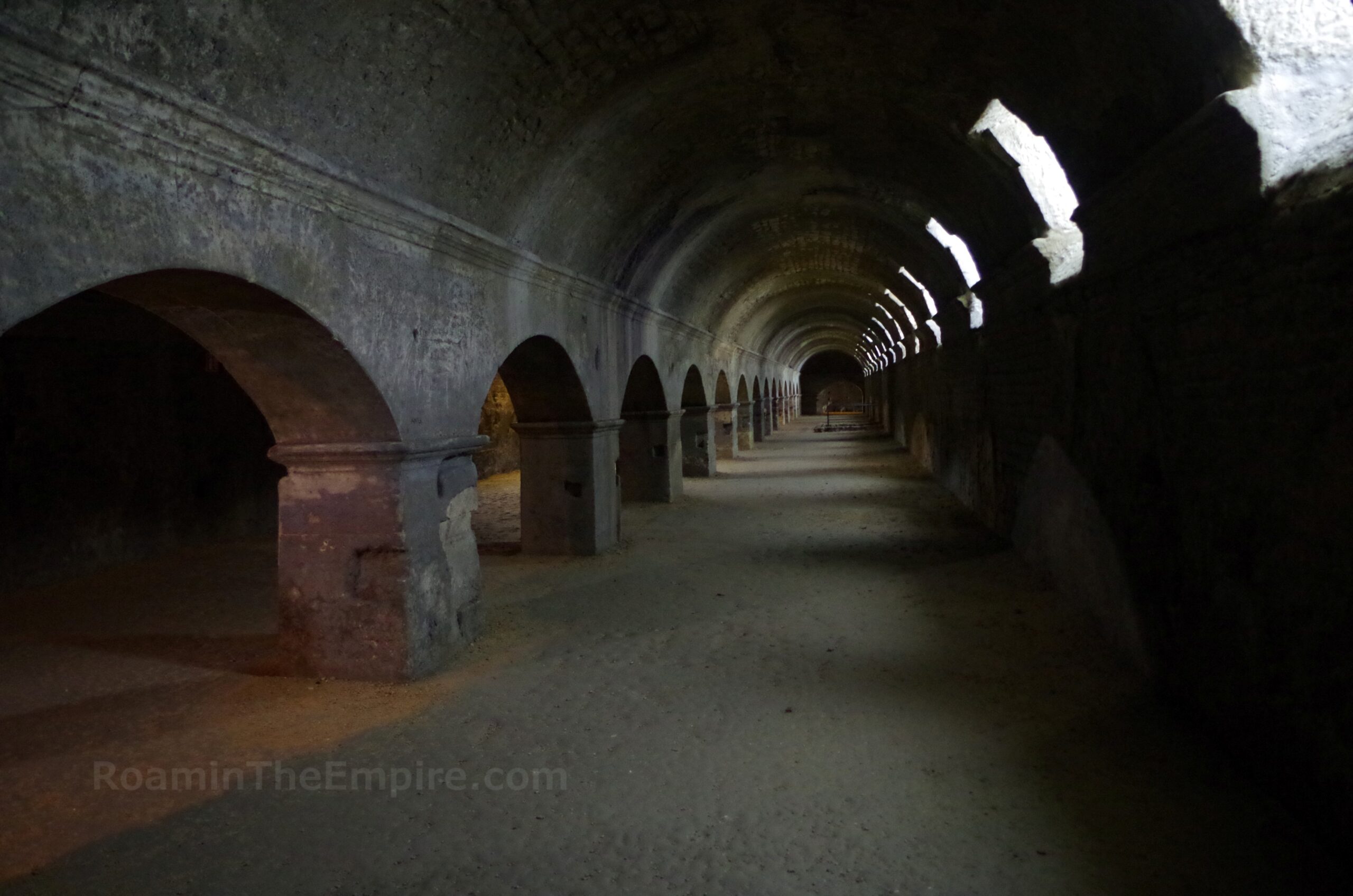
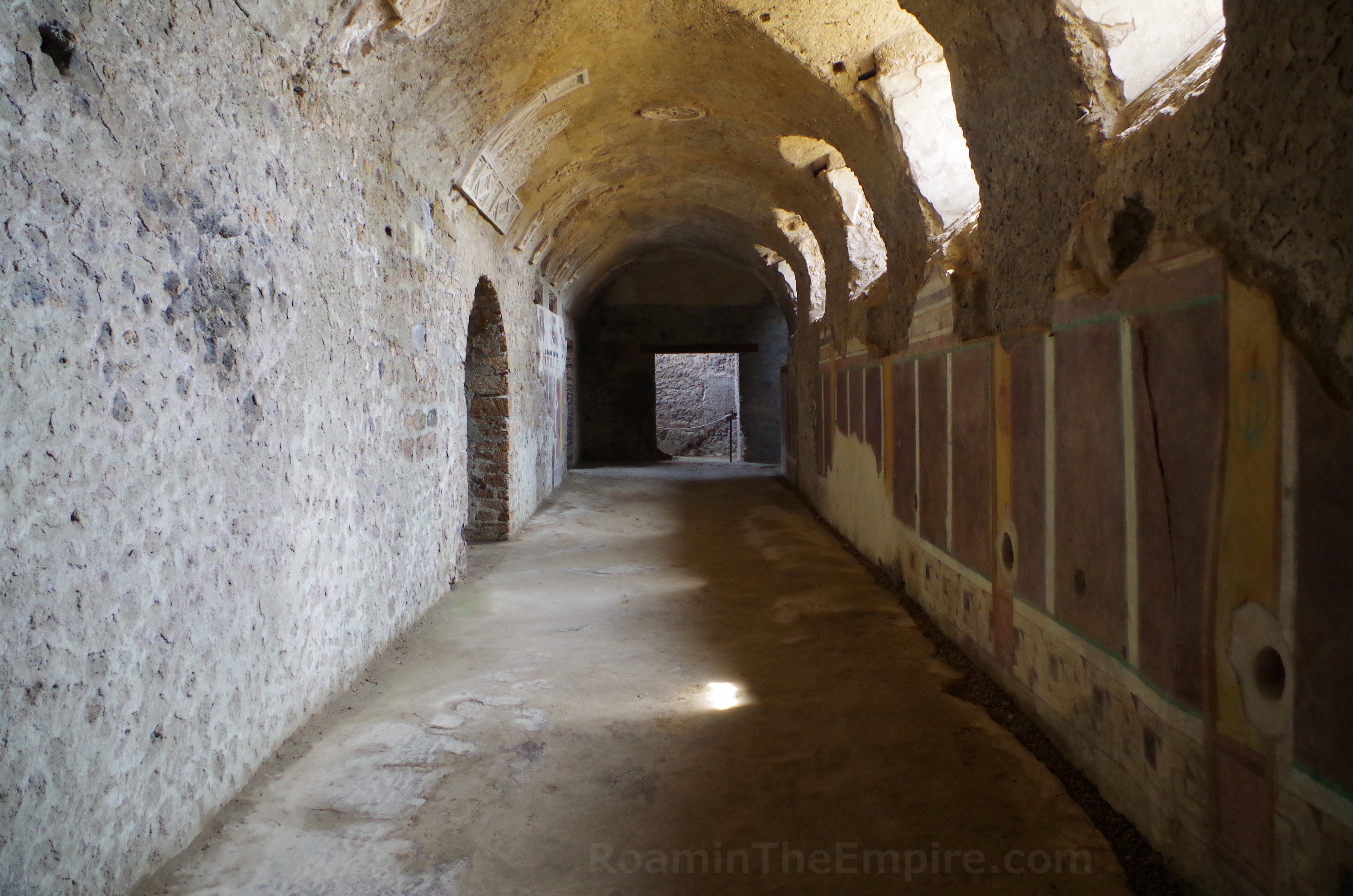
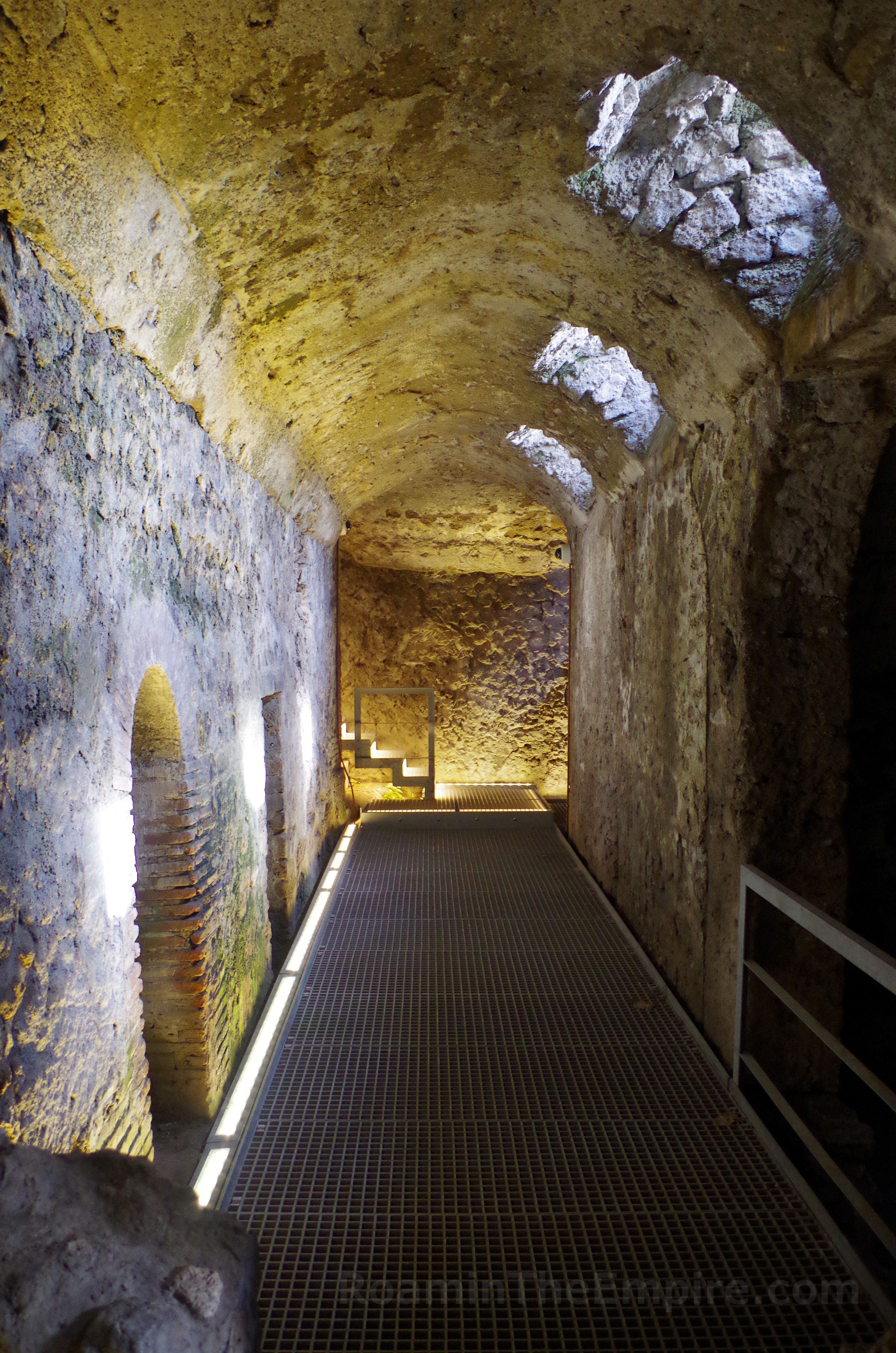
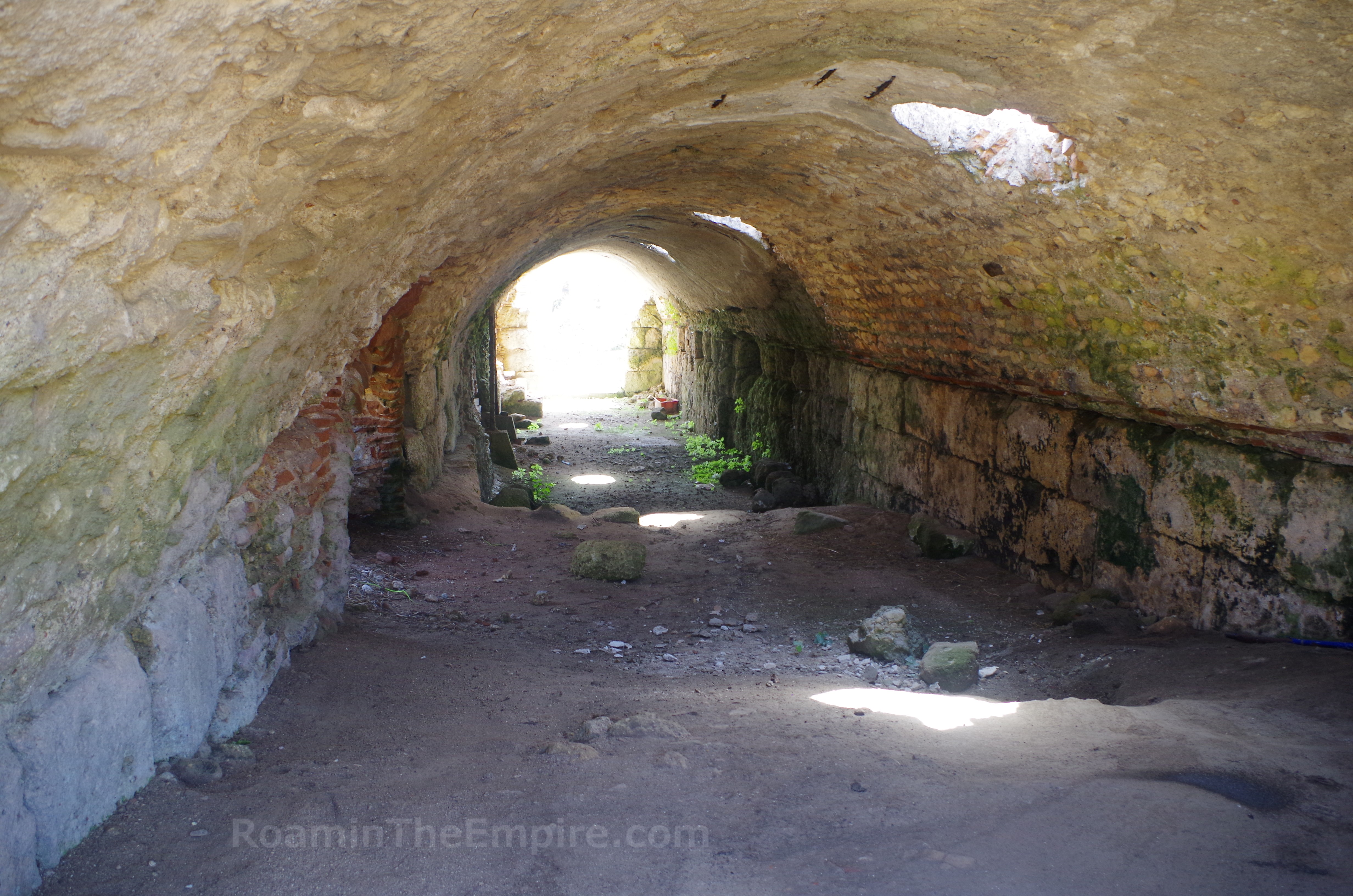
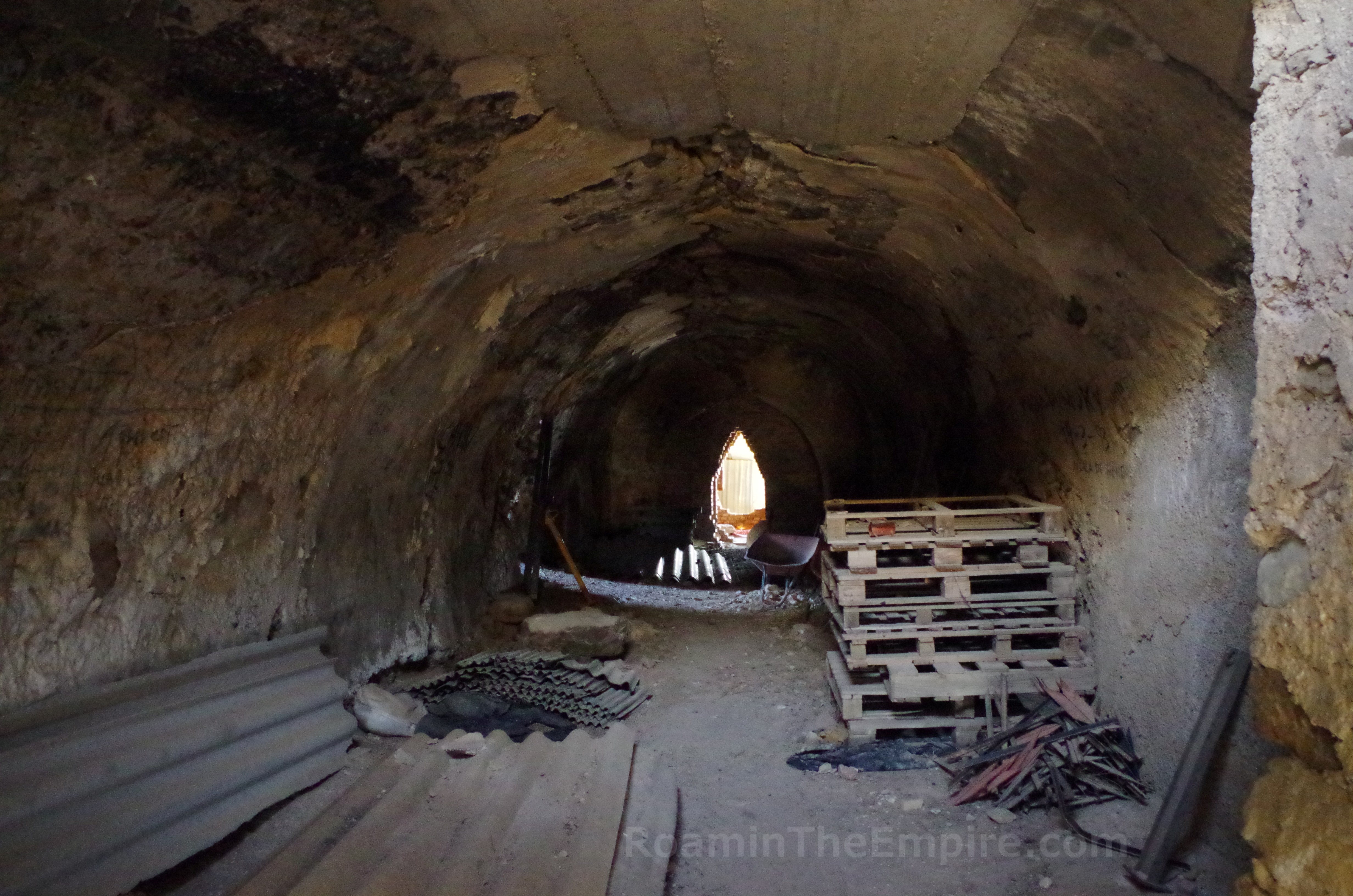
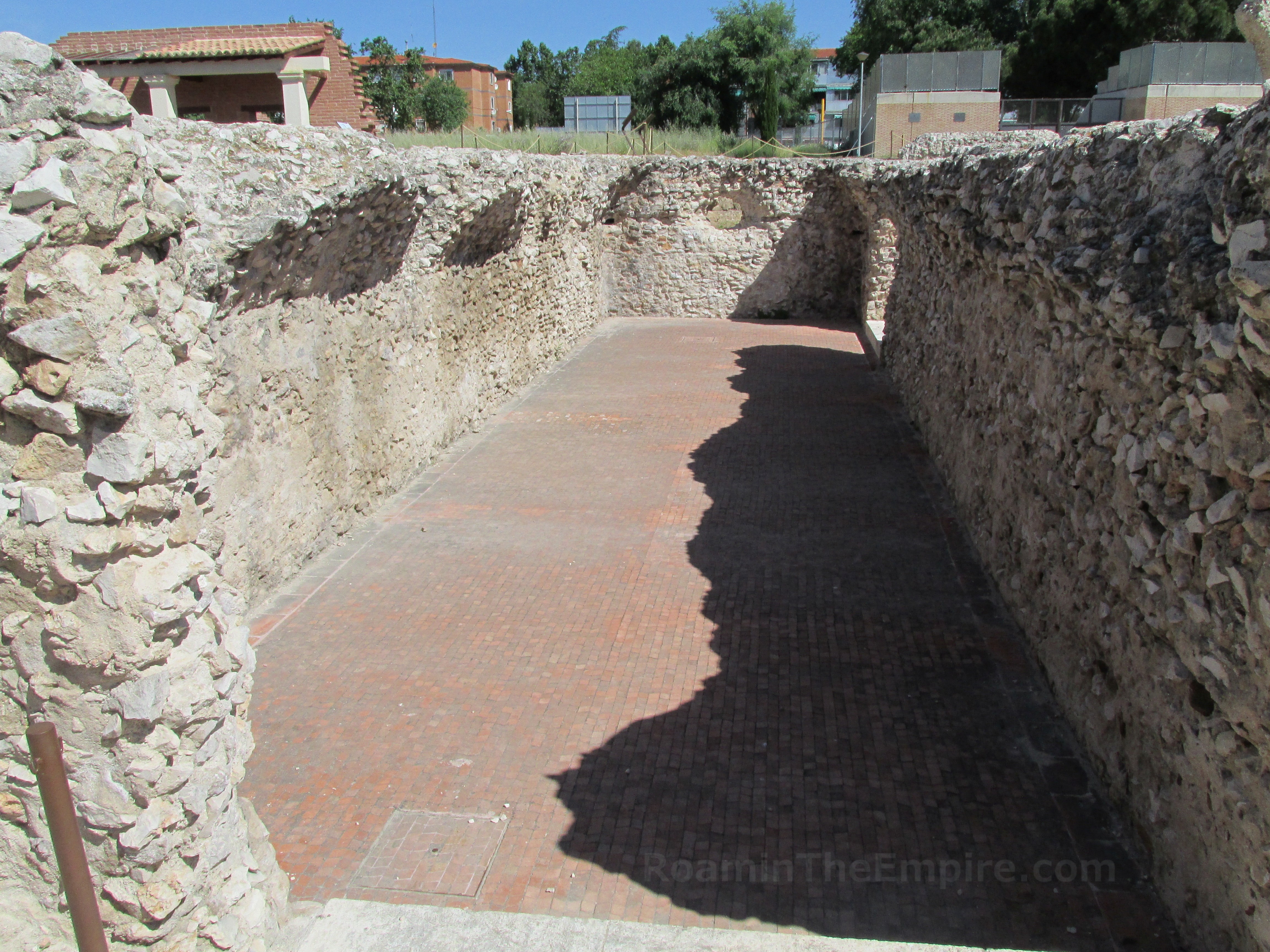
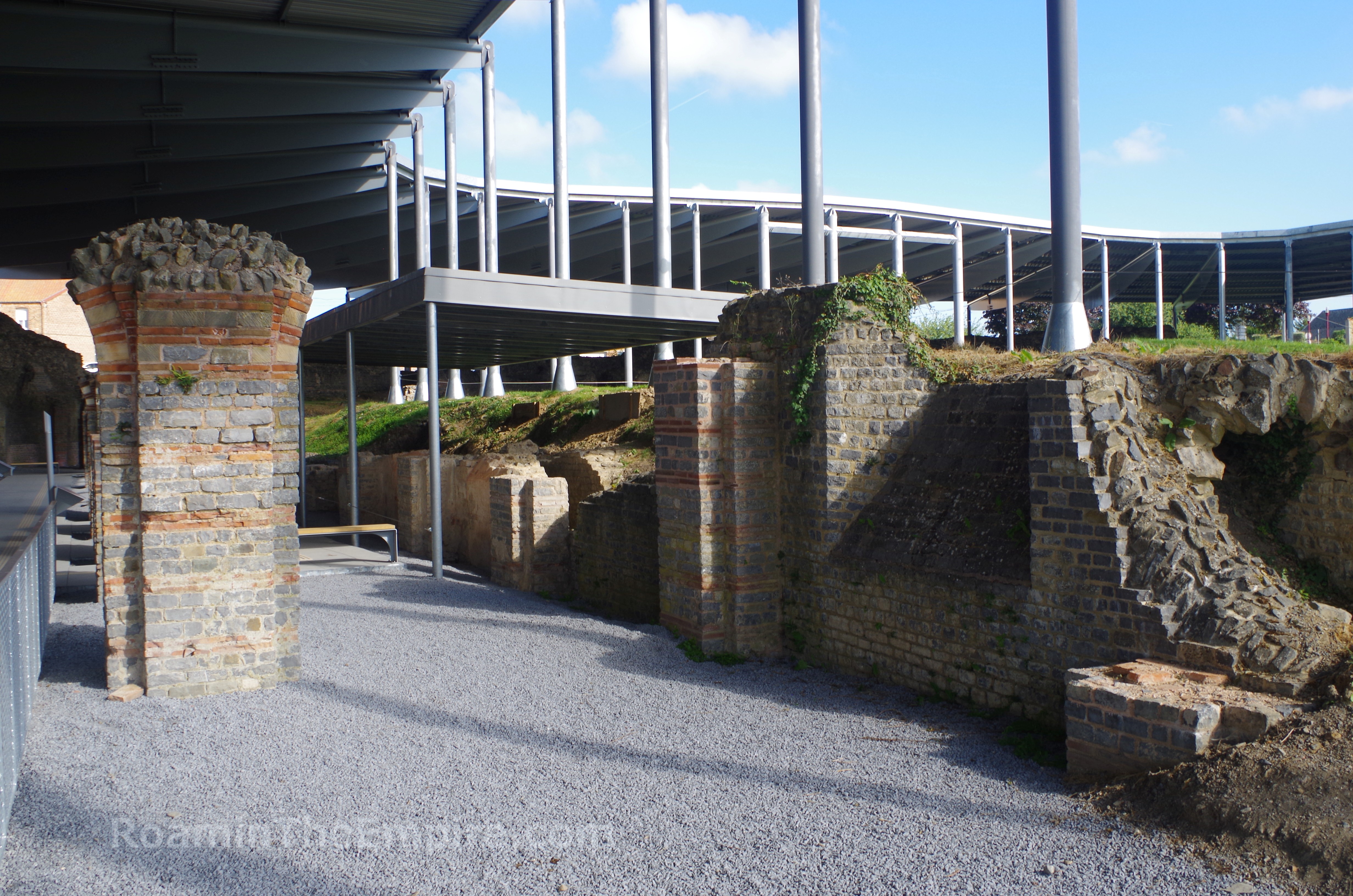
The cryptoporticus (plural: cryptoportici) was a subterranean or semi-subterranean passageway associated with various Roman building types. The name comes from the Latin words crypto (derived from the Greek word kriptos, κρυπτός), meaning hidden, and porticus, a colonnaded passageway, referring to the underground nature of the architectural feature that reflects the structure and function of an above-ground portico. The actual design of the cryptoporticus can vary greatly, with some essentially mirroring the structure of tunnels (fully underground with no features other than the pathway and vaulted ceiling) while others are only partially sunken and have large dual passages separated by archways. Many others fall somewhere on the spectrum between. Light wells in the upper part of the cryptoporticus, particularly on those that are not fully subterranean, help to illuminate some cryptoportici with natural light. Others may be lit artificially.
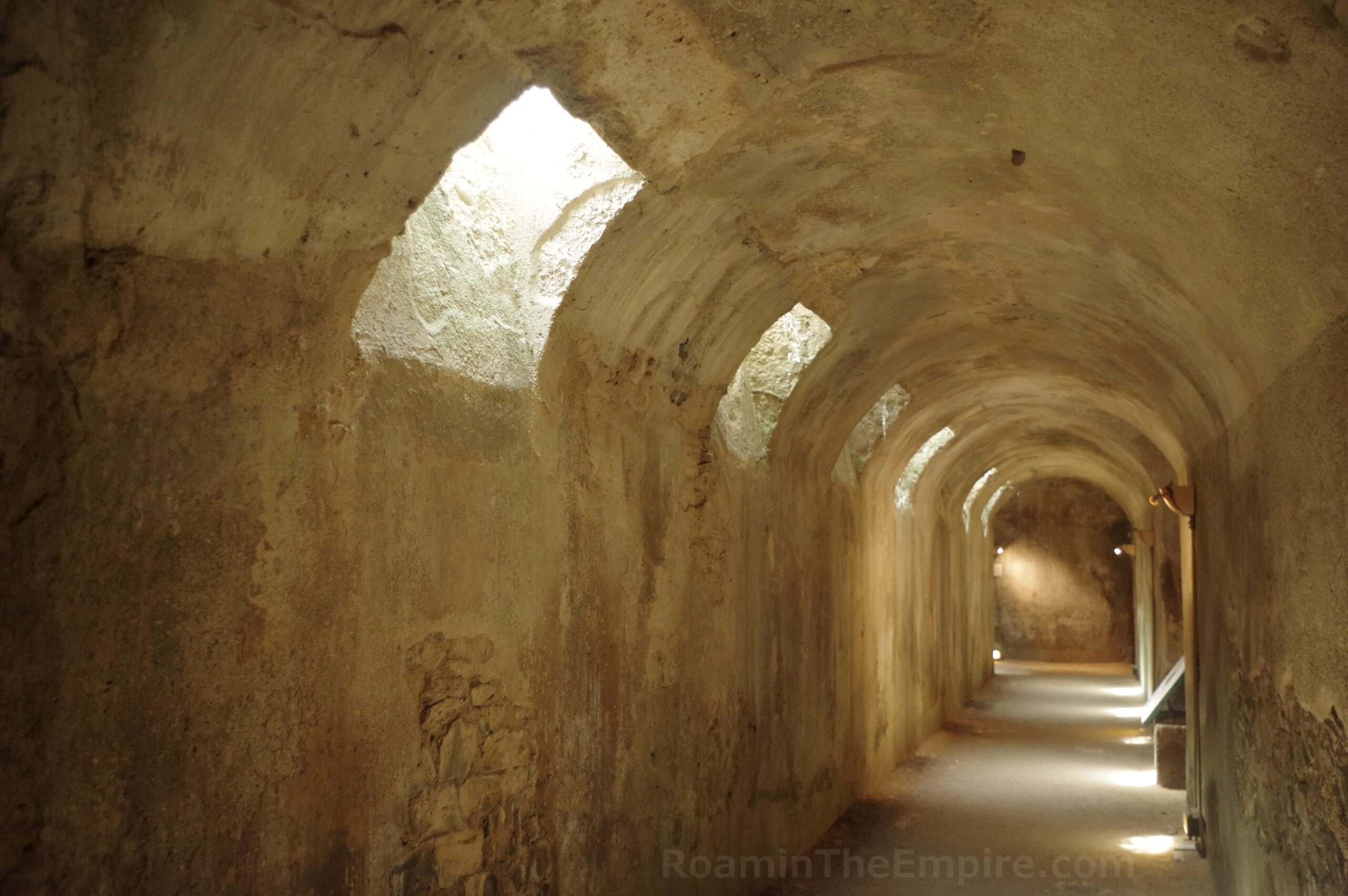
A cryptoporticus could be a feature of a private residence (mostly likely one belonging to a relatively wealthy inhabitant) or a large public building, such as a forum. There are a number of examples of cryptoportici being incorporated into one or more sides of the public square of a settlement’s forum. The cryptoporticus also often supported a portico at ground level above it, particularly as a feature of a public building, or in the case of semi-subterranean cryptoportici, an elevated gallery. Unlike an above-ground portico, the primary use of the cryptoporticus does not seem to have been ambulatory, but rather was likely used as a storage space.