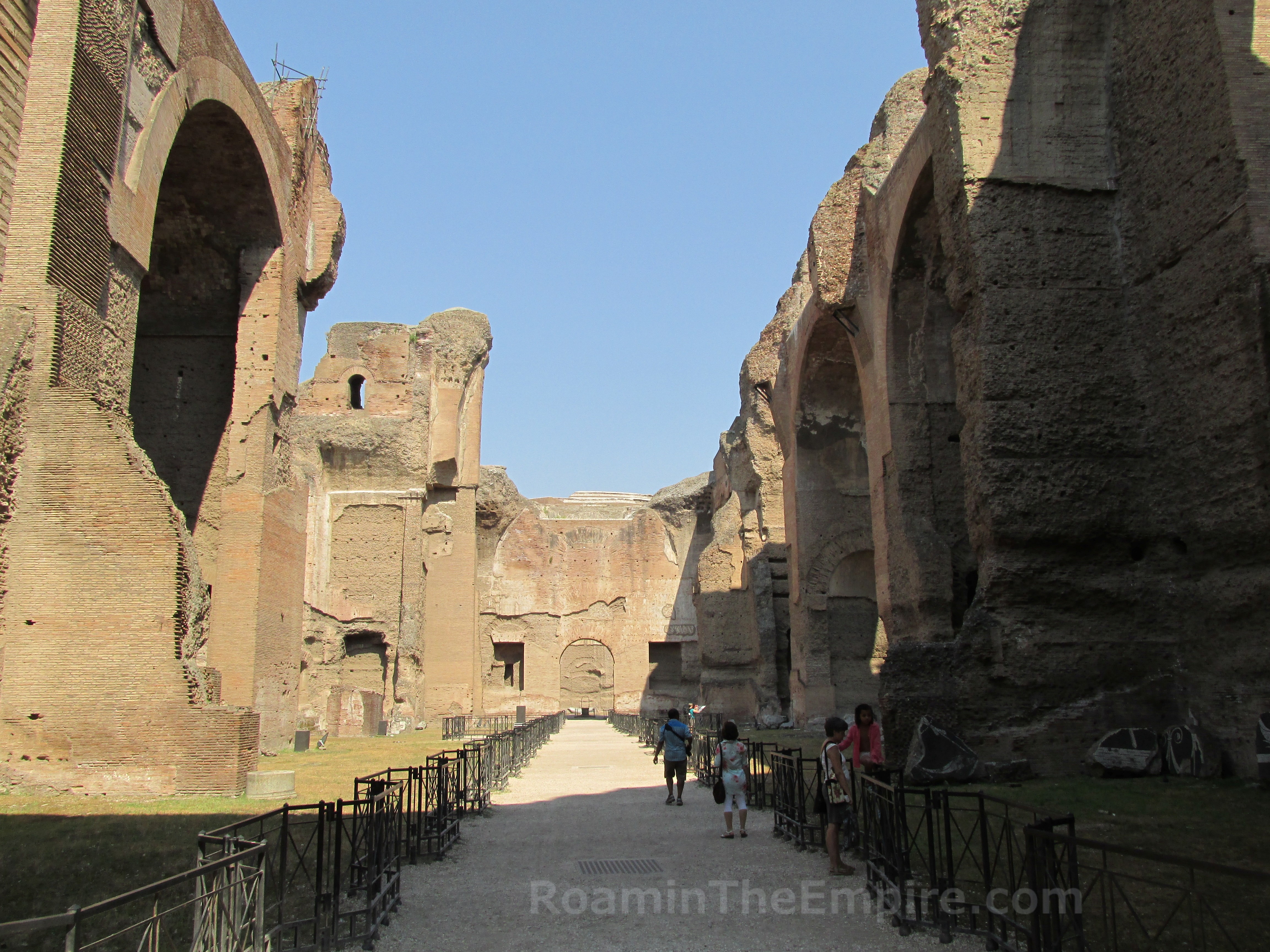


Frigidarium

The frigidarium (plural: frigidaria) was the cold water room of a Roman bathing complex. It was one of the three primary rooms along with the caldarium and tepidarium. The name is derived from the Latin word for cold, frigidus. While the water and air temperature of the heated rooms were maintained through artificial means, the frigidarium typically made use of the natural coolness of the water, which often came from cold natural sources. In some cases, snow or ice may have been used to lower the temperature of the water before it was introduced into the frigidarium. Unlike the heated rooms, there was no means of controlling the ambient air temperature in the frigidarium other than limiting sun exposure and using the insulation of thick walls to prevent heat seepage. Because of this, the cold effects of the frigidarium were mostly achieved through the use of one or more cold water pools.

Earlier frigidaria typically featured simple basins for the cold water, but later evolved into larger pools in which a bather could fully immerse themselves. In some cases, these pools would have been very large, mirroring the size of modern swimming pools. The frigidarium sometimes had its function combined with that of another room into a single multifunction room. An example of this can be seen in the women’s bathing section of the Stabian Baths at Pompeii, where the apodyterium also contains a cold water pool to function as both the frigidarium and apodyterium.